
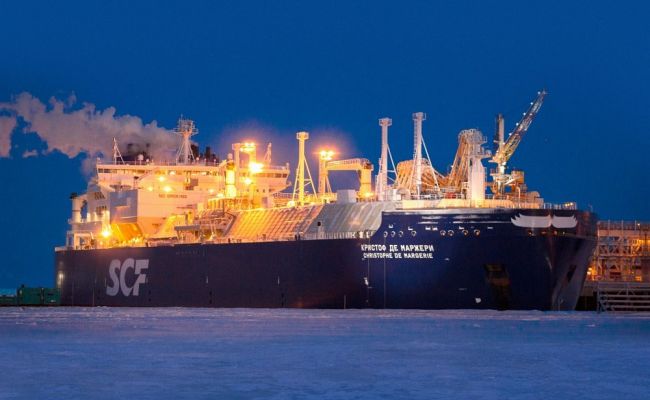
EU sanctions Russian condensate Yamal LNG 2027 ban has been formally approved and published in the EU's official journal, with new European Union sanctions set to prohibit condensate imports from Yamal LNG, Arctic LNG-2, and other Russian projects that produce the light fuel as a byproduct of their liquefied natural gas operations from January 1, 2027. The condensate ban was part of a broader package of measures formally approved by the EU on Thursday, which also included a 90 billion euro loan to Ukraine and additional sanctions against Russia, announced ahead of an informal summit of European leaders in Cyprus. The condensate prohibition closes what critics had long identified as a significant gap in the EU's otherwise comprehensive energy sanctions architecture, addressing a supply stream that had been explicitly excluded from restrictions in 2022 when European leaders prioritised maintaining LNG supply security over the comprehensive sanctioning of Russian energy revenues that has since become the bloc's stated policy objective.
Gas condensate, a type of light oil that is produced as a byproduct of natural gas and LNG operations rather than from dedicated oil wells, occupies a specific place in the EU's Russia sanctions history because of its exclusion from the December 2022 Russian oil import ban that covered crude oil and most petroleum products. The exclusion reflected genuine supply security concerns at a moment when Europe was simultaneously trying to eliminate Russian pipeline gas dependence while ensuring that Russian LNG continued to flow as a partial substitute, and the condensate from Yamal LNG and Arctic LNG-2 was seen as tied to that LNG supply in ways that made separate sanctioning politically and logistically complicated. The January 2027 implementation date for the condensate ban gives European industry approximately eight months to adjust supply chains and sourcing arrangements, a lead time that reflects both the complexity of the supply chain adjustments required and the EU's standard practice of providing advance notice for major sanctions extensions.
The timing of the condensate ban's formal approval, at a moment when U.S.-brokered peace talks over Ukraine have been paused due to Washington's focus on the Iran war, is the EU's clearest signal yet that it intends to maintain and tighten Russia sanctions pressure independently of the American diplomatic trajectory. With Washington's attention and military resources focused on the Middle East conflict, European capitals have expressed concern that American Ukraine policy is drifting toward an accommodation with Moscow that European security interests cannot accept, and the Cyprus summit provides the political moment for European leaders to demonstrate the bloc's continued commitment to Ukraine through both the 90 billion euro loan and the expanded sanctions package. The condensate ban's January 2027 effective date creates a concrete policy milestone that European leaders can point to as evidence that the sanctions architecture is being strengthened rather than allowed to stagnate while American diplomacy is distracted elsewhere.
How EU Energy Sanctions Were Built and Why Condensate Was Left Out
The European Union's December 2022 ban on Russian crude oil imports, implemented following the February 2022 full-scale invasion of Ukraine, represented the most economically consequential single sanctions decision the bloc had made in the conflict's early phase, given that the EU imported approximately 25 percent of its crude oil from Russia in 2021 and had built significant refinery and petrochemical infrastructure around Russian crude's specific characteristics. The ban was accompanied by a G7-coordinated price cap mechanism designed to allow Russian oil to continue flowing to third countries at capped prices, reducing Russian revenues while preventing the complete removal of Russian supply from global markets that would have caused the kind of oil price spike that Western sanctions policies were explicitly trying to avoid. The combination of import ban for EU refineries and price cap for third-country purchases was an attempt to square the circle of reducing Russian energy revenues without triggering a supply shock that would undermine the Western public's support for the sanctions regime.
Gas condensate's explicit exclusion from the December 2022 ban was a deliberate policy choice made at the highest levels of the EU's sanctions design process, reflecting the specific circumstances of Yamal LNG's supply relationships with European buyers and the assessment that penalising condensate at the same time as imposing the crude oil ban would create more supply security risk than the revenue reduction it would achieve was worth. Yamal LNG, the Arctic liquefied natural gas facility on the Yamal Peninsula in northwestern Siberia, was producing and exporting both LNG and condensate in quantities that made its European customers dependent on both supply streams, and the argument was made that forcing immediate condensate substitution would risk disrupting LNG supply relationships that Europe needed to maintain during the painful transition away from Russian pipeline gas. The exclusion was framed at the time as temporary and subject to review as the supply security situation evolved.
The evolution of that supply security situation over the following three years made the condensate exclusion increasingly anomalous in an overall EU sanctions architecture that was progressively becoming more comprehensive. The EU has almost fully ended Russian coal, crude oil, and fuel imports, reducing the dependence that in 2021 saw the bloc importing 43 percent of its fuels and 25 percent of its crude oil from Russia. Against the backdrop of this comprehensive energy decoupling, the continued import of Russian condensate from Yamal LNG represented a remaining supply relationship whose sanctioning had been deferred on grounds that had become less compelling as European energy markets adapted, alternative supplies were secured, and the political consensus for sustained pressure on Russia deepened. The January 2027 condensate ban is the policy culmination of this three-year progression toward comprehensive Russian energy import elimination.
Yamal LNG's Condensate Export Scale and Its Commercial Significance
The Yamal LNG plant's condensate exports to Rotterdam tell a story of a supply stream that has been growing even as the broader Russian energy relationship with Europe has been systematically eliminated. The plant exported 1.12 million tons of gas condensate to Rotterdam in 2024, up 16.3 percent from 2023, and the supplies rose a further 7.4 percent to 1.2 million tons last year. The growth trajectory, occurring against the backdrop of the comprehensive Russian energy sanctions that governed the same period, reflects the specific commercial dynamics of a supply stream that was explicitly exempted from the import restrictions that covered all comparable Russian energy products, creating a legal pathway that continued to generate Russian energy revenues even as the EU's stated policy was the elimination of those revenues.
Rotterdam's centrality in this condensate trade reflects the Dutch port's role as Europe's primary petrochemical and refinery hub, where condensate from Yamal LNG has been processed into petrochemical feedstocks and motor fuel components that flow into the broader European industrial economy. Gas condensate is more valuable than crude oil for petrochemical applications because its lighter composition more closely matches the feedstock requirements of naphtha crackers and other petrochemical production units, and Russian Arctic condensate has specific quality characteristics that European petrochemical operators have built processing capacity around. The supply chain adjustments that the January 2027 ban will require are therefore not merely a matter of finding alternative suppliers but potentially of adapting processing equipment and feedstock management to handle condensates with different quality profiles from those that Yamal LNG has been supplying.
Arctic LNG-2, the second Russian project that produces condensate covered by the new sanctions, has faced significant development complications from Western sanctions imposed specifically on the project, including the withdrawal of Western technology partners and equipment suppliers and the consequent delays to the facility's development schedule. The inclusion of Arctic LNG-2 condensate in the January 2027 ban, despite the project's currently limited operational status, reflects the EU's forward-looking intent to ensure that any future condensate production from the facility does not create a new import stream that bypasses the restrictions now being applied to Yamal LNG's established condensate trade. The comprehensive coverage of both projects in the new sanctions language prevents the kind of regulatory arbitrage that condensate buyers might otherwise attempt by switching sourcing between the two facilities.
The Ukraine Loan Package and Its Connection to Continued Sanctions Pressure
The 90 billion euro loan to Ukraine that the EU formally approved alongside the condensate ban represents the financial support dimension of the European response to Russia's war that is as important as the sanctions pressure dimension. Ukraine's ability to continue defending itself, maintaining basic government functions, and sustaining the economic activity that supports its population through the conflict depends on sustained external financial support, and the EU's loan commitment provides the fiscal foundation that military aid and humanitarian assistance alone cannot substitute for. The loan's formal approval on the same day as the new sanctions sends a deliberate signal that the EU's commitment to Ukraine is being implemented simultaneously across the military, economic, and financial dimensions of the conflict, rather than being traded off against diplomatic aspirations for a rapid settlement.
The Cyprus summit context for both approvals reflects the political moment in European leadership that the Iran war's impact on American attention has created. European leaders meeting in Cyprus, geographically proximate to the Middle East conflict whose energy consequences they are managing alongside the Ukraine war's demands, are navigating a strategic environment in which the assumptions underlying European security policy are being challenged from multiple directions simultaneously. The U.S.-brokered Ukraine peace talks' pause, driven by Washington's reallocation of attention and resources to the Iran conflict, has heightened European concerns about whether the diplomatic framework for ending the Ukraine war reflects European security interests or is being shaped primarily by American political considerations including the November midterm election timeline. The EU's decision to proceed with both the Ukraine loan and the expanded Russia sanctions in this context represents a claim of European strategic agency that goes beyond following American diplomatic leadership.
The EU's Iran war sanctions posture has been carefully calibrated to avoid direct confrontation with the American military campaign while maintaining the bloc's stated commitment to international law and diplomatic resolution, creating a nuanced European position that is neither fully aligned with the American military approach nor openly opposed to it. The Cyprus summit provides an opportunity for European leaders to discuss the Iran conflict's implications for European energy security, the coordination of strategic petroleum reserve releases with American policy, and the diplomatic framework for eventual conflict resolution, alongside the Ukraine agenda that European security consensus has been built around. The simultaneous approval of the Ukraine loan and the Russia condensate ban at this summit moment creates a deliberate demonstration of European strategic continuity that says the bloc will not allow the Iran war's diversion of American attention to result in a weakening of the sanctions pressure on Russia that European security requires to be maintained.
Implementation Timeline, Industry Adjustments, and the Sanctions Architecture's Completion
The January 1, 2027, effective date for the Russian condensate import ban provides the European petrochemical and refining industries with approximately eight months of adjustment time from the formal approval of the restriction to its legal implementation, a timeline that reflects both the practical complexity of supply chain substitution at the scale required and the EU's standard practice of providing advance implementation periods for major sanctions extensions. Eight months is a meaningful but not generous adjustment period for industries that have built procurement relationships, processing equipment optimisation, and long-term supply contracts around a specific supply stream, and European condensate users will be required to move quickly on several dimensions simultaneously: identifying and qualifying alternative suppliers, potentially renegotiating or terminating existing contracts with Russian suppliers, adapting processing equipment if necessary, and managing the price and quality implications of the supply transition.
Alternative condensate supply sources that European buyers can potentially access include North Sea producers including Norway, whose condensate from offshore gas fields shares some quality characteristics with Russian Arctic condensate, U.S. Gulf Coast condensate that has become a significant export product as American tight oil production has expanded, and Middle Eastern condensate from Qatar, the UAE, and other Gulf producers whose LNG-associated condensate output has been growing. Each of these alternative sources has its own quality characteristics, pricing dynamics, and logistics profiles that European buyers will need to assess relative to their specific processing requirements, and the transition will not be seamless or cost-free even for industries that prepare carefully for January 2027. The price premium that European buyers may need to pay for condensate from suppliers who do not face sanctions pressure will add to the cumulative cost of the EU's comprehensive Russian energy decoupling that has been building since December 2022.
The condensate ban's implementation will require enforcement mechanisms that can distinguish condensate of Russian origin from that of other producers, particularly given the potential for Russian condensate to be re-exported through third-country intermediaries in ways that obscure its origin. The EU's existing Russia oil sanctions framework includes origin tracing requirements and prohibitions on importing Russian oil that has been processed or blended in third countries, and the condensate ban will presumably apply similar provisions to prevent circumvention through transit through friendly jurisdictions. The effectiveness of these enforcement mechanisms will be an important test of the EU's ability to close supply loopholes that Russian energy exporters and their commercial partners have shown considerable ingenuity in exploiting across the four years of the current sanctions regime.
The Broader Sanctions Architecture and What Remains Unaddressed
The Russian condensate ban's addition to the EU's sanctions framework moves the bloc closer to the comprehensive elimination of Russian energy import dependence that has been the stated policy objective since the February 2022 invasion but has been implemented progressively rather than comprehensively. The remaining significant Russian energy supply relationship that the condensate ban does not address is LNG itself, which continues to flow from Yamal LNG and the limited Arctic LNG-2 capacity to European buyers under supply contracts that were not covered by the 2022 restrictions. Russian LNG's continued import into European markets, including through facilities in Spain, France, and Belgium where it is regasified and redistributed, has remained a politically sensitive but substantively significant gap in the sanctions architecture, with estimates suggesting Russia exported between 15 and 20 billion cubic metres of LNG to Europe in 2025.
The political difficulty of banning Russian LNG imports reflects both the genuine supply security concerns that motivated the original condensate exclusion and the contractual and legal complexities of unilaterally terminating long-term LNG supply agreements that were entered into under normal commercial conditions before the invasion. European companies and governments that signed long-term LNG supply contracts with Yamal LNG and related entities face potential liability for breach of contract if they terminate those agreements without legal justification, and the EU's sanctions legislation must be carefully designed to provide that justification without triggering the kind of international arbitration proceedings that have complicated other aspects of the Russia sanctions regime. The January 2027 condensate ban's explicit coverage of Yamal LNG-associated condensate while leaving the LNG trade itself unaddressed reflects the continued political and legal complexity of the LNG question rather than a policy judgment that LNG revenues are acceptable to Russia.
Guillaume Durin's comment about the halo of respectability that institutional investment provides to companies like Palantir has a direct parallel in the condensate sanctions context, where the continued exclusion of Russian condensate from import restrictions had provided Yamal LNG with a sustained revenue stream and an implicit EU policy signal that not all Russian energy revenues were subject to the same pressure. The January 2027 ban removes that implicit signal and closes the revenue stream, completing the EU's stated commitment to eliminating Russian energy imports across all significant categories and reinforcing the message that the bloc's sanctions architecture will continue to be tightened rather than eased as long as the Ukraine conflict continues without a resolution that meets European security standards.