
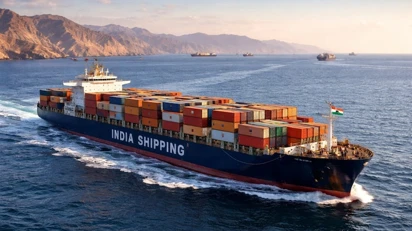
India Plans Sovereign is planning a landmark sovereign guarantee program worth billions of dollars to support insurers providing coverage for vessels traveling through the Persian Gulf, as the escalating Middle East conflict drives maritime war risk insurance premiums to levels not seen in modern shipping history. Government and industry sources familiar with the matter confirmed that the plan includes a $1.5 billion sovereign guarantee fund designed to provide insurers with reinsurance support and the financial liquidity they need to continue offering coverage as insurance costs remain dangerously and prohibitively elevated. The initiative represents one of the most significant government interventions in the Indian insurance sector in years and signals just how seriously New Delhi is treating the threat that the current conflict poses to the country's trade routes, energy imports, and overall economic stability.
A separate $300 million fund drawn from contributions made directly by India's private and public insurance industry is also being established alongside the sovereign guarantee structure, according to the same government source. This secondary fund is specifically designed to help the industry manage and settle any large-scale surge in insurance claims that might result from incidents involving Indian-flagged or Indian-cargo vessels operating in the affected region. Together, the two funds represent a coordinated government and industry response to a crisis that has left shipowners, energy traders, and cargo operators facing dramatically higher costs and in some cases an outright inability to secure adequate coverage for voyages through one of the world's most commercially vital maritime corridors.
The sources who shared details of the plan declined to be identified publicly because they were not authorized to speak to media organizations on the record. India's finance ministry and the country's insurance regulatory authority had not responded to requests for official comment at the time this report was prepared. Three separate insurance industry sources confirmed, however, that India's insurance regulator had recently sought formal feedback from industry participants about the nature of support they required and the practical mechanisms through which any government-backed funding structure should be implemented and administered. That consultation process suggests the plan is moving from preliminary discussion toward concrete implementation with some urgency given the pace at which the conflict and its commercial consequences are developing.
How the Iran War and Strait of Hormuz Crisis Sent Maritime Insurance Premiums Surging 1,000 Percent
The current crisis in maritime insurance markets has its direct origins in the outbreak of military conflict in the Middle East that began on February 28, 2025, when the United States and Israel launched coordinated attacks on Iran. Tehran responded by closing the Strait of Hormuz, one of the single most strategically critical chokepoints in global maritime trade, through which roughly 20 percent of the world's traded oil and enormous volumes of liquefied natural gas, container cargo, and dry bulk commodities pass every day. Iran also struck targets in other countries across the broader region, dramatically expanding the geographic scope of the conflict and the range of maritime routes that insurers and shipowners now consider dangerously exposed to war risk. The combination of the Hormuz closure and the widening regional conflict created an immediate and severe shock to maritime insurance markets that had not been tested at this scale since the tanker wars of the 1980s.
Maritime war risk insurance premiums have surged by as much as 1,000 percent in some specific cases since the conflict began, according to industry sources and insurance brokers operating in the sector. That figure represents a historic and extraordinary spike that has transformed the economics of operating commercial vessels through the Persian Gulf region almost overnight. Gaurav Agarwal, head of marine specialties at Prudent Insurance Brokers, described the situation by noting that while war insurance coverage remains technically available, the rates being charged by insurers vary considerably, are significantly elevated compared to pre-conflict levels, and continue to change dynamically as the security situation evolves and as different insurers make different assessments of the risks involved. That dynamic and unpredictable pricing environment makes long-term commercial planning extremely difficult for shipowners and cargo operators who need cost certainty to structure their freight contracts and supply chain arrangements.
Insurers have also significantly expanded their definition of what constitutes a high-risk zone requiring war-risk pricing beyond the immediate vicinity of the Strait of Hormuz. Rajesh Kumar Singh, executive president of property at Howden India, an insurance brokerage firm, confirmed that insurers have broadened their risk perimeter to encompass parts of the Red Sea, the Gulf of Aden, and the Arabian Sea approaches to the Persian Gulf region. That geographic expansion of the war-risk zone means that vessels on far longer voyage segments are now subject to the elevated premium structures originally associated only with direct Strait of Hormuz transits. The practical effect is that the cost increase has cascaded far beyond the immediate conflict zone and is affecting trade routes and shipping economics across a vast and commercially critical area of the Indian Ocean region.
Why India's Sovereign Guarantee Plan Is Critical for the Country's Energy Security and Trade Flows
India's decision to develop sovereign-backed insurance support mechanisms reflects the country's acute and specific vulnerability to disruptions in Persian Gulf shipping routes. India is one of the world's largest importers of crude oil, and a substantial portion of that oil arrives through the Persian Gulf and across the Arabian Sea routes that are now subject to war-risk pricing and coverage uncertainty. Any sustained inability of Indian-connected vessels or cargo to obtain adequate and affordable maritime war-risk insurance would translate directly into higher energy import costs, potential supply disruptions, and broader inflationary pressure on an economy that is still navigating a complex and challenging global trade environment. The government's willingness to put $1.5 billion in sovereign guarantee capacity behind the insurance sector reflects a clear-eyed assessment of how serious those economic risks have become.
The guarantee funds are expected to serve two interconnected and mutually reinforcing purposes. First, they will reduce India's current heavy dependence on international reinsurance markets to backstop the war-risk coverage that Indian insurers provide to shipowners and cargo operators. Several major reinsurers, including GIC Re, India's only state-backed reinsurer, have either withdrawn coverage entirely or dramatically increased their premiums in response to the conflict, leaving Indian insurers with sharply reduced access to the reinsurance capacity they need to confidently underwrite war-risk policies. That withdrawal of reinsurance support has created a structural gap in the market that the sovereign guarantee fund is specifically designed to fill by providing Indian insurers with government-backed financial assurance that reduces their exposure to catastrophic loss scenarios.
Second, the availability of sovereign-backed reinsurance support should give Indian insurance companies the operational confidence and financial security they need to continue providing coverage to vessels and cargo moving through the region as trade flows attempt to resume and normalize. A senior insurance executive familiar with the planning process described the potential impact by noting that a sovereign-backed Indian insurance pool could provide meaningful confidence to insurers and help reduce the overall cost of shipping goods through the Persian Gulf region for Indian importers and exporters. That cost reduction benefit extends not only to energy importers but to the full range of Indian businesses and consumers who depend on goods moving through Persian Gulf trade routes, from petrochemical raw materials to agricultural commodities to manufactured goods moving in both directions through the region.
The Wider Impact on Global Shipping and What Industry Experts Are Warning About
The insurance crisis triggered by the Iran conflict and the Strait of Hormuz closure is generating consequences that extend well beyond India and are reshaping the economics and risk calculations of global maritime trade in ways that industry experts say will persist long after any immediate resolution of the military conflict itself. Shipowners operating in the affected region are facing a compounding set of financial pressures that combine dramatically higher war-risk insurance costs with the fuel and time costs associated with rerouting vessels around the closed Strait, uncertainty about the reliability and duration of any partial reopenings, and the additional crewing costs and risk premiums demanded by sailors asked to operate in a conflict zone. Those compounding pressures are already being passed through to cargo owners and end consumers in the form of higher freight rates and energy prices that are contributing to inflationary pressure in economies across Asia, Europe, and beyond.
Energy firms moving crude oil and liquefied natural gas through the Persian Gulf are among the most severely affected commercial operators. The concentration of global hydrocarbon export infrastructure in the Gulf region means that a sustained closure of the Strait of Hormuz or a prolonged period of elevated war-risk pricing has direct and immediate consequences for global energy markets that go far beyond the bilateral trade relationships of any single country. Several major energy trading houses have already begun adjusting their procurement strategies, seeking alternative supply sources and routing options where available, and building larger inventory buffers to protect against supply interruptions. Those adjustments themselves carry costs and market distortions that contribute to the broader economic impact of the conflict beyond its immediate geographic scope.
Even if the Strait of Hormuz reopens in the near term, insurance industry sources are unanimous in warning that war-risk pricing will remain elevated for an extended and potentially prolonged period. The reasoning behind that assessment is straightforward. Insurers price risk based on demonstrated historical patterns and current assessments of the probability and potential severity of future incidents. A conflict that has already demonstrated the willingness of a major regional power to close the world's most strategically important maritime chokepoint and to strike targets across multiple countries in the region will take years of sustained stability to reassess as substantially lower risk than current pricing reflects. The institutional memory of the current conflict will shape maritime insurance pricing in the region for years to come regardless of how quickly hostilities formally end.
How India's Insurance Industry Is Responding and What Comes Next for the Guarantee Fund
The Indian insurance industry's response to the crisis has involved both immediate market adjustments and active engagement with the government's planning process for the sovereign guarantee structure. Industry participants have been providing the insurance regulator with detailed feedback on the specific mechanisms through which government support can be most effectively deployed, drawing on their operational experience of the current market disruptions and their assessments of where the most critical gaps in coverage availability and affordability exist. That feedback loop between the regulator and the industry suggests a level of coordination and urgency in the government's approach that reflects how seriously officials are treating the potential economic consequences of a prolonged insurance market disruption.
The $300 million industry-contribution fund being established alongside the sovereign guarantee structure is significant because it creates a shared risk and shared responsibility model in which the insurance industry itself has meaningful financial skin in the game. That structure gives insurers both the incentive to manage the fund prudently and the credibility to assure policyholders and international counterparties that the support mechanism is substantively backed rather than merely symbolic. The combination of sovereign guarantee capacity and industry-funded claims settlement capacity creates a layered support structure that addresses both the reinsurance gap that has left insurers reluctant to provide coverage and the claims management uncertainty that has made even willing insurers cautious about the scale of risk they are prepared to underwrite.
The timeline for the funds to become operational has not been officially confirmed, and the sources familiar with the planning process declined to provide specific dates or implementation milestones given the sensitivity of the ongoing discussions. What is clear is that the government is treating the matter with urgency and that the insurance regulator's recent consultation with industry participants represents an active and accelerating planning process rather than a preliminary or exploratory conversation. As the conflict continues and its commercial consequences deepen, the pressure on the government to move quickly from planning to implementation will only intensify, particularly as Indian energy importers and shipowners continue to absorb the escalating costs of operating in what has become one of the world's most commercially and militarily dangerous maritime environments.