
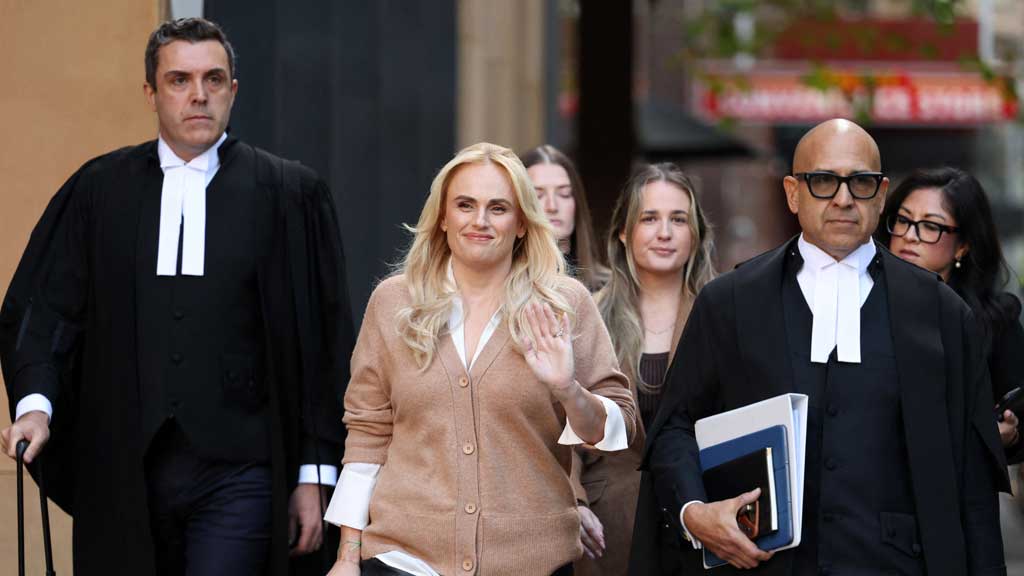
Australian actor Rebel Wilson appeared in a Sydney court on Monday at the start of a nine-day defamation trial brought by Charlotte MacInnes, the lead actor in Wilson's directorial debut film The Deb, in a case that brings together allegations of social media misconduct, sexual harassment claims on a film set, and the question of what responsibilities public figures with millions of followers bear when they make serious allegations about private individuals through their personal social media platforms. The case represents a significant moment in Wilson's public life and career, coming as the actress and filmmaker attempts to establish herself as a director following her long and successful run as a comedic actor in major Hollywood productions, and it has already created significant collateral damage to the film at the center of the dispute, with The Deb facing delays in its Australian theatrical release earlier this month directly because of the legal proceedings surrounding it. MacInnes, who was also present in court for Monday's opening hearing, is seeking aggravated damages from Wilson alongside a court order that would prevent the actress from repeating the allegations online or through any other platform, remedies that reflect the seriousness with which the plaintiff views the reputational harm she claims the Instagram posts have caused to her professional standing and personal reputation.
The core allegation at the heart of the defamation case is that Wilson falsely suggested through a series of Instagram posts made in July 2024 that MacInnes had privately confided in her about being sexually harassed by one of the producers involved in The Deb, a suggestion that MacInnes disputes entirely and that she says caused serious reputational damage by implying she had later lied when she publicly denied discussing harassment or inappropriate behaviour by the film's producers. Court filings allege that Wilson failed to seek any verification from MacInnes before making these claims and that she proceeded with the posts despite knowing that no complaint about harassment had been made by MacInnes in the way her social media content implied. The platform through which Wilson made the posts is itself a significant element of the case's potential impact, with Wilson's Instagram account carrying more than 11 million followers at the time the July 2024 posts were published, meaning that allegations about MacInnes were placed before an enormous audience without the kind of editorial oversight, fact-checking process, or right of reply that traditional media publication would typically involve or require.
Wilson addressed reporters outside the Sydney court following Monday's hearing with comments that focused entirely on the film itself rather than on the legal proceedings, telling journalists that she loved The Deb and describing it as cute and amazing while thanking everyone who was going to cinemas to see it. The statement was notable for what it did not address, making no mention of the defamation case, the allegations against her, or the impact of the legal proceedings on MacInnes, and instead using the court appearance as an opportunity to promote the film whose production and release have been so thoroughly overshadowed by the legal disputes surrounding it. Wilson's legal defence has not been publicly disclosed at this stage of the proceedings, leaving observers to assess her position primarily through her denial of MacInnes's claims and the legal team she has assembled to contest a case that is expected to run for nine court days and to examine in considerable detail the specific content and context of the social media posts that gave rise to MacInnes's complaint.
How The Deb's Production Became the Backdrop for a Multi-Jurisdictional Legal Battle
The Deb represents Rebel Wilson's transition from celebrated comedic actor to filmmaker, and the film's journey from production through its premiere at the Toronto International Film Festival in September 2024 to its complicated and legally disrupted Australian release has been so thoroughly overshadowed by the disputes that emerged around it that the creative achievement the project represents has been almost entirely eclipsed by the legal and reputational controversies attached to it. Wilson built her international profile through a series of commercially successful and critically appreciated comedic performances, most notably in the Pitch Perfect franchise where she became one of the most recognisable and beloved members of an ensemble cast, and in Bridesmaids, where her sharp comedic instincts translated effectively to a broad mainstream audience. The decision to step behind the camera as a director for The Deb represented a significant creative step forward that was clearly intended to demonstrate the depth and range of Wilson's artistic ambitions beyond performing, but the film's commercial and critical trajectory has been fundamentally disrupted by the events that unfolded around its production and the social media activity that followed.
The July 2024 Instagram posts that sit at the centre of the defamation case were made in the context of a broader dispute between Wilson and the executive producer and producers of The Deb, a dispute that had escalated into public view and that involved serious allegations about conduct on the film's set and about the motivations of those involved in its production and distribution. Wilson alleged in the July 2024 posts that executive producer Vince Holden, along with producers Amanda Ghost and Gregor Cameron, had attempted to block the film's Australian premiere in retaliation for her raising concerns about alleged misconduct during the production, allegations that the producers have disputed and that have given rise to separate legal proceedings in addition to the MacInnes defamation case. The combination of the alleged harassment concerns, the dispute over the film's premiere and release, and the social media activity through which Wilson chose to address these issues publicly created a legal exposure across multiple jurisdictions that has proved considerably more complex and damaging to all parties than might have been anticipated when the posts were first made to Wilson's millions of followers.
The separate lawsuit filed against Wilson by The Deb's producers in both a United States court and a court in the Australian state of New South Wales adds further jurisdictional and legal complexity to a situation that is already complicated enough with the MacInnes defamation case proceeding in Sydney. The existence of litigation in multiple courts across two countries simultaneously reflects the international character of the film industry ecosystem in which The Deb was produced and distributed, with financing, production, and distribution arrangements that cross national boundaries creating legal relationships and potential disputes that can be litigated in multiple jurisdictions depending on where specific legal obligations were created and where relevant conduct occurred. For Wilson, managing simultaneous legal proceedings in Australia and the United States while also trying to promote and support the Australian release of The Deb creates a practically and reputationally challenging environment that makes the coming weeks and months particularly difficult regardless of how the individual legal proceedings ultimately resolve.
What the Defamation Case Reveals About Social Media Accountability for Public Figures
The MacInnes defamation case against Wilson sits within a broader and increasingly important legal conversation about the responsibilities of public figures who use their personal social media platforms to make serious allegations about private individuals, a conversation that has been developing across multiple jurisdictions as courts grapple with the implications of the extraordinary reach and immediacy that major social media accounts give to statements that in previous eras would have required media publication to reach comparable audiences. Wilson's Instagram account had more than 11 million followers at the time the July 2024 posts were published, a reach that dwarfs the circulation of most traditional media outlets and that means a single post can place potentially defamatory content before an enormous audience within minutes of publication, without the editorial processes, legal reviews, or factual verification requirements that responsible traditional media organisations would apply before publishing allegations about named individuals. The court filings in the MacInnes case specifically allege that Wilson failed to seek verification from MacInnes before making the claims about her, a failure that goes directly to the question of the standard of care that someone with Wilson's platform size should be expected to apply before making public statements that could seriously damage another person's professional and personal reputation.
Australian defamation law provides a specific and well-developed legal framework within which the MacInnes case will be assessed, and the Australian legal environment has been at the forefront of international defamation jurisprudence in adapting existing legal principles to the realities of social media publication and the specific challenges posed by content that can be published instantly, viewed globally, and shared widely before any correction or retraction can meaningfully limit the damage done. MacInnes's claim for aggravated damages, which are available under Australian law when a court finds that the defendant acted with malice, recklessness, or in ways that demonstrate a lack of genuine belief in the truth of the defamatory statements, signals that her legal team will be arguing not simply that the Instagram posts were defamatory in their natural and ordinary meaning but that the circumstances in which they were made justify an enhanced level of compensation that goes beyond ordinary damages for reputational harm. The court order sought by MacInnes to prevent Wilson from repeating the allegations online or elsewhere is also significant as a remedy, because it would function as a form of injunctive relief that imposes ongoing legal obligations on Wilson's social media activity rather than simply compensating for past harm through a financial payment.
The outcome of the nine-day hearing will have implications that extend beyond the specific parties to the case and beyond the circumstances of The Deb's troubled production and release. A finding against Wilson would add to the growing body of Australian and international judicial decisions that hold social media publishers, including individuals with large followings rather than just media organisations, to meaningful defamation liability standards for content published through their personal accounts. It would reinforce the message that reach and influence in the social media environment carry corresponding legal responsibilities, and that the informal and immediate character of social media communication does not exempt its participants from the legal obligations that have historically governed the publication of statements capable of damaging another person's reputation. For the Australian entertainment industry, which is watching the case with considerable attention, the proceedings also raise questions about how disputes between collaborators on film and television productions should be managed when they escalate into public disputes conducted partly through social media platforms with enormous reach and immediate impact.