
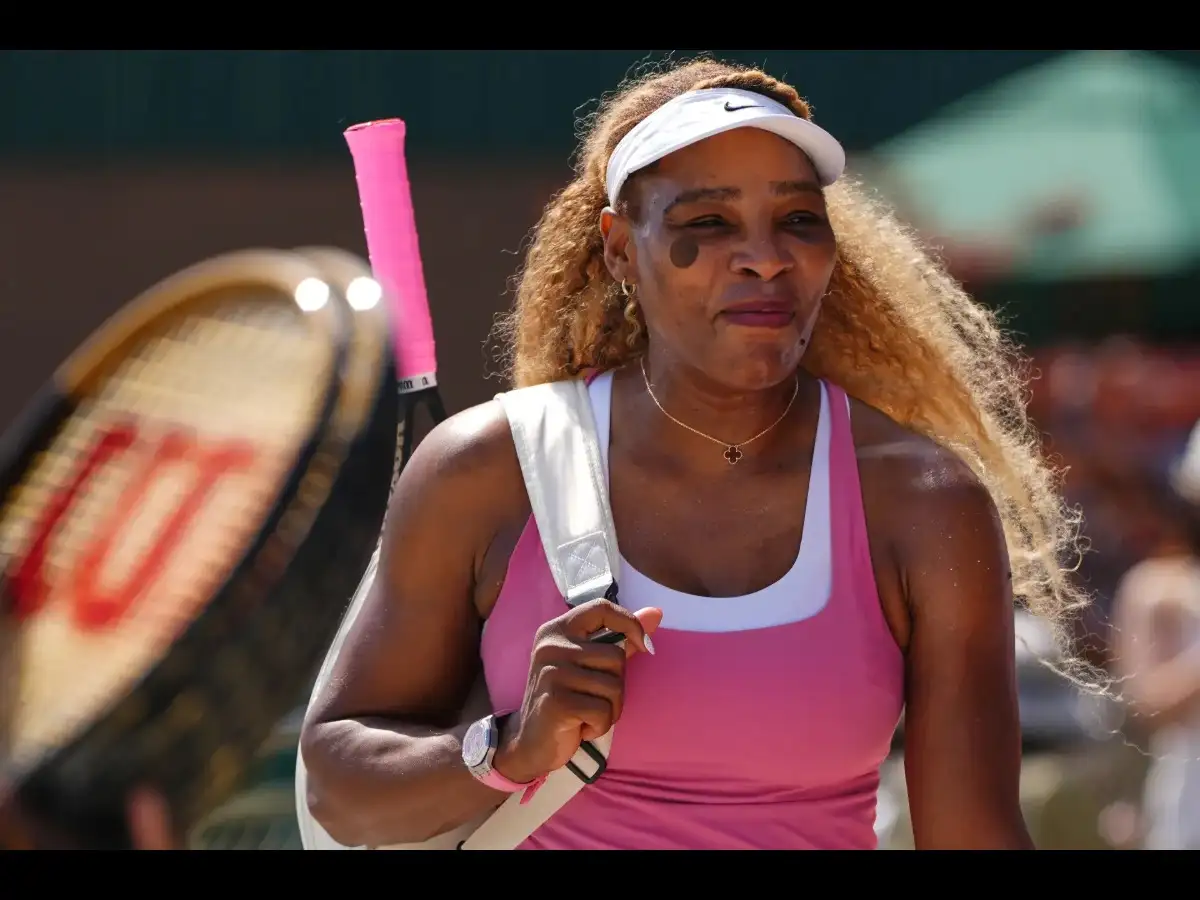
The names Serena venus carry the full weight of American tennis history in two words. No other sibling combination in the history of professional sport has dominated a major discipline the way the Williams sisters have dominated women's tennis across three decades. Venus serena williams represent the specific achievement of two girls from Compton, California, who were coached on cracked public courts by a father whose tennis manual was held together with tape, who were told repeatedly by the institutional establishment of their sport that they did not belong, and who proceeded to win a combined 30 Grand Slam singles titles, reshape the physical and tactical definition of what women's tennis could be, and force the sport's governing bodies, its commentators, and its audiences to reckon with their own assumptions about race, gender, and who deserves to win on the biggest stages in the world.
This is not a simple story. The greatness is real and undeniable. The controversies are also real, documented, and worth examining with the honesty that both serena venus deserved and were not always given by a sport whose relationship with them was characterised by admiration and resistance simultaneously.
The 2018 US Open Final: The Night That Split Tennis in Half
No single episode in venus serena williams history generated more immediate global controversy than the 2018 US Open final between Serena Williams and Naomi Osaka. The match produced a sequence of events whose facts are not in dispute and whose interpretation has been disputed ever since by people whose assessments of what happened reveal more about their prior assumptions than about the specific events they are evaluating.
Umpire Carlos Ramos issued three code violations against Serena during the final. The first was for coaching, issued after Ramos observed Serena's coach Patrick Mouratoglou making hand signals from the stands. Mouratoglou subsequently admitted he had been coaching, though Serena denied having seen the signals. The coaching violation triggered a warning.
The second violation was for racket abuse, issued after Serena smashed her racket on the court following a lost game. Racket abuse violations are standard in professional tennis and the call was unambiguously correct under the rules.
The third violation was for verbal abuse, issued after Serena called Ramos a liar and a thief during an extended confrontation that interrupted play and delayed the match. The verbal abuse violation triggered the loss of a game, the most severe single-point penalty in the standard violation framework.
Serena's response was immediate and passionate. She accused Ramos of sexism, arguing that male players had said far worse to umpires without receiving equivalent penalties. She accused him of stealing from her. She demanded an apology. Her coach and the US Tennis Association subsequently became involved in the post-match accountability discussion.
The serena venus Williams family's argument about double standards rested on documented evidence. Male players including John McEnroe, whose career was built partly on legendary umpire confrontations, had engaged in behaviour far more aggressive than Serena's during Grand Slam matches without receiving the cumulative penalty sequence that ended her 2018 final. The specific question of whether Ramos applied the rules consistently across gender lines is a legitimate and unresolved empirical question whose honest answer requires examining the complete record of how verbal abuse violations have been issued in men's and women's Grand Slam matches.
What is also factually true is that Naomi Osaka, a young woman of Japanese and Haitian heritage who was making her Grand Slam final debut, won her first major title in a match that ended with her opponent's controversy consuming the media narrative. Osaka's achievement, which was genuinely significant, was partially obscured by the controversy in ways that served neither athlete.
Anti-Doping Testing Controversies: The Missed Tests and the Investigation
Venus and Serena Williams have both been subjects of anti-doping discussion across their careers, with the specific controversies taking different forms at different points.
In 2016, a hacking group called Fancy Bears released confidential World Anti-Doping Agency documents showing that multiple athletes had received Therapeutic Use Exemptions allowing them to take otherwise prohibited substances for legitimate medical reasons. The Williams sisters were among the athletes named. Serena had TUEs for several substances including prednisone, prednisolone, and others. Venus had a TUE for prednisone.
The immediate and important clarification is that TUEs are a legitimate and formal anti-doping process. An athlete who receives a TUE has applied through the proper channels, provided medical documentation, and received authorised approval to use a substance for a genuine medical condition. The release of the TUE information by hackers was a privacy violation. The use of TUEs by the Williams sisters was procedurally proper and did not constitute doping.
Serena also faced attention regarding missed out-of-competition testing requirements, which generated specific documentation about whereabouts failures whose accumulation under WADA rules can trigger investigations. She addressed these situations directly and the matters were resolved without doping findings. No positive test has ever been returned by either Williams sister across careers spanning more than two decades of intensive testing.
The anti-doping controversy around serena venus is therefore accurately characterised as a controversy about privacy violations by hackers who released legitimately obtained TUE documents, and about procedural whereabouts reporting requirements whose management created administrative complications rather than substantive doping findings.
The Escalation of Penalties: Were the Standards Applied Fairly?
The core debate about the 2018 US Open penalty sequence asks whether three violations in a single Grand Slam final was the appropriate institutional response to conduct whose individual components were treated differently in comparable situations involving other players.
USTA President Katrina Adams publicly criticised Ramos's handling of the situation during the trophy ceremony, an unprecedented institutional statement that effectively sided with Serena against the umpire whose calls had been made under the ITF's own rules. The WTA subsequently announced that it would review its policies on umpire interactions.
Former player James Blake and others argued publicly that male players had received more lenient treatment for more aggressive conduct. The statistical evidence supporting the double standard argument is mixed. Research examining violation rates across men's and women's tennis found that women receive code violations at lower rates overall but that the specific comparison of how verbal confrontations with umpires are handled across gender lines is complicated by the different contexts, provocation sequences, and umpire personalities involved in different matches.
What the 2018 final definitively established is that serena venus Williams's presence in professional tennis forced conversations about race, gender, and institutional power whose importance extended far beyond the specific rules of tennis and whose legacy has produced genuine reform in how the sport discusses and monitors umpire consistency.
The Double Standards Debate: What the Record Shows
The allegations of double standard treatment of venus serena williams across their careers span multiple dimensions beyond the 2018 final. Their bodies, their physical style of play, their fashion choices, their off-court advocacy, and their verbal confrontations with officials have all been subjected to commentary that critics argue would not have been applied to white European players in equivalent circumstances.
The specific examples are documented. Early in their careers, the Williams sisters faced commentary about their physiques that carried racial coding whose presence has been acknowledged by multiple sports journalists and analysts who covered the era. Their beaded hair and colourful outfits generated commentary that would not have been applied to players whose appearance conformed to the predominantly white European aesthetic that women's tennis had presented for decades before the Williams sisters arrived.
Venus's fight for equal prize money at Wimbledon, which she began advocating for in the early 2000s and which Wimbledon finally adopted in 2007, is the specific institutional reform whose achievement documents both the discrimination that existed and her specific effectiveness in dismantling it. The equal prize money she fought for benefits every woman who plays at Wimbledon today.
What Venus Serena Williams Built Together
The venus and Serena Williams story is not simply the story of two individuals. It is the story of what happens when institutional resistance meets extraordinary talent combined with extraordinary determination. They were told their father's coaching methodology was wrong. They won. They were told their physical style did not fit tennis. They won. They were told their fashion was inappropriate. They won. They were told they did not belong at the top of the game. They won more Grand Slam titles than any other siblings in the sport's history.
Venus serena williams combined record of Grand Slam titles, Olympic gold medals, and sustained excellence across three decades of professional tennis represents the most remarkable athletic sibling story in the history of professional sport. Serena's 23 Grand Slam singles titles is the Open Era record. Venus's seven Grand Slam singles titles, achieved while managing Sjogren's syndrome, a chronic autoimmune condition diagnosed in 2011, represents one of the most remarkable athletic achievements in tennis history.
The 2018 US Open controversy did not end Serena's career. She continued to compete, to reach Grand Slam finals, and to advocate for the specific changes in how the sport treated its female players that her specific experience had made undeniably necessary.
Conclusion: The Greatest Story Tennis Has Ever Told
Serena venus Williams has given tennis more than it has given them. They arrived on the tour facing resistance from players, commentators, and institutional structures whose comfort with the status quo disturbed their very existence disturbed. They won through it all. They won through the double standard commentary. They won through the anti-doping TUE privacy violations. They won through the 2018 US Open penalty controversy. They won through chronic illness. They won through the specific racism and sexism whose presence in their careers has been documented by the people who experienced it rather than by those who denied it.
Venus serena williams did not simply overcome the obstacles placed in their path. They identified the obstacles, named them publicly, fought them legally and institutionally, and in the case of equal prize money at Wimbledon, removed them permanently for every woman who followed.
The serena venus story is the greatest story tennis has ever produced not because of the titles alone, although 30 Grand Slam singles titles between two sisters from Compton is a sentence that needs no embellishment. It is the greatest story because it is the story of two women who were told repeatedly what they could not do and who spent three decades proving, on the biggest stages in the world, that the people telling them were wrong.
They overcame everything. And they changed the sport that tried to stop them in the process.