
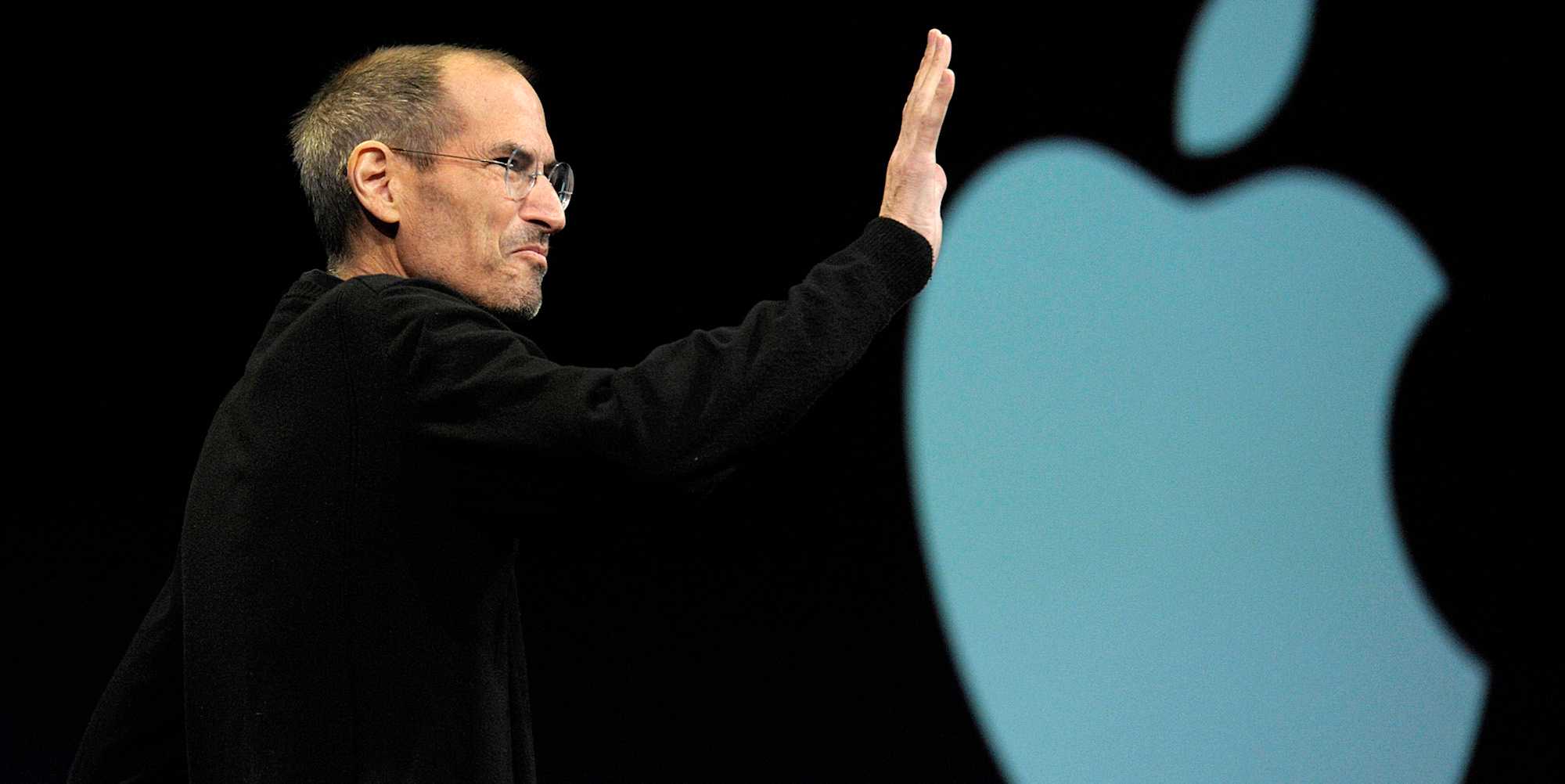
Apple 50 years history technology journey began not in a gleaming Silicon Valley campus but in a California garage in early 1976, when Steve Wozniak completed the design of a computer circuit board he intended to share with fellow hobbyists at a local club, and his friend Steve Jobs recognised in that circuit board not just engineering elegance but a commercial opportunity that would eventually reshape the technology industry, popular culture, and the daily lives of billions of people across the planet. The company that was born from that partnership turns 50 on Wednesday, and its half-century arc from garage startup to the world's most recognisable consumer technology brand encompasses the personal computer revolution, the iPod's transformation of the music industry, the iPhone's redefinition of what a phone is supposed to do, and the App Store's creation of an entirely new economic ecosystem that generates hundreds of billions of dollars annually. No other technology company in history has achieved what Apple has achieved across five decades, and no other company has so thoroughly embedded itself in the daily rituals of modern human life.
The 50th anniversary arrives at a moment of genuine strategic uncertainty for a company that has spent much of its history making uncertainty look like confident inevitability. Apple's stock is the second-worst performer among the Magnificent Seven since OpenAI launched ChatGPT in November 2022, a relative underperformance that reflects investor concern about whether the company that defined the personal computer era and the smartphone era is positioned to define the artificial intelligence era with the same authority. Despite embedding machine learning features in its chips since 2017, analysts and investors say delays in the rollout of key AI features including a revamped Siri suggest Apple was underprepared for how quickly consumers would embrace AI as a primary interface. That underprepared characterisation stings for a company whose entire identity has been built around anticipating what consumers want before consumers know they want it.
Independent tech analyst Ben Thompson captured the challenge with the precision that the occasion demands: Apple made it fifty years with no one truly competing with its integrated business model, and the fate of its next fifty years may rest on whether AI ends up being compelling enough to disrupt that model and whether OpenAI can out-Apple the original. That last phrase, out-Apple the original, is the most interesting formulation of the competitive threat Apple faces because it frames the risk not as a technical deficit but as a business model challenge. Apple's genius has always been integration, the seamless combination of hardware, software, and services into products that feel inevitable rather than engineered. If an AI competitor can achieve that same integration quality at the AI layer, the competitive threat is existential in a way that no previous challenger has managed to produce.
Five Decades That Changed Technology and Culture
The circuit board that Wozniak shared with Jobs in 1976 became the Apple I, a product sold as a bare board to hobbyists who assembled their own machines, generating approximately $774,000 in revenue in its first year and establishing the commercial foundation on which Apple II, and then the entire personal computer industry, would be built. The Apple II, introduced in 1977, was the product that transformed Apple from a hobbyist enterprise into a mainstream consumer company, with its colour graphics, expandable architecture, and accessible design making it the first personal computer that could be used by people who were not engineers. Its adoption by schools, small businesses, and eventually households across America established the template for the mass-market personal computer that the entire industry would spend the following decades refining.
The Macintosh, introduced in 1984 with the famous Super Bowl advertisement that positioned IBM as Big Brother and Apple as the liberating alternative, brought the graphical user interface and the mouse to mass-market computing in a form that was simultaneously innovative and commercially comprehensible. The Mac did not immediately dominate the market and Apple's subsequent years through the late 1980s and the 1990s were marked by strategic missteps, the departure of Steve Jobs in 1985 following an internal power struggle, and a period of product proliferation and corporate drift that brought the company to the edge of bankruptcy by 1997. The return of Jobs in 1997 and Apple's subsequent acquisition of NeXT, the computer company he had founded after leaving Apple, brought both the leader and the operating system foundation that would underpin the company's extraordinary revival across the following decade.
The iMac, introduced in 1998 in a translucent coloured casing that announced Apple's return as a design-driven consumer brand, was the first product of Jobs's second era that demonstrated the company had recovered its aesthetic sensibility and its commercial instinct simultaneously. The iMac's commercial success stabilised Apple's finances, but it was the iPod, introduced in 2001 with the deceptively simple tagline of one thousand songs in your pocket, that established the pattern for Apple's next phase of dominance. The iPod was not the first digital music player but it was the one that combined industrial design, software elegance, and ecosystem thinking in a way that made everything else feel inadequate. That same combination formula would be applied to the phone market six years later, with consequences for the entire technology industry that are still unfolding fifty years after Wozniak finished that circuit board.
The iPhone Era and the Creation of the App Economy
The iPhone's introduction in January 2007 is among the most consequential single product launches in the history of consumer technology, not primarily because of what the first iPhone did but because of what it demonstrated was possible when a company thought about a device as an integrated system rather than a collection of features. Jobs introduced it as three products in one, an iPod, a phone, and an internet communicator, a framing that was simultaneously accurate and insufficient because the iPhone became something none of those three things individually were: a general-purpose computer that fits in a pocket, connected to the internet at all times, and capable of running software from any developer who could master its programming environment. The App Store, introduced in 2008, was the institutional infrastructure that converted the iPhone from a very good phone into the platform that defined the following decade of technology development.
The App Store's economic model, charging developers a 30 percent commission on in-app purchases and app sales in exchange for distribution, security, and payment processing, created both the revenue stream that became Apple's most important growth engine and the regulatory controversy that has been a defining feature of its business for the past decade. The dispute with Epic Games over in-app payment commissions, which resulted in legal battles in multiple jurisdictions and forced changes to App Store policies in some markets, reflects the structural tension between Apple's integrated business model and regulators' and competitors' arguments that it amounts to a monopolistic control of software distribution on the world's most widely used computing platform. That tension is not resolved and will continue to shape Apple's regulatory environment regardless of who leads the company.
Apple's stock growth across the iPhone era was extraordinary by any measure, transforming the company from a near-bankrupt computer maker in 1997 to the world's first company to reach a $1 trillion market capitalisation in 2018 and eventually to a peak valuation above $3 trillion. The in-house M-series chip development that Apple began transitioning its Mac computers to in 2020 demonstrated the company's continued ability to achieve performance and efficiency levels that third-party chip suppliers could not match when vertical integration gave Apple control of the full hardware design stack. The $599 MacBook Neo, its cheapest laptop ever, which had a strong recent launch, reflects the M-series chip's ability to deliver premium performance at price points that were previously impossible for Apple's premium-margin business model to contemplate.
Services, China, and the Revenue Diversification That Sustained Growth
Apple's transition from a hardware-focused business to a hardware-plus-services model has been the most significant strategic evolution of the post-Jobs era, driven by the recognition that a device install base of over 2 billion active devices generates recurring revenue opportunities through subscriptions, commissions, and digital content that are structurally more valuable than hardware replacement cycles alone. Apple Music, Apple TV Plus, Apple Arcade, iCloud storage, and the App Store commission structure together constitute a services business that generates over $85 billion annually, growing faster than the hardware business and carrying higher margins that have transformed Apple's financial profile from a cyclical hardware company into a partially recurring revenue platform business. That transformation has been critical to sustaining Apple's premium valuation through periods of iPhone replacement cycle slowdown.
China's role in Apple's revenue story is both a major growth opportunity and a major strategic risk, reflecting the company's deep integration into the Chinese manufacturing ecosystem alongside its dependence on Chinese consumer demand for a disproportionate share of iPhone revenue. As the U.S. smartphone market has reached saturation with replacement cycles lengthening, China and emerging markets including India have grown their share of Apple's revenue in ways that make the company's financial performance sensitive to Chinese economic conditions, regulatory environments, and the competitive pressure from domestic Chinese smartphone brands including Huawei, Xiaomi, and Vivo. The U.S.-China technology competition and the tariff environment that has developed around it create ongoing uncertainty about Apple's China manufacturing and sales exposure that the company must manage as a strategic priority alongside its product and technology development agenda.
India represents the most promising large-market growth opportunity in Apple's next chapter, with a rapidly expanding middle class, a young population whose technology adoption patterns are shaped by smartphones as primary computing devices, and a premium brand association that gives Apple pricing power in a market that has historically been dominated by Android at lower price points. Apple's manufacturing investment in India, where it has expanded iPhone production through supplier partnerships, serves both the domestic market and the export diversification goal of reducing dependence on China-based manufacturing. The India opportunity and the India manufacturing investment are strategically linked in ways that represent Apple's most consequential geographic bet for the decade ahead.
AI Challenge, iPhone 17 Strength, and the Next Fifty Years Question
The competitive challenge that artificial intelligence poses to Apple is different in character from any previous competitive threat the company has faced, because previous challenges were primarily about products and Apple's ability to design better products than competitors. The AI challenge is partly about products but more fundamentally about the interface layer through which people interact with their devices and the ecosystems built around those interactions. If the primary way that people interact with their technology shifts from the touch-based app paradigm that Apple created with the iPhone to a conversational AI paradigm where the quality of the AI assistant matters more than the quality of the physical device, Apple's device-centred business model faces structural disruption rather than just competitive pressure.
Apple's delayed rollout of meaningful AI features, including the revamped Siri that was announced but has not yet delivered the conversational AI capability that ChatGPT demonstrated was possible, reflects either an underestimation of the pace of AI adoption or a deliberate strategic choice to prioritise privacy-preserving on-device AI over cloud-based AI capabilities. Apple has framed its AI approach as Apple Intelligence, emphasising the privacy and security advantages of processing AI workloads on the device rather than in the cloud, a framing that is consistent with Apple's brand positioning but that has not yet produced features that rival the capabilities available through competing AI systems. The distinction between being strategically deliberate and being competitively behind is one that investors and analysts are not yet able to resolve from the available evidence.
OpenAI's reported plans to launch AI devices that aim to disrupt the smartphone's long-held dominance represent the most direct competitive threat to Apple's core business model that any competitor has ever articulated. A device whose primary function is AI interaction rather than the app paradigm that Apple created would compete with the iPhone not on specifications within the current paradigm but on the question of whether the paradigm itself is being superseded. Apple has survived multiple such paradigm challenges before, from the PC to the internet browser to social media, and in each case the iPhone provided the platform through which those paradigms were delivered rather than being displaced by them. Whether the same pattern holds for AI depends on whether AI interaction is primarily delivered through the existing device paradigm or requires fundamentally different hardware, and that question is not yet answered by anything in the market.
iPhone 17, MacBook Neo, and the Product Strength That Buys Time
The strong demand for the iPhone 17 series that drove Apple's December-quarter earnings demonstrates that whatever competitive pressure Apple faces at the strategic level has not yet translated into consumer-level rejection of the products it makes. iPhone replacement cycles remain one of the most reliable patterns in consumer technology, driven by the combination of hardware capability improvements, software ecosystem lock-in, and the social signalling value of the iPhone as a premium device that commands premium pricing across global markets. The iPhone 17's performance in the most recent quarter, combined with the successful launch of the MacBook Neo at its industry-low $599 price point, suggests that Apple's product execution capability remains intact even as its AI strategy attracts criticism.
The MacBook Neo's significance extends beyond its own commercial performance to what it demonstrates about the strategic flexibility that Apple's M-series chip development gives the company. The ability to offer a MacBook at $599 that delivers the performance characteristics previously associated with significantly more expensive computers reflects the cost and performance advantages of Apple's custom silicon, which allows it to move down-market without sacrificing the product quality standards that its brand requires. That downmarket movement opens addressable market segments that Apple's premium-only strategy had previously excluded, and the strong launch performance suggests that price-sensitive consumers who aspired to Apple hardware but could not justify the previous entry price points are a meaningful commercial opportunity.
Annual revenue approaching $465 billion in Apple's ongoing fiscal year ending in September represents a scale of commercial operation that no technology company in history has matched, and it is the financial foundation from which Apple is funding the AI investments, research programmes, and product development initiatives required to compete in the next era of technology. The services business that generates over $85 billion annually provides a revenue stream that is partially independent of hardware replacement cycles and that funds Apple's competitive investments regardless of quarterly iPhone demand fluctuations. The combination of hardware scale, services recurring revenue, and the financial resources of one of the world's most valuable companies gives Apple a strategic runway to navigate the AI transition that smaller competitors facing existential pressure at every quarter simply do not have.