
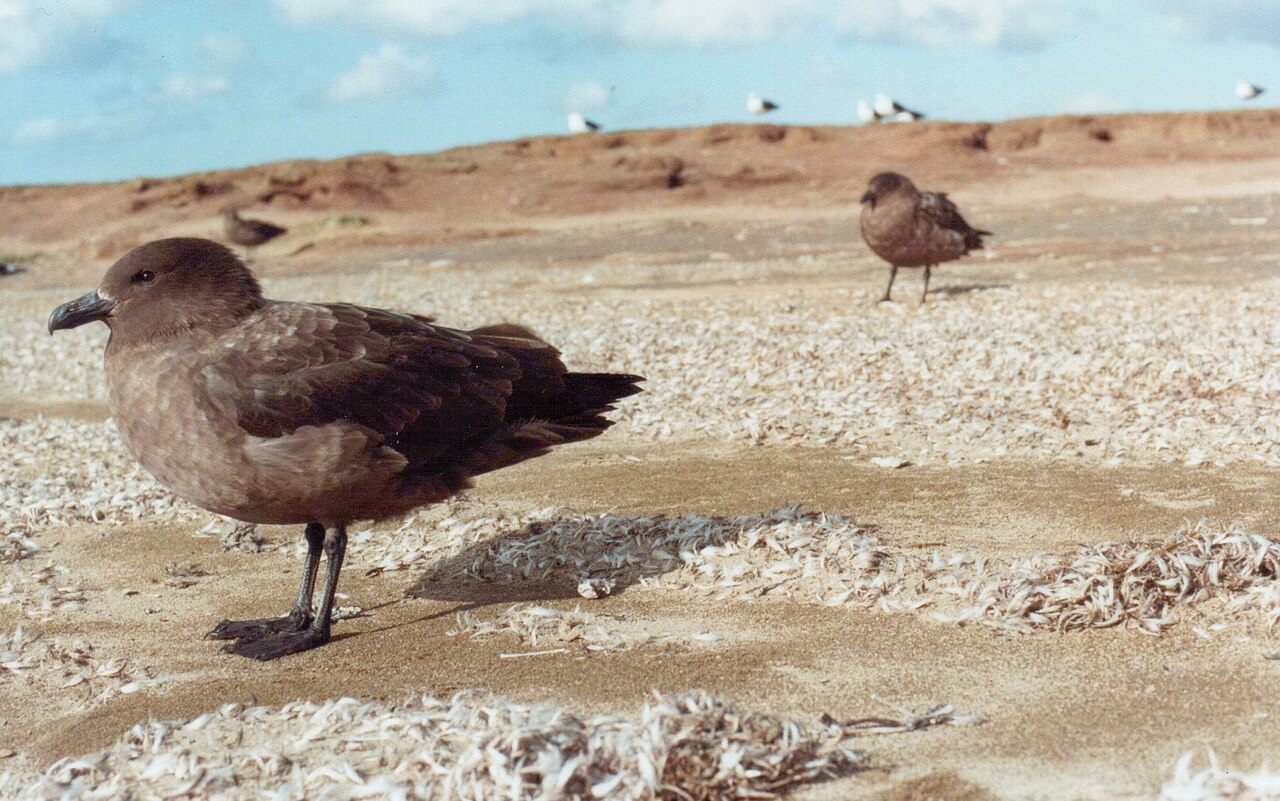
Australia H5N1 Bird flu first case every continent 2026 has been confirmed by the country's agriculture ministry, with Agriculture Minister Julie Collins announcing on Saturday that the highly contagious H5N1 strain was detected in a migratory brown skua seabird found on a beach at Cape Le Grand National Park near Esperance, approximately 700 kilometres south-east of Perth in remote Western Australia, making Australia the final continent to report the virus's presence and completing the H5N1 strain's global geographic sweep across every continent on Earth. The discovery ends Australia's status as the only continent where H5N1 had not been detected and triggers the emergency animal disease response protocols that Collins confirmed were already activating, with Chief Veterinary Officer Beth Cookson stating that authorities had been preparing for this event for a long time and that the Committee for Emergency Animal Disease had convened on Saturday to coordinate the immediate response. A second suspected case has also been identified, a southern petrel found exhausted on an Esperance beach, though Collins noted there was no evidence of mass mortalities at this time, providing the cautious reassurance that the immediate situation remains localised while acknowledging the confirmation process that the second suspected case requires before the full scope of the mainland Australian introduction can be assessed.
The healthcare and pharmaceutical significance of H5N1 reaching Australia extends across multiple dimensions simultaneously: the immediate threat to Australia's poultry industry from a highly contagious strain that has devastated domestic bird populations on every other continent it has reached, the wildlife conservation threat to Australian bird species that have no evolutionary exposure to H5N1 and whose immune naivety may make mortality rates worse than in bird populations that have had some historical contact with influenza strains, and the public health monitoring requirement that any H5N1 detection creates given the strain's pandemic potential should it develop the human-to-human transmission capability that current variants lack but that surveillance authorities must monitor continuously. Human cases tied to H5N1 remain uncommon and are generally associated with direct contact with infected animals, making the current Australian detection a veterinary and wildlife emergency rather than an immediate public health emergency, but the global public health architecture treats any H5N1 geographic expansion as a pandemic risk development whose monitoring and containment must be immediately activated.
Threatened Species Commissioner Fion Fraser's statement that authorities would know within a few days whether the virus was present in any other animal populations in Australia documents the immediate surveillance priority that the detection triggers, with Australia's unique wildlife including species found nowhere else in the world creating the specific conservation stakes that distinguish an Australian H5N1 introduction from the same event in countries with less endemic biodiversity. The migratory seabird as the detected carrier is consistent with the established understanding of H5N1's global spread mechanism, with wild birds' long-distance migration routes creating the biological transmission corridors through which the virus has progressively expanded its geographic range from its original Chinese detection in the late 1990s to the global presence that Saturday's Australian confirmation documents.
How H5N1 Reached Every Continent and What Australia's Remote Territories Revealed
The H5N1 strain's detection on Australia's remote Heard and McDonald Islands in October last year, located in the southern Indian Ocean, provided the advance warning that mainland Australian authorities have been using to prepare the emergency response protocols whose activation Saturday's confirmation has triggered. The islands, while technically Australian territory, are geographically isolated subantarctic landmasses whose proximity to the migration routes of seabirds travelling between the southern ocean and the African and South American coasts made them a predictable way-station for the virus's progression toward the Australian mainland through the bird migration corridors that have been its primary global transmission mechanism. The study released this week estimating that approximately 13,000 baby seals from a group of 17,000 on Heard Island have been killed by H5N1 since last August, representing more than 75 percent of the entire group, with higher than expected penguin deaths also documented, provided the most dramatic and scientifically quantified evidence of the virus's devastating impact on naive wildlife populations that had no prior exposure to or immunity against the strain.
The Heard Island seal mortality documented in this week's study is the specific data point that most clearly illustrates the conservation threat that H5N1's mainland Australian arrival poses, because it quantifies the mortality rate that the virus produces in naive mammal populations in a way that translates directly into the risk assessment for Australian seal, dolphin, and other marine mammal populations that have similarly had no prior H5N1 exposure. The 75 percent seal pup mortality rate at Heard Island exceeds the mortality rates that H5N1 has produced in many previously exposed wild bird populations, reflecting the specific vulnerability of naive animal populations whose immune systems have no prior adaptive response to the virus and whose herd immunity development requires either natural exposure with its associated mortality or vaccination programmes that are practically impossible to implement in wild populations at scale. Scientists' identification of the Crozet Islands, approximately 1,800 kilometres from Heard Island, as the probable source of the Heard Island introduction via migrating birds from French-owned territory documents the specific geographic transmission pathway whose continuation toward the Australian mainland the brown skua's detection Saturday now confirms.
The H5N1 strain's global progression from its emergence in China in the late 1990s through successive continental spread in Asia, Europe, Africa, the Americas, and now Australia follows the specific migratory bird route geography that ornithologists and epidemiologists have been modelling as the likely pathway for the virus's continued geographic expansion since the strain began its current wave of particularly aggressive spread starting around 2020. Each continental introduction has followed a pattern of initial wild bird detection followed by domestic poultry outbreaks whose management through culling of infected and exposed flocks has had severe economic consequences for the poultry industries of affected countries, with Europe, North America, and South America all having experienced the devastating combination of wild bird mortality and domestic flock culling that H5N1's arrival has consistently produced on other continents. Australia's poultry industry, which has been preparing for this introduction through enhanced biosecurity measures and emergency response planning, now faces the operational test of whether those preparations can prevent the wild bird introduction from developing into the domestic flock outbreak that other countries' experiences suggest is the typical next phase of H5N1 continental introductions.
Australia's Unique Wildlife and the Conservation Stakes
Australia's status as a megadiverse country with the highest proportion of endemic species of any continent creates the specific conservation dimension of the H5N1 introduction that distinguishes it from comparable detections in countries whose wildlife is more broadly distributed and whose species have more genetic overlap with populations elsewhere that might carry some degree of cross-immunity. The Australian continent's long isolation has produced the evolutionary divergence that makes its wildlife unique but also specifically vulnerable to novel pathogens introduced from outside the evolutionary environment in which Australian species developed their immune systems, with historical introductions of diseases like chlamydia, psittacine beak and feather disease, and various novel pathogens having repeatedly demonstrated that Australian wildlife can suffer catastrophic mortality from diseases that populations with longer evolutionary exposure manage at lower mortality rates. The brown skua detected at Cape Le Grand National Park is itself a migratory species whose breeding territories are in the subantarctic and whose regular presence on Australian beaches creates the specific introduction vector that connects the Heard Island outbreak documented in October last year to the mainland detection that Saturday's confirmation reports.
The surveillance priority that Fraser articulated, identifying which other animal populations may already be infected, reflects the standard epidemiological response to any novel pathogen detection in a wildlife setting, where the identified case is rarely the first or only case in the local animal population but rather the first detected case whose discovery through the surveillance system that monitors beach-found seabirds has created the opportunity to assess the broader situation. Other seabird species that share Cape Le Grand National Park's coastal environment, including the southern petrel that represents the second suspected case, and the marine mammal populations that use the same coastal zone, are the immediate surveillance priorities whose assessment within the days that Fraser specified will determine whether the introduction is truly localised to the identified individuals or represents a wider and potentially more established presence in the local wildlife community.
The Emergency Response, Poultry Industry Biosecurity, and Human Health Monitoring
The Committee for Emergency Animal Disease's Saturday convening, confirmed by Cookson's statement that authorities had been preparing for this event for a long time, activates the specific coordination mechanism that Australia's agricultural and veterinary response infrastructure has been building toward since the Heard Island detection last year made mainland introduction a probability rather than a possibility. The committee's immediate priorities include establishing the geographic extent of the current introduction through the wildlife surveillance that Fraser described, implementing the enhanced biosecurity measures at commercial poultry facilities in Western Australia that reduce the risk of wild bird to domestic flock transmission, and activating the diagnostic laboratory capacity that the increased testing demand the detection creates requires. Cookson's preparedness framing, while conveying appropriate institutional confidence in Australia's readiness to manage the introduction, also implicitly acknowledges that Australia has had the advantage of watching every other continent navigate H5N1 introductions and building its response protocols from the accumulated international experience of what works and what does not in the specific challenge of containing a highly contagious wild bird virus.
The public health monitoring dimension of Saturday's response, while less immediately urgent than the animal health and conservation response, requires the specific activation of the human exposure surveillance that any H5N1 detection triggers in the communities near the detection site and among the wildlife workers, veterinarians, and field staff who may have had contact with affected birds. The general population risk from the current detection is low, consistent with the global pattern in which H5N1 infections in humans remain uncommon and are generally associated with close direct contact with infected animals, but the monitoring protocols exist precisely because H5N1's pandemic potential requires the consistent tracking of any human exposures that might document the virus's evolution toward greater human infectivity. Esperance's relatively small population and the remote location of Cape Le Grand National Park reduce the exposure population compared to what an equivalent detection in a heavily populated coastal area would create, but the wildlife workers and any beachgoers who may have had contact with the seabirds require the specific follow-up that the public health response protocols require.
The pharmaceutical preparation dimension of Australia's H5N1 response includes the specific question of antiviral medication stockpiling and the status of H5N1 vaccine development programmes whose activation Australia's position as the final continental introduction justifies reassessing in light of the now-global strain distribution. Australia's national medical stockpile includes antiviral medications effective against influenza strains including H5N1 whose deployment in the event of detected human cases would be the standard treatment protocol, while the H5N1 vaccine development pipeline maintained by the global health community in anticipation of the pandemic risk scenario that sustained H5N1 spread represents provides the pharmaceutical backstop whose readiness Australia's authorities will be assessing alongside their veterinary and wildlife response.