
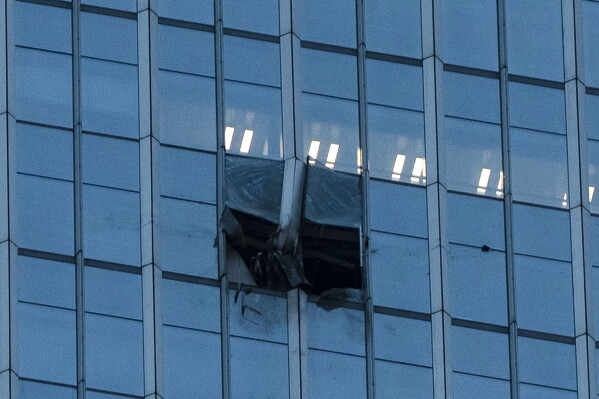
Beijing light aircraft crash CITIC Tower China Zun 2026 has killed the pilot and injured 13 people who were not on board after a single-engine two-seat light sport aircraft collided with the 528-metre-high skyscraper known as both CITIC Tower and China Zun in Beijing's Central Business District at 5:55 p.m. local time on Friday, June 26, according to a statement posted on social media by the Chaoyang district government confirming the unusual accident in a city where airspace is among the most heavily restricted in the world. The pilot was the sole person on board and died in the crash, with the 13 injured individuals who were not on the aircraft receiving medical treatment as authorities investigate the incident whose cause had not been publicly disclosed at time of the Saturday statement. Damage to the facade of the skyscraper, which is approximately 6 kilometres from the Forbidden City and near Zhongnanhai where China's top political leadership maintains its offices, appeared limited to a hole caused by the loss of two large glass panels that had been temporarily boarded up by Saturday morning, though structural assessment of a collision at that altitude and velocity requires the engineering inspection that Chinese authorities have not yet completed or publicly reported.
The specific geographic sensitivity of the crash location is significant beyond the human tragedy of the pilot's death and the 13 injuries, because CITIC Tower's proximity to both the Forbidden City, one of Beijing's most visited tourist sites, and Zhongnanhai, the compound housing the offices of China's highest political leadership, places the incident within the most politically sensitive airspace geography of the Chinese capital. Beijing's airspace restrictions, which are among the most stringent in the world given the concentration of national political and security infrastructure within and around the city, make the question of how a single-engine light sport aircraft was flying near the East Third Ring Road in Chaoyang district at all the central investigative question whose answer will determine both the legal accountability for the crash and any regulatory or security response to the incident. The crash follows Beijing's May ban on buying, renting, or flying drones without authorization due to public security concerns, creating the specific regulatory context in which an unauthorized or improperly authorised fixed-wing light aircraft operation near the CBD creates the security and safety failure whose investigation the Chaoyang district government has confirmed is underway.
The CITIC Tower, also known as China Zun due to its shape resembling the ancient Chinese ritual bronze vessel, is Beijing's tallest building whose completion in 2018 made it one of the most prominent landmarks of the capital's Central Business District. A light aircraft collision with its facade at a height that produced the glass panel losses documented in Saturday's reporting creates the specific structural and safety assessment challenge that the building's management and Beijing's emergency response authorities must complete before the building can resume normal operations in the affected areas. The temporary boarding of the damaged facade panels visible in Saturday's reporting represents the immediate safety measure whose permanence depends on the engineering assessment of whether the panel loss affected structural elements beyond the glass curtain wall.
Beijing's Airspace Restrictions and What Makes This Crash Extraordinary
Beijing's airspace is managed through one of the world's most comprehensive and strictly enforced restricted airspace frameworks, reflecting the concentration of national political leadership, military command infrastructure, and internationally sensitive diplomatic sites within a relatively compact urban geography that creates the highest-consequence airspace management environment in Chinese aviation. The restricted airspace zones around Beijing extend outward from Tiananmen Square and Zhongnanhai through concentric rings of increasing permitted activity, with the Central Business District's East Third Ring Road area where Friday's crash occurred sitting within an airspace environment whose civilian aviation activity is strictly controlled through the military-civil aviation coordination that manages all Beijing-area flight operations. The specific question of what flight authorization, if any, the pilot of the crashed light sport aircraft had obtained, and through which regulatory pathway, is the central investigative question that will define the legal and accountability dimension of the incident beyond the immediate emergency response.
China's civil aviation regulatory framework for light sport aircraft, a category that includes single-engine two-seat aircraft below certain weight and speed thresholds, operates through the Civil Aviation Administration of China with specific local restrictions applied in sensitive areas whose implementation in Beijing's case is more restrictive than in most other Chinese cities. The light sport aircraft category's regulatory treatment has been an evolving area of Chinese aviation policy as the general aviation sector has grown, with the tension between encouraging recreational aviation development and maintaining the airspace security standards that Beijing's specific political geography requires creating the specific regulatory environment within which the crash's authorization questions must be assessed. Whether the pilot was operating under a valid authorization whose terms permitted flight near the East Third Ring Road, or whether the flight represented an unauthorized incursion into controlled airspace, fundamentally changes the investigation's direction and the regulatory response that Chinese authorities must consider.
The comparison to the last Beijing aircraft crash in 2022, when a tourist helicopter crashed in the Changping and Fangshan districts killing both pilots, is instructive for what it reveals about how unusual aviation accidents in the Chinese capital are even in normal circumstances. The 2022 crash occurred in the more peripheral districts that lie beyond Beijing's inner restricted zones, making the location of Friday's crash in the Central Business District near the CITIC Tower a qualitatively different security event rather than simply a more central occurrence of the same category of accident. A light aircraft crash in Beijing's equivalent of the City of London or Midtown Manhattan carries the political and security implications that the Chaoyang district government's statement's careful factual reporting without speculation about cause reflects, because the investigation's direction depends on findings whose political sensitivity the government must manage alongside the public safety accountability that the 13 injuries and pilot death create.
The CITIC Tower and Its Significance as Beijing's Tallest Building
The CITIC Tower, completed in 2018 at 528 metres including its antenna, holds the distinction of Beijing's tallest building and one of China's tallest structures, designed by Kohn Pedersen Fox Architects in the distinctive China Zun shape that gives it its alternative name referencing the ancient ritual bronze vessels of Chinese cultural tradition. Its Central Business District location places it at the heart of Beijing's contemporary financial and commercial geography, with the building housing the headquarters of CITIC Group, one of China's largest state-owned conglomerates, alongside other major financial and professional services tenants whose operations were potentially affected by the incident. The building's height means that the collision zone, wherever on the 528-metre structure the aircraft made contact, involves airspace that would normally be well above the operational altitude of light sport aircraft whose performance parameters suggest they would struggle to reach or maintain the heights at which Beijing's tallest building's upper floors are located.
The glass panel losses documented in the Chaoyang district statement as the facade's visible damage reflect the curtain wall construction that modern supertall buildings employ, where the glass panels are engineered components of the building envelope whose replacement is operationally manageable but whose loss creates the immediate safety concern about falling glass and building envelope integrity that the temporary boarding represents as a precautionary response. The relatively limited physical damage described suggests the aircraft did not penetrate deeply into the building's structural frame, which would create a substantially more serious structural assessment situation, but the engineering inspection required to confirm the structural integrity of the building's frame elements near the impact zone is the prerequisite for any characterisation of the damage as limited rather than potentially more extensive.
The Investigation Status, Injured Persons' Treatment, and What Comes Next
The Chaoyang district government's confirmation that authorities are investigating the incident without providing any indication of the possible cause creates the specific information environment in which the public accountability for a crash in one of Beijing's most sensitive locations must develop over a timeline that Chinese investigative and media frameworks will shape through the official information release decisions whose pace and content reflect both the genuine investigative timeline and the political management considerations that any sensitive Beijing incident involves. The investigation must establish the aircraft's authorization status, the pilot's qualifications and license validity, the flight plan or lack thereof, the aircraft's maintenance status, and the specific circumstances of the collision, answering the fundamental question of whether this was a mechanical failure, a medical emergency affecting the pilot, a navigation error, or an unauthorized airspace incursion.
The 13 injured individuals who were not on board the aircraft represent the specific population whose treatment and welfare the local government confirmed was ongoing, and whose injuries document that the collision's consequences were not limited to the pilot's death but created ground-level consequences that the glass panel losses and any debris from the impact produced. The specific nature and severity of the 13 injuries, whether they resulted from falling glass, structural debris, or the emergency evacuation and public response to the incident, affects both the immediate medical management and the potential civil liability dimension that the pilot's estate, the aircraft operator, and potentially the building's management may face depending on the investigation's findings about what could have been prevented.
China's broader general aviation sector, which has been developing as part of the government's economic development policies around aviation and aerospace industries, faces the specific regulatory scrutiny that a Beijing CBD crash will intensify, with the drone authorization ban implemented in May providing the immediate recent context within which the light aircraft incident will be evaluated by Chinese aviation regulators assessing whether additional restrictions on light aircraft operations near sensitive urban areas are warranted. The distinction between the drone regulatory response and the light aircraft regulatory framework, which involves different licensing, authorization, and operational requirement structures, means that the investigation's findings about how the pilot came to be flying near CITIC Tower will determine the specific regulatory gap, if any, that Chinese aviation authorities need to address to prevent comparable incidents.