
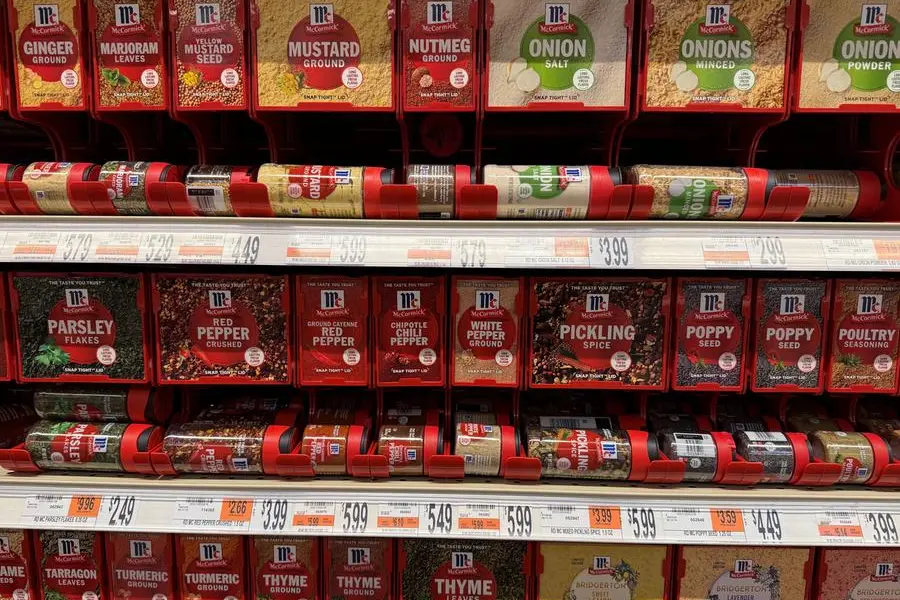
Consumer megadeals Q1 2026 have made a dramatic and rare comeback to the upper ranks of global transaction activity, with two blockbuster mergers involving U.S. food companies announced within 24 hours of each other cracking the top ten of the biggest global transactions of the first quarter for the first time since 2015, according to LSEG data. McCormick's nearly $45 billion deal to acquire Unilever's food business ranked second globally in the first quarter behind only Amazon's $50 billion investment in OpenAI, while Sysco's $29 billion agreement to buy Jetro Restaurant Depot came in seventh, placing two U.S. consumer deals in the global top ten simultaneously in a feat that has not been achieved in the consumer sector in over a decade. The transactions reflect a broad and accelerating reshaping of the consumer industry driven by shifting generational tastes, rising tariffs, slowing organic growth, and a volatile market environment that is pushing companies, including several backed by founding families, toward the scale and diversification that only large-scale consolidation can deliver.
The speed and scale of the two announcements, struck back-to-back within a single 24-hour period, gave them a momentum and visibility that individually significant deals would not have generated, signalling to the broader market that the forces that had been building toward consumer sector consolidation had finally aligned sufficiently to produce action. These are not impulsive transactions but deals that were years in the making on both sides, with McCormick tracking Unilever's progressive divestiture of food assets as a precursor to its own acquisition opportunity, and Sysco identifying Jetro Restaurant Depot as a strategic fit long before the family succession dynamics that ultimately accelerated the deal's timing. Both transactions reflect the kind of strategic patience and opportunistic timing that distinguishes genuinely transformative acquisitions from the defensive combinations that characterise distressed deal-making.
The first quarter activity points toward more consumer deal momentum through the rest of 2026, with talks ongoing between Jack Daniel's maker Brown-Forman and France's Pernod Ricard in the spirits sector, and between beauty company Estee Lauder and Barcelona-based Puig in the prestige beauty market, combinations that would create companies worth tens of billions of dollars. Jeannette Smits van Oyen, JPMorgan's global head of consumer and retail investment banking, captured the strategic and family dynamics driving these potential transactions with precision: in a volatile market environment that shows no signs of stabilising, scale and diversification are incredibly critical, and those decisions become particularly fundamental for family-controlled companies evaluating what their alternatives could look like. The message from Q1 2026 is that consumer consolidation, long discussed as inevitable, has moved from discussion to execution.
How Consumer M&A Fell Behind and Why the Last Decade Was Different
The global mergers and acquisitions rankings that McCormick and Sysco's deals disrupted in Q1 2026 have been dominated by technology and energy sector transactions for the better part of a decade, reflecting the structural reality that the valuations, growth rates, and strategic imperatives driving deal-making in those sectors consistently produce larger individual transactions than consumer industry consolidation has generated. Technology megadeals driven by platform economics, network effects, and the race to acquire AI capabilities have commanded headlines and rankings positions that consumer companies, operating in a slower-growth world with lower valuation multiples, have rarely been able to compete for. Energy sector consolidation, driven by the energy transition and commodity cycle dynamics, has similarly produced transactions whose scale reflects the capital intensity and strategic urgency of repositioning for a decarbonising world.
Consumer companies' relative absence from the upper ranks of global M&A activity during the post-2015 decade reflected a specific combination of conditions that made large-scale consolidation difficult to execute despite the strategic logic for it being consistently present. High valuations during the period of sustained low interest rates made acquisition mathematics challenging, as the financing costs of large deals were manageable but the premium required to acquire already-expensive targets compressed the returns that acquirers could project. Organic growth, while slowing, remained sufficient in many categories for management teams to defer the complexity of large-scale integration in favour of continuing to invest in their existing businesses. And the regulatory environment in certain consumer categories, particularly food and beverages, added uncertainty to transaction timelines that made some potential deals less attractive to pursue.
The 2015 benchmark that LSEG data identified as the last time two U.S. consumer deals cracked the top ten in the same quarter involved Coty's acquisition of Procter and Gamble's beauty business and the merger of three Coca-Cola bottlers, both transactions that reflected specific industry restructuring dynamics rather than a broad wave of consumer consolidation momentum. The Coty-P&G beauty deal was part of a strategic simplification at Procter and Gamble that divested hundreds of brands, while the Coca-Cola bottler consolidation addressed distribution efficiency issues specific to the beverages sector. Neither transaction signalled a sustained wave of consumer megadeal activity, and the following decade confirmed that assessment with the absence of similarly scaled consumer transactions from the global top ten rankings until Q1 2026's twin announcements changed the picture.
Unilever's Strategic Pivot and How It Created McCormick's Opportunity
The strategic trajectory that produced McCormick's $45 billion acquisition of Unilever's food business began not with McCormick's decision to buy but with Unilever's multiyear decision to sell. Unilever had been divesting food assets for years, completing the separation of its ice cream unit in December 2025 and progressively narrowing its remaining food portfolio to its strongest brands, Hellmann's and Knorr, as the company's strategic centre of gravity shifted toward beauty, personal care, and wellness categories where it saw greater growth opportunity and higher sustainable margins. The strategic logic of that divestiture programme was transparent and progressive, creating a well-understood and well-telegraphed opportunity for potential acquirers who tracked Unilever's asset dispositions as a roadmap toward eventual food business availability.
When Unilever's new CEO Fernando Fernandez articulated his strategic priorities at a Barclays consumer conference in September 2025, the directional signal to the market was unmistakable. Fernandez listed seven priorities, each of which was more beauty, more wellbeing, more personal care, more premium, more ecommerce, more U.S., more India, noting that beauty and personal care already represented 51 percent of Unilever's revenue with an ambition to make it two-thirds of revenue in the medium term. The absence of food from that list of priorities, and the explicit revenue share target that implied a further relative decline of the food business within Unilever's portfolio, was the signal that a source familiar with the matter confirmed had led McCormick to conclude that the food business was available and to intensify its acquisition preparation.
McCormick's position as the world's leading spice and flavouring company gave it a specific strategic rationale for acquiring Hellmann's, Knorr, and the other brands in Unilever's food portfolio that a generalist financial acquirer would not have had, because the combination creates a global flavouring and condiment company of a scale and brand breadth that would transform McCormick's competitive position in the food ingredients and retail condiments market simultaneously. The acquisition represents both a revenue diversification away from the commodity-sensitive spice market and an expansion of McCormick's flavouring expertise into categories where Unilever's brand equity, distribution relationships, and consumer insight create immediate value that would take decades to build organically. At $45 billion, the transaction required McCormick to take on significant leverage, but the strategic transformation it delivers justifies the financial risk in the assessment of the management team and the investment banks that advised the deal.
Jetro Restaurant Depot, Family Succession, and Why Sysco Was the Right Buyer
Sysco's $29 billion acquisition of Jetro Restaurant Depot addresses a different strategic logic from McCormick's deal but shares the characteristic of a transaction that became possible when circumstances on the seller's side aligned with a buyer's pre-existing strategic interest. Jetro Restaurant Depot, a private family-owned company whose founder Nathan Kirsh is in his 90s, faced the classic family business succession challenge of a founder who built a significant enterprise whose next generation does not run the business and who needed to make a decision about the company's long-term ownership and management before the founder's mortality created an unmanaged transition. The family's decision that Sysco was the best home for the business to carry it to the next generation reflected both the strategic fit between the two companies' food distribution businesses and the cultural and operational trust that Sysco CEO Kevin Hourican developed in the relationship.
The restaurant food distribution business that Jetro Restaurant Depot operates serves the same end market as Sysco's core foodservice distribution business, making the combination a market share and scale consolidation rather than a diversification play. For Sysco, acquiring Jetro addresses the scale disadvantage it faces in the independently owned restaurant segment, where Jetro has built strong customer relationships and operational capability that Sysco's larger but more institutionally focused distribution system has not replicated as effectively. The combination creates a more complete market coverage that improves Sysco's competitive positioning against both specialist distributors and the self-supply chains that larger restaurant groups operate internally when they reach sufficient scale to justify vertical integration.
The family ownership characteristic that connects Jetro Restaurant Depot to the other consumer sector deals either completed or in discussion reflects a broader trend that Smits van Oyen identified as no coincidence: family constituents evaluating their alternatives in volatile market conditions are reaching different conclusions than they might have reached in more stable times. A family that could afford to wait through previous periods of uncertainty because the business was performing adequately and the competitive environment was manageable faces different calculus when market volatility is accelerating, competitive pressure is intensifying, and the window for maximising transaction value may not remain open indefinitely. The Q1 2026 wave of family-influenced consumer M&A reflects that reassessment happening simultaneously across multiple industry segments.
The Deal Wave, the Strategic Drivers, and What Q1 Results Signal for the Rest of 2026
The ongoing discussions between Brown-Forman and Pernod Ricard in spirits and between Estee Lauder and Puig in prestige beauty represent the next potential chapter of the consumer megadeal revival that McCormick and Sysco's transactions have opened. Both potential combinations carry a partly defensive strategic logic that differs from the offensive expansion rationale of the food deals. The spirits industry faces structural headwinds from generational consumption shifts, with younger consumers drinking alcohol at lower rates than previous generations and premium spirits growth slowing from the post-pandemic surge that had sustained the category's financial performance through the period of broader consumer uncertainty. A Brown-Forman and Pernod Ricard combination would create a spirits giant with the brand portfolio breadth and international distribution scale to manage declining category volumes more effectively than either company could independently.
The Estee Lauder and Puig discussions reflect the prestige beauty market's response to L'Oreal's acquisition of Kering's beauty division last year, which created a more formidable competitor in the luxury beauty segment and raised the competitive bar for the companies positioned below L'Oreal in market scale. Prestige beauty companies under pressure to better compete with a significantly enlarged L'Oreal face the choice of organic investment in brand building and distribution, which is slow and capital-intensive, or consolidation that creates the scale advantages in retail relationships, digital marketing efficiency, and manufacturing that large-scale beauty operations require to compete effectively. A combined Estee Lauder and Puig would bring together American beauty brand heritage and Spanish luxury goods expertise in a combination that neither company could replicate through organic means in any timeframe relevant to the current competitive moment.
Jens Welter, Citi's co-head of North America investment banking coverage, articulated the cross-industry logic of the consumer consolidation wave with a nuance that avoids treating the food, spirits, and beauty deals as driven by identical dynamics. Each sector's M&A activity reflects its specific competitive pressures, demand trends, and strategic options, and the common thread is not a single industry-wide force but the convergence of company-specific circumstances, market opportunities, and strategic imperatives that happen to be producing large transactions across multiple consumer categories simultaneously. Fast-moving consumer goods companies have emerged from a period of high inflation that has been passed to consumers and has impacted volume growth, and they are seeking alternative growth through consolidation because the organic growth that would have satisfied shareholders in earlier periods is no longer available at the rates that consumer company valuations require.
Record Q1 M&A Activity and What Global Cross-Border Consolidation Signals
The record overall M&A activity across all sectors in Q1 2026, within which the consumer deals represent a notable but not isolated development, reflects a broader deal-making environment in which the strategic imperative of scale and global diversification has overcome the hesitation that interest rate and regulatory uncertainty had imposed on transaction decision-making in preceding quarters. Several of the Q1 megadeals were cross-border transactions, reflecting the strategic logic that global companies with diversified market exposures are better positioned to manage the country-specific risks of a volatile geopolitical and trade environment than companies concentrated in single markets regardless of how strong those markets appear in any given period. The insight that becoming a more global company offers a hedge against volatility is not new, but its practical application in Q1 deal-making reflects a management consensus that the diversification benefit is now urgent enough to justify the complexity and premium of large international acquisitions.
Mike Ross, PwC's U.S. consumer markets deals leader, identified the generational taste shift pressure as the underlying driver of consumer companies' need to be more agile and adaptive than they have ever had to be before. Consumer companies that built their market positions on brand equity and distribution advantages accumulated over decades are now competing in a world where those advantages are less durable, where digital channels have democratised brand building and distribution access for challenger brands, and where the generational shift in consumer preferences toward health, sustainability, and authenticity is moving faster than legacy brand management processes can track. The scale that megadeals create is one response to this challenge, providing the resources for digital transformation, product innovation, and category expansion that smaller companies cannot afford but that the pace of consumer preference change demands.
The Q1 consumer megadeal activity sets up what deal-makers expect will be a more active H2 2026 for consumer sector M&A, as the McCormick and Sysco transactions demonstrate to management teams and boards across the industry that deals of this scale are executable and that the strategic and financial rationales being articulated are credible to investors. Smits van Oyen's observation that deals beget deals captures the specific deal momentum dynamic: when two major transactions in a sector are announced successfully, they validate the M&A strategy for peers who have been considering similar moves, reduce the uncertainty that boards face about market receptivity, and often trigger competitive responses from rivals who recognise that a newly scaled competitor requires a strategic response. The Q1 consumer megadeals are therefore both significant transactions in their own right and catalysts for a deal cycle that is likely to produce further major announcements through the remainder of the year.