
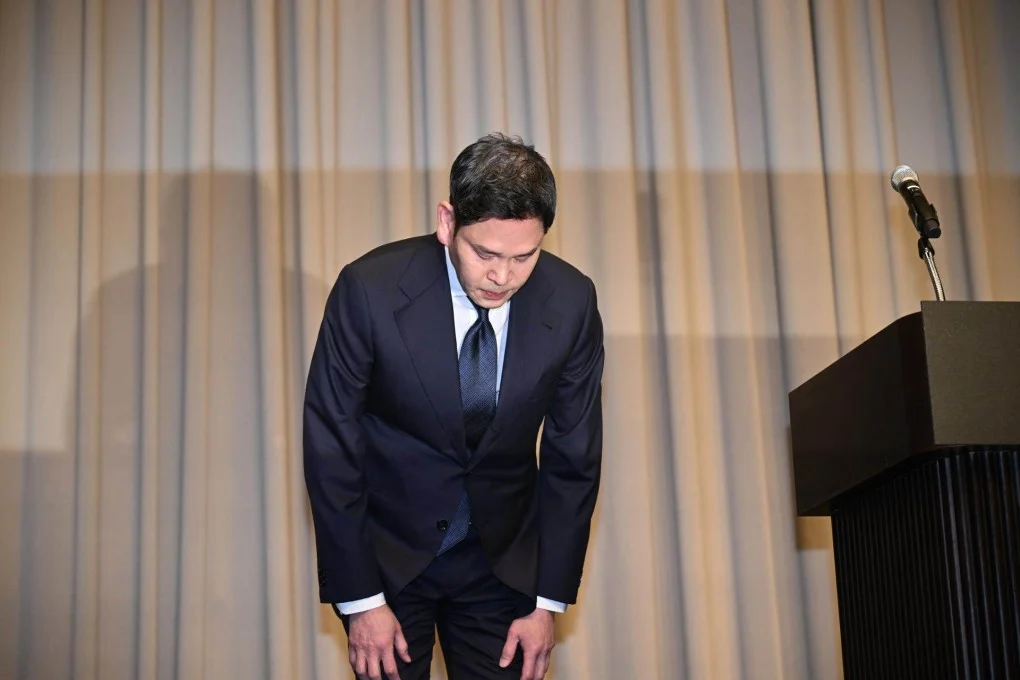
Starbucks Korea Tank Day marketing Gwangju Uprising backlash 2026 has produced what a Shinsegae Group official described as a very significant drop in sales after the South Korean operator of the coffee chain launched a tumbler marketing campaign on the anniversary of the May 18 Gwangju Uprising, one of the most painful and politically charged events in modern South Korean history, triggering a public outcry whose intensity has surprised even the company conducting an internal investigation into how the campaign received approval. Shinsegae Group, whose subsidiary E-Mart owns the Starbucks Korea licence, saw its chairman Chung Yong-jin hold a public press conference on Tuesday to apologise personally and ask people not to direct their anger at Starbucks Korea employees and frontline staff who bear no responsibility for the marketing decision. Chung stated that he takes it very seriously that Starbucks Korea's inappropriate marketing hurt and angered many people and that he will take all responsibility for the incident, a public accountability statement whose directness reflects the severity of the commercial and reputational damage the campaign has caused in a market where Starbucks is the leading food and beverage chain by estimated customer numbers.
The May 18 Gwangju Uprising was the 1980 pro-democracy protest in the city of Gwangju during which the military dictatorship of Chun Doo-hwan deployed troops and tanks to suppress demonstrations, with hundreds of people estimated to have died or gone missing in the crackdown. The uprising is one of the foundational events of South Korea's democratic consciousness, commemorated annually with national seriousness and personal grief by the families of those who died and by South Koreans who understand the uprising as the moment when their country's democratic movement paid its highest price. Launching a commercial marketing campaign on the anniversary of this event with imagery evoking the military tanks deployed in the crackdown represents a failure of historical and cultural awareness so severe that Shinsegae's internal investigation is focused on determining whether there was premeditation or intentional wrongdoing by management or employees rather than simply assuming the campaign was an inadvertent oversight.
Starbucks Korea's e-commerce team organised the campaign and received final approval from team leaders and executives before launch, creating a management approval chain that failed to identify the obvious problem with promoting a product called Tank Day on the Gwangju Uprising anniversary. The company acknowledged that the incident exposed serious flaws in Starbucks Korea's risk management framework, with the e-commerce team having been overly focused on sales amid a large volume of weekly promotional events, leading staff to approve the campaign without proper review or legal scrutiny. Starbucks fired the head of Starbucks Korea last week following the initial apology, and Starbucks global headquarters in the United States is monitoring the situation and receiving regular updates, with the global parent company having also apologised and begun its own investigation.
The Gwangju Uprising, Its Historical Significance, and Why the Campaign Was So Offensive
The Gwangju Uprising of May 18, 1980, occupies a place in South Korean democratic history comparable in its emotional and political significance to Tiananmen Square in China or Bloody Sunday in the United Kingdom, a moment of state violence against civilians demanding democratic rights whose memory continues to shape national politics, cultural identity, and the relationship between the Korean state and its citizens four and a half decades after the events. The uprising began when students and citizens in Gwangju took to the streets to oppose the military coup led by Chun Doo-hwan, who had seized power following the assassination of President Park Chung-hee in 1979, and escalated into a full-scale confrontation between civilian protesters and the military when paratroopers and special forces were deployed to suppress the demonstrations with extreme violence. The deployment of tanks into Gwangju's streets is one of the most visceral and symbolically charged images from the uprising, representing the full weight of military power turned against unarmed citizens whose demands were for the democratic governance that South Korea was eventually to achieve through the resistance that the uprising's victims inspired.
The official death toll from the Gwangju Uprising has been a matter of historical controversy and ongoing investigation, with hundreds of people estimated to have died or gone missing during the crackdown and many details including the chain of command that authorised lethal force against civilians remaining unconfirmed or contested decades later. The South Korean government recognised the uprising's democratic significance with the designation of May 18 as a national commemoration day and the establishment of the May 18th National Cemetery in Gwangju where the uprising's victims are honoured, creating an official memorial framework that contextualises the events as foundational to South Korea's democratic identity rather than as merely historical incidents to be noted and moved past. Chun Doo-hwan himself was eventually convicted of mutiny and insurrection in 1996 and sentenced to death, later commuted to life imprisonment before being pardoned, but his conviction established the legal and historical record that the uprising was a criminal act of state violence against democratic aspirations rather than a legitimate military operation.
The annual May 18 commemoration is not a distant historical ritual but a living political and emotional event that engages Koreans of all generations, with particular intensity among those who have personal or family connections to the uprising and among the democratic movement activists who view the day as a reminder of the cost of the freedoms that South Korean democracy provides. The political parties, civil society organisations, and media institutions that shape Korean public life all participate in the May 18 commemoration with serious attention to its meaning and with sensitivity to any action that might appear to trivialise, commercialise, or disrespect the memory of those who died. Marketing a commercial product with tank imagery on May 18 represents precisely the kind of trivialisation and commercialisation of a sacred historical moment that the Korean public finds most offensive, because it treats as a sales opportunity the anniversary of an event whose tanks represent state violence against democratic protesters who died for the freedoms that allow commercial activity to flourish.
The Risk Management Failure and How It Happened
The investigation's preliminary finding that the e-commerce team was overly focused on sales amid a large volume of weekly promotional events, leading staff to approve the campaign without proper review or legal scrutiny, describes a corporate governance failure of a type that is unfortunately recognisable in organisations where promotional volume and commercial pressure overwhelm the deliberate pause for cultural and historical assessment that sensitive dates and topics require. Large consumer brands running frequent promotional campaigns face the operational pressure of filling a content calendar with fresh material, and the routinisation of that process can progressively reduce the deliberateness of each individual campaign's review as the volume of campaigns makes thorough checking of every element feel logistically overwhelming. The result is that campaigns whose obvious problems would have been caught by any thoughtful review conducted with adequate time and attention slip through because the review process has been compressed by volume and speed into a form that misses the historical and cultural context that makes certain marketing decisions obviously unacceptable.
The management approval chain that cleared the Tank Day campaign is particularly troubling because it creates the question of who along that chain should have identified the problem and at what stage. If team leaders and executives approved the campaign, the failure is not simply one of junior staff oversight but of a management hierarchy that did not include anyone with sufficient Korean historical awareness or sufficient deliberateness in reviewing campaign dates and imagery to catch an association that was, to anyone with knowledge of the May 18 anniversary, immediately obvious. The internal investigation's focus on whether there was premeditation or intentional wrongdoing reflects the alternative hypothesis that cannot be immediately dismissed: that the Tank Day campaign was a deliberate provocation by someone with specific motivations rather than a cascade of oversight failures. The difficulty of definitively ruling out intentional wrongdoing, despite not yet finding evidence of it, is itself an indication of how egregious the apparent oversight failure appears when viewed without the charitable assumption of incompetence.
The Commercial Damage, the Political Response, and What Starbucks Must Do
Starbucks Korea's position as the leading food and beverage chain in South Korea by estimated customer numbers in the six months to February gives context to the scale of commercial damage that a very significant sales drop represents, because the loss of even a fraction of the market position that makes Starbucks Korea the category leader translates into substantial revenue reduction in a market where the brand has invested decades in building its customer base and premium positioning. Consumer boycotts in South Korea have demonstrated significant commercial impact in multiple previous cases where major brands or companies offended Korean historical or political sensitivities, and the Gwangju Uprising's particular emotional charge in Korean democratic consciousness means the Tank Day controversy has the potential to sustain consumer anger for a period that goes beyond the typical short-term social media outrage cycle. The question of whether the very significant sales drop that the official described represents a temporary consumer response that will recover as the apology and investigation demonstrate accountability, or a more durable erosion of brand trust among consumers whose loyalty is inseparable from their respect for democratic history, will determine the medium-term commercial consequences for Shinsegae, E-Mart, and ultimately the Starbucks Korea franchise.
The share price movements on Tuesday, with Shinsegae initially falling 2.8 percent before reversing to rise 1.7 percent and E-Mart gaining 2.3 percent, suggest that markets interpreted the press conference apology and the internal investigation as credible steps toward managing the crisis rather than as the beginning of a sustained commercial deterioration. The chairman's personal appearance at the press conference, his direct assumption of responsibility, and his specific request that consumers not punish frontline staff for management failures represent the kind of specific, accountable, and emotionally intelligent public response that crisis communications advisers would recommend for exactly this type of culturally sensitive commercial controversy. The political system's response, with a Democratic Party spokesperson describing Chung's apology as seeming sincere and the internal probe as having been wrapped up well while pledging to seek frameworks preventing recurrence, provides the political validation that the corporate apology alone could not establish.
The structural question that the Tank Day controversy raises for Starbucks Korea's long-term governance is how the company rebuilds the risk management framework that the investigation identified as having serious flaws, in ways that are genuinely effective rather than merely creating additional bureaucratic process that generates the same outcome through a longer approval chain. Effective cultural sensitivity review in a Korean commercial context requires either employing people with deep Korean historical knowledge in roles that have genuine authority to halt campaigns for cultural review or creating mandatory consultation processes with external Korean historical expertise for campaigns touching on any nationally significant dates. The firing of the Starbucks Korea head is a consequence and an accountability signal but is not itself a governance reform, and the prevention of comparable incidents requires the systemic changes to review processes and cultural competency that the internal investigation's findings about the e-commerce team's review culture suggest were genuinely absent rather than having been present but overridden.