
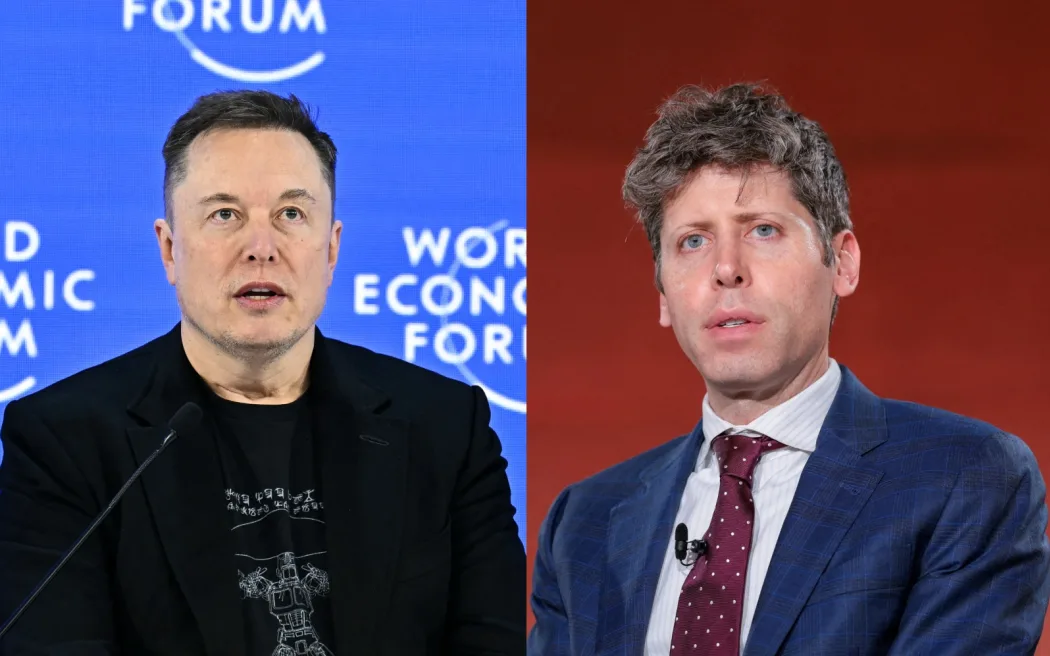
One of the most consequential and closely watched legal confrontations in the history of the technology industry is finally reaching a jury in Oakland, California, as Elon Musk's lawsuit against OpenAI, its chief executive Sam Altman, and co-founder Greg Brockman moves into its trial phase with jury selection planned for Monday and opening arguments expected on Tuesday in a federal court proceeding that has already produced thousands of pages of internal documents revealing the private ambitions, interpersonal conflicts, and ideological tensions that shaped the development of the most influential artificial intelligence company in the world from its origins in a nonprofit research lab to its current status as a commercial powerhouse valued at more than $850 billion. Musk is seeking $150 billion in damages from Elon Musk OpenAI and Microsoft, one of the company's largest and most strategically important investors, with the proceeds under his legal theory directed to OpenAI's charitable arm rather than to Musk personally, a framing that his legal team has deployed to support the narrative that this lawsuit is fundamentally about mission betrayal and public accountability rather than personal financial gain. The damages figure, the largest sought in any lawsuit directly involving the artificial intelligence industry, reflects the calculation Musk's lawyers have constructed by multiplying OpenAI's current valuation by the portion of the nonprofit's stake they attribute to Musk's founding contributions, with his team arguing that between 50 and 75 percent of the nonprofit's stake can be traced back to his seed money, his name recognition, and his ability to recruit the top researchers who gave OpenAI the credibility to attract the external investment that ultimately built its commercial value.
The internal documents surfaced through the litigation process offer a window into the personalities, ambitions, and interpersonal dynamics of the people who have done more than any others to define the current era of artificial intelligence, and they make for reading that is simultaneously illuminating and uncomfortable for a company that has positioned itself publicly as uniquely committed to the responsible development of AI for the benefit of humanity. Among the most striking revelations is a diary entry written by Brockman in the fall of 2017, in which OpenAI's president wrote that the company's current moment represented the only chance they had to get out from under Musk's influence and questioned whether Musk was the kind of glorious leader he would actually choose to follow if given a genuine choice. The entry, which Musk's lawyers have highlighted as evidence of the internal resistance to his leadership and the divergence between OpenAI's stated values and the private motivations of its leadership, sits alongside another Brockman diary entry in which he wrote about his personal financial ambitions, asking himself what it would take to reach a billion dollar net worth and noting that accepting Musk's terms on governance would undermine both the organization's ability to choose its own direction and the economics that could make him personally wealthy. These entries, private reflections written in what Brockman presumably did not expect would become federal court exhibits, provide a human and at times unflattering picture of how the people building one of the most powerful and consequential technology organizations in history were simultaneously navigating genuine ideological commitments and very ordinary personal ambitions for influence and wealth.
The trial comes at a moment of extraordinary competitive and financial pressure for both principal parties, with OpenAI racing to complete its corporate restructuring and prepare for a potential initial public offering that Reuters has reported could value the company at one trillion dollars, and with Musk simultaneously managing the legal exposure of this lawsuit alongside the strategic challenges facing his own artificial intelligence venture xAI, which he founded in 2023 shortly after OpenAI launched ChatGPT and ignited the current generative AI boom. OpenAI's lawyers have argued that Musk's motivations for bringing the lawsuit are not principled concern for the company's original nonprofit mission but rather a compulsion to control OpenAI and an interest in undermining a competitor to his own AI lab that has so far failed to match OpenAI's market penetration and usage levels despite significant investment. The simultaneous preparation of SpaceX for what could be the largest initial public offering in history, now incorporating the xAI operations that Musk has folded into the rocket company, adds further context to a legal confrontation in which the financial stakes extend well beyond the immediate damages calculation to encompass the reputational and competitive positioning of entities whose combined valuations span multiple trillions of dollars.
How OpenAI and Musk's Relationship Began With Idealism and Ended in Litigation
The founding of OpenAI in 2015 grew from a conversation between Sam Altman and Elon Musk in which Altman approached Musk with the concept of creating an artificial intelligence research organization dedicated to developing AI safely and for the benefit of humanity, describing the proposed venture in terms that court documents have now revealed as the Manhattan Project for AI, a framing that captured both the ambition of the undertaking and the urgency that both men felt about the need to develop AI capabilities in a responsible institutional environment rather than leaving the field entirely to commercial entities like Google whose primary accountability was to shareholders rather than to broader public interests. Musk's involvement in OpenAI's early years was crucial in ways that went beyond the approximately $38 million in seed funding he contributed between 2016 and 2020, with his name, his reputation as a technology visionary, and his existing relationships with top researchers providing the credibility and attraction needed to recruit the scientific talent that gave OpenAI the standing to be taken seriously as a research organization capable of competing with the much better resourced AI programs at Google, Facebook, and other major technology companies.
The relationship between Musk and OpenAI's other leadership began deteriorating by mid-2017, a period that court documents illuminate through emails, meeting notes, and the private diary entries that have become central exhibits in the federal trial. Musk began questioning OpenAI's viability and at points withheld promised funding after clashing with Altman, Brockman, and former chief scientist Ilya Sutskever over the direction of the organization and the pace of its technical progress. One of the most significant sources of tension that the court documents reveal was Musk's desire to become OpenAI's chief executive, a demand that made other co-founders uneasy and that appears to have been a critical factor in the breakdown of the collaborative relationship that had defined the organization's early years. The suggestion from Musk's own communications that he wanted direct executive control over OpenAI at a time when he was also leading Tesla and SpaceX created concerns among other co-founders about both the feasibility of such an arrangement and the implications for the organization's independence from any single founder's personal commercial interests and competitive considerations.
The decision that OpenAI made in March 2019 to restructure as a for-profit unit governed by the nonprofit, which forms the heart of Musk's legal complaint, came thirteen months after he left the OpenAI board and was presented by the organization as a necessary step to access the external investment capital needed to fund the escalating computational costs of frontier AI research. OpenAI has argued that Musk was involved in discussions about the structural changes that eventually produced the for-profit entity and that he himself demanded the CEO position as a condition of his continued involvement, a claim that directly contradicts Musk's core legal argument that he was kept in the dark about the plans to transform the organization from a nonprofit into a commercial entity. The competing accounts of who knew what and when during the critical 2017 to 2019 period, and whether Musk's departure from the board was voluntary or effectively forced by conflicts over leadership and direction, are among the central factual disputes that the trial will need to resolve through the testimony of witnesses who were present in the rooms where these consequential decisions were made.
What the Trial Reveals About OpenAI's Evolution and the Broader AI Power Struggle
The transformation that OpenAI has undergone from its origins in Brockman's apartment as a nonprofit research lab to its current status as a public benefit corporation worth more than $850 billion and preparing for what could be a trillion dollar initial public offering represents one of the most dramatic institutional evolutions in the history of the technology industry, and the legal documents surfaced through the Musk litigation provide an unusually detailed and candid account of how that transformation was experienced and contested by the people who were living through it. The 2019 restructuring as a for-profit unit governed by the nonprofit was presented publicly as a pragmatic accommodation of funding realities rather than an abandonment of the mission, and the 2024 decision to restructure again as a public benefit corporation in which the nonprofit and other investors including Microsoft hold stakes represented a further evolution of the governance model as the company's commercial success and fundraising needs continued to grow beyond what any purely nonprofit structure could accommodate. Microsoft, which is also named as a defendant in the Musk lawsuit, has denied colluding with OpenAI and stated that its investment partnership with the company began only after Musk had already left the board, a timeline that Microsoft argues is relevant to the question of whether it can be held liable for whatever allegedly wrongful conduct occurred during the period when Musk was still involved.
The witnesses expected to testify in the trial represent an extraordinary concentration of Silicon Valley power and influence, with Musk, Altman, and Microsoft CEO Satya Nadella all expected to appear in person and submit to cross-examination by opposing counsel in a federal courtroom proceeding that will generate significant media coverage and public attention. Shivon Zilis, a former OpenAI board member who is also the mother of four of Musk's children, is identified in court filings as likely to be a key witness, with OpenAI's lawyers arguing that she funneled information about OpenAI's internal affairs and strategic plans to Musk during a period when her board membership created confidentiality obligations that such disclosure would have violated. The personal relationships and family connections that interweave with the professional and corporate relationships at the center of this litigation give the trial a dimension of human drama that goes beyond the usual parameters of corporate litigation and that reflects the unusually intimate and interconnected nature of the small community of individuals who have been most directly shaping the development of artificial intelligence at the frontier level over the past decade.
The trial's potential impact on OpenAI's IPO preparations represents one of the most significant commercial stakes of the legal proceedings for the technology industry more broadly, with unflattering disclosures about leadership motivations, internal conflicts, and the gap between the organization's public mission statements and the private ambitions of its founders potentially complicating the investor relations work that a successful public offering at a trillion dollar valuation would require. Institutional investors evaluating an IPO investment in OpenAI will be watching the trial's disclosures carefully for evidence that bears on questions of governance quality, leadership integrity, and the consistency between the company's public positioning and the private culture that the internal documents are revealing, all of which are directly relevant to the risk assessment that investment decision-makers need to conduct before committing capital to a company at the valuation levels being targeted. The possibility that the trial generates a sustained drumbeat of unflattering disclosures about AI industry leaders' motivations could also have broader effects on public attitudes toward artificial intelligence at a moment when Americans' trust in the technology and the companies developing it is already under pressure from concerns about job displacement, misinformation, privacy, and the concentration of unprecedented capabilities in the hands of a small number of private entities with their own commercial interests and personal ambitions.
What Comes Next and What the Verdict Could Mean for the AI Industry
The legal remedies that Musk is seeking beyond the $150 billion damages figure are in some respects more structurally consequential than the financial claim itself, because his demand that OpenAI revert to a nonprofit structure, that Altman and Brockman be removed as officers, and that Altman be removed from the board, if granted, would fundamentally alter the governance and commercial trajectory of the most influential AI company in the world at a critical moment in its development. The likelihood that a court would order such sweeping corporate restructuring is a matter on which legal experts hold a range of views, with some arguing that the equitable remedies Musk seeks are extraordinary and would require an exceptionally compelling factual record to justify, while others note that courts have historically been willing to impose significant structural remedies in cases of proven breach of fiduciary duty or nonprofit mission diversion. The damages calculation itself, which reaches $150 billion through a methodology that attributes between 50 and 75 percent of the nonprofit's current stake to Musk's contributions and then multiplies by OpenAI's current valuation, is based on assumptions about causation and attribution that OpenAI's lawyers will vigorously contest and that will need to survive scrutiny from a jury that will be asked to evaluate complex corporate finance and nonprofit governance questions without specialized expertise in either domain.
OpenAI's competitive position in the broader AI industry is itself a significant context for the trial, with the company facing unprecedented competition from rivals including Anthropic, Google's Gemini, and Musk's own xAI, while simultaneously spending billions on the computational infrastructure needed to maintain its frontier model capabilities and service the growing commercial demand that ChatGPT and its API products have generated across enterprise and consumer markets. The trial's distraction of senior leadership attention, the legal costs of defending a $150 billion damages claim across what is likely to be weeks of trial proceedings, and the reputational exposure created by continued public disclosure of internal documents all represent real costs for a company that is trying simultaneously to win a competitive race in rapidly advancing AI technology, complete a complex corporate restructuring, maintain key customer and partner relationships, and prepare for a landmark public offering. Whether OpenAI emerges from the trial with its leadership, governance, and commercial narrative sufficiently intact to proceed with its IPO plans on the timeline its leadership has been pursuing will be one of the most important practical questions that the trial's outcome determines, regardless of how the jury ultimately resolves the central legal and factual disputes that Musk's lawsuit has placed before the federal court in Oakland.