
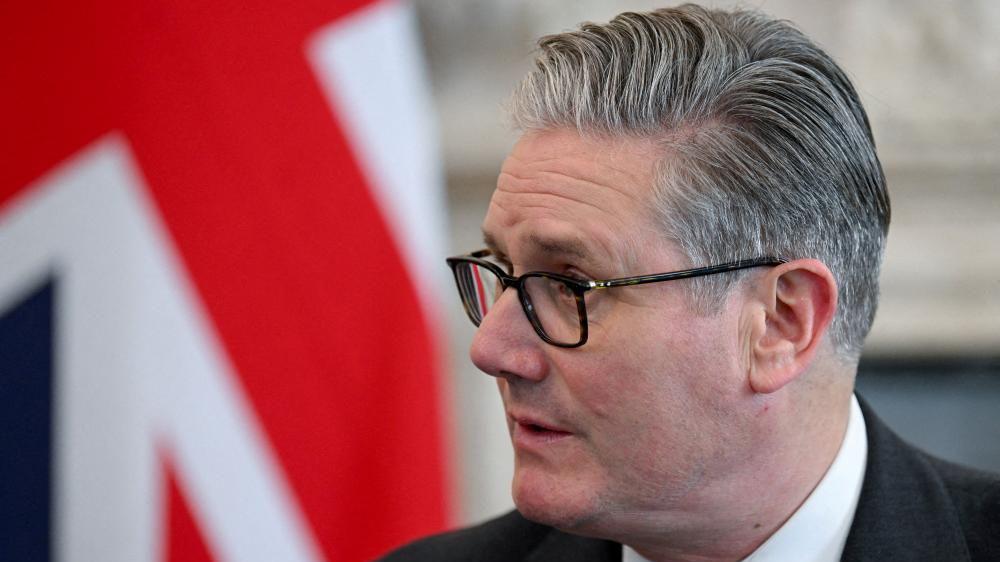
Prime Minister Sir Keir Starmer is facing one of the most consequential and politically dangerous parliamentary appearances of his time in Downing Street as he prepares to address a packed House of Commons over the handling of Lord Mandelson's security vetting, a scandal that has already cost him his US ambassador, his chief of staff, and the head of the Foreign Office, and that has generated calls for his own resignation from every single opposition leader simultaneously in a display of cross-party hostility that underlines just how serious and politically damaging this episode has become for a prime minister who came to office on promises of integrity, transparency, and a clean break from the standards of his predecessors. The scale of the damage already done to Starmer's government by the Mandelson affair is striking and measurable in the most concrete of political terms, but the appearance in the Commons on Monday carries the potential to either arrest the crisis or dramatically accelerate it depending on how convincingly and completely the prime minister is able to answer the specific and pointed questions that opposition MPs, political journalists, constitutional experts, and members of his own parliamentary party are demanding he address with genuine clarity and without the evasions and omissions that have allowed the scandal to grow and deepen over the weeks since it first emerged into public view.
Starmer had repeatedly and explicitly told Members of Parliament that full due process was followed when Lord Mandelson was appointed as US ambassador in December 2024, a statement he made on multiple occasions in the Commons in terms that left little room for ambiguity or qualification. That confident assertion has since been comprehensively undermined by the revelation that civil servants in the Foreign Office withheld information from the prime minister about serious red flags identified during the initial vetting process, a withholding that Starmer himself described as staggering when he learned of it last week. The prime minister has pledged what he calls true transparency in his Commons appearance on Monday, an undertaking that opposition parties and a significant portion of the media are treating with considerable skepticism given that the scandal has been developing for months during which critical information was not forthcoming until political and parliamentary pressure made continued withholding impossible. The five central questions that Monday's Commons appearance must address go to the heart of what Starmer knew, when he knew it, why he and his team did not seek more information, whether he misled Parliament, and what the ongoing political and legal consequences of the entire affair will be.
The Mandelson vetting scandal has its roots in the decision Starmer made when US President Donald Trump returned to the White House in January 2025 to replace the existing career civil servant US ambassador Karen Pierce with Lord Mandelson, a political appointee whose appointment critics argued from the outset carried significantly higher risk than a conventional diplomatic appointment precisely because of the publicly known elements of Mandelson's personal history and associations. Lord Mandelson's friendship with convicted sex offender Jeffrey Epstein was public knowledge well before the appointment was made, as were the previous scandals around money, influence, and conduct that had led to Mandelson being forced out of Cabinet not once but twice during his long and controversial political career. Critics have consistently argued that the combination of these publicly known risk factors and the heightened scrutiny that applies to political appointees rather than career civil servants made it incumbent on Starmer and his team to take exceptional care in verifying that the vetting process was being followed correctly and completely, rather than simply assuming that due process would unfold without active oversight from Number 10.
What Starmer Knew About the Vetting Red Flags and When He Knew It
The first and most fundamental question Starmer must answer in Monday's Commons appearance concerns the basic timeline of his personal knowledge of the red flags identified during Mandelson's vetting process, a timeline that opposition parties argue is fundamentally implausible in the version the prime minister has presented and that goes to the heart of whether Starmer was genuinely kept in the dark by his civil servants or whether his account of events cannot be taken at face value. Starmer has told reporters that the first he personally knew about the vetting red flags was last Tuesday, when Dame Antonia Romeo, the head of the civil service, and Cat Little, the head of the Cabinet Office, informed him of information they had themselves received two weeks prior. That account places the prime minister's personal knowledge fourteen months after the red flags were initially raised to the Foreign Office by UK Security and Vetting officials in January of last year, a gap that opposition MPs and political commentators have described as simply not credible given the political sensitivity of the appointment and the active engagement of Number 10 staff in managing the ambassadorial relationship throughout the period.
The timeline becomes even more complicated and difficult to reconcile when the September 2024 events are examined closely. The prime minister's then director of communications, Tim Allan, was contacted by the political editor of the Independent in September, and the newspaper subsequently published a story about Mandelson failing his vetting process. That sequence of events, in which a senior Number 10 communications official was directly approached by a journalist with specific information about the vetting failure and the story was then published, makes it extraordinarily difficult to sustain the argument that neither the prime minister, nor his chief of staff Morgan McSweeney, nor anyone else in Number 10 had any knowledge of the vetting concerns at or around that time. Starmer has insisted that McSweeney and other Number 10 staff were equally unaware of the UKSV warnings, but McSweeney's subsequent resignation from his role as chief of staff over the Mandelson scandal in February adds a layer of complexity to the official account that opposition MPs are determined to explore and challenge in Monday's session.
The documents that ultimately forced full public disclosure of the vetting situation were revealed only after the Conservative Party tabled a parliamentary motion specifically demanding the publication of all paperwork relating to the vetting process, a procedural mechanism that suggests the information would not have been forthcoming voluntarily without the parliamentary pressure that the motion created. For a prime minister who pledged transparency as a core value of his government and who has presented the Mandelson affair primarily as a failure by civil servants to share information with him, the fact that the most critical documentary evidence emerged only in response to parliamentary compulsion rather than proactive disclosure by the government raises questions that Monday's Commons appearance must address if Starmer is to make a credible case that his commitment to transparency is genuine rather than conditional on whether disclosure serves his political interests in any given moment. Opposition parties will press hard on this gap between the transparency rhetoric and the documentary reality that the motion was needed to surface information that the government had not previously provided.
Whether Starmer Misled Parliament and What the Ministerial Code Requires of Him Now
The question of whether Starmer misled Parliament in his repeated statements that full due process was followed during Mandelson's appointment is constitutionally the most serious charge he faces from the current scandal, because deliberately misleading the House of Commons is among the gravest violations of the standards expected of a prime minister under the ministerial code and carries consequences that in serious cases have resulted in ministerial resignations and formal findings of contempt. Starmer told MPs in September, one day before Lord Mandelson was ultimately sacked as US ambassador, that full due process had been followed during his appointment, a statement that he made with apparent confidence and without qualification despite the fact that, as he now acknowledges, the vetting process had in fact identified serious concerns that were not communicated through the expected channels to the appropriate decision makers in the manner that due process would require. The Conservatives have argued that this statement constitutes a clear breach of the ministerial code regardless of whether Starmer was aware of the vetting problems at the time, while the prime minister denies misleading Parliament on the basis that he believed his statement to be accurate when he made it given the information that was available to him.
The ministerial code's requirements in cases where a minister has made a statement to Parliament that subsequently proves to be inaccurate are clear in their direction if not always in their application, requiring the minister in question to correct the record at the earliest opportunity after the inaccuracy has been identified. Opposition leaders, including Conservative leader Kemi Badenoch and Liberal Democrat leader Sir Ed Davey, have argued that Starmer should have corrected the parliamentary record at Prime Minister's Questions last week, the day after he has said he found out about the vetting red flags, rather than waiting until Monday's appearance to address the Commons. The six-day gap between when Starmer says he learned of the vetting failure and when he is appearing before the Commons to address it publicly has attracted significant criticism, though the prime minister's team has noted that he was in Paris on Thursday for a pre-scheduled meeting of global leaders on the Iran war and that Monday was the next available parliamentary sitting for a formal Commons statement. Whether that explanation is accepted as adequate by the Commons, by the Privileges Committee that Liberal Democrats have called on to investigate the matter, and by the court of public opinion will be among the most important political judgments rendered in the immediate aftermath of Monday's appearance.
Some documents relating to Lord Mandelson's vetting and appointment are expected to be released in the near future, but the release will be incomplete because certain documents will be withheld at the request of the Metropolitan Police, which is conducting its own investigation into Lord Mandelson for potential criminal activity. This selective release creates its own political complications for Starmer, because it means that Monday's transparency pledge cannot be fully delivered immediately and that the full documentary picture of what happened during Mandelson's appointment and vetting will remain partially obscured for as long as the police investigation requires. Any government-proposed redactions on security grounds must additionally be approved by the Intelligence and Security Committee of cross-party MPs, adding a further layer of parliamentary oversight to the document release process that both limits the government's ability to control what is disclosed and provides a degree of independent validation for whatever redactions are ultimately made. Badenoch has demanded that all available papers be released by the end of the current week, a demand the government is unlikely to be able to fully satisfy given the police and security constraints on what can be publicly disclosed.
What Comes After Monday and Whether the Scandal Has Further to Run
The political consequences of the Mandelson affair have already been more severe and more rapidly accumulating than most Westminster observers anticipated when the scandal first broke into full public view, and the question of whether Monday's Commons appearance marks the beginning of the end of the crisis or merely its latest and most visible escalation point will depend on how completely and credibly Starmer manages to address the specific questions that have been building in intensity over the preceding weeks. Sir Olly Robbins, the ousted head of the Foreign Office whose removal last Thursday was itself a major political event, is expected to appear before the Foreign Affairs Committee on Tuesday to give evidence on how Lord Mandelson's clearance was handled, in an appearance that committee chair Dame Emily Thornberry has described as particularly significant given her stated feeling of having been misled by Sir Olly when he first gave evidence to the committee in November last year. Whatever Sir Olly tells the committee on Tuesday will land directly and immediately after Starmer's Monday Commons statement, creating the possibility that the prime minister's account and the former permanent secretary's account will be compared and contrasted with damaging effect if they contain inconsistencies or contradictions.
The committee is expected to press Sir Olly on whether red flags about Lord Mandelson's appointment were ignored within the Foreign Office and if so by whom and on whose instructions or authority, whether Foreign Office staff experienced any pressure from Number 10 to handle the vetting situation in particular ways, and whether the November testimony he gave to the committee requires correction or supplementation in light of information that has emerged since. The question of Number 10 pressure on Foreign Office staff is potentially the most explosive element of the committee's expected questioning, because any evidence that the prime minister's office was aware of and seeking to manage the vetting situation in ways that were not disclosed to Parliament would fundamentally undermine Starmer's account of being kept in the dark by his civil servants. The remaining documents linked to Mandelson's vetting will be released over the coming weeks, and the possibility of criminal proceedings arising from the Metropolitan Police investigation adds an additional and potentially very significant dimension to a scandal that has already demonstrated a remarkable capacity to generate damaging new revelations at regular intervals.
The position of Labour backbenchers, who are returning from a week on the campaign trail for local elections and who will be assessing both the political damage the scandal has caused and the credibility of Starmer's Monday performance, will be an important indicator of whether the parliamentary party remains sufficiently united behind its leader to withstand the sustained opposition pressure that every opposition party is now applying simultaneously. A prime minister who loses the confidence of his own backbenches in the immediate aftermath of a major Commons statement faces a political challenge of an entirely different and more existential order than one who merely fails to fully satisfy the opposition, and the mood of the parliamentary Labour Party as it returns from the local election campaign will be one of the most carefully watched indicators of whether Starmer's Monday appearance has done enough to stabilise his political position or whether the Mandelson scandal has further and more damaging chapters still to unfold.