
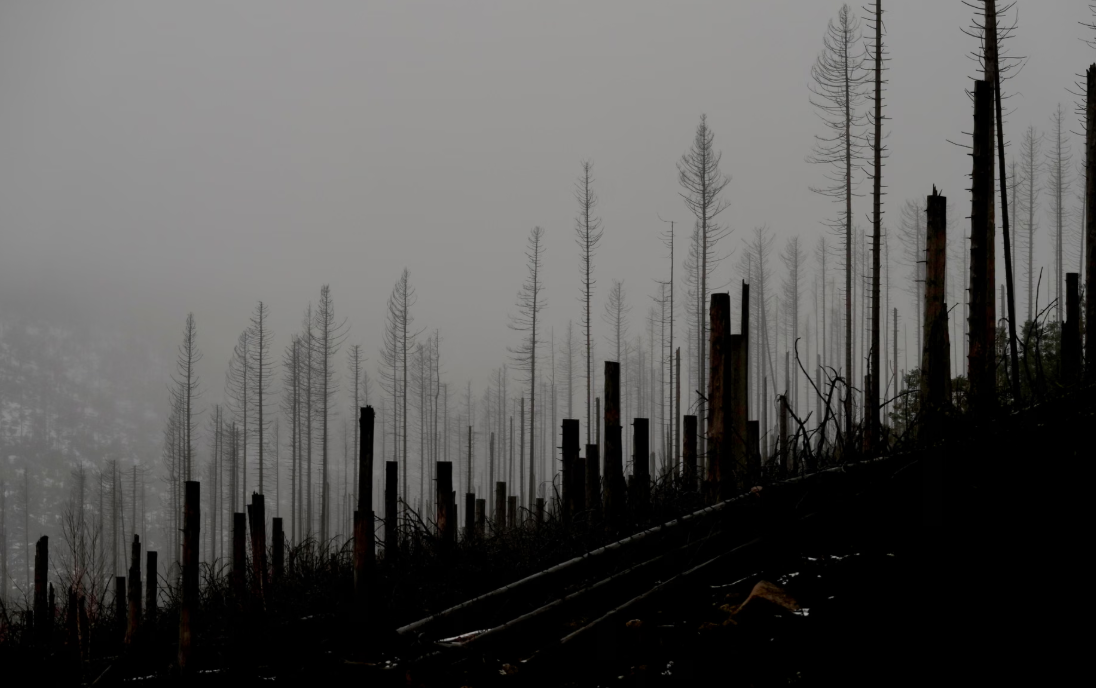
Verdant Beauty Tarnished: The Crisis in the Harz Mountains
The once vibrant green of Germany’s Harz mountains now conceals a harsh reality. Vast expanses of dead trees stand as skeletal remains of what were thriving spruce forests. Since 2018, relentless outbreaks of bark beetles, fueled by prolonged droughts and rising temperatures, have devastated these forests. This is no isolated tragedy but a symptom of a growing ecological crisis sweeping across Europe and beyond, threatening not just local ecosystems but global climate goals and carbon sink capacities.
The Monoculture Trap: Why Old Forestry Methods Fail
Germany’s traditional forestry approach, characterized by vast monoculture plantations dominated by spruce trees, is now under intense scrutiny. The bark beetle outbreaks that wiped out nearly 5% of Germany’s forests since 2018 reveal the inherent vulnerabilities of these single-species ecosystems. When drought weakens trees, pests exploit the opportunity, causing large-scale die-offs. Experts warn this cycle is likely to repeat if the same forestry methods persist.
“The forestry industry’s focus on spruce monocultures wasn’t accidental but driven by economic incentives — fast growth and timber uniformity — ignoring ecological resilience,” said a forestry expert. This approach, while profitable for decades, has proven disastrously brittle in the face of climate change. Attempts to replant with the same species would only invite future calamity.
Biodiversity as Climate Resilience: A New Hope
Foresters in the Harz mountains are pioneering a shift toward biodiversity. Instead of replanting monocultures, they are cultivating mixed forests composed of beech, fir, sycamore, oak, and other native species alongside surviving spruce. Research supports this approach: tree species diversity increases resistance to drought, pests, and disease. Studies published in Nature and PNAS confirm that diverse forests sustain growth and carbon absorption better during climatic stress.
This biodiversity strategy not only enhances forest health but could help revive Germany’s faltering carbon sink — a critical natural ally in meeting national and EU climate targets.
Forest Carbon Sinks Shrinking Rapidly
Scientific data paints a worrying picture. Since 2010, Europe’s forest carbon absorption has dropped by roughly one-third, with Germany experiencing a major decline directly linked to drought and pest outbreaks. This reduction in natural carbon sinks makes hitting climate targets increasingly difficult. The Thünen Institute of Forestry confirms Germany will likely miss its carbon sequestration goals, undermining EU-wide efforts to limit global warming.
“You cannot force the forest to grow — we cannot command how much their contribution should be towards our climate targets,” said Professor Matthias Dieter, head of the Thünen Institute.
A European Crisis: Forests Under Siege
Germany’s struggles mirror those across the continent. The Czech Republic, Norway, Sweden, France, Finland, Greece, and many other nations report forest diebacks, wildfires, and drying peatlands. Ancient woodlands once thought resilient now face regeneration failures. Europe's natural carbon storage capacity is diminishing across the board — a wake-up call with global implications.
The Human Cost: Communities and Workers in the Crossfire
The devastation is not just environmental. Forestry workers endure burnout from continuous salvage logging, watching decades of labor vanish in a few years. Local communities, emotionally and economically tied to these forests, face uncertainty. Yet the emerging biodiversity restoration efforts offer hope — a new mission to build resilient, multi-species forests that can survive future shocks.
Global Lessons from Germany’s Forest Crisis
Germany’s forest crisis holds urgent lessons for the global community:
Monoculture forestry is no longer viable in a warming climate. Countries worldwide must transition to biodiverse ecosystems to enhance resilience.
Natural carbon sinks are fragile and declining. Policymakers must recalibrate climate targets and accelerate fossil fuel phase-out.
Nature-based climate solutions require long-term investment and societal commitment.
Forest restoration must consider ecological complexity, not just tree planting numbers.
A Call to Action
Germany’s dying forests are a canary in the coal mine for the global climate crisis. The dangers of monoculture, the promise of biodiversity, and the limits of relying on nature as a carbon sink are lessons relevant everywhere.
“Many people worked in these forests for 40 years and in just three years, all their work is gone,” said forester Mathias Aßmann. “It’s very hard for them. So this place is good for their soul. It’s a good goal for them to work towards.”
The future of global climate mitigation depends on recognizing and addressing these truths now. Otherwise, the world risks not only ecological collapse but also the failure of climate promises made to future generations.