
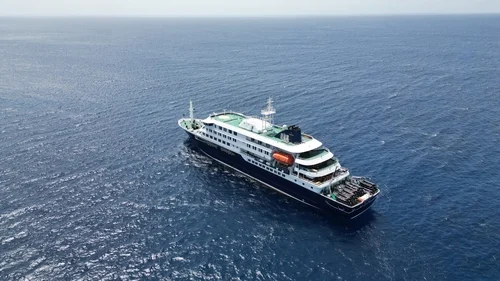
A deadly hantavirus outbreak aboard a luxury Antarctic expedition cruise ship has claimed three lives and left at least one passenger in intensive care, prompting the World Health Organization to issue an urgent assessment on Tuesday. The WHO confirmed hantavirus cruise ship outbreak seven cases, both confirmed and suspected, aboard the vessel and stated that human-to-human transmission may have occurred among passengers sharing close living quarters on board. The announcement has drawn international attention to a virus that is rare in cruise ship settings and has historically been associated with contact with infected rodents rather than person-to-person spread. Health authorities across multiple countries are now coordinating their response as the ship remains stranded off the coast of Cape Verde in the Atlantic Ocean.
The ship at the center of the outbreak is the Hondius, operated by Oceanwide Expeditions, which departed from Ushuaia in southern Argentina in late March on a voyage that took passengers to some of the most remote destinations on the planet, including the Antarctic Peninsula, South Georgia, and the island of Tristan da Cunha. The cruise was marketed as a premium nature expedition, with berth prices ranging from 14,000 to 22,000 euros, attracting mostly British, American, and Spanish passengers. Approximately 150 people remain on board, unable to disembark as Cape Verde authorities have refused to allow the ship to put passengers ashore while the outbreak investigation continues.
The human and diplomatic dimensions of the crisis are both intensifying. A Dutch man became the first fatality on April 11, with his body remaining on board until April 24 before being disembarked at Saint Helena. His wife, who had shown gastrointestinal symptoms at the time of disembarkation, deteriorated during a flight to Johannesburg and died upon arrival at the emergency department on April 26. A German national has also died. A British passenger was evacuated from the ship and is currently receiving treatment in intensive care at a hospital in Johannesburg, where South African authorities have confirmed a positive hantavirus test. Three additional suspected cases involving passengers still on board are being monitored, one of whom is currently experiencing a mild fever.
What Is Hantavirus and How Does the Andes Strain Differ From Other Variants
Hantavirus is a family of viruses primarily carried by rodents, and human infection typically occurs through contact with the urine, droppings, or saliva of infected animals. The virus does not normally spread from person to person, and for most of its documented history it has been understood as a zoonotic disease, meaning one that crosses from animals to humans rather than circulating within human populations. That characteristic has historically limited its potential for large-scale outbreaks, making it a serious but geographically contained public health concern rather than a pandemic-level threat. The fatality rate for hantavirus pulmonary syndrome, the most severe form of the disease, can reach 40 percent in some outbreaks, making individual case management critical even when overall transmission rates are low.
The Andes virus, the strain the WHO believes is involved in the current cruise ship outbreak, is a notable exception to the general rule about human-to-human transmission. First identified in Argentina and Chile in the 1990s, the Andes strain has been associated with a small number of documented cases where the virus appeared to spread between people in very close contact, particularly within households and intimate partnerships. This characteristic sets it apart from other hantavirus strains such as Sin Nombre virus in North America, which has no documented human-to-human transmission history. The Andes virus circulates primarily in the southern cone of South America, the same region where the Hondius began its voyage, providing an epidemiological link that the WHO is treating as its working assumption pending full laboratory confirmation.
In earlier outbreak investigations involving the Andes strain, researchers found that transmission between humans appeared to require prolonged, intimate contact rather than the kind of casual exposure that drives the spread of respiratory viruses like influenza or coronavirus. That finding has important implications for how authorities are assessing the risk profile of the current situation on the Hondius. The WHO's assessment that the risk to the wider public remains low is grounded in this understanding of how the Andes strain behaves, even while acknowledging that the close-quarters environment of a cruise ship cabin created conditions somewhat analogous to the household settings where limited human-to-human transmission has previously been documented.
How the Outbreak Likely Began and What WHO Believes Happened on Board
The WHO's current working hypothesis about the origin of the outbreak centers on the initial infection of the Dutch couple who joined the Hondius in Argentina. Health officials believe the couple may have been exposed to the Andes virus while engaging in outdoor activities ashore before boarding the ship, with bird watching cited as one possible scenario. Southern Argentina, particularly the Patagonian region around Ushuaia where the ship departed, falls within the known geographic range of rodent populations that carry the Andes virus. Travelers engaging in outdoor activities in that region, particularly those involving proximity to grasslands, forests, or rural structures where infected rodents may be present, carry a baseline exposure risk that most tourist itineraries do not explicitly address.
Once the initial case developed on board, the confined and intimate environment of the cruise ship created conditions that the WHO believes may have facilitated limited onward transmission within close contact pairs. Maria Van Kerkhove, the WHO's director of epidemic and pandemic preparedness and prevention, told reporters in Geneva that the suspected human-to-human transmission involved people in very close contact, specifically couples sharing cabins. She described the shared cabin setting as quite intimate contact, a level of proximity that is understood to be necessary for the Andes strain to pass between individuals. The transmission pattern being observed is therefore consistent with what has been documented in previous Andes virus household clusters, transposed into the unusual setting of a luxury expedition vessel.
The WHO confirmed that disinfection procedures are actively underway on the ship and that anyone showing symptoms, along with those providing care to patients, is wearing full personal protective equipment. Additional PPE supplies have been brought on board to support ongoing containment efforts. The organization also stated that it had been informed there are no rats on board the Hondius, which rules out active rodent-based transmission as an ongoing source of new infections within the ship environment. This assessment, combined with the pattern of cases clustering among close contact pairs, supports the hypothesis that the outbreak originated from a single external exposure event rather than a persistent onboard rodent reservoir, a distinction that is important for both containment strategy and passenger risk communication.
The Diplomatic Crisis Around Port Access and Where the Hondius Is Headed
The humanitarian and logistical dimensions of the Hondius outbreak have been complicated by the diplomatic challenge of finding a port willing to receive the vessel. Cape Verde, where the ship is currently marooned, has declined to allow passengers to disembark while the outbreak investigation is ongoing. The WHO has indicated that the immediate priority is evacuating the two most seriously ill passengers still on board to the Netherlands for specialist treatment, after which the ship is expected to proceed toward the Canary Islands. However, Spain's health ministry issued a notably cautious response to that plan, stating that no decision had yet been made about receiving the vessel and that the appropriate port of call would be determined based on epidemiological data collected during the ship's passage through Cape Verde.
The reluctance of port authorities to accept the Hondius reflects a broader pattern seen in previous infectious disease events involving cruise ships, where the interaction between public health protocols, national jurisdiction, and passenger welfare creates complex and sometimes prolonged standoffs. The 2020 Diamond Princess coronavirus outbreak remains the most prominent recent example of how a ship-based disease cluster can become both a public health and diplomatic emergency simultaneously. In the current situation, the relatively small number of cases and the WHO's assessment of low public risk provide some basis for confidence that port reception can be managed safely with appropriate protocols, but that assessment must be communicated clearly to receiving authorities who are understandably cautious about the political and public health consequences of making the wrong call.
For the approximately 150 passengers and crew still on board, the uncertainty about the ship's next port of call adds a layer of psychological stress to what is already an extraordinarily difficult situation. Many passengers boarded what was marketed as a once-in-a-lifetime Antarctic expedition and are now confined to a vessel associated with three deaths and an active disease investigation. Oceanwide Expeditions has been providing updates through official channels, and contact tracing is underway for individuals who traveled on the same flight as the Dutch woman who died after being evacuated to Johannesburg. Passengers on that flight have been identified as a priority group for health monitoring given the documented deterioration that occurred during the journey.
Public Health Risk Assessment and What Travelers Need to Know About Hantavirus
The WHO has been deliberate and consistent in its messaging that the risk to the general public from the current hantavirus outbreak remains low. That assessment is grounded in the specific transmission characteristics of the Andes strain, the contained geographic footprint of the outbreak, and the absence of evidence that the virus is spreading beyond individuals in sustained close contact with confirmed cases. For the vast majority of people who have not been on board the Hondius or in close contact with any of the confirmed patients, there is no basis for elevated personal concern about hantavirus exposure as a result of this outbreak. The disease does not spread through casual contact, airborne transmission in open environments, or contaminated food and water in the way that more familiar outbreak pathogens do.
For travelers planning visits to southern South America, particularly Argentina and Chile where the Andes virus circulates in wild rodent populations, the outbreak serves as a useful reminder of standard precautions that public health agencies have long recommended. Avoiding contact with wild rodents and their nesting materials, not handling dead rodents without protective gloves, ensuring that food is stored in rodent-proof containers when camping or staying in rural accommodations, and being cautious about entering enclosed spaces such as barns, cabins, or shelters that may have rodent activity are all practical steps that reduce exposure risk. These precautions are relevant regardless of the current cruise ship situation and represent established travel health guidance for the region.
The current outbreak also raises important questions about health screening and risk communication practices on expedition cruise ships, which by their nature take passengers to remote locations far from advanced medical facilities. The Hondius voyage visited some of the most isolated destinations on earth, where evacuation in a medical emergency involves enormous logistical complexity and significant time delays. The interval between the first fatality on April 11 and the disembarkation of the body on April 24 illustrates how challenging medical management becomes in remote maritime environments. As expedition cruising continues to grow in popularity among affluent travelers seeking extraordinary destinations, the industry and public health regulators will need to examine whether current protocols for managing infectious disease events in remote maritime settings are adequate for the risks those itineraries present.