
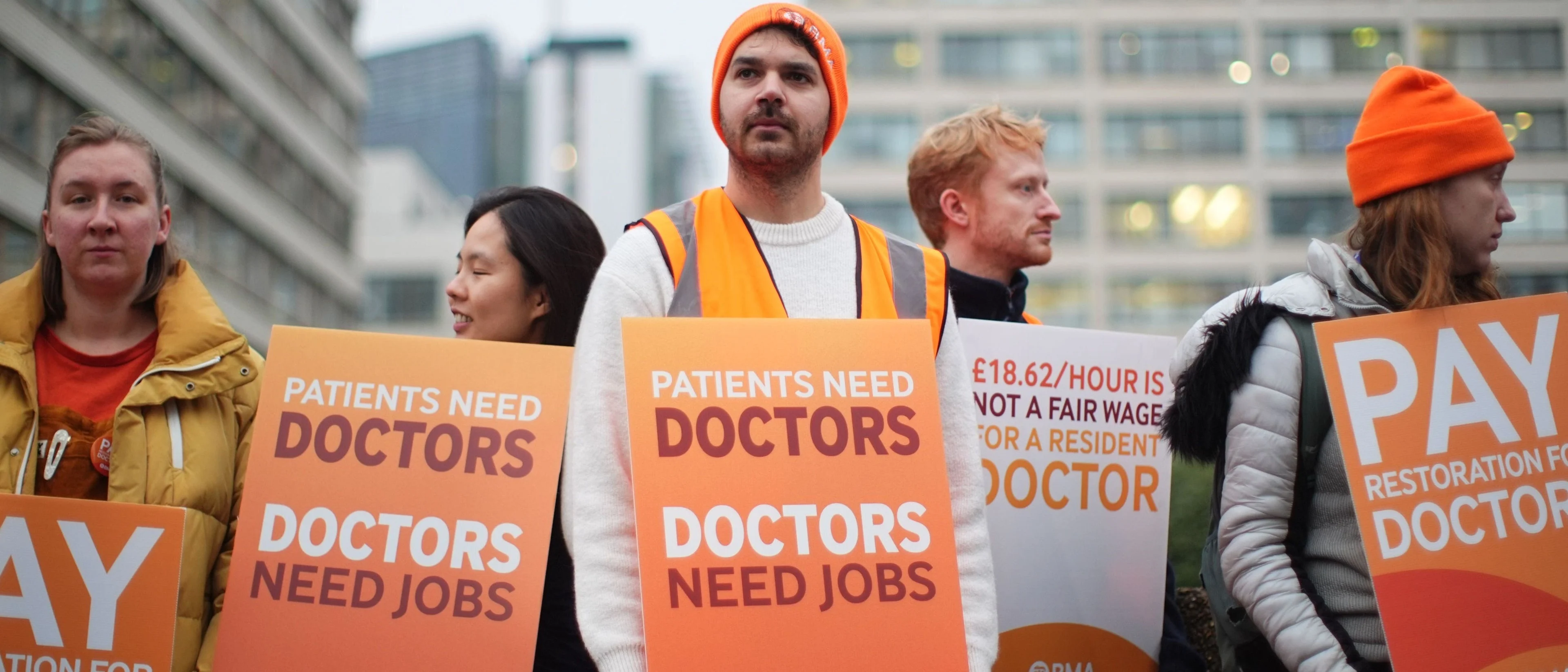
Starmer doctors strike 48 hours deadline has been issued by Prime Minister Keir Starmer to the British Medical Association's resident doctors committee, demanding the union reconsider its refusal to put a proposed pay and workforce deal to a member vote before announcing six days of strikes in April. Writing in the Times newspaper on Monday, Starmer described the BMA's decision to reject the offer without consulting its 55,000 resident doctor members as a reckless step that would hurt both doctors and patients, and warned that opportunities contained in the deal including thousands of additional training posts and exam fee reimbursements would be permanently lost if the committee did not reverse course. The ultimatum represents the sharpest confrontation between the Starmer government and the medical profession since Labour came to power, and it arrives at a moment when the National Health Service is already under severe pressure from a combination of historic backlogs, workforce shortages, and the economic disruption of the global energy crisis.
The deal that the BMA rejected without putting to a member vote would have delivered an above-inflation pay rise in the current year and taken total pay increases over three years to approximately 35 percent, alongside reforms to pay progression designed to reward experience more consistently, reimbursement of mandatory exam fees that can cost doctors thousands of pounds across their training years, and the creation of up to 4,500 additional specialty training posts over three years. That is a substantial package by any objective measure of public sector pay negotiation in the current fiscal environment, and Starmer's frustration that the BMA leadership rejected it without allowing the 55,000 resident doctors it represents to vote on whether they found it acceptable is both politically understandable and democratically significant. Union members have a reasonable expectation that they will be consulted on whether to accept or reject offers made in their name.
The BMA's resident doctors committee has a different reading of both the deal and the democratic process. Jack Fletcher, chair of the committee, responded to Starmer's 48-hour ultimatum by saying the dispute was not about arbitrary cut-offs and that any deadline would fall away once a credible and sustainable offer was on the table. The committee's argument is that the proposed pay increase was below inflation when properly calculated and that the phased approach to pay progression risked locking in further real-terms pay losses rather than genuinely restoring the value that resident doctors have lost over years of below-inflation settlements. The gap between those two characterisations of the same offer is the political and substantive distance that 48 hours of deadline pressure must somehow close, and the history of NHS pay disputes suggests that ultimatums alone are rarely sufficient to resolve disagreements of this depth and duration.
How Resident Doctor Pay Erosion Built the Current Crisis
The dispute between resident doctors and the UK government is not a disagreement that began with the current offer or with the BMA's decision to call April strikes. It is the continuation of a conflict over pay that has been building across more than a decade of public sector pay restraint, with resident doctors experiencing cumulative real-terms pay reductions that the profession estimates at approximately 26 percent when measured against inflation since 2008. The government's figure and the BMA's figure for how much pay has been lost in real terms differ, as they typically do in pay disputes, but the direction of the change is not contested: resident doctors in England are paid significantly less in real terms than they were fifteen years ago, and the cumulative effect of that erosion on recruitment, retention, and morale across the medical workforce has been severe and well-documented.
The rebrand of junior doctors as resident doctors reflects both a recognition that the term junior inadequately described the experience and responsibility of doctors who may be in their mid-thirties with years of clinical practice behind them and a political attempt to reframe the profession's public image in ways that generate greater public sympathy for their pay claims. But whatever the title, the underlying economic reality is unchanged: these are the doctors who staff hospital wards, manage acute medical emergencies, cover overnight shifts, and form the backbone of the NHS clinical workforce, and they have been paid below the rate of inflation for most of the past fifteen years. The 2023 and 2024 strikes during the previous Conservative government were the most sustained industrial action in NHS history, and their resolution under Labour was supposed to have established the foundation for a durable settlement. The current dispute represents either the incomplete resolution of that earlier conflict or its continuation under different political management.
The BMA's argument that the proposed pay increase was below inflation when properly calculated reflects a specific dispute about the baseline from which the percentage increase is measured and the inflation measure used to assess real-terms value. Government and union pay calculations in these disputes routinely produce different numbers from the same nominal percentage increase because they use different starting points, different inflation indices, and different assumptions about how pay progression over time compounds the annual increases. The 35 percent over three years figure that Starmer cited represents the government's calculation using its preferred methodology. The BMA's below-inflation characterisation uses a different calculation framework that the union argues better reflects the actual purchasing power of resident doctors' salaries in the years ahead. Both claims can be simultaneously true under different methodological assumptions, which is why this kind of dispute is so difficult to resolve through political pressure alone.
The NHS Workforce Crisis and Why Training Posts Matter
The offer's inclusion of up to 4,500 additional specialty training posts over three years addresses a workforce dimension of the NHS crisis that goes beyond the immediate pay dispute into the structural supply of trained doctors available to staff the health service over the coming decade. Specialty training posts are the positions through which resident doctors progress from general medical training to qualification in specific clinical specialties, and their availability determines both the career progression of individual doctors and the long-term supply of consultants and specialists that the NHS needs to function. A shortage of training posts creates a bottleneck that wastes the investment made in training doctors to the point of specialty entry and that forces talented clinicians to either wait years for progression or leave the NHS workforce entirely for better-resourced health systems in other countries.
The UK has been experiencing a significant outflow of trained doctors to Australia, Canada, New Zealand, and other English-speaking countries with better pay and working conditions, a drain that depletes the NHS workforce and transfers the cost of British medical education to health systems in other countries. The creation of 4,500 additional specialty training posts directly addresses this structural problem by opening more progression routes that give resident doctors a reason to remain in the NHS rather than seeking career development elsewhere. The BMA's rejection of the deal without a member vote means that these posts, if the government does not keep them on the table indefinitely, could be withdrawn as the negotiating climate hardens around the April strikes. Starmer's warning that opportunities would be lost if the deal was not put to a vote is a direct reference to this specific element of the package.
The reimbursement of mandatory exam fees represents a seemingly technical but practically significant element of the deal for resident doctors navigating the financial realities of medical training. Mandatory professional examinations required for specialty progression can cost individual doctors thousands of pounds across their training years, fees that are paid from salaries that have already been eroded in real terms. For doctors in the early years of their careers managing the financial legacy of medical school fees alongside examination costs and the relatively modest salaries of residency years, exam fee reimbursement has a practical financial significance that its relatively modest headline cost to the government significantly understates. The BMA's rejection of a deal that included this benefit, without allowing members to evaluate it for themselves, reflects a committee assessment that the overall package is inadequate that may or may not be shared by the membership whose salaries it affects.
Starmer's Labour and the NHS Promise That Defined the 2024 Election
Keir Starmer's Labour Party made the NHS a central commitment of its 2024 general election campaign, promising to end the Conservative-era strikes through a new relationship with NHS workers built on fair pay and proper workforce planning. The resolution of the resident doctor dispute that Labour negotiated after taking power was presented as a demonstration of that commitment, and the current breakdown represents a significant political embarrassment for a government that positioned its NHS approach as a defining difference from its predecessor. The 35 percent over three years offer is the product of that earlier resolution's aftermath, and its rejection by the BMA committee without a member vote puts Labour in the position of defending a pay offer that it considers generous while managing public sympathy for doctors who have experienced years of real-terms pay cuts.
The political difficulty for Starmer is that the NHS holds a special place in British political culture that makes any government seen to be fighting with doctors vulnerable to the charge of undermining a national institution that the public values deeply. The BMA's ability to generate public sympathy for resident doctors is considerable, drawing on a genuine appreciation for the work these clinicians do and a genuine understanding that NHS pay has been inadequate for years. Starmer's decision to describe the BMA's decision as reckless and to issue a 48-hour ultimatum through a newspaper article rather than through direct negotiation reflects a political calculation that public pressure on the union leadership may be more effective than private negotiation at this stage, but it risks being read as confrontational rather than constructive by a public that wants the government and the doctors to reach agreement rather than to fight.
The government's fiscal position creates genuine constraints on what it can offer the BMA beyond the current package, and Starmer's government has inherited a public sector pay environment in which multiple unions across health, education, and public services are pressing claims that collectively cannot all be satisfied within the budget envelope available. The resident doctors' case is distinctive in the depth of the real-terms pay erosion they have experienced and in the workforce implications of failing to resolve the dispute, but it is not the only NHS pay claim the government must manage and any settlement with resident doctors creates precedents and comparisons that affect negotiations with nurses, paramedics, midwives, and other clinical staff. That fiscal and political context shapes what the government can offer in ways that individual union negotiations cannot fully account for.
The 48 Hours, the BMA Response, and What April Strikes Would Mean
Starmer's decision to issue the 48-hour ultimatum through a Times newspaper article rather than through a direct government communication to the BMA reflects a specific political communication strategy that attempts to put public pressure on the union committee by framing its decision in terms that the general public can evaluate and respond to. The argument that the BMA's committee denied 55,000 resident doctors the democratic right to vote on a deal that would have given them a 35 percent pay increase over three years is designed to shift the public framing of the dispute from doctors versus government to BMA committee versus its own members. If that framing lands effectively with the public and with resident doctors themselves, it creates internal pressure on the BMA committee that a government ultimatum alone cannot generate.
The 48-hour deadline itself is a negotiating technique whose effectiveness depends on the credibility of the consequences it implies and the willingness of the ultimatum issuer to enforce those consequences if the deadline passes without compliance. Starmer's warning that opportunities contained in the deal would be lost if the committee did not reverse course implies that the government will either withdraw specific elements of the offer or take a harder negotiating line if the April strikes proceed. The BMA committee's response through Fletcher, that any deadline would fall away once a credible and sustainable offer was on the table, directly challenges the deadline's authority by reframing the question as one about offer quality rather than union procedure. That counter-framing is effective because it shifts the conversation from what the BMA committee did to what the government is offering, which is where the BMA wants the public debate to be.
The April 7 to April 13 strike dates create a specific logistical and medical challenge for the NHS that gives the Starmer government additional incentive to resolve the dispute before it begins. Six consecutive days of resident doctor industrial action in April would result in widespread cancellation of elective procedures, significant disruption to outpatient services, and increased pressure on the remaining NHS workforce including consultants and nurses who would be asked to cover additional duties during the walkout. The NHS is operating with a backlog of millions of patients waiting for treatment, and every day of industrial action adds to that backlog and undermines the government's commitment to reducing waiting times that was central to its NHS mandate. The political cost of the strikes for Starmer is therefore substantial regardless of how the public apportions blame between the government and the union.
The BMA's Position and Why the Committee Rejected Without a Vote
Jack Fletcher's response to Starmer's 48-hour ultimatum articulates the BMA committee's position with the careful framing of a union leader who is simultaneously managing an internal constituency of 55,000 members and an external public audience whose sympathy is essential to the union's bargaining power. His statement that the dispute was not about arbitrary cut-offs and that any deadline would fall away once a credible and sustainable offer was on the table implicitly acknowledges that the current offer is not, in the committee's assessment, credible and sustainable, and signals that the path to resolution runs through improving the offer rather than through deadline pressure alone. The committee's refusal to put the current offer to a member vote reflects its judgment that recommending or even presenting the offer for member consideration would be inconsistent with its professional responsibility to advocate for an adequate settlement.
The BMA's argument that the proposed pay increase was below inflation and that the phased approach to pay progression risked locking in further real-terms losses addresses the most substantive dimension of the dispute that public framing around the 35 percent headline figure tends to obscure. Pay progression systems that advance doctors through pay bands over time can produce different long-term outcomes for total pay packages depending on how the bands are structured, how quickly doctors move through them, and what happens to the value of those bands in inflation-adjusted terms over the coming years. A pay deal that looks generous at the three-year horizon of the current offer can embed structural features that reduce real pay value over the five and ten-year horizons that affect career planning, pension calculations, and workforce retention decisions. The BMA committee's analysis of these longer-term structural implications may be more sophisticated than a headline percentage increase comparison captures, and its refusal to put the offer to a member vote may reflect a professional judgment that presenting it without that context would not give members an adequate basis for an informed decision.
The BMA's representation of approximately 55,000 resident doctors who make up nearly half of the medical workforce gives it the organisational weight to cause significant NHS disruption through industrial action, and its track record of sustained strikes during the Conservative years demonstrated that it has both the membership support and the institutional resilience to pursue lengthy disputes when it believes the substantive case for doing so is strong. The committee's willingness to call six days of April strikes within days of rejecting the government's offer without a member vote signals that it does not regard the 48-hour ultimatum as a genuine threat whose consequences would be worse than the current trajectory of the dispute. Whether that assessment is correct depends on whether the government holds firm on the deal's current terms, modifies the offer in response to the BMA's specific objections to its structure, or escalates the confrontation in ways that harden positions on both sides.
What Resolution Would Actually Require and What April Strikes Would Cost
The resolution of the current dispute would require either the government to address the BMA committee's specific objections to the pay progression structure and the inflation calculation methodology, or the committee to put the existing offer to a member vote and accept that the membership's judgment on whether it is acceptable should override the committee's own assessment. The former path requires substantive negotiation that 48 hours is almost certainly insufficient to complete. The latter path requires the committee to reverse a decision it has publicly committed to, which is politically difficult for any union leadership regardless of the substantive merits of the reversal. Neither path is straightforward within the deadline that Starmer has set, which suggests that the 48-hour ultimatum is as much a political communication to the public as it is a genuine expectation of resolution within that timeframe.
The cost of six days of April strikes would be measured in cancelled procedures, disrupted care, and additional waiting time for patients who have already waited months or years for NHS treatment. The NHS workforce that remains working during strikes is stretched to cover the gap left by the walking-out doctors, creating burnout risk and operational strain that affects care quality for the patients who do receive treatment during the action. The financial cost to the NHS of managing strike disruption, rebooking cancelled appointments, and recovering the service's operational tempo after the action ends runs to hundreds of millions of pounds that the health service cannot afford to lose from a budget already under pressure from multiple directions. Both sides of the dispute understand these costs, and both sides are calculating whether accepting a less-than-ideal settlement now is preferable to the costs of continued conflict that serves neither doctors nor patients adequately.