
The Institute of Hotel Management Catering Technology and Applied Nutrition IHM Ranchi MSME Approval has earned a landmark recognition that is set to reshape how hospitality education connects with entrepreneurship across India. The institute received in-principle approval as a Host Institute under the MSME Innovative Scheme (Incubation Component) from the Ministry of Micro, Small and Medium Enterprises, one of the most significant institutional achievements in the history of hotel management education in Jharkhand. This approval positions IHM Ranchi as one of the very few hospitality-focused institutions in the country that is formally empowered to support startup development under a central government framework, giving the institute a unique role in India's growing innovation ecosystem.
The approval was granted during the 10th Project Monitoring and Advisory Committee (PMAC) meeting held on March 24, 2026, in New Delhi. For an institution built on applied hospitality education, this recognition carries weight far beyond a government certificate. It is a mandate, a clear signal from the Ministry of MSME that IHM Ranchi has the credibility, the infrastructure, and the educational culture needed to build real pathways for students, early-stage entrepreneurs, and community stakeholders who want to transform ideas into working businesses within the hospitality sector. The committee's decision reflects confidence in the institute's existing approach to education and its demonstrated capacity to think beyond conventional classroom learning.
Principal Dr. Bhupesh Kumar responded to the achievement with a grounded sense of purpose. He noted that this recognition brings with it both opportunity and responsibility, and that the institute is committed to building a living incubation ecosystem that genuinely connects academic knowledge with industry practice and local community needs. He emphasized that IHM Ranchi does not intend to treat this status as a symbolic achievement. The goal is to create a functional, impactful incubation environment where innovation-led growth and skill-based entrepreneurship become natural outcomes of the educational experience, benefiting not just students but the wider hospitality community in the region.
How IHM Ranchi Built the Foundation for This Recognition
IHM Ranchi has never positioned itself as a purely classroom-based institution. Over the years, the institute developed a culture of applied learning where students are consistently expected to engage with real-world business problems rather than working solely within theoretical frameworks. This approach has produced graduates who enter the hospitality workforce equipped with both technical skills and a practical understanding of how hospitality businesses operate, including operational planning, staffing, customer experience design, and financial management. The institute's reputation in the industry has been built on this kind of preparation, and it is this reputation that supported the case for MSME incubation recognition.
The institute has regularly collaborated with industry professionals to evaluate student work, embedding external expertise directly into the academic assessment process. This consistent integration of industry voices into education helped IHM Ranchi maintain a curriculum that stays closely aligned with what employers and entrepreneurs actually need from a trained hospitality professional. Faculty members at the institute have worked deliberately to keep academic content grounded in real business realities, and this orientation toward relevance rather than abstraction has been a defining feature of the institute's educational identity for years. It is precisely this track record that made IHM Ranchi a credible and compelling candidate when the MSME framework evaluated potential Host Institutes.
Beyond curriculum design, the institute has also worked to shift the entrepreneurial mindset of its students over time. Faculty have encouraged students to see entrepreneurship as a serious and achievable outcome of a hospitality education, not just a distant aspiration. By embedding business planning into core academic programs, requiring students to develop and defend viable business models, and treating capstone projects as genuine entrepreneurial exercises rather than academic formalities, IHM Ranchi spent years building the internal culture that a formal incubation mandate now requires. The MSME approval did not create this culture. It recognized a culture that was already there.
Capstone Projects That Reflected Startup-Ready Thinking
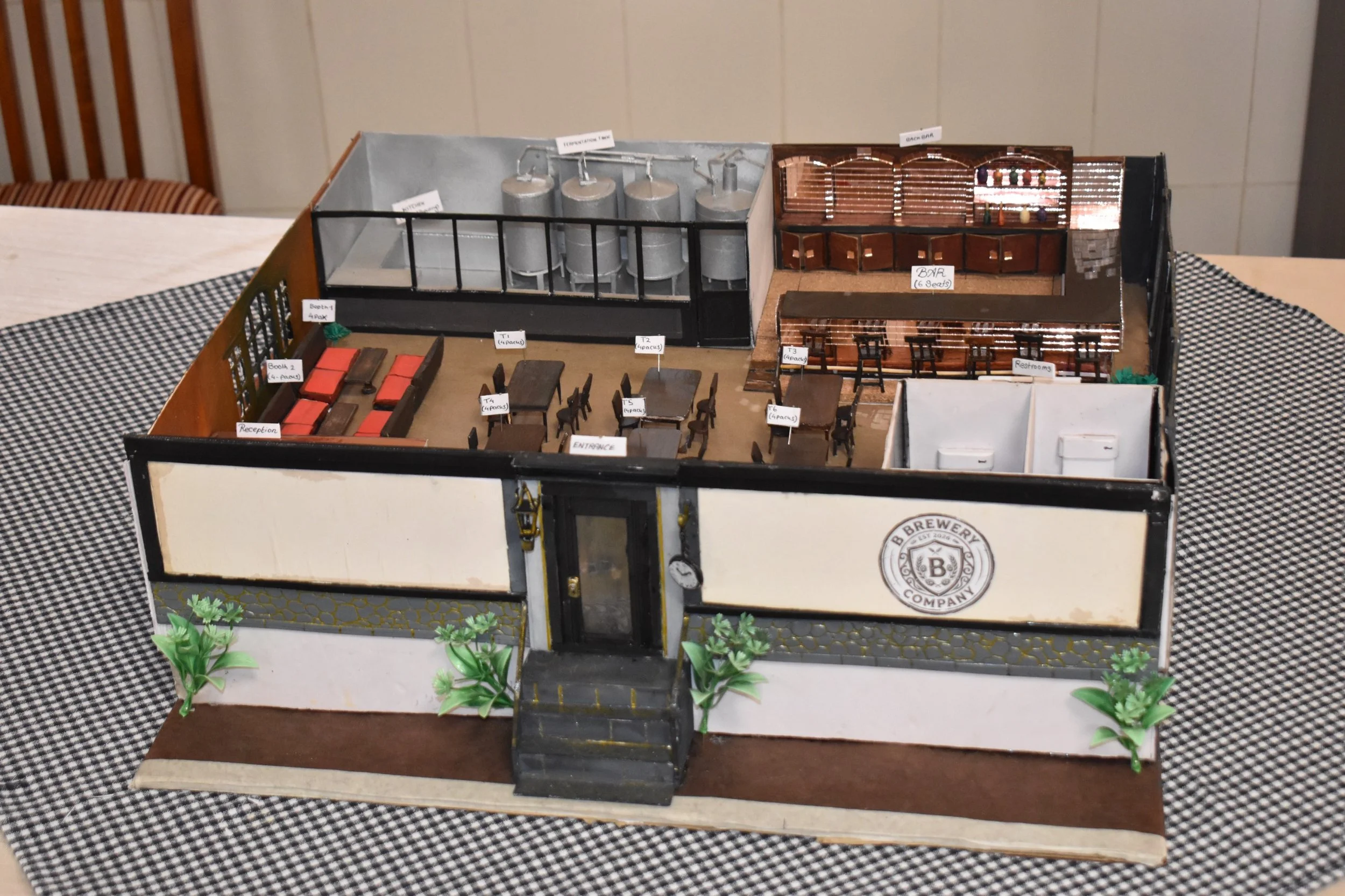
One of the clearest demonstrations of IHM Ranchi's readiness to function as a startup incubation hub came from the quality of final-year student projects completed in recent academic cycles. Students developed comprehensive business blueprints for a wide range of hospitality formats including specialty restaurants, cafes, coffee shops, and bars. These were not simple academic exercises produced for the purpose of fulfilling a course requirement. They were detailed, research-backed business documents that included operational planning, financial modeling, market analysis, competitive assessments, and customer experience strategies, all evaluated rigorously by both academic faculty and external industry professionals brought in specifically for the purpose.
These projects demonstrated something important: IHM Ranchi students were already thinking and working like entrepreneurs before any formal incubation structure was in place. They were grappling with real constraints such as location selection, pricing strategy, staffing models, supplier relationships, and brand positioning in ways that closely mirror what actual startup founders must navigate during the early stages of building a hospitality business. The decision by the institute to treat these projects as serious business documents, subject to the same standards of scrutiny that an investor or industry mentor might apply, reflects a deliberate and well-considered institutional philosophy that has been years in development.
This philosophy maps directly onto the requirements of the MSME incubation framework. Host Institutes under the scheme are expected to demonstrate the capacity to identify promising ideas from within their community, guide innovators through structured development stages, connect them with relevant financial and technical resources, and support them through the process of turning a concept into a viable enterprise. IHM Ranchi's existing project culture means the intellectual and operational infrastructure for doing this work was already being built inside the academic program itself, long before the formal recognition arrived. The MSME committee's decision to approve the institute reflects an assessment that this foundation is real and substantial.
What the MSME Recognition Means for Entrepreneurs and Communities
With formal Host Institute status under the MSME Innovative Scheme, IHM Ranchi can now offer structured mentorship to aspiring entrepreneurs through an officially sanctioned and government-supported framework. This is a meaningful shift from the informal guidance that any educational institution might offer to motivated students. What IHM Ranchi can now provide is a process, one that includes defined mentorship milestones, business development support across multiple stages, and access to funding pathways under the MSME scheme for entrepreneurs whose ideas meet the criteria for support. For students and early-stage founders in the hospitality space, this is a genuinely new resource in a region where such structured support has not previously been available through an institution with this level of domain expertise.
Access to financial support is among the most practically significant outcomes of this recognition. One of the most common reasons that promising hospitality startup ideas fail to reach the market is not that the concept is weak or that the founder lacks capability. It is that early-stage capital is difficult to access, particularly for entrepreneurs who are not connected to investor networks or who are operating in regions outside the major metropolitan centers. By functioning as a Host Institute, IHM Ranchi can now help bridge that gap in a formal and structured way, connecting entrepreneurs with the funding mechanisms embedded in the MSME Innovative Scheme and improving the odds that viable hospitality ideas make it from planning to execution.
The institute is also expected to extend its incubation support to Self-Help Groups and grassroots stakeholders operating in the hospitality and food service space across the region. This dimension of the work significantly broadens the impact of the recognition beyond the immediate student community. For SHGs in Jharkhand that are involved in food production, catering, or related activities, access to a formal incubation structure supported by a nationally recognized institution opens possibilities for market entry, business formalization, and sustainable growth that were previously out of reach. This inclusion of community-level stakeholders reflects the kind of inclusive growth agenda that gives the recognition its full developmental significance.
IHM Ranchi's Role in Strengthening India's Hospitality Startup Ecosystem
India's hospitality sector has seen growing entrepreneurial interest in recent years, particularly in food and beverage, experiential dining, agri-tourism, and travel-related services. However, the startup support infrastructure specifically designed for hospitality entrepreneurs has remained limited compared to what is available in technology, manufacturing, or even agriculture. General incubators and startup accelerators often lack the domain knowledge needed to give genuinely useful guidance to someone trying to build a restaurant brand, develop a catering business, or launch a hospitality-focused product. IHM Ranchi's recognition as an MSME-approved incubation hub begins to address this structural gap in a meaningful and targeted way.
By combining deep hospitality domain expertise with a structured incubation mandate backed by government support, the institute can offer something that general startup incubators simply cannot replicate. The mentorship available through IHM Ranchi will be grounded in the operational realities of running a hospitality business, from kitchen management and food costing to guest experience design and regulatory compliance. For entrepreneurs in this space, that specificity is enormously valuable. It is the difference between receiving advice from someone who understands the theory of business and receiving guidance from mentors who understand what it actually takes to open and sustain a restaurant, a cafe, or a catering operation in the Indian market.
The recognition also fits clearly within the larger national agenda articulated through Atmanirbhar Bharat, which prioritizes self-reliance, job creation, rural empowerment, and the development of sustainable enterprises across sectors. Hospitality is a sector with significant capacity to generate employment across a wide range of skill levels, and supporting hospitality entrepreneurship in Jharkhand, a state where economic opportunity has historically been concentrated and where large portions of the population remain underserved by mainstream economic growth, carries real developmental importance. IHM Ranchi's incubation work has the potential to contribute meaningfully to that broader agenda by creating businesses that generate local employment and build economic activity in communities that need it.
A Model That Other Hospitality Institutions Can Learn From
IHM Ranchi's achievement in securing MSME Host Institute status sets a precedent with implications that reach well beyond the institute itself. Hospitality education across India has traditionally been structured around producing skilled employees for the hotel, restaurant, and tourism industries. The emphasis has been on technical training, service standards, and operational competence, all of which remain important. But the shift toward also producing entrepreneurs, supported by formal government-backed incubation infrastructure, represents a genuinely significant evolution in what a hotel management institute can be and what it can contribute to the wider economy.
If IHM Ranchi builds a functioning incubation ecosystem that consistently produces viable hospitality startups, it will demonstrate a replicable and credible model for other institutes in the IHM network and for hospitality institutions more broadly across the country. The combination of domain expertise, student energy, established industry connections, academic rigor, and MSME framework support creates conditions where genuine innovation can emerge from within hospitality education rather than in spite of it. Other institutes watching IHM Ranchi's progress will have a real-world example to learn from, adapt, and build upon.
The broader significance of this moment should not be underestimated. India's hospitality sector is growing, and the country needs more entrepreneurs who understand it deeply, who can build businesses that serve the market well, create employment, and contribute to the development of a hospitality ecosystem that is both economically vibrant and socially inclusive. IHM Ranchi, through this recognition and the work it will now do under the MSME incubation framework, is positioning itself to play a leading role in making that future possible. The institute has earned the recognition it received, and the work that follows will determine the full measure of what that recognition can achieve.