
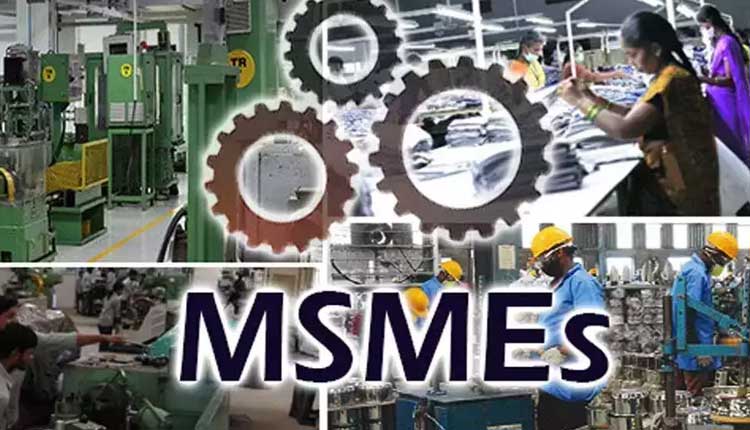
MSME Formalisation Udyam registration 2026 has crossed 7.83 crore enterprises registered on the Udyam Registration Portal and Udyam Assist Platform combined, according to data reported by the Ministry of Micro, Small and Medium Enterprises as of February 28, 2026, marking one of the most significant expansions of formal small business registration in India's economic history. The number represents a tenfold increase from the 0.79 crore enterprises registered in FY22, a growth trajectory that reflects the combined impact of the revised MSME classification criteria introduced in July 2020, the digital infrastructure built around the Udyam portals, and the sustained government effort to bring India's vast informal small business economy into the formal financial and regulatory framework. The formalisation of 7.83 crore enterprises across manufacturing, services, and trading sectors represents a structural transformation of India's MSME ecosystem that has direct implications for credit access, government scheme participation, export competitiveness, and the quality of employment across the small business economy.
The significance of the 7.83 crore figure extends well beyond the headline number to the economic and social consequences of bringing this volume of enterprises into the formal system. A registered MSME has access to government schemes, priority sector lending from banks, trade receivables discounting through TReDS platforms, government procurement opportunities through GeM, and the legal protections of the MSMED Act that an unregistered enterprise cannot access regardless of its size or economic contribution. The formalisation journey that each of these 7.83 crore enterprises has undertaken gives them a digital identity, a government-recognised classification, and a pathway to financial services that was previously unavailable or inaccessible. The aggregate economic consequence of that access, multiplied across crores of enterprises employing tens of millions of workers across urban and rural India, is the structural story behind the registration statistics.
The Union Budget 2026-27's package of credit-related measures for MSMEs builds on this formalisation foundation by creating new financial infrastructure that specifically targets registered enterprises, using their Udyam registration as the gateway to enhanced credit access. Mandatory TReDS settlement for CPSE purchases, CGTMSE-backed invoice discounting, GeM-TReDS integration, and securitisation of TReDS receivables are all measures whose benefits flow specifically to formally registered enterprises, creating a powerful additional incentive for the remaining informal enterprises to formalise and a meaningful enhancement of the economic value that existing registered enterprises can extract from their formal status. The government's approach of building the formalisation incentive structure progressively through each budget cycle reflects a strategic patience about building durable formal sector participation rather than chasing registration numbers alone.
How Udyam Registration Transformed India's MSME Landscape Since 2020
The introduction of revised MSME classification criteria in July 2020 was the single most consequential policy decision in India's MSME formalisation history, replacing the earlier investment-only classification basis with a combined investment and turnover criterion that expanded the eligible universe of MSMEs and aligned the classification framework with the economic realities of service-sector and trading enterprises that had previously been difficult to classify accurately. The earlier framework, which classified enterprises based solely on investment in plant and machinery, was designed for a manufacturing-centric economy and systematically excluded or mis-classified service enterprises whose value creation depends on human capital and intellectual assets rather than physical machinery. The revised framework that introduced turnover as an additional classification criterion opened the MSME definition to the service and trading enterprises that dominate India's small business economy.
The revised classification limits that accompanied the definitional change were also significantly revised upward to reflect the economic growth that had occurred since the previous classification revision, bringing a larger number of enterprises within the MSME universe at all three tiers of micro, small, and medium enterprise classification. Enterprises that had outgrown the old MSME thresholds and lost access to MSME scheme benefits were brought back within the formal MSME framework, creating a renewed incentive for registration among enterprises that had previously had no reason to maintain their formal MSME status. The combination of definitional expansion and threshold revision dramatically increased the addressable registration universe, and the Udyam portal infrastructure that was simultaneously being built provided the accessible digital channel through which that expanded universe could be reached.
The Udyam Assist Platform, introduced subsequently to complement the main Udyam Registration Portal, specifically targeted the informally registered enterprises that had been classified under the earlier Udyog Aadhaar Memorandum system and provided a streamlined migration pathway for these enterprises to obtain formal Udyam registration. Many enterprises that had registered under Udyog Aadhaar had received an informal acknowledgement of their MSME status without the full suite of benefits associated with formal Udyam registration, and the UAP's creation acknowledged that the transition to the new framework needed active facilitation rather than assuming that enterprises would independently navigate the migration. The UAP's contribution to the 7.83 crore total registration figure reflects the government's recognition that inclusive formalisation requires meeting enterprises where they are rather than expecting them to find their way to the formal system independently.
The Government Schemes That Made Formalisation Valuable for Small Enterprises
The value of Udyam registration is inseparable from the scheme ecosystem that makes formal MSME status commercially meaningful for the enterprises that obtain it, and the government's simultaneous investment in expanding that ecosystem has been as important to the formalisation growth as the registration infrastructure itself. The Prime Minister's Employment Generation Programme provides subsidised credit to new micro enterprises establishing manufacturing or service activities, with the subsidy accessible only to formally registered enterprises and channelled through the banking system in ways that build formal financial relationships alongside the direct economic support. The PMEGP has created employment across urban and rural India in enterprises that would not have been viable without the upfront margin money subsidy, and its reach has expanded progressively with each successive budget allocation.
The Credit Guarantee Scheme for Micro and Small Enterprises addresses the most fundamental barrier that small businesses face in accessing formal credit: the absence of collateral that banks require before extending loans to enterprises without significant tangible asset bases. By providing a government-backed guarantee that substitutes for the collateral that MSMEs cannot provide from their own resources, the CGTMSE scheme enables banks to lend to creditworthy but collateral-poor small businesses without taking on the full credit risk of unsecured lending. The scheme's expansion in successive budgets, including the CGTMSE-backed invoice discounting mechanism announced in Budget 2026-27, reflects its demonstrated effectiveness in expanding formal credit access to MSMEs that would otherwise be limited to informal and more expensive financing sources.
PM Vishwakarma represents a specifically targeted formalisation and upgrading programme for traditional artisan and craftsperson communities whose skills represent significant cultural and economic value but whose enterprises have historically operated entirely outside the formal system. By creating a specific registration and support pathway for weavers, potters, carpenters, blacksmiths, and other traditional craft communities, PM Vishwakarma brings a category of micro enterprises into the formal system that had not previously been meaningfully reached by the mainstream MSME registration infrastructure. The programme's combination of skill training, tool support, digital payment adoption, and formal credit access addresses multiple barriers to formalisation simultaneously, reflecting a more holistic approach to bringing deeply informal communities into the formal economy than registration-focused schemes alone can achieve.
The Role of Digital Infrastructure in Accelerating Registration
The Udyam Registration Portal's design as a self-service digital platform accessible with Aadhaar authentication has been fundamental to the scale of registration growth documented in the Ministry's data. Earlier registration systems required physical documentation, in-person visits to government offices, and processes that imposed significant time and compliance costs on small enterprises whose proprietors were simultaneously managing their businesses without the administrative support that larger companies employ. The Udyam portal's Aadhaar-authenticated, documentation-light registration process reduced the friction of formal registration to the point where a micro enterprise proprietor with a smartphone and an Aadhaar number could complete registration in minutes without leaving their business premises.
The integration of Udyam registration data with other government systems including the Goods and Services Tax network, the income tax database, and the GeM procurement portal has created a digital ecosystem in which formal MSME status generates continuous value through seamless interaction with multiple government platforms. An enterprise that registers on Udyam gains simplified access to GeM registration, streamlined GST compliance recognition, and banking system recognition of its MSME status for priority sector lending purposes, creating a network of compounding benefits from a single registration event that makes the value proposition of formalisation substantially stronger than any individual scheme benefit in isolation. This ecosystem approach to MSME digital infrastructure reflects sophisticated policy design that goes beyond building a registration database to creating an integrated formal economy identity for registered enterprises.
The geographic reach of Udyam registration, documented in Ministry data showing significant registration volumes from states across India including traditionally less formalised regions, reflects the digital platform's ability to overcome the geographic concentration of earlier registration systems that were more accessible in urban and peri-urban areas. Rural and semi-urban enterprises that had limited access to government offices and limited familiarity with formal registration processes have been reached through the combination of the Udyam portal's accessibility and the outreach programmes conducted by District Industries Centres, MSME Development Institutes, and banking correspondents who have assisted unregistered enterprises in completing the registration process. The breadth of geographic coverage in the 7.83 crore registration figure is as significant as the aggregate number for understanding the structural scope of India's MSME formalisation progress.
7.83 Crore Registered Enterprises and the Budget 2026-27 Credit Measures
The 7.83 crore enterprises registered on Udyam platforms as of February 28, 2026, represent a formal economic constituency of unprecedented scale that the government can now reach with targeted support, financial services, and regulatory protections that were previously available only to the fraction of MSMEs operating within the formal system. The economic multiplier of formalisation operates through multiple channels simultaneously: formally registered enterprises have better access to bank credit at lower interest rates than informal enterprises, better access to government procurement markets through GeM, better protection against late payment from large buyers through the MSMED Act's provisions, and better ability to participate in export markets that require formal registration and compliance documentation. Each of these channels generates economic value that compounds over time, making the 7.83 crore registration figure the foundation for medium-term MSME sector productivity and competitiveness improvements.
The sectoral distribution of registrations across manufacturing, services, and trading enterprises reflects the true composition of India's small business economy in ways that the earlier manufacturing-focused registration framework did not capture. Service enterprises, which now account for a substantial share of the MSME universe, contribute significantly to employment, income generation, and economic value creation in both urban and rural India, and their inclusion in the formal MSME framework gives the government a more complete picture of the small business economy for policy design purposes. Trading enterprises, which had been a contested category under earlier classification frameworks, are explicitly included in the Udyam framework in recognition of their role as critical economic intermediaries in India's distribution economy, particularly in the last-mile retail and wholesale networks that serve both rural and urban consumers.
The trajectory of registration growth from 0.79 crore in FY22 to 7.83 crore in FY26 represents a compound annual growth rate that far exceeds any previous period of MSME registration expansion and that reflects the cumulative effect of the policy, infrastructure, and outreach investments made since the July 2020 framework revision. The Ministry's data showing an upward trajectory that has accelerated rather than plateaued as the registration universe has grown suggests that the formalisation momentum has not yet exhausted itself, and that further registration growth is likely as outreach continues to reach unregistered enterprises in the most rural and most informally operating segments of the economy. The 7.83 crore figure is not a ceiling but a milestone in an ongoing structural transformation whose full extent will only be visible over the next decade of sustained policy implementation.
Budget 2026-27 Credit Measures and Their Impact on Registered MSMEs
The Union Budget 2026-27's MSME credit package represents the government's recognition that registration alone is insufficient to realise the economic potential of the 7.83 crore formally registered enterprises, and that the formal status gateway must be connected to substantive financial infrastructure improvements that address the working capital constraints that limit MSME growth and competitiveness. Mandatory TReDS settlement for Central Public Sector Enterprise purchases is the most immediately impactful of the announced measures, because it addresses the late payment problem that is one of the most significant constraints on MSME liquidity and cash flow management. When CPSEs are mandated to settle their MSME payables through TReDS rather than through their standard payment processes, MSME suppliers gain access to invoice discounting that converts their trade receivables into immediate working capital rather than waiting the 45 to 90 day payment cycles that large buyers often impose regardless of the MSMED Act's 45-day payment obligation.
CGTMSE-backed invoice discounting extends the credit guarantee framework that has proven effective in enabling collateral-free term lending to MSMEs into the working capital and trade finance domain where collateral constraints are equally binding. By backing invoice discounting on TReDS platforms with CGTMSE guarantees, the Budget measure enables financial institutions to discount MSME invoices at lower risk premiums than uncovered invoice discounting would require, passing the benefit of the guarantee coverage through to MSME sellers in the form of lower financing costs for their working capital. The integration of CGTMSE coverage with TReDS infrastructure creates a secured working capital product that is accessible to any registered MSME with verifiable trade receivables from creditworthy buyers, without requiring the MSME to provide physical collateral or maintain a long banking relationship history.
GeM-TReDS integration connects the government procurement marketplace where registered MSMEs already sell to the trade receivables discounting infrastructure that provides working capital financing, creating a seamless financial service pathway within the digital government ecosystem. An MSME that sells to a government buyer through GeM can now flow its GeM invoice directly into TReDS for discounting, converting a government purchase order into working capital within days rather than waiting for the payment cycle to complete. The securitisation of TReDS receivables announced in the Budget creates a capital market instrument that allows financial institutions to package and sell pools of MSME trade receivables to investors, deepening the capital available for MSME invoice financing by connecting it to capital market funding sources beyond the balance sheet capacity of the individual financial institutions currently active on TReDS platforms.