
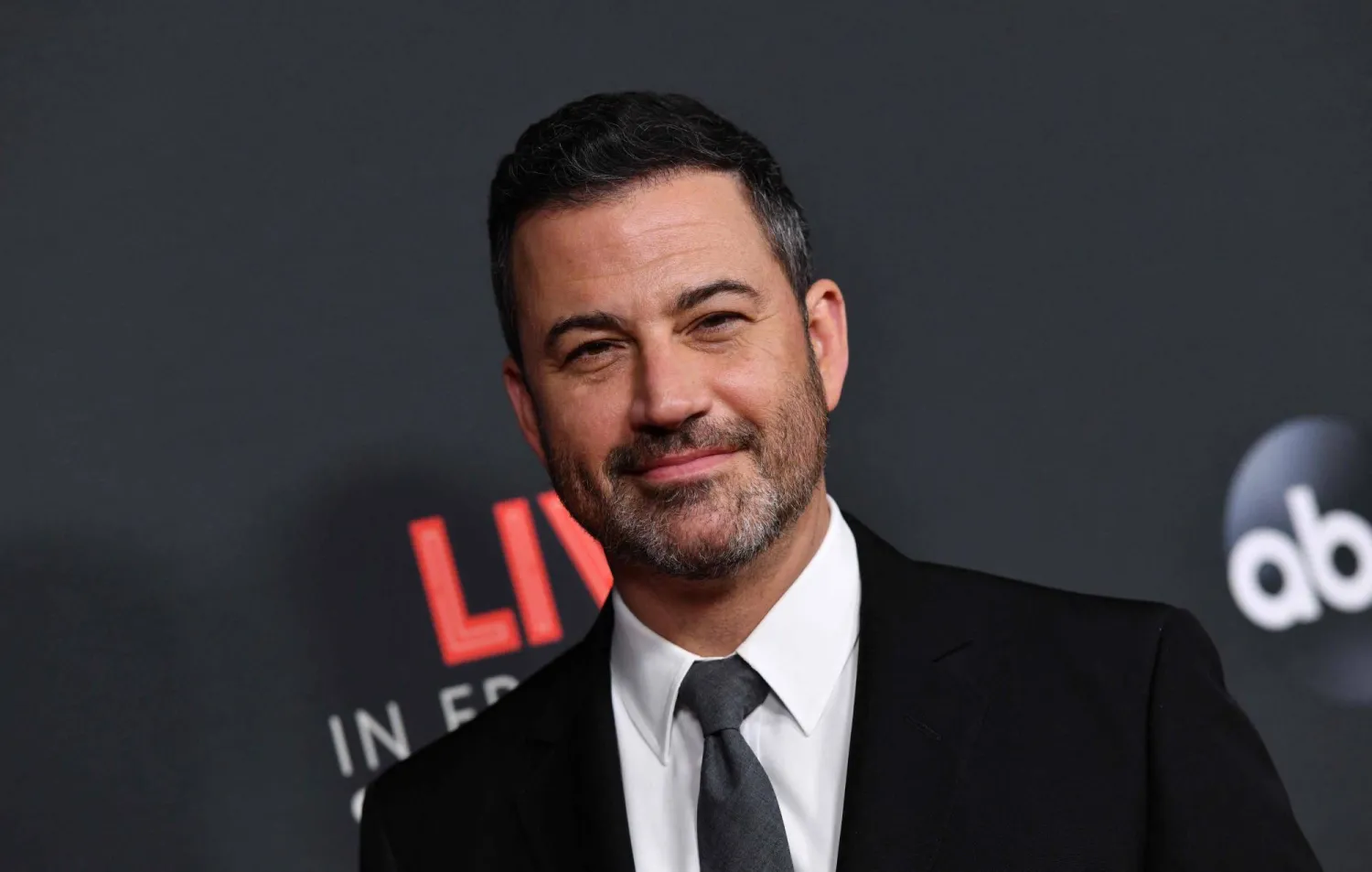
Late-night comedian Jimmy Kimmel addressed his audience directly on Monday to defend a joke he made about First Lady Melania Trump during a parody segment at the White House Correspondents' Dinner, insisting that his quip had been fundamentally misconstrued and was in no way a call to assassination as critics had characterized it, even as President Donald Trump intensified his demands that ABC and its parent company Walt Disney Company immediately terminate the television host over remarks that became politically explosive following a shooting incident near the weekend gathering of journalists and politicians in Washington. Kimmel used the opening monologue of Jimmy Kimmel Live to explain that his joke describing Melania Trump as having a glow like an expectant widow was a straightforward reference to the significant age difference between the First Lady and her nearly 80-year-old husband rather than any commentary on or encouragement of political violence, a clarification he delivered with characteristic directness and without apparent willingness to offer the kind of unconditional apology that the Trump family and their supporters had been demanding publicly since the original remarks were made last Thursday. The comedian's decision to address the controversy head-on rather than simply issuing a statement set the stage for a public confrontation that touches on questions of free speech, media accountability, the boundaries of political satire, and the degree to which the Trump administration's ongoing pressure campaign against critical broadcasters is testing the independence of the television networks and their corporate parents.
The timing of the controversy could not have been more politically charged or personally significant for the Trump family, arriving as it did in conjunction with a genuine security incident at the Washington Hilton where the Correspondents' Dinner was being held. A suspect identified as Cole Allen charged through a security checkpoint at the venue and fired at Secret Service agents, wounding one, before being subdued and arrested, prompting President Trump and the First Lady to be rushed out of Saturday's dinner in circumstances that were frightening and traumatic for everyone present. The proximity in time between Kimmel's Thursday joke and Saturday's shooting provided the political and emotional context in which the Trump family's criticism of the comedian escalated from the kind of routine social media pushback that late-night hosts have become accustomed to into something considerably more serious and consequential, with both the President and the First Lady making explicit demands that ABC take disciplinary action against Kimmel and framing the joke as irresponsible rhetoric that contributed to a dangerous political atmosphere. Kimmel expressed genuine sympathy for Melania Trump and for everyone who attended Saturday's dinner and endured the traumatic incident, while firmly rejecting the argument that a joke delivered three days before the shooting could reasonably be said to have had any effect on the actions of the individual who opened fire at Secret Service agents.
The dispute has arrived at a sensitive moment for ABC and its parent company Disney, which is navigating the first weeks of new CEO Josh D'Amaro's tenure following his appointment last month, creating a leadership test that the executive did not anticipate inheriting quite so early and quite so publicly in his role. D'Amaro faces competing pressures from a president who has demonstrated both the willingness and the ability to create regulatory and political problems for broadcasting companies he regards as unfair to him, and from the entertainment industry and free speech advocates who have pushed back vigorously against what they characterize as unconstitutional government pressure on editorial content. The question of how ABC's new leadership responds to presidential demands to fire one of its most prominent and commercially valuable hosts will be watched closely by the broader broadcasting industry as a signal of whether the Trump administration's sustained pressure campaign is succeeding in shifting the behavior of major media companies in ways that go beyond the specific case of any individual host or program.
How Jimmy Kimmel's Correspondents' Dinner Joke Became a National Political Controversy
The joke that ignited the current controversy was delivered last Thursday during what Kimmel described as a parody segment connected to the White House Correspondents' Dinner, a context in which comedic exaggeration and pointed political humor about public figures including the President and First Lady are entirely conventional and expected features of a Washington event that has historically served as a licensed space for the kind of satirical commentary that would generate more friction in other settings. Kimmel's description of Melania Trump as having a glow like an expectant widow was presented on Monday as a light roast joke about the factual reality that Donald Trump is approaching 80 years old and that Melania is younger than Kimmel himself, a comedic framing that draws its humor from the implication that a much younger spouse might be contemplating her post-widowhood circumstances rather than from any suggestion of violence or harm. The joke is of a type that has been commonplace in late-night political comedy for decades and that satirizes the age and health of political figures in ways that the targets and their supporters typically find offensive but that courts have consistently held to be protected expression under the First Amendment's robust protection of political satire and commentary about public figures.
Melania Trump responded to the joke through a post on X in which she described Kimmel's remarks as corrosive and a symptom of what she characterized as a political sickness in the United States, calling for ABC's leadership to take a stand against behavior she described as atrocious and arguing that people like Kimmel should not have the opportunity to enter American homes each evening to spread what she called hate. Her characterization of the joke as corrosive political rhetoric rather than as a comedic observation about her husband's age reflects the framework through which the Trump family has consistently interpreted critical comedy about the President, treating satirical exaggeration as evidence of genuine malice rather than as a conventional feature of the democratic culture of political commentary that American courts and traditions have protected for centuries. Kimmel's response to Melania Trump's criticism was pointed in its own right, expressing agreement in principle with the idea that hateful and violent rhetoric should be rejected while suggesting that a great place to start would be for the First Lady to have a conversation with her husband about the rhetoric that has characterized his own public communications throughout his political career.
President Trump had already been calling for Kimmel's removal from ABC before Monday's clarification, with Trump describing the joke as something far beyond the pale and demanding that Disney and ABC immediately fire the host in language that was considerably more absolute and less qualified than the criticism typically directed at entertainers whose work displeases political figures. Trump's willingness to make explicit demands about the employment decisions of private broadcasting companies reflects an approach to media relations that his supporters characterize as justified pushback against genuinely unfair coverage and that his critics and First Amendment experts describe as an unconstitutional pattern of government pressure on editorial independence that tests the limits of what a president can legally do to influence the content decisions of regulated broadcasters. The fact that Trump is simultaneously the person making demands about Kimmel's employment and the head of the administration that regulates the broadcasting licenses of the ABC-affiliated stations that air Kimmel's program gives the presidential criticism a coercive dimension that distinguishes it from the ordinary political pushback that public figures direct at critical media coverage.
The FCC Pressure Campaign and What It Means for Broadcasting Freedom
The current confrontation between the Trump administration and Jimmy Kimmel did not emerge from nowhere but is the latest episode in a sustained pattern of pressure that has been building for months and that has already produced at least one concrete consequence for the late-night host and his network. In September of last year, the head of the Federal Communications Commission, Brendan Carr, warned local broadcasters that airing Kimmel's program could expose them to fines or the loss of their broadcasting licenses, pressuring the stations to drop the show in response to comments Kimmel had made about conservative activist Charlie Kirk. ABC briefly suspended Kimmel's show in response, a decision that came just hours after Carr's public warning and that the entertainment industry and legal experts widely interpreted as evidence that government regulatory pressure was producing tangible effects on the editorial decisions of a major broadcast network in ways that raised serious constitutional concerns about the boundaries of permissible government influence over protected speech.
The FCC intervention drew unusually broad criticism that crossed partisan lines, with Republican Senator Ted Cruz explicitly comparing Carr's threats to the tactics of an organized crime boss, a comparison that reflected the degree to which the FCC's conduct struck even conservative commentators as having crossed the line from legitimate regulatory oversight into something that looked more like government intimidation of critical media. The entertainment industry's response was similarly unified and emphatic, with performers, producers, and free speech advocates arguing that the FCC's pressure on broadcasters over Kimmel's content represented exactly the kind of government censorship of political commentary that the First Amendment was designed to prevent. Experts in communications law have been consistent in their position that broadcasters have broad First Amendment rights to make jokes about public figures, including jokes that are distasteful or offensive to those figures, and that government regulatory pressure designed to suppress such content raises serious constitutional problems regardless of whether the regulatory agency frames its intervention as a response to concerns about license compliance rather than as content censorship.
The question of what Disney and ABC will do in response to the latest presidential demands is one that the entertainment industry is watching with considerable interest as a test of whether major corporate media companies will maintain the editorial independence that their legal rights and journalistic traditions support or whether the accumulated pressure of regulatory threats, social media campaigns, and explicit presidential demands will produce the kind of behavioral change that the administration appears to be seeking. D'Amaro's position as a new CEO facing his first major political test is complicated by the commercial reality that Kimmel is one of ABC's most successful and valuable properties whose audience loyalty and cultural influence represent significant business assets, and by the legal reality that firing an employee in direct response to government pressure to do so could itself create legal liability for the company in ways that the situation's politics tend to obscure. The coming days and weeks will reveal whether the pattern of pressure that has been building since September has created the conditions for a more significant capitulation or whether ABC's leadership concludes that defending Kimmel's right to make politically controversial jokes is both the legally correct and the commercially appropriate response to demands that legal experts say the First Amendment does not permit the government to enforce.