
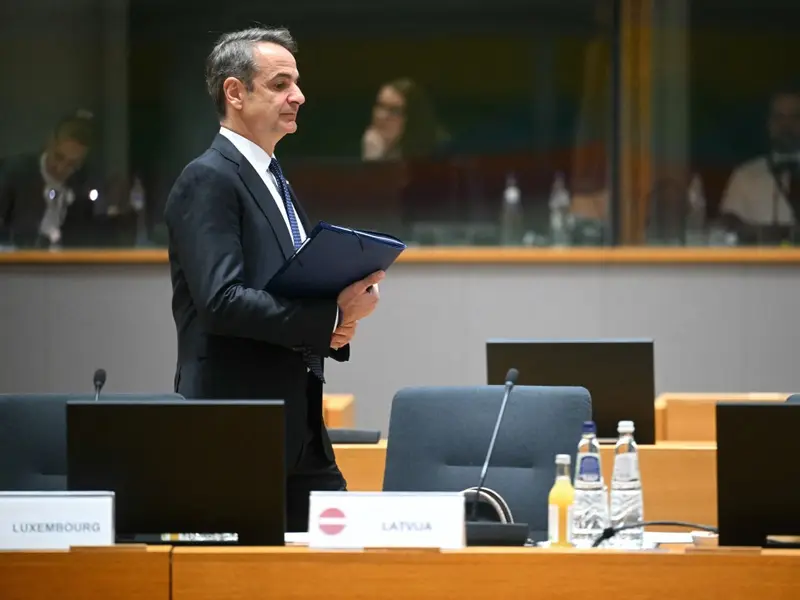
Greece will ban children under the age of 15 from accessing social media platforms starting January 1, 2027, Prime Minister Kyriakos Mitsotakis announced on Wednesday in a move that positions the country among the global leaders taking decisive legislative action to protect young people from the documented psychological and developmental harms of unregulated social media exposure. The Greece social media ban under 15 was announced through a video message addressed directly to young people across the country, a deliberate and symbolically significant choice that framed the decision not as a restriction imposed on children from above but as an act of protection undertaken on their behalf by a government that takes seriously the evidence of harm that excessive social media use is causing to a generation growing up entirely inside digital environments designed to maximize engagement at any cost to user wellbeing. The announcement immediately drew national and international attention, placing Greece alongside Australia and a growing number of European nations that are concluding that voluntary industry measures and parental guidance alone are insufficient to protect minors from social media platforms whose core business models depend on capturing and holding the attention of the youngest and most psychologically vulnerable users.
Prime Minister Mitsotakis was explicit about the personal and policy motivations behind the decision, describing conversations with parents across Greece who had shared deeply concerning observations about their children. Those parents reported that their children were sleeping poorly, becoming anxious with unusual ease, and spending hours each day absorbed in smartphone use that crowded out physical activity, face-to-face social connection, homework, and the unstructured downtime that children need for healthy cognitive and emotional development. Mitsotakis framed the social media environment as one that subjects children to relentless pressure through constant social comparison, exposure to online commentary and criticism, and the algorithmically driven cycle of content consumption that platforms deliberately engineer to be difficult to interrupt or exit. The prime minister's characterization of social media as featuring addictive design was not rhetorical. It reflected a growing body of research and a hardening regulatory consensus that the engagement-maximizing architecture of major social platforms functions in ways that exploit psychological vulnerabilities, particularly in adolescent users whose impulse control and identity formation processes are still actively developing.
An opinion poll conducted by ALCO and published in February provided important political context for the announcement, showing that approximately 80 percent of those surveyed in Greece approved of a social media ban for minors. That level of public support is extraordinary by the standards of any major policy initiative and reflects how broadly and deeply the concerns about children's social media use have penetrated Greek society across generational, political, and demographic lines. The Greek government had already taken preliminary steps in this direction before the full ban announcement, having previously outlawed mobile phones in schools and established parental control platforms designed to help families limit teenagers' screen time at home. Those earlier measures established both a policy precedent and a technical infrastructure foundation that the 2027 ban will build upon and extend into a comprehensive legal framework covering platform access rather than just device use in specific settings.
Why Greece Is Taking This Step Now and What the Research Evidence Says About Social Media Harm to Children
The decision by Prime Minister Mitsotakis to announce the Greece social media ban under 15 in 2025 reflects a convergence of accumulated research evidence, growing parental concern, and an international policy momentum that has been building across multiple continents over the past several years. The scientific literature on the effects of heavy social media use on adolescent mental health has grown substantially in the past decade, with a range of studies establishing associations between high levels of social media engagement and elevated rates of anxiety, depression, sleep disruption, body image concerns, and social comparison distress among young users. While the causal mechanisms and the strength of these associations remain subjects of ongoing academic debate, the weight of evidence has shifted sufficiently that many public health authorities, child development experts, and government bodies now treat the mental health risks of unregulated adolescent social media use as a serious and actionable concern rather than a speculative or unproven hypothesis.
Sleep disruption is one of the most consistently documented and mechanistically well-understood harms associated with adolescent social media use. The combination of blue light exposure from screens, the psychological stimulation of social content consumption, and the social anxiety triggered by awareness of online activity occurring without one's participation creates a powerful set of barriers to the early and restful sleep that adolescent brain development specifically requires. Greek parents reporting to the prime minister that their children do not sleep well reflects a pattern that pediatric sleep researchers across the world have been documenting and raising alarms about for years. The 2027 ban is in part a response to that specific and well-evidenced harm, with the government concluding that platform design choices that keep children scrolling late into the night represent a public health problem that warrants regulatory intervention rather than reliance on individual family-level solutions.
The addictive design argument that Mitsotakis invoked in his announcement reflects a more structural and systemic critique of social media platforms that goes beyond the content those platforms distribute to the engineering principles underlying how they are built and optimized. Major social media platforms are designed by teams of engineers and behavioral psychologists working specifically to maximize the amount of time users spend on their services, using variable reward mechanisms, social validation signals, and algorithmically personalized content feeds that are calibrated to maintain engagement even when users consciously wish to stop. Those design choices are not accidental features of platforms that happen to be engaging. They are deliberate business decisions made by companies whose advertising revenue depends directly on the volume of human attention they can capture and sell. Applying those engineering techniques to children and adolescents, whose developing brains are neurologically more susceptible to reward-seeking and impulse control challenges than adult brains, is what critics and now governments are increasingly characterizing as an unacceptable form of exploitation that justifies legislative intervention.
How Greece Fits Into the Global Movement to Regulate Children's Social Media Access
Greece's decision to implement a social media ban for children under 15 from 2027 places it within a rapidly growing international movement that is reshaping how governments around the world approach the regulation of digital platforms in relation to minors. Australia became the world's first country to enact a comprehensive social media ban for children when it implemented its law in December, prohibiting access to platforms including TikTok, YouTube, Instagram, and Facebook for users under the age of 16. The Australian legislation was the product of years of parliamentary debate, extensive consultation with child safety experts and mental health professionals, and sustained public pressure from parents and advocacy organizations who argued that the platforms had repeatedly failed to protect young users despite years of voluntary commitments and self-regulatory promises. The Australian example demonstrated that comprehensive age-based social media restrictions were practically and politically achievable, removing the argument that such bans were too technically complex or legally complicated to implement.
The major platforms affected by the Australian ban responded with a mixture of formal compliance and continued public skepticism about the policy's effectiveness. Meta, Snapchat, and TikTok each stated publicly that they did not believe Australia's ban would succeed in protecting young people from online harms, while simultaneously committing to comply with the legal requirements it established. That combination of technical compliance and expressed policy disagreement reflects the platforms' broader strategic posture toward age-based regulation, which is to contest the policy arguments while avoiding the regulatory and reputational costs of open non-compliance with democratically enacted law. Greece and the other countries now moving toward similar restrictions can expect to encounter the same pattern of platform behavior as they implement their own legislative frameworks.
Beyond Australia, a significant number of countries are either actively considering or already in the process of legislating social media restrictions for minors. The United Kingdom, France, Denmark, Poland, and Malaysia are among the nations that have advanced legislative proposals or formal policy reviews targeting children's social media access in some form. That geographic and political diversity of countries taking action signals that the movement toward age-based social media regulation has crossed the threshold from fringe policy proposal to mainstream governance response, reflecting a global convergence of concern among policymakers about the documented and perceived harms of unregulated adolescent social media use. Greece's announcement accelerates that momentum and adds the weight of an EU member state's formal legislative commitment to a trend that Prime Minister Mitsotakis explicitly said he hopes to extend to the entire European Union.
Mitsotakis Calls for EU-Wide Digital Age of Majority and Coordinated Enforcement Framework
Perhaps the most strategically significant dimension of Prime Minister Mitsotakis's announcement was not the domestic ban itself but his parallel call for coordinated European Union action to establish continent-wide protections for children on social media platforms. Writing directly to European Commission President Ursula von der Leyen in a separate letter timed to coincide with his domestic announcement, Mitsotakis argued forcefully that national measures taken by individual EU member states would be insufficient on their own to effectively protect minors from the harms of social media addiction and that only a unified European framework could create the scale and enforcement consistency necessary to hold global platforms genuinely accountable.
The specific proposals Mitsotakis advanced in his letter to von der Leyen were concrete and ambitious in scope. He called for the establishment of an EU-wide digital age of majority set at 15, meaning that across all 27 member states, social media platforms would be legally prohibited from permitting users below that age threshold to access their services. He further proposed mandating age verification and regular re-verification requirements for all platforms operating in the European market, addressing one of the most persistent technical challenges in implementing age-based restrictions, which is ensuring that verification systems are robust enough to prevent easy circumvention through false age declarations or borrowed credentials. A harmonized enforcement and penalty framework across EU member states would ensure that platforms face consistent and meaningful consequences for violations regardless of where within the bloc those violations occur, preventing the forum shopping and regulatory arbitrage that has historically allowed large technology companies to concentrate their EU legal exposure in jurisdictions with lighter enforcement cultures.
Mitsotakis proposed an ambitious timeline for EU action, urging the European Commission and member states to put a unified digital age of majority system in place by the end of 2026, a deadline that would require the EU institutions to move with unusual speed given the complexity of the legislative and regulatory processes involved. The proposal positions Greece as a driving force within the EU on children's digital protection policy and reflects Mitsotakis's stated confidence that Greece's domestic initiative will not remain isolated but will instead become a model that other EU members and ultimately the bloc as a whole will follow. Whether the European Commission responds with the urgency and ambition the Greek proposal calls for will depend on the political will of other member states and the institutional appetite within the commission for adding another major digital regulation initiative to an already crowded legislative agenda.
What the Greece Social Media Ban Means for Platforms, Parents, and Young People
The practical implementation of the Greece social media ban under 15 from January 1, 2027 will require the development and deployment of age verification systems capable of reliably distinguishing users below the 15-year threshold from those above it when they attempt to access covered platforms. That technical challenge is one that other jurisdictions implementing similar restrictions have grappled with extensively, and the solutions being explored range from government identity document verification integrated with platform onboarding processes to parental consent mechanisms and device-level age assurance systems. Greece's two-year implementation timeline between the announcement and the January 2027 effective date is likely partly designed to allow both the government and the platforms to develop, test, and refine the technical infrastructure needed to make the ban practically enforceable rather than easily circumvented.
For parents of children currently under 15, the announcement provides both validation of concerns many have already been experiencing and a concrete policy commitment that additional support structures will be available before the ban takes effect. The government's existing parental control platform infrastructure and the mobile phone ban already implemented in schools create a foundation that the 2027 legislation can build upon, potentially creating a more coherent and mutually reinforcing set of tools for families managing their children's digital lives. The public support level of 80 percent revealed in the February ALCO poll suggests that most Greek parents will welcome rather than resist the ban, reducing the political friction that sometimes accompanies paternalistic government interventions in personal and family decision-making.
For the young people the ban is designed to protect, the announcement will inevitably generate mixed reactions ranging from relief among those who have personally experienced the anxiety and sleep disruption the prime minister described to frustration among those who use social media primarily for creative expression, social connection, and access to information and communities that matter to them. The challenge for the Greek government as it implements the ban will be to ensure that the restrictions genuinely protect children from documented harms without unnecessarily severing the positive connections and opportunities that digital platforms can also provide when accessed in age-appropriate and well-designed ways. Getting that balance right will require ongoing engagement with young people themselves, not only the parents and policymakers whose perspectives have so far dominated the public debate about children's social media use and its consequences.