
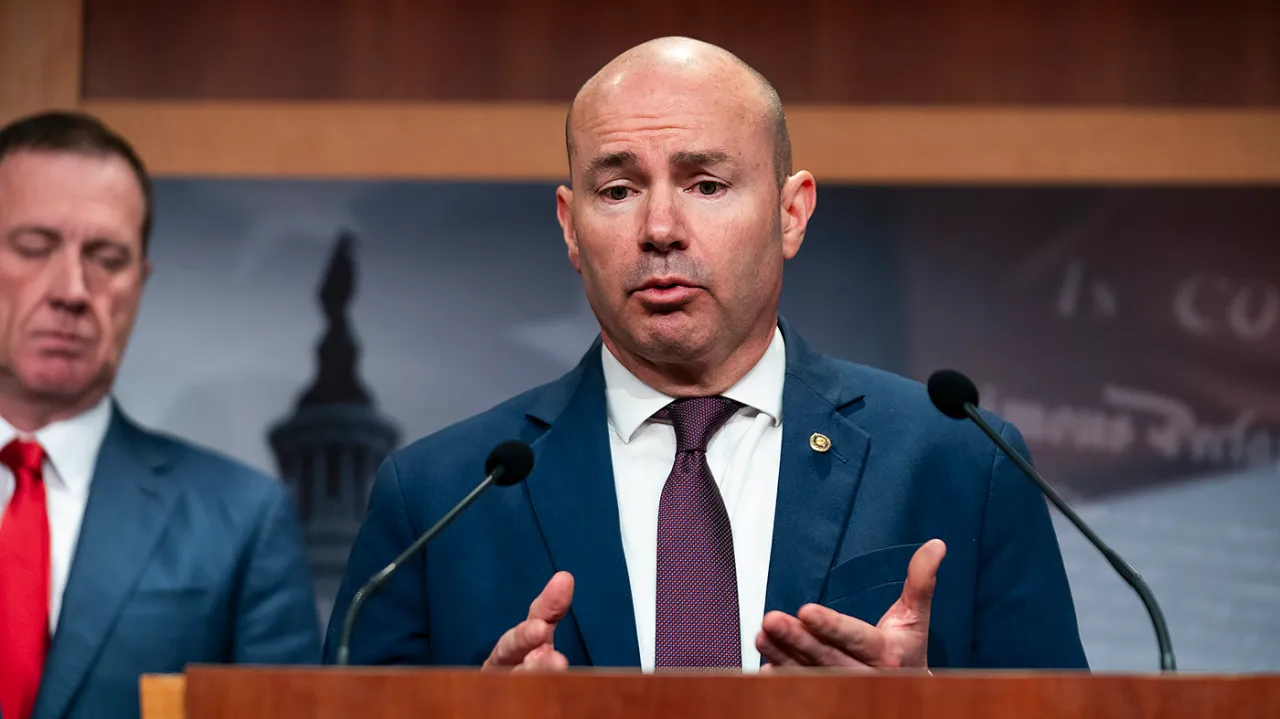
Utah Senator Mike Lee has positioned himself at the center of a pivotal Senate debate that could permanently alter the federal judicial confirmation process. As Republicans eye control of the Senate Judiciary Committee, Lee has signaled plans to modify the century-old blue slip custom, a tradition that allows home-state senators to block federal district judges, U.S. marshals, and U.S. attorneys nominated by the White House.
The procedural maneuvering comes amid mounting frustration from conservative allies over stalled appointments. However, Lee’s willingness to adjust Senate norms has exposed deep tactical divisions within his own party, sparking fresh debates over institutional power, presidential authority, and the future of the federal bench.
The Battle Over Judicial Nominations and the Blue Slip Tradition
In the U.S. Senate, the blue slip is an unwritten, century-old courtesy where home-state senators submit an opinion on a presidential nominee for a federal judgeship or U.S. attorney post in their state. Withholding the blue slip historically acted as a unilateral veto, stopping a nomination from advancing through the Judiciary Committee.
During the first Trump administration, Senate Republicans modified the rule for federal circuit court judges, allowing appellate nominees to proceed without home-state approval. The broader debate over Senate procedure and judicial confirmations has been shaped by earlier fights over the federal judicial confirmation process. However, the custom remained largely intact for federal district courts. Now, as a prominent mike lee maga senator aligned with President Donald Trump's judicial agenda, Lee aims to revisit the practice to prevent Democratic senators from blocking conservative appointees in blue or purple states.
Trump has publicly blasted the tradition as an outdated custom that limits executive authority, calling on Senate leadership to abandon it completely. While Lee has acknowledged the need for reform, he has carefully avoided advocating for a total repeal.
"There is no appetite to just get rid of them," Lee noted in recent public statements, emphasizing that while the blue slip practice must evolve to prevent political obstruction, complete elimination remains off the table for many colleagues.
Intraparty Friction: Traditionalists Push Back Against Procedural Overhaul
Lee’s proposed changes to the mike lee blue slip practice have met notable resistance within Republican ranks. Senior GOP lawmakers and institutionalists fear that destroying home-state consultation will strip individual senators of one of their most powerful leverage tools, especially when Republicans inevitably return to the minority.
The proposal has highlighted significant mike lee intraparty friction, pitting reform-minded conservatives against long-serving committee members like Senator Chuck Grassley. Grassley, a longtime defender of the blue slip, has consistently argued that the process forces the White House to consult with home-state lawmakers, preventing radical appointments from either side of the aisle.
Senate Faction | Key Stance on Blue Slips | Primary Argument |
Reform-Minded Conservatives (e.g., Mike Lee) | Modify or limit home-state veto power | Prevents minority obstruction and accelerates conservative judicial confirmations |
GOP Traditionalists (e.g., Chuck Grassley, John Cornyn) | Preserve the blue slip custom | Protects senatorial prerogatives, ensures local consultation, and guards minority rights |
Senate Democrats | Maintain full blue slip veto | Safeguards home-state influence and maintains checks on executive power |
Other senior Republicans, including Senator John Cornyn, have emphasized Lee’s reputation as a constitutional scholar, expressing confidence that any adjustments will respect institutional boundaries. Meanwhile, lawmakers like Louisiana Senator John Kennedy have warned that attempting to abolish the blue slip entirely would face strong opposition on the Senate floor, as most senators fiercely guard their home-state appointment privileges.
Social Media Campaigns and the Push for the SAVE America Act
Beyond judicial procedure, Lee has actively leveraged digital platforms to mobilize populist support for major legislative priorities. Through posts targeting mike lee x the save america act, the Utah senator has repeatedly championed the Safeguard American Voter Eligibility (SAVE) Act, demanding strict federal proof-of-citizenship requirements for voter registration.
Lee has used his platform on X (formerly Twitter) to tie the election integrity bill directly to broader government funding fights, urging his colleagues to hold the line against Democratic opposition. By blending aggressive legislative tactics with public campaigns, Lee has solidified his role as a prominent parliamentary strategist for the modern conservative movement.
Conclusion
Senator Mike Lee’s campaign to reform the Senate blue slip custom underscores a growing rift between institutional tradition and party strategy. By challenging long-held judicial customs, Lee is attempting to streamline the confirmation process for conservative judges while navigating pushback from colleagues determined to protect senatorial rights. As debate over the judiciary intensifies, how Senate Republicans handle the blue slip tradition will shape both the makeup of the federal courts and the balance of power inside the Senate for years to come.