
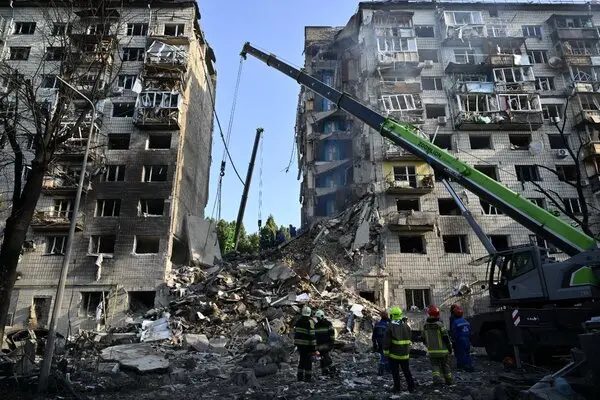
Russia strikes Kyiv Odesa Pivdennyi port maritime Ukraine 2026 campaign has intensified on Thursday with Russia's defence ministry confirming it struck military and industrial facilities in the Ukrainian capital alongside infrastructure at the Black Sea ports of Odesa and Pivdennyi and two Ukrainian naval vessels, as Ukrainian officials confirmed that ballistic missiles struck at least two Kyiv districts in the early hours of Thursday morning, triggering fires and killing two people in a capital strike whose stated Russian justification targeted facilities the defence ministry described as involved in the production and storage of medium and long-range drones. Russia said it also hit infrastructure at the ports of Odesa and Pivdennyi used to receive, store, and handle military cargoes and fuel supplies, and confirmed striking a maritime vessel and a high-speed boat belonging to the Ukrainian armed forces while they were en route to ports in the Odesa region, creating the most comprehensive single-day Russian strike package against Ukrainian military, industrial, and port infrastructure in recent weeks. The Thursday strikes fit within the specific mutual economic warfare pattern that has been intensifying, with Ukrainian forces hitting Russian energy infrastructure including oil tankers while Russia has escalated its attacks on Black Sea ports in recent weeks in a tit-for-tat economic degradation campaign whose civilian and infrastructure costs accumulate with each exchange.
The strikes on Kyiv's drone production and storage facilities, if confirmed by Ukrainian officials, represent Russia's most direct effort to degrade the specific military capability whose long-range application has been the most operationally consequential Ukrainian asset in the current conflict phase, with Ukrainian drones having struck targets thousands of kilometres inside Russian territory including Ural industrial cities and Moscow-adjacent facilities in the campaign whose reach has been forcing Russian air raid alerts across regions that the official conflict narrative had positioned as safely distant from the front. The drone production and storage facility targeting reflects the specific Russian strategic logic of attempting to reduce the source of the capability rather than simply defending against its deployment, and its application to Kyiv facilities signals Russian targeting intelligence about where in Ukraine's drone industrial base the production and forward storage nodes are concentrated.
The two civilians killed in Thursday's Kyiv strike provide the specific human cost whose documentation Ukrainian officials have consistently prioritised as the accountability record of Russian targeting in the capital, creating the international record of civilian casualties whose accumulation constitutes the humanitarian argument against the Russian military operations and whose specific instance in each strike reminds the international community that the conflict's operational military targeting has consequences for civilian populations and civil infrastructure that cannot be entirely separated from the military justifications that the Russian defence ministry provides.
How Mutual Economic Targeting Became the Conflict's Current Strategic Logic
The mutual economic targeting dynamic that Thursday's strikes reflect has developed over the past several months into the most strategically significant dimension of the Ukraine-Russia conflict's current phase, with both sides having identified the degradation of the other's economic infrastructure as a more achievable and more cumulatively costly objective than the conventional territorial gains whose pursuit has been producing extremely high casualties for limited ground-level change. Ukraine's drone strikes against Russian oil refineries, storage facilities, and tankers in the Black Sea and Sea of Azov represent the Ukrainian side's specific application of this economic warfare logic, targeting the oil export revenue that finances Russia's military campaign and the energy production infrastructure whose disruption imposes the compounding costs on the Russian economy that conventional battlefield attrition cannot achieve at equivalent cost-effectiveness for Ukraine's own force expenditure.
Russia's intensified Black Sea port strikes, of which Thursday's Odesa and Pivdennyi strikes are the latest expression, represent the Russian counter-application of the same economic targeting logic, directing strike assets against the infrastructure through which Ukraine receives military supplies, handles fuel for its armed forces, and maintains the commercial shipping activity whose continuation provides the economic activity and foreign exchange earnings that sustain Ukraine's economy during the conflict. Odesa's port complex is not simply a commercial facility but the critical node in Ukraine's military supply chain whose disruption the Russian defence ministry's characterisation of the strike targets as military cargo and fuel supply infrastructure directly addresses, framing the port strikes within the legitimate military targeting framework of dual-use infrastructure whose military function makes it targetable even when its commercial function also affects civilian economic activity.
The maritime vessel and high-speed boat strikes while en route to Odesa region ports reflect the specific extension of the port targeting logic to the vessels themselves rather than only the port facilities, creating the naval interdiction dimension that threatens the supply chain at the maritime transit stage rather than only at the terminal stage. The targeting of Ukrainian naval assets in open water adds the sea control dimension to what has been primarily a land-based and port-based targeting campaign, suggesting an expansion of Russian strike ambition to include denial of the waterways that supply and naval vessels use rather than simply the port facilities they transit through.
The Kyiv Drone Facility Strike and Its Strategic Significance
Kyiv's status as Ukraine's political, industrial, and logistical capital means that strikes on the capital serve multiple simultaneous purposes in Russian military doctrine: the direct degradation of specific military-industrial targets located there, the psychological pressure on Ukrainian political leadership and the civilian population whose daily life is disrupted by air raid alerts and strike damage, and the demonstration of Russian strike reach that communicates to both domestic and international audiences that no part of Ukrainian territory is beyond Russia's targeting capability. Thursday's strikes on drone production and storage facilities specifically address the dimension of Ukraine's military capability that has been most operationally impactful in the current phase, with the long-range drone campaign having achieved the specific strategic goal of imposing costs on Russian territory that Ukraine's conventional military cannot reach through ground operations and whose political effect on the Russian domestic narrative about the conflict's geographic containment has been the most significant.
The ballistic missile delivery of Thursday's Kyiv strikes, confirmed by Ukrainian officials, reflects the specific targeting decision to use high-speed, harder-to-intercept delivery systems for the capital strikes rather than the slower cruise missiles and drones that Ukraine's air defence network has achieved higher intercept rates against, suggesting Russian tactical adaptation to the specific air defence capabilities that Kyiv's concentrated defence systems provide. Ballistic missiles' higher interception difficulty makes them the preferred delivery system for targets whose destruction Russian planners prioritise over the risk of interception, with the drone production facilities' strategic value to Ukraine justifying the use of more expensive and harder-to-intercept delivery systems rather than the slower munitions whose interception Ukraine's Kyiv-area air defence has been demonstrating capability against.
The Port Infrastructure Damage and What Thursday's Pattern Signals
The simultaneous targeting of both Odesa and Pivdennyi ports in Thursday's strike package reflects Russian strike planners' effort to affect the full range of the Odesa region's port infrastructure rather than allowing the degradation of one port to be compensated by increased throughput through the other, creating the cumulative port capacity reduction whose strategic effect is greater than degrading either facility individually. Pivdennyi, also known as Yuzhne, functions as Ukraine's primary terminal for bulk liquid cargoes including fuel and chemical products, making its infrastructure's targeting specifically relevant to the fuel supply function that the Russian defence ministry's targeting characterisation highlighted, while Odesa's port handles the broader range of general cargo and military logistics that the defence ministry described as military cargoes.
The infrastructure facilities at both ports targeted for the specific function of receiving, storing, and handling military cargoes and fuel supplies provides the Russian defence ministry's legal targeting justification within the laws of armed conflict's dual-use infrastructure framework, which allows military targeting of civilian infrastructure whose actual current use for military purposes makes it a legitimate military objective regardless of its commercial function. Ukraine's use of its port infrastructure for military supply, which is operationally necessary for sustaining the armed forces in the south and southwest of the country, creates the dual-use character that Russia's targeting characterisation invokes, while Ukraine's counter-characterisation of the port strikes as attacks on civilian infrastructure reflects the genuine civilian economic harm that port strikes produce regardless of the military targeting justification.
The maritime vessel and high-speed Ukrainian naval boat struck en route to Odesa region ports represent the strike package's naval interdiction element, adding the specific at-sea targeting that prevents Ukrainian naval assets from reaching their destination rather than only hitting them at their port base. Thursday's comprehensive package of Kyiv drone facility strikes, dual port infrastructure attacks at Odesa and Pivdennyi, and open-water naval vessel targeting documents a Russian strike campaign on Thursday whose geographic and target-type scope across the Ukrainian capital, the Black Sea port region, and the maritime transit routes is the most comprehensive single-day strike picture of the current conflict phase and whose full damage assessment will determine the operational impact on Ukraine's military capability and supply chain that Russian planners were targeting.