
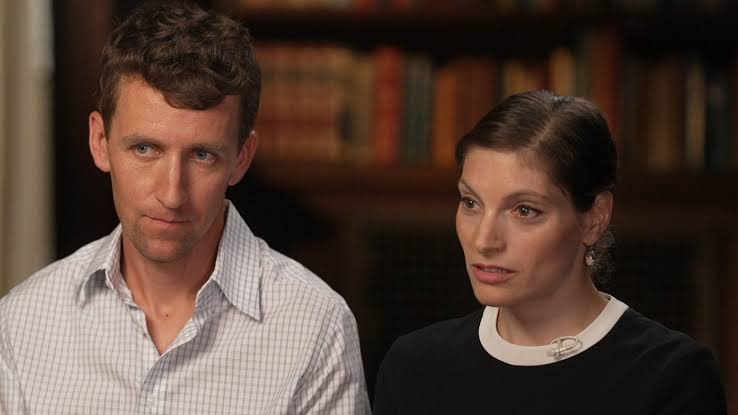
In his first televised appearance, Patrick Clancy on 60 Minutes last night addressed the horrific 2023 tragedy that claimed the lives of his three young children, offering an intimate look at his ongoing journey through grief, forgiveness, and recovery.
The moving interview comes hot on the heels of a major court update in Massachusetts. On September 4, a judge declared a mistrial in the murder trial of his ex-wife, Lindsay Clancy. Eleven jurors voted to clear Lindsay of criminal responsibility, concluding she was suffering from severe postpartum psychosis when she strangled five-year-old Cora, three-year-old Dawson, and eight-month-old Callan in their family home before trying to take her own life. A single holdout juror sided with prosecutors, who argued she was aware of her actions.
Now, with Plymouth County prosecutors set to decide whether to attempt a re-trial, Patrick broke his long public silence to reclaim his narrative, defend his family’s honor, and shed light on the devastating realities of perinatal mental illness.
Pushing Back Against Online Speculation and Conspiracy Theories
During the segment, Patrick Clancy on 60 Minutes directly confronted the wave of toxic internet speculation and conspiracy theories that targeted him throughout the trial. Online critics, claiming to support Lindsay, frequently blamed Patrick for failing to notice the warning signs or provide adequate care.
"It's deeply harmful to the legacy of my children," Patrick said, reflecting on the harsh public discourse. "It is a huge distraction from what really matters here, which is perinatal mental health. And it's done real harm to real people, myself included, but also others."
He emphasized how painful it has been to navigate public life while facing persistent internet rumors. When lie after lie spreads online, Patrick noted, onlookers start to believe the fiction, leaving the victims to carry an unfair burden of online abuse alongside unimaginable personal grief.
The Warning Signs and the Deceptive Nature of Mental Illness
Reflecting on the months leading up to the tragedy, Patrick recalled noticing early symptoms in late 2022, shortly after their youngest son Callan was born. Lindsay began struggling with severe sleep deprivation and overwhelming anxiety.
Like many spouses, Patrick admitted he was unprepared for the reality of severe maternal health crises. "I didn't know how to manage a postpartum illness," he acknowledged, emphasizing how easily severe psychological distress can hide behind everyday routines. "Mental illness has this ability to be tragically deceptive. So I'm sure there are things that I didn't see."
Lindsay's condition deteriorated rapidly in December 2022, prompting a stay at McLean Psychiatric Hospital over New Year's Eve. Tragically, just 17 days after her release from the facility, the attack occurred.
Recalling those agonizing hours, Patrick shared a heartbreaking memory from the hospital as doctors tried to revive eight-month-old Callan, who had briefly regained a heartbeat.
"I remember just thinking, 'Just give me one. Just give me one kid, and I would raise him as best I could, and I would give him the best life I possibly could. I'd tell him about his brother and sister,'" Patrick recounted. Tragically, Callan passed away shortly after.
Choosing Forgiveness and Rebuilding a Broken Life
Despite the incomprehensible loss, Patrick has chosen a path of grace. He continues to attribute the tragic event to his ex-wife's severe mental condition rather than malice, openly rejecting public narratives labeling her as a "killer mom."
"I think I did the best I could with what I had at the time," he stated on 60 minutes Patrick Clancy. "And I live with the outcome. I live with it every day."
Both Patrick and Lindsay have since filed separate medical malpractice lawsuits against the medical providers and institutions involved in her care, alleging systemic failures in diagnosing and treating her condition.
The road to healing required radical changes. Facing unbearable memories and suicidal thoughts, Patrick eventually moved to New York City to seek anonymity and rebuild his identity. To help process his grief, he kept his children's personal items, connected with peer specialists at Postpartum Support International, and joined a local running group where he met his current wife, Rachel Danis.
Joining him on 60 Minutes, Patrick Clancy's wife Rachel shared her own perspective on supporting a partner through deep trauma.
"I know I can't bring his kids back," Rachel said. "But if I can honor them and allow Pat to grieve but also just continue to honor them in the present... I guess that's all I can do."
As Massachusetts prosecutors weigh whether to pursue a second trial, Lindsay Clancy remains under treatment at Tewksbury Hospital. For Patrick, the focus remains firmly on honoring Cora, Dawson, and Callan while advocating for better understanding around perinatal mental health struggles.
Conclusion
Patrick Clancy's appearance on 60 Minutes serves as a poignant reminder of the far-reaching impact of postpartum psychiatric crises and the human cost behind sensationalized legal battles. Beyond the headlines and legal deadlock, Patrick's message centers on dignity, healing, and turning personal catastrophe into a call for better mental healthcare systems. Stories like this also demonstrate the human cost behind criminal cases, where the consequences extend far beyond the courtroom. By choosing to forgive and publicly honor the memory of his children, he hopes to refocus the conversation on maternal mental health support so other families might avoid a similar fate.