
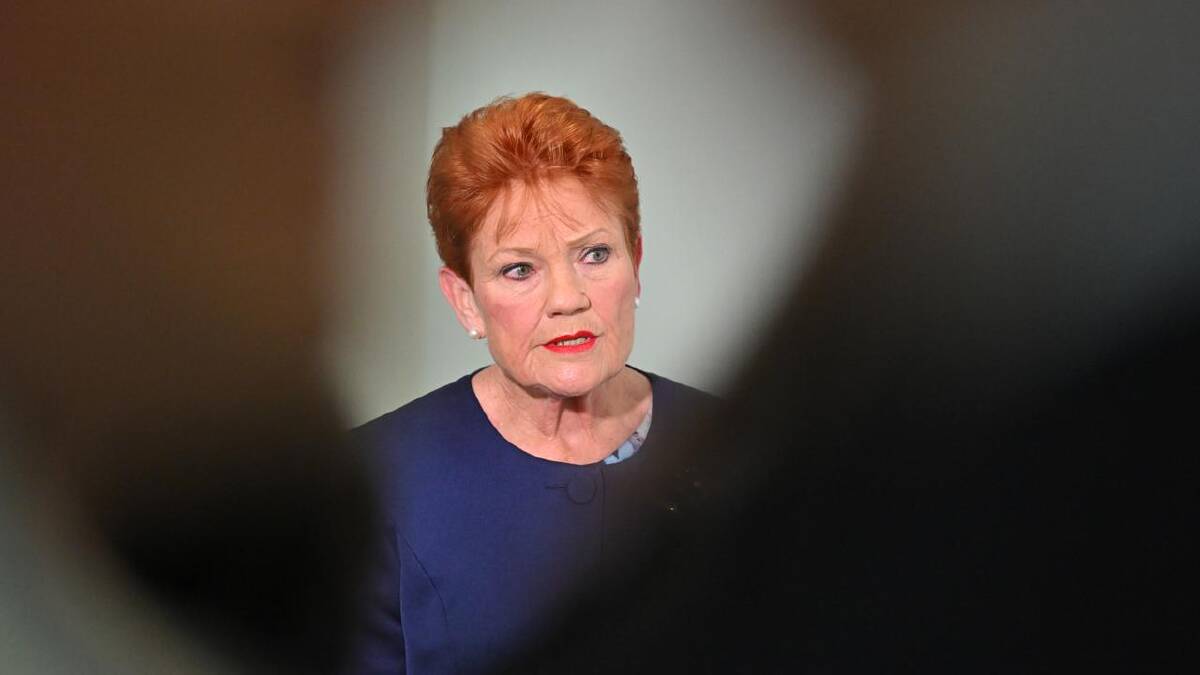
The Pauline Hanson latest Indigenous controversy erupted on September 14, 2026, after One Nation leader Pauline Hanson made remarks on a podcast describing Indigenous Australians as the “most primitive race on Earth.” Indigenous Australians Minister Malarndirri McCarthy condemned the comments, calling them outrageous and racist.
By the following day, Hanson offered a qualified apology, saying she was sorry if she had offended people. The response intensified debate over her remarks and broader political record, adding another major controversy to her three decades in Australian public life.
The Primitive Race Remarks: What She Actually Said
The remarks that ignited this week's firestorm were made on a podcast and surfaced publicly this week, drawing immediate condemnation from across Australia's political spectrum. Hanson called Indigenous Australians the most primitive race on Earth. When the backlash arrived, she did not immediately retract. She contextualised.
Speaking to News24, she said: "If we go back to the time of settlement in Australia, they were primitive compared to the settlers that came out here from England. But I'm not talking about those terms now. It's not about now."
Let that reasoning sit for a moment. The defence offered for calling an entire people the most primitive race on Earth was that she was speaking historically, and that by the standards of British colonial settlers in the 18th century, the characterisation was accurate. This is not an apology. This is the specific rhetorical structure that has characterised Hanson's approach to controversy for 30 years: say something that crosses a clear line, offer a contextual explanation that does not retract the substance, and then express regret for the hurt while maintaining the position.
Indigenous Australians Minister McCarthy called the comments outrageous, completely racist, and divisive. Liberal Senator Kerryn Liddle called them shameful. Senator Jacinta Nampijinpa Price, herself an Indigenous woman and a senator from the conservative side of politics, accused Hanson of deliberate ignorance. Thomas Mayo, writer and human rights advocate, described the statements as shockingly racist and ignorantly wrong, while noting that given Hanson's record, they came as no surprise.
Writer Thomas Mayo also pointed to the Brewarrina Fish Traps as a rebuttal of Hanson's historical framing. These ancient fish traps, thousands of years old, are among the oldest human-made structures on earth. The civilization that built them was not primitive. It was sophisticated beyond what the word primitive, deployed in any century, can accommodate.
The Qualified Apology: What Sorry If I Caused Offence Actually Means
Senator Hanson apologised if she had offended people by using the term primitive, and addressed criticising the amount of time that Prime Minister Anthony Albanese's mother Maryanne lived in public housing, arguing the remarks were not derogatory.
Sorry if I caused offence is not an apology. Every linguist, every psychologist, and every ordinary person who has ever received one knows this. It is a conditional expression whose grammar places the burden of sensitivity on the person harmed rather than the burden of accountability on the person who caused the harm. Sorry if you were offended, say: I did nothing wrong, but I am sorry you felt something.
Indigenous Affairs Minister McCarthy told the ABC: "Sorry if I caused offence is not really an apology. She says outrageous things about Indigenous Australians, disgusting things, and then walks back into this building and says she didn't say it at all."
The second part of Hanson's qualified apology week concerned Prime Minister Albanese's late mother. In a February 2026 podcast with Karl Stefanovic, Senator Hanson had criticised Maryanne Albanese for living in public housing for over six decades, describing the situation as not on and characterising the Prime Minister's references to his background as pathetic. Albanese's mother suffered from severe rheumatoid arthritis. She was a single mother who raised her son in circumstances of genuine hardship. Albanese responded emotionally, stating his mother was way out of Pauline Hanson's league. He was right.
Hanson's apology for the Albanese comments was equally qualified. She said her criticism was directed at housing commission policy rather than at the Prime Minister's mother personally. She said she was sorry if he had taken offence. She had said what she said. The apology did not change the substance.
Immigration, the Gas Controversy, and the Broader One Nation Politics
The pauline hanson broader One Nation politics that surrounds this week's specific controversy reflects three decades of a consistent political project whose core positions have never fundamentally shifted even as their specific expression has evolved.
The dispute unfolded amid One Nation's presentation of proposals for a significant reduction in migration. The party, founded and led by Hanson, has long advocated stricter immigration restrictions and opposed multiculturalism. These debates are part of a wider international discussion around migration policy and restrictions on foreign workers.
The immigration policy presentation, timed to coincide with the week's Indigenous controversy, is the specific One Nation political rhythm that her operatives have refined over 30 years: anchor the week's conversation in identity and culture, present a policy position that appeals to the same base, and allow the controversy to generate the coverage that advertising budgets could not buy.
Her burqa Senate chamber incidents, the most recent in November 2025 when she walked into the Senate chamber wearing a full burqa as a protest stunt and was subsequently censured, document the same political methodology applied to Muslim immigration. Hanson, the leader of the anti-Muslim, anti-immigration One Nation minor party, was accused of performing a disrespectful stunt when she walked into the Senate shrouded in the head-to-ankle garment to protest fellow senators' refusal to consider her bill that would ban the burqa and other full-face coverings in public places.
The gas and donor controversies that have followed One Nation in recent years involve questions about the alignment between corporate donor interests and the party's policy positions on fossil fuel advocacy. Hanson has consistently positioned One Nation as a defender of working Australians against elite coastal environmentalism, and her energy policy positions have attracted support from fossil fuel-aligned interests whose donations to political parties are a matter of public record.
The Family Law Debate: A Different Kind of Controversy
The pauline hanson family law debate represents the One Nation policy area where her positions have attracted the most cross-partisan complexity. Her Senate work on family law reform, particularly around fathers' rights, shared parenting, and the Family Law Act's application in contested custody disputes, has produced a body of policy advocacy that her supporters characterise as pro-child welfare and her critics characterise as minimising domestic violence risks.
She has long argued that the family law system disadvantages fathers and that false allegations of domestic violence are used as a tactical weapon in custody disputes. Domestic violence advocates have consistently and forcefully contested this characterisation, pointing to research that documents the genuine prevalence of violence in relationship dissolution contexts and the specific risks that minimising those claims creates for vulnerable women and children.
The family law debate, unlike the Indigenous and immigration controversies, has not resolved into a clean accountability narrative because the underlying policy questions are genuinely complex and the competing research evidence is contested by people who share a genuine concern for child welfare even as they reach different policy conclusions.
How She Has Survived 30 Years of This
Here is the uncomfortable political truth about Pauline Hanson broader One Nation politics: it has survived because it speaks to genuine anxieties in the Australian community that mainstream politics has not always adequately addressed.
Hanson first entered parliament in 1996 on a platform of immigration restriction and Indigenous policy critique that mainstream politicians dismissed as bigotry and that significant sections of regional and working-class Australia heard as someone finally saying what they felt. Whether or not her specific characterisations were accurate, the economic anxieties, the cultural displacement concerns, and the sense of being ignored by a political establishment focused on urban progressive priorities were real experiences that real Australians were having.
She lost her seat. She returned. She built One Nation into a genuine Senate force. She survived multiple internal party controversies, including the extraordinary 2003 conviction for electoral fraud that was subsequently overturned on appeal. She survived the burqa censure. She survived this week's Indigenous remarks controversy.
Hanson said: "I've always put my foot in my mouth in the way I come out and say things. I'm not the most eloquent speaker in how I deliver something, what I say.
That self-awareness, however limited, is the specific quality that has allowed her to absorb controversy after controversy without fatal political damage. She does not pretend to be something she is not. Her supporters, who have voted for her across six federal election cycles, know exactly what they are getting. And they keep voting for her anyway.
Conclusion: The Controversy That Never Quite Ends
The Pauline Hanson Indigenous controversy in September 2026 adds another chapter to her long record of political disputes. Her qualified apology over the Indigenous remarks drew further criticism, while her family law positions, immigration policies, gas and donor questions, and burqa controversies continue to shape debate around One Nation.
Hanson has remained politically active despite past setbacks, including a conviction later overturned on appeal, electoral defeats and a Senate censure. The latest controversy therefore fits into a broader pattern of political confrontation surrounding her public career, highlighting the continuing debate over her rhetoric, policies and role in Australian politics.