
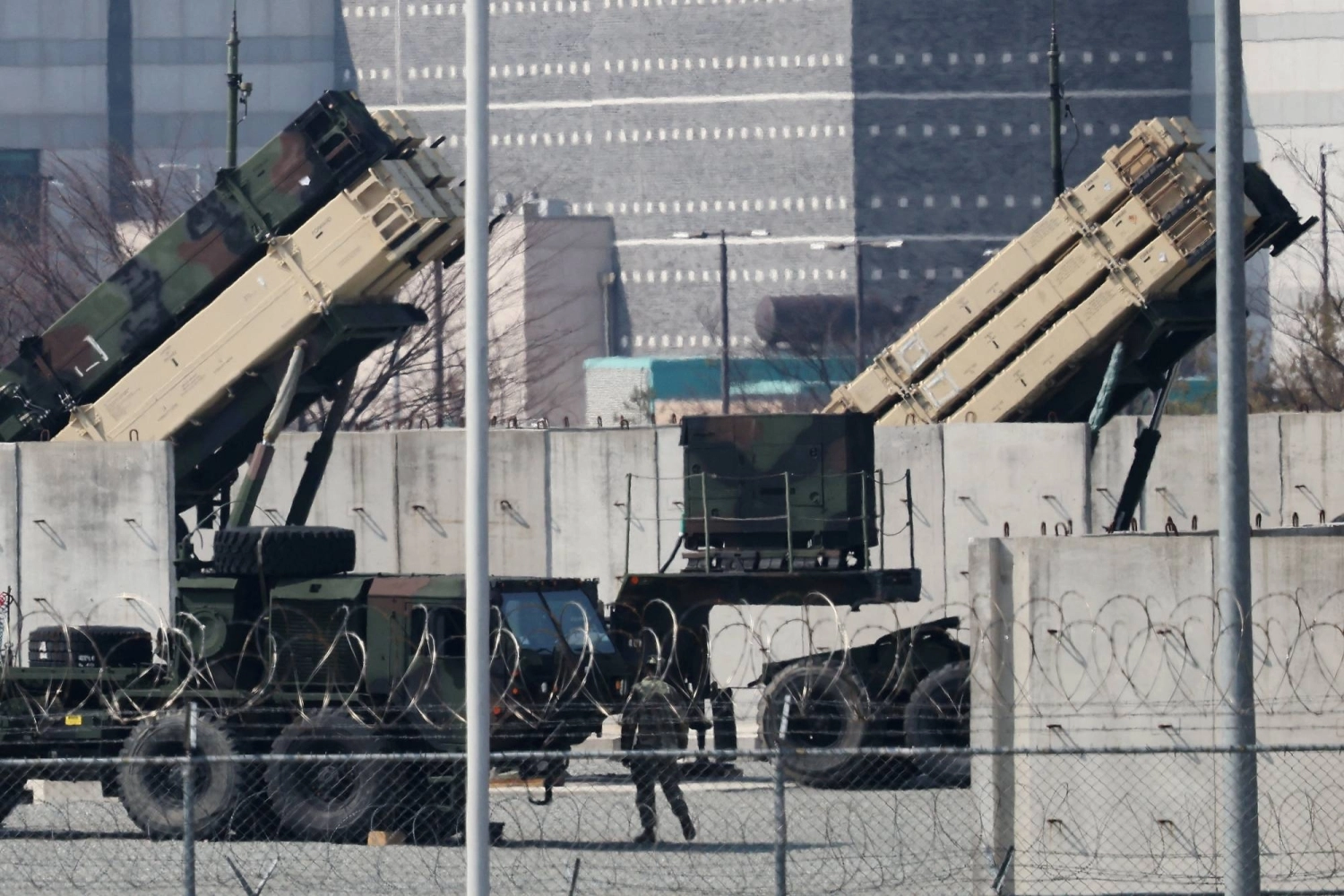
Patriot missile Bahrain civilian blast that injured 32 people including children in a pre-dawn explosion in the Mahazza neighbourhood of Sitra island on March 9 was likely caused by an American-operated Patriot air defence battery located approximately 4 miles southwest of the impacted area, according to an analysis by researchers at the Middlebury Institute of International Studies at Monterey that Reuters has examined and independently verified. The conclusion carries moderate-to-high confidence according to the three researchers who produced it, and was reviewed by two independent target-analysis experts and one Patriot system missile researcher, none of whom found reason to dispute it. Former senior Pentagon targeting advisor Wes Bryant described the researchers' conclusions as pretty undeniable.
Both Bahrain and the United States blamed an Iranian drone attack for the March 9 blast at the time it occurred, with U.S. Central Command posting on X that an Iranian drone had struck a residential neighbourhood in Bahrain. Ten days passed before Bahrain acknowledged for the first time, in response to questions from Reuters, that a Patriot missile was involved in the explosion at all. The Bahraini government statement maintained that the Patriot successfully intercepted an Iranian drone mid-air and that the damage and injuries were not the result of a direct impact to the ground of either the interceptor or the Iranian drone. Neither Bahrain nor Washington has provided any evidence that an Iranian drone was actually involved in the Mahazza incident, and both governments have declined to answer specific questions about the Patriot's role.
The incident sits within a broader pattern of military accountability questions that have emerged from the opening phase of Operation Epic Fury. On February 28, the first day of U.S. strikes on Iran, an Iranian girls school took a direct hit. Reuters previously reported that U.S. Defense Department investigators believe U.S. forces were likely responsible, possibly because of outdated targeting data. The Bahrain blast and the girls school strike represent two incidents in which civilian casualties occurred and in which initial official attributions have been challenged or contradicted by subsequent investigation. The pattern of delayed acknowledgment, incomplete disclosure, and official statements that decline to answer specific questions is a recurring feature of how both governments have managed accountability in the conflict's early weeks.
How Patriot Air Defence Works and What the Bahrain Deployment Represents
The Patriot air defence system is the U.S. Army's primary high-to-medium range aircraft and missile interceptor, manufactured by Raytheon, part of RTX Corp., and deployed across the United States military and its allies as the backbone of layered air defence architecture. A Patriot battery consists of a radar unit, a command hub, and up to eight launchers integrated to detect, track, and intercept incoming aircraft and missiles at ranges and altitudes that shorter-range systems cannot engage. The system has been deployed in combat conditions across multiple conflicts and is regarded as one of the world's most capable air defence platforms, with a track record that includes documented successful intercepts alongside documented failures and incidents in which interceptor missiles have caused unintended damage.
The fundamental challenge that Patriot and similar high-end air defence systems face in the current conflict is the economic asymmetry between the interceptor and the target. Iranian drones used to attack Gulf infrastructure and military facilities cost a fraction of the Patriot interceptors used to destroy them, creating a financial exchange rate that heavily favours the attacking side in a sustained campaign. A single Patriot PAC-3 interceptor missile costs approximately $4 million, while the drones it is used to intercept can cost tens of thousands of dollars or less. At those exchange rates, a sustained drone campaign can deplete expensive air defence inventories faster than they can be replenished while imposing costs that are orders of magnitude smaller on the attacking side. The Bahrain incident illustrates a different dimension of the same problem: the blast from a Patriot interceptor detonating near a residential neighbourhood is itself capable of causing the civilian casualties and property damage that the system is deployed to prevent.
The Bahrain deployment of both American and Bahraini Patriot batteries reflects the island kingdom's critical role in the U.S. military architecture for the Gulf region. Bahrain hosts the U.S. Navy's Fifth Fleet and the regional U.S. naval command, making it one of the most important American military positions in the Middle East and a high-priority target for Iranian strikes designed to impose costs on Washington's regional presence. The proximity of military infrastructure to civilian residential areas in a small, densely populated island nation means that the air defence of military facilities inevitably creates risk for civilian populations in ways that are structurally different from the air defence of remote military installations. Sitra island is home to both residential neighbourhoods and an oil refinery, and the Mahazza neighbourhood where the March 9 blast occurred sits in the overlap between those civilian and industrial areas.
The Night of March 9 and What Actually Happened in Mahazza
The night of March 9 was one of intense activity in Bahrain as Iranian attacks targeted the Sitra oil refinery operated by national oil company Bapco, which declared force majeure hours after the attack. Videos posted to social media showed smoke rising from the facility on the morning of March 9, confirming that Iranian strikes had reached and damaged the refinery despite the air defence systems deployed to protect it. The refinery strike occurred on the same night as the Mahazza residential neighbourhood blast, creating a night of simultaneous civilian and industrial impacts whose investigation and attribution required the kind of careful forensic analysis that the Middlebury researchers subsequently conducted rather than the rapid official attribution that both governments offered within hours of the incident.
Research associates Sam Lair and Michael Duitsman and Professor Jeffrey Lewis of the Middlebury Institute used open-source visual analysis and commercial satellite imagery to reconstruct the blast's trajectory and trace it back to its origin point. They geolocated videos of the blast aftermath to Block 602 of the Mahazza neighbourhood using landmarks that matched commercial satellite imagery and visible street addresses, a process that Reuters independently verified. They then traced the trajectory of the suspect missile backward from the impact area to a Patriot battery site in Riffa, Bahrain's second-largest city, which commercial satellite imagery showed had five launchers visible two days before the March 9 incident. The site's location and orientation were assessed as consistent with the trajectory of the suspect Patriot interceptor.
The video evidence reviewed by the researchers was separately evaluated by Hany Farid, a professor at the University of California at Berkeley specialising in digital forensics, who found no obvious evidence that the video was artificially generated. The earliest posting of the key video that Reuters could find online was at approximately 2 am local time on March 9, consistent with the timeline of the blast and inconsistent with any suggestion that the footage was produced or manipulated after the fact. The combination of geolocation verification, trajectory analysis, satellite imagery correlation, and video forensics authentication gives the Middlebury analysis a methodological foundation that the three independent experts who reviewed it found unconvincing to dispute and that former Pentagon targeting advisor Wes Bryant assessed as pretty undeniable.
The History of Patriot Interceptor Collateral Damage and What It Tells Us
The Bahrain incident is not the first time that a Patriot interceptor has caused civilian casualties and property damage, and placing it in that historical context is important for understanding both the specific incident and the broader strategic questions it raises. During the Gulf War of 1991, the first large-scale combat deployment of the Patriot system, analyses of Patriot performance produced significant controversy about both the system's effectiveness against Iraqi Scud missiles and the collateral effects of interceptor debris and failed intercepts falling on populated areas. Subsequent Patriot deployments in the Gulf region, in Saudi Arabia during Houthi missile and drone campaigns, and in Israel and Ukraine during their respective conflicts have generated recurring incidents in which interceptor missiles or debris have caused unintended civilian harm.
The structural reason for this recurring pattern lies in the physics of air defence in populated environments. When a Patriot interceptor hits a drone or missile target at altitude, the resulting explosion scatters debris across a wide area whose direction and extent depends on the intercept geometry, the altitude of the intercept, and the force of the explosion. When an interceptor misses its target and continues on its trajectory, it eventually impacts somewhere within the territory it was defending. In both cases the potential for civilian harm exists in proportion to the population density beneath the intercept attempt, and in densely populated Gulf environments where military facilities and civilian neighbourhoods are physically proximate the risk is structurally elevated regardless of the skill and intent of the operators.
The Bahraini government's statement that the Patriot successfully intercepted an Iranian drone mid-air and that the damage was not a result of direct ground impact of either the interceptor or the drone is technically consistent with an intercept that generated substantial blast and debris effects at altitude sufficient to cause the observed residential damage and civilian injuries. It is also technically consistent with an interceptor that detonated at low altitude without successfully intercepting a drone, generating the same blast effects without a successful intercept. The distinction matters for the official narrative but may not matter for the people whose homes were destroyed and whose children were hospitalised, whose experience of the blast was defined by its effects rather than by the technical sequence that produced them.
The Investigation Findings, the Official Response, and the Accountability Gap
The Middlebury Institute researchers' conclusion that the Patriot interceptor was likely launched from a U.S. battery rather than a Bahraini battery at moderate-to-high confidence is the most specific and most consequential finding of the investigation, because it places direct American operational responsibility for the blast rather than attributing it to allied forces acting independently. Both the United States and Bahrain operate Patriot batteries on the island, and the distinction between which country's battery fired the interceptor that caused the residential damage has direct implications for accountability, for the official narratives that both governments have constructed, and for the question of why both governments initially attributed the blast to Iranian drone action rather than acknowledging a friendly-fire or self-inflicted damage scenario.
The satellite imagery analysis that identified five launchers at the Riffa Patriot site two days before the March 9 incident provided the physical foundation for the trajectory analysis that traced the suspect missile's path from the Mahazza impact area back to the battery location. That analysis is based on commercial satellite imagery that is publicly available and independently verifiable, giving the Middlebury methodology a transparency that classified intelligence assessments do not have. When three independent experts including a former senior Pentagon targeting advisor review that methodology and find no reason to dispute it, the evidentiary basis for the moderate-to-high confidence conclusion is as robust as open-source investigation can produce in the absence of official disclosure.
The Pentagon's referral of Reuters' questions to Central Command, which did not immediately reply, and the White House official's response that focused on crushing Iran's drone and missile capability while declining to answer specific questions about the Patriot attack are the official response to an analysis whose conclusions are described as pretty undeniable by a former Pentagon insider. That non-response is itself a form of communication it tells observers that the U.S. government is not prepared to publicly acknowledge what the Middlebury analysis documents, and it leaves the accountability question unanswered in a way that protects official narratives at the cost of the transparency that civilian populations affected by the blast have a reasonable claim to expect.
Bahrain's Delayed Acknowledgment and What Ten Days of Silence Revealed
Bahrain's acknowledgment that a Patriot missile was involved in the March 9 Mahazza explosion came ten days after the blast and only in response to direct questions not as a voluntary disclosure to the Bahraini public or to the international community that had been told an Iranian drone was responsible. The ten-day gap between the initial Iranian drone attribution and the Patriot acknowledgment represents a period during which the official account was factually incomplete and potentially misleading, and during which Bahraini citizens who lived in the affected neighbourhood, received medical treatment for their injuries, and watched their homes damaged were given an explanation that did not include the involvement of an air defence missile fired to protect them.
The Bahraini government's explanation that the Patriot successfully intercepted a drone and that the resulting damage was not a direct ground impact of either weapon is framed as a vindication of the air defence system rather than an explanation of why civilian harm occurred. The framing prioritises the operational success narrative over the accountability narrative, and it leaves unanswered the question of why Bahrain chose not to include the Patriot's involvement in its initial public communications about the incident. A government that proactively disclosed that its air defence systems had caused civilian casualties while protecting against Iranian attack would be making a different kind of political and moral statement than one that acknowledges the Patriot's involvement only when pressed by outside investigators ten days later. The difference between those two postures is the difference between accountability and damage control.
The refinery strike that occurred on the same night adds context to the air defence failure dimension of the incident. The oil refinery on Sitra, which the Patriot batteries in Bahrain are presumably deployed partly to protect, was struck by Iranian drones and declared force majeure despite the presence of Patriot systems on the island. The blast in the Mahazza residential neighbourhood injured 32 civilians including children. The combination of civilian harm from a Patriot interceptor and successful Iranian penetration of the refinery's air defences on the same night raises questions about the effectiveness of the current air defence posture that are distinct from the accountability questions about the Mahazza blast but that are equally important for assessing the strategic situation.
The Girls School Strike and the Pattern of Civilian Harm Attribution
The February 28 strike on an Iranian girls school that Reuters previously reported as likely caused by U.S. forces, possibly due to outdated targeting data, and the March 9 Patriot blast in Bahrain's residential neighbourhood represent two incidents within the first ten days of the conflict in which civilian harm occurred, in which initial official attributions were incomplete or incorrect, and in which the full picture emerged through independent investigation rather than official disclosure. That two-incident pattern in ten days is not statistically meaningful on its own, but the pattern of official response to both incidents is institutionally consistent: initial attribution that does not include American responsibility, subsequent investigation that challenges that attribution, and official responses to specific questions that decline to confirm or deny the investigation's findings.
The U.S. military's stated commitment that it never targets civilians is a policy statement about intent rather than an empirical claim about outcomes, and the Bahrain and girls school incidents illustrate the gap between that intent and the operational reality of a high-intensity air campaign in densely populated environments. Outdated targeting data, the collateral effects of interceptor missiles in residential areas, and the inevitable friction of real-world military operations in complex environments all produce civilian casualties that are not the result of targeting intent but that are the result of operational choices whose foreseeable risks were accepted when the campaign was planned and executed. The accountability question is not whether the U.S. military intends to harm civilians but whether the operational choices that foreseeably create civilian harm risk are being disclosed, investigated, and learned from in ways that reduce the frequency and severity of future incidents.
The broader strategic question raised by both incidents is what accountability looks like in a conflict where the attacking side believes its cause is just, where the speed and scale of military operations overwhelms the institutional capacity for real-time transparency, and where the governments involved have strong incentives to attribute civilian harm to the enemy rather than to their own operations. Those incentives are not unique to the United States or Bahrain, and the Middlebury analysis methodology of using open-source imagery and commercial satellite data to independently reconstruct incident trajectories represents one of the most important developments in conflict accountability in the current era. The fact that academic researchers with publicly available tools can produce conclusions that former Pentagon insiders describe as pretty undeniable within weeks of an incident changes the accountability landscape in ways that official information control strategies have not yet fully adapted to.