
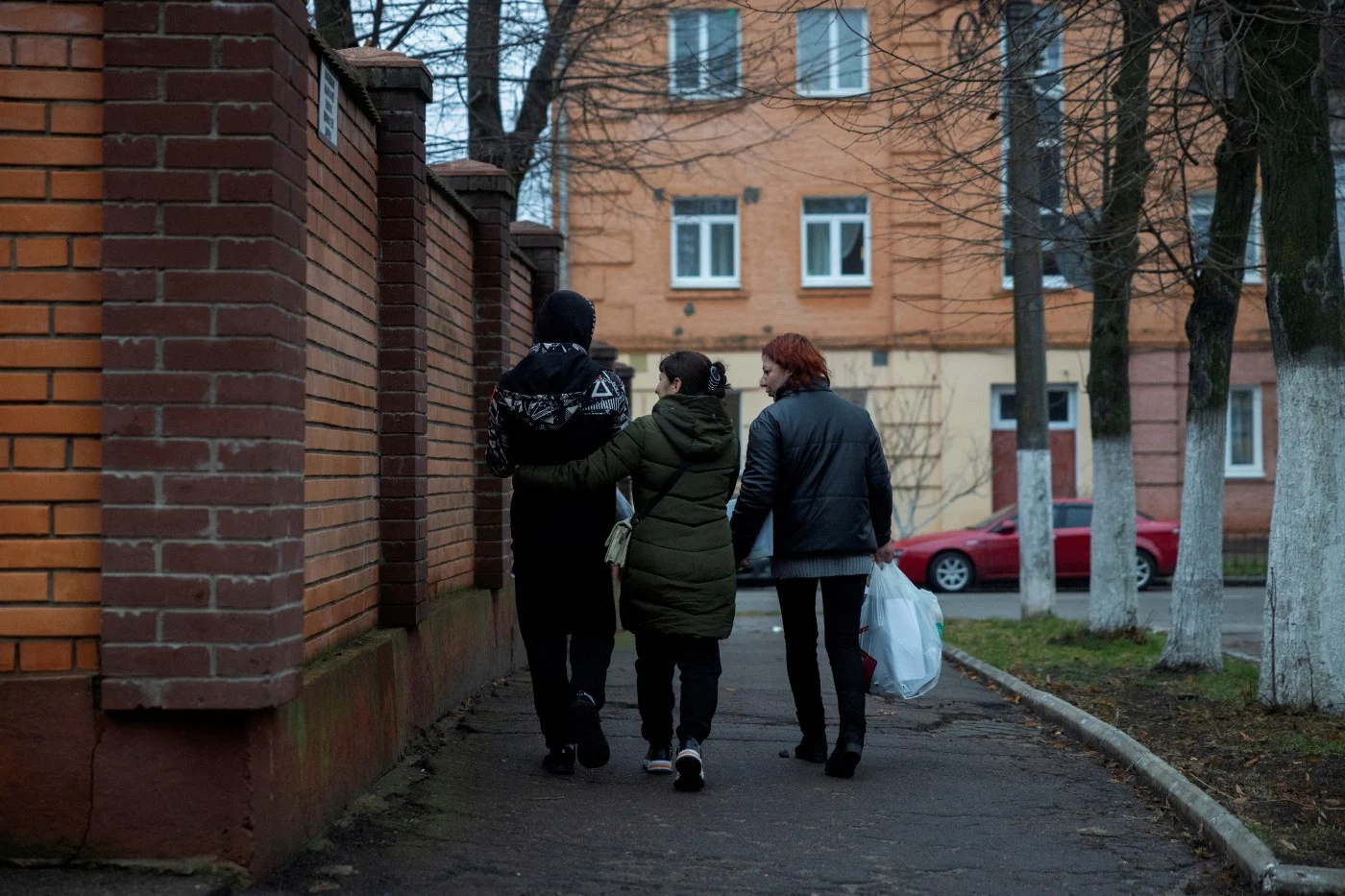
On a crisp September evening in 2024, a group of Ukrainian teenagers gathered beside train tracks near a village in Chernihiv, a region that had been living under near-constant Russian drone and missile attacks, with a hospital struck just two days earlier. Fifteen-year-old Vitalii pried open cabinets containing Ukraine minors railroad communication and signaling equipment, poured flammable liquid over them, and set them on fire according to an indictment filed by Chernihiv prosecutors. The boys paused to film the flames, doused them with water from plastic bottles they had packed, and shared the video with another boy who forwarded it to a man known online only as Sania, a stranger who had offered hundreds of dollars through online platforms to perform specific tasks that he deliberately neglected to describe as sabotage against the Ukrainian state. Vitalii received the equivalent of $23 for his role in the fire, money he can barely remember spending more than a year later, sitting in a cold office in a Chernihiv detention center, suggesting he might have bought his brother a gift or perhaps some school supplies for himself.
The case of Vitalii and his friends is not an isolated incident but part of a disturbing and growing pattern that Ukraine's security services have been tracking and contending with since Russia launched its full-scale invasion in 2022. More than 1,100 Ukrainians have been accused of committing arson, terrorism, or sabotage in betrayal of their country according to Ukraine's security service the SBU, and one in five of those accused have been minors. As of February 2026, Ukraine's Prosecutor General's office reported that 240 minors were involved in crimes against national security, arson, and terrorist acts related to the possible involvement of Russia's special services or others working in Russia's interest, with 102 of those minors detained. Reuters followed the case of Vitalii and his friends for a year and reviewed nearly 100 pages of court documents to understand how Ukrainian authorities are grappling with some of the most morally complex questions the war has generated: what does justice look like for children induced to betray their country, can they return to a society battered by four years of conflict, and what does Ukraine owe to these young people who grew up entirely within the shadow of war.
The recruitment mechanism that drew Vitalii and his friends into the fire at the train tracks follows a pattern that Ukrainian investigators have documented repeatedly across dozens of similar cases. Minors are approached online by strangers using aliases who offer money in exchange for performing specific physical tasks, describing the tasks in ways that obscure their true nature as acts of sabotage against Ukrainian infrastructure, military equipment, or state assets. The man called Sania who recruited the Chernihiv teenagers through online messaging platforms is assumed by Ukrainian investigators to have been working for Russian special services, part of a deliberate and systematic effort to exploit the economic vulnerability and online availability of young Ukrainians living in communities where poverty, absent fathers serving at the front, and the psychological weight of constant war create exactly the conditions that make easy money from a stranger online seem like a risk worth taking. A United Nations report from March 2025 noted a surge in credible allegations that Russia had used Ukrainian children to conduct surveillance and commit sabotage targeting the Ukrainian military, warning that such use of children would violate international law's prohibition on recruiting or using children in hostilities if the incidents could be linked to the armed conflict.
How Russia's Online Recruitment of Ukrainian Minors Has Escalated Into a Systematic Security Threat
The scale and systematic character of Russia's alleged online recruitment of Ukrainian teenagers for sabotage operations represents a dimension of the conflict that has received considerably less international attention than the conventional military operations on the front lines but that poses its own serious threats to Ukrainian security, social cohesion, and the welfare of the young people being exploited as instruments of a foreign power's intelligence objectives. The SBU and Ukraine's National Police launched an advertising campaign last year specifically to discourage young Ukrainians from working on behalf of Russia, including a YouTube video showing teenage characters following Ukrainian soldiers and torching military vehicles before being arrested and imprisoned, with text below the video warning that these crimes carry severe criminal liability even for minors. The SBU also created a Telegram bot enabling anyone to report an acquaintance who has been offered money for sabotage or arson, a crowd-sourced intelligence gathering mechanism that reflects the security service's awareness that the recruitment is happening through social media channels that are difficult to monitor through traditional surveillance methods.
The consequences of this recruitment have extended beyond property damage to include genuine threats to human life and safety that illustrate how the exploitation of vulnerable teenagers by Russian intelligence services carries risks that the teenagers themselves are completely unprepared to understand or manage. Last year a 17-year-old died and a 15-year-old was badly injured when an explosive device they had been instructed to build and take to a drop-off point in western Ukraine exploded, a tragedy that reveals the complete callousness with which the recruiters treat the young people they are using, providing instructions for constructing dangerous devices to children with no relevant training or safety awareness. In March of this year two police officers were injured after explosions on the outskirts of Kyiv that the SBU described as a terrorist attack orchestrated by Russia, with a 21-year-old recruited online and instructed to build an improvised explosive device arrested in connection with the attack. The recruitment of teenagers for Russia-linked sabotage operations is also not confined to Ukraine, with at least a dozen teenagers in Germany, Poland, Britain, and Lithuania arrested in Russia-linked cases of sabotage and spying as reported cases of suspected Russian-directed incidents rose across Europe last year.
The motivations of the minors accused of sabotage in Ukraine are predominantly financial rather than ideological, a distinction that is crucial to understanding the nature of what is happening and to determining appropriate legal and social responses to cases involving young people who had little understanding of the true nature or consequences of what they were being paid to do. In most cases those charged with arson or sabotage were motivated by money rather than any pro-Russian sympathies, recruited into situations that amounted to betrayal of their country without being presented with that framing by the recruiters who were careful to obscure the political and military significance of the tasks they were assigning. Vitalii's description of himself as having been duped captures the experience of many of the minors involved in these cases, young people from economically precarious backgrounds in communities far from the resources and opportunities of major Ukrainian cities who encountered what appeared to be a simple way to earn money and had neither the life experience nor the social support needed to recognize the trap they were walking into.
What Ukraine's Justice System and Educators Are Doing to Respond to Teenage Saboteurs
The question of how Ukraine's justice system should respond to teenagers who committed acts of sabotage against their own country while being manipulated by foreign intelligence services operating through anonymous online personas is one of the most morally difficult and practically complex questions that the war has generated for Ukrainian society, requiring a balance between accountability for serious crimes against national security and recognition of the developmental realities of adolescence and the extraordinary vulnerability created by wartime poverty and social disruption. Roughly half of the minors accused of betraying their country since the war's start have been convicted while the other half have been acquitted, freed on bail, or sentenced to community service according to Ukraine's justice ministry, a distribution that reflects the genuine legal complexity of these cases and the variability in the severity of the conduct and the degree of understanding that different minors had about what they were doing. Vitalii's lawyer is attempting to have the charges against him downgraded from the more serious charge of sabotage to intentional property damage, arguing that the boys never had any genuine intent to harm Ukraine, a legal strategy that goes to the heart of the moral ambiguity surrounding cases where the harm was real but the criminal intent in the fullest sense was compromised by youth, manipulation, and ignorance of the true consequences of the recruited actions.
Inside the Chernihiv detention center where Vitalii awaits trial, a physics teacher named Hennadiy Yachnyi passes through five heavy metal prison doors several times each week to teach classes to teenage detainees who are awaiting trial and sentencing for charges ranging from regular criminal offenses to the sabotage accusations that Vitalii and one other teenage girl in the facility face. Yachnyi is part of a program that pairs school teachers with minors in detention centers, a program that has been extended specifically because of the growing number of minors accused of sabotage-related offenses who are now moving through the system. He told Reuters that he does not see the young people he teaches as criminals but as students, an assessment that reflects a deliberately humanizing approach to adolescents whose offenses, however serious in their consequences, were committed in circumstances of profound manipulation and vulnerability that conventional criminal framing fails to capture adequately. The program represents Ukraine's attempt to ensure that even minors accused of the most politically sensitive wartime offenses retain access to the educational continuity that the country's constitution guarantees to all citizens regardless of their legal circumstances.
Antonina Kharchenko, the director of the Chernihiv high school that sends teachers to the detention center, has articulated the constitutional and moral foundations of this approach with directness and conviction when asked whether it is uncomfortable to educate accused saboteurs when her own school's graduates are serving and dying at the front. She pulled out a copy of Ukraine's constitution and pointed to Article 53, which guarantees every citizen the right to an education, stating that what her school does is create the conditions for that right to be upheld whether students are in classrooms, bomb shelters, online from abroad, or in detention facilities awaiting trial. Her characterization of the communities from which these recruited teenagers come reflects a nuanced understanding of the conditions that make them vulnerable: poverty, fathers absent at the front, the constant psychological weight of war, and the economic desperation that makes offers of easy money from strangers online appear as opportunities rather than dangers to young people with limited resources and limited understanding of the geopolitical context in which they are being targeted and exploited.