
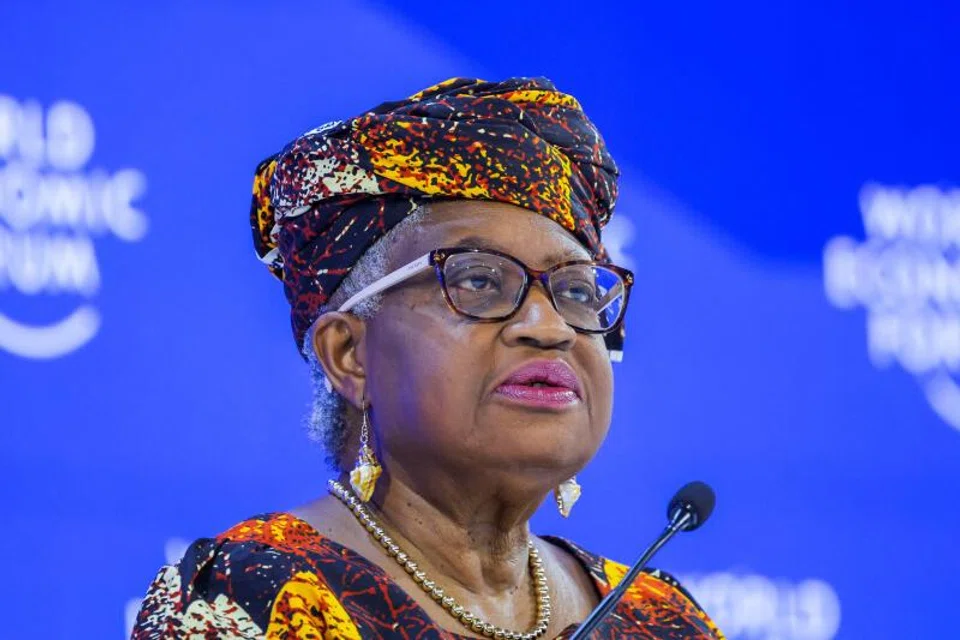
WTO reform talks collapse in Cameroon should be read not as a surprising diplomatic failure but as the predictable culmination of a decade-long erosion of the political will that makes multilateral trade governance possible. The four-day ministerial talks in Yaounde ended in the early hours of Monday with Brazil blocking the extension of a moratorium on e-commerce duties that has been in place for over two decades, trade ministers unable to agree on a reform roadmap despite the most urgent need for global trade coordination in a generation, and the United States Trade Representative reportedly telling delegates there would be consequences if Washington did not get what it wanted on the e-commerce moratorium. The consequences of this failure will be borne not by the diplomats who created it but by the businesses, workers, and consumers in every WTO member country whose economic lives depend on a functioning rules-based trading system that the Yaounde meeting has left more damaged than it found it.
The specific failure on e-commerce deserves particular attention because it was supposed to be the easy part. The moratorium on duties for electronic transmissions including digital downloads and streaming has been renewed at successive WTO ministerial conferences since 1998 without serious challenge, representing one of the few areas of genuine multilateral consensus in a body that has struggled to reach meaningful agreement on almost anything for the past fifteen years. The fact that even this routine renewal proved impossible in Yaounde tells you everything about the state of the WTO and the political alignments that have replaced the broad consensus on liberal trade that the organisation was built to codify and enforce.
Britain's Business and Trade Secretary Peter Kyle described the failure to reach a joint decision as a major setback for global trade, and that characterisation understates the problem. A setback implies a temporary obstacle to a journey that continues toward a defined destination. What happened in Cameroon looks less like a setback and more like a confirmation that the WTO's members no longer share the destination well enough to agree on even the most basic housekeeping of the rules they already have. Keith Rockwell, trade analyst at the Hinrich Foundation and a former WTO director, captured the institutional shift with the authority of someone who spent decades inside the system: in the old days the Americans would have swallowed hard and taken a hit because they felt responsibility for the system. But now they will not do that anymore. That change in American posture is the single most important fact about the WTO's current condition.
How the WTO Was Built and Why Its Foundations Have Been Eroding
The World Trade Organization was created in 1995 as the successor to the General Agreement on Tariffs and Trade, bringing into institutional form the post-World War II consensus that trade liberalisation was the foundation of peace and prosperity and that the major trading nations had a shared interest in building and maintaining the rules that made open trade possible. The founding premise was not merely economic but political: that countries integrated through trade had incentives to resolve disputes through negotiation rather than conflict and that the institutional structures of multilateral trade governance made that resolution systematic rather than ad hoc. The United States was the system's principal architect, champion, and enforcer because it was the economy that gained most from open global markets and that had the political and economic weight to make the system function.
The consensus model that the WTO operates on requires unanimous agreement for most significant decisions, giving every member an effective veto over outcomes they cannot accept. This model worked reasonably well when the major trading powers shared broadly similar interests in market access and rules-based dispute resolution, when the United States actively managed the system with the patience and willingness to compromise that hegemonic responsibility requires, and when the number of members and the complexity of issues were manageable within the diplomatic culture of Geneva negotiation. All three of those conditions have deteriorated significantly over the past two decades, and the Yaounde failure is the cumulative consequence of that deterioration rather than a sudden or surprising breakdown.
China's accession to the WTO in 2001 was presented as the integration of the world's largest emerging economy into the rules-based trading system that would gradually align Chinese practices with liberal trade norms through the binding disciplines of multilateral membership. That expectation has been substantially disappointed, with the United States and European Union arguing that China has systematically exploited the existing rules to subsidise its industries, maintain market access barriers, and accumulate trade surpluses at a scale that the WTO's rules were not designed to manage and that its dispute resolution system has proven too slow and too limited to address effectively. The U.S.-China trade conflict that escalated from 2018 onward was a direct expression of American frustration with the WTO's failure to discipline Chinese trade practices, and it transferred a significant portion of U.S.-China trade governance from WTO rules to unilateral tariffs that bypass the multilateral system entirely.
The E-Commerce Moratorium and Why Brazil's Block Matters
The moratorium on duties for electronic transmissions has been one of the WTO's most consequential and least contested commitments since its introduction in 1998, reflecting the consensus of that era that the emerging digital economy should develop without the friction of import duties on electronic transactions. The moratorium prevents WTO members from imposing customs duties on digital products and services transmitted electronically, including digital downloads, streaming services, software, and the vast ecosystem of digital commerce that has grown from a niche to the backbone of the global economy across the quarter century since the moratorium was first adopted. Its renewal at successive ministerial conferences had become so routine that it was barely contested, representing the kind of institutional maintenance that functioning multilateral bodies perform automatically.
Brazil's blocking of the moratorium extension in Yaounde is not a simple act of obstruction but a calculated expression of a policy position that developing countries have been building for years. The argument is that the moratorium denies developing countries potential tax revenue from the digital economy that is increasingly significant for their fiscal capacities, and that the moratorium disproportionately benefits the developed-country technology companies that dominate digital trade while preventing developing-country governments from taxing the digital services their citizens consume. This is not an economically frivolous argument. The digital economy's tax base has been a subject of intense debate in domestic and international tax policy for over a decade, and developing countries that watch their citizens pay for streaming services and digital downloads without generating any fiscal contribution to the domestic economy have legitimate grievances that deserve engagement rather than dismissal.
The diplomatic dynamics of the e-commerce impasse reveal the structural tension that has been building in the WTO for years between the United States, which represents the technology companies that benefit most from duty-free digital trade, and the developing country coalition, which sees the moratorium as a permanent subsidy to Silicon Valley at the expense of their fiscal autonomy. U.S. Trade Representative Jamieson Greer's reported warning that there would be consequences if the U.S. did not secure a long-term extension is the kind of coercive diplomacy that alienates the developing country members whose support any WTO reform agenda requires, confirming the Brazilian diplomat's characterisation that the U.S. wanted the sky rather than a realistic negotiated outcome. Threatening consequences in a consensus-based multilateral institution is not a negotiating strategy that works against members who are not economically dependent on American market access and who have alternative trade arrangements they are building outside the WTO framework.
The WTO's Relevance Crisis and the America First Complication
The WTO's relevance crisis predates the Trump administration but has been dramatically accelerated by it. Under Trump's first term, the United States effectively disabled the WTO's Appellate Body by blocking judicial appointments, leaving the dispute resolution system unable to issue binding rulings on trade conflicts between major economies. That disabling of the WTO's enforcement mechanism was the most damaging single act against the trade body in its history, removing the institution's capacity to perform its most essential function without formally withdrawing from it. Trump's return to the presidency in 2025 and his pursuit of the America First agenda including the Iran war, tariff escalation, and retreat from multilateral bodies has deepened the American ambivalence toward the WTO at precisely the moment when global trade disruption from the Iran war and the energy crisis most urgently requires effective multilateral coordination.
The WTO ministerial meeting in Yaounde was supposed to demonstrate the institution's continued relevance by producing at least minimal progress on the e-commerce moratorium and on a reform roadmap that would address the systemic issues that have accumulated over fifteen years of stalemate. Instead, it has produced the opposite demonstration. The failure to renew a moratorium that has been in place for twenty-seven years, the inability to agree on a reform framework despite the most acute trade disruption since the WTO's founding, and the tone of the American diplomatic engagement that made delegates uncomfortable are all signals that the WTO is losing the political support of its most powerful member at a moment when it most needs that support to function.
Keith Rockwell's observation that the impasse will boost alternative structures like the Comprehensive and Progressive Agreement for Trans-Pacific Partnership points to the predictable institutional consequence of WTO failure: trade governance does not disappear when multilateral institutions fail to function, it migrates to bilateral and plurilateral arrangements that exclude the countries unable or unwilling to meet their standards. The CPTPP, encompassing Japan, Britain, Canada, Mexico, Australia, Malaysia, and other members but not the United States, could immediately agree on a digital trade framework that would serve its members' shared interests in the absence of WTO consensus. That migration of governance to alternative structures reduces the WTO's relevance further with each successive ministerial failure, creating a self-reinforcing cycle of irrelevance that is difficult to reverse once it reaches a certain momentum.
Yaounde's Aftermath and What the WTO Must Do to Survive
The immediate practical consequence of the Yaounde failure is that the e-commerce moratorium has lapsed without renewal, creating a legal situation in which WTO members are technically free to impose customs duties on electronic transmissions for the first time in twenty-seven years. Whether any WTO member will actually exercise that freedom immediately is a separate question whose answer will partly determine how damaging the moratorium lapse proves to be. Brazil's argument that developing countries deserve fiscal autonomy over their digital economies does not necessarily translate into immediate digital tariff imposition, and WTO Director-General Ngozi Okonjo-Iweala's statement that the body hopes to restore the moratorium suggests that the diplomatic process has not entirely collapsed but has instead produced a pause whose outcome depends on continued negotiations between Brazil and the United States in the weeks following Yaounde.
The WTO's claim that progress was made on a reform roadmap before time ran out and that discussions will continue in Geneva in May is the kind of institutional communication that multilateral bodies use to maintain the appearance of process in the absence of outcome. Whether that claim represents genuine forward momentum or diplomatic face-saving is a judgment that the May Geneva talks will either validate or refute. The issues on the reform agenda including reworking WTO rules to make subsidy use more transparent and decision-making more efficient are genuinely important and genuinely contested, with the U.S. and EU arguing that China has exploited current rules to their detriment and China having every incentive to resist rule changes that would constrain its industrial policy. That fundamental disagreement is not resolvable in a two-day Geneva meeting, and the Yaounde failure has not created any new political dynamic that makes May's talks more likely to succeed.
Okonjo-Iweala has managed the WTO's institutional credibility with considerable diplomatic skill during a period of extraordinary challenge, maintaining relationships with all major members and keeping the institution engaged with the real problems of global trade even when it lacks the political support to address them effectively. Her statement that Brazil and the U.S. are trying to reach agreement on the moratorium after Yaounde is a characteristically constructive framing of a situation that could alternatively be characterised as a fundamental breakdown of multilateral trade governance. The gap between those two characterisations is the gap between institutional optimism and analytical realism, and both contain elements of truth whose relative weight will be determined by what happens in Geneva and beyond.
The Brazil-U.S. Impasse and What Both Sides Actually Want
The specific dynamics of the Brazil-U.S. impasse in Yaounde reveal a negotiation that failed not because the two sides were impossibly far apart but because neither was willing to make the political investment in compromise that closing the gap required. Diplomats worked throughout Sunday to draft a four-year extension with a one-year sunset buffer concluding in 2031, a proposal that represented a significant move from both the U.S. preference for a permanent extension and Brazil's initial two-year proposal. Brazil then proposed a four-year extension with a review clause halfway through, a counter-proposal that showed genuine movement but that failed to win support, partly because the U.S. had poisoned the diplomatic atmosphere with Greer's consequences warning and partly because the trust between the major parties has been so depleted by years of WTO dysfunction that last-minute compromise is harder than it once was.
Keith Rockwell's analysis that Brazil was trying to leverage e-commerce to pursue concessions on agriculture and that this strategy failed because the U.S. is no longer so invested in the WTO captures the political economy of the breakdown accurately. Brazil has significant interests in agricultural trade liberalisation that the WTO has failed to deliver despite decades of Doha Round negotiations, and Brazilian negotiators have been using their e-commerce blocking position as leverage to extract concessions on agriculture from developed-country members who benefit most from the moratorium. That leverage strategy makes rational sense in a functioning multilateral negotiation where all issues are in play and where the major powers are invested in the institution's success. It makes less sense when one of the major powers has signalled that it is no longer willing to pay a price for the institution's preservation.
The Brazilian diplomat's characterisation that the U.S. wanted the sky and that it was not prudent to pursue a longer extension given rapid changes in digital trade contains its own analytical validity that the American position does not adequately acknowledge. The digital economy in 2026 is categorically different from the digital economy in 1998 when the moratorium was adopted, and the fiscal stakes of permanently foreclosing developing countries' ability to tax digital commerce are genuinely larger than they were when streaming services and digital platforms were a fraction of their current economic significance. A permanent extension of the moratorium commits developing countries to a permanent fiscal sacrifice whose magnitude grows with every year of digital economy expansion, and a U.S. position that treats this sacrifice as non-negotiable reflects the same hegemonic indifference to partner interests that has eroded American multilateral leadership across multiple institutions and issue areas.
What Comes Next and Whether the WTO Can Recover Its Purpose
The WTO's recovery from the Yaounde failure requires political will from its major members that is not currently visible in any of the key capitals. The United States under Trump is retreating from multilateral institutions as a matter of policy preference rather than circumstance, making sustained American investment in WTO reform politically implausible in the near term. China has a strategic interest in preventing WTO rule changes that would constrain its industrial policy and state subsidy practices, making the reform agenda that the U.S. and EU want most difficult to advance. Brazil and the developing country coalition have legitimate grievances about the fiscal and governance dimensions of digital trade rules that are not being adequately addressed by the current negotiating framework. The European Union, which has been the most consistent advocate for WTO reform and for maintaining the institution's relevance, lacks the political weight to compensate for American disengagement or to bridge the U.S.-China divide that underlies most of the WTO's substantive deadlocks.
The CPTPP alternative that Rockwell identifies as the likely beneficiary of WTO failure represents a specific type of trade governance that works very differently from the WTO's universal membership model. The CPTPP is a high-standard, deep-integration agreement among like-minded economies that can move at the pace of its most ambitious members rather than being constrained by the lowest common denominator of a 166-member organisation. Its digital trade provisions are more comprehensive and more up-to-date than anything the WTO could agree on given its current membership dynamics, and its governance model allows for the kind of substantive rule-making that the WTO's consensus requirement has made impossible. The WTO's failure to renew the e-commerce moratorium will strengthen the case for CPTPP expansion and for other plurilateral arrangements that bypass WTO gridlock at the cost of excluding the large developing economies and the United States that make the WTO the only truly global trade institution.
The honest editorial assessment is that the WTO is not merely experiencing a difficult period from which institutional resilience and diplomatic skill can recover it. It is experiencing a structural failure whose root causes lie in the political choices of its most powerful members and in the genuine divergence of interests among its 166 members that the consensus model cannot manage. Reforming the WTO to make it functional requires either changing the consensus model in ways that will be resisted by members who benefit from their veto power, or rebuilding the political consensus among major members that makes the current model workable, or accepting that the WTO's role is diminishing and building the alternative governance architecture that global trade requires. None of those paths is easy or quick, and none of them was advanced by what happened in Yaounde in the early hours of Monday morning.