
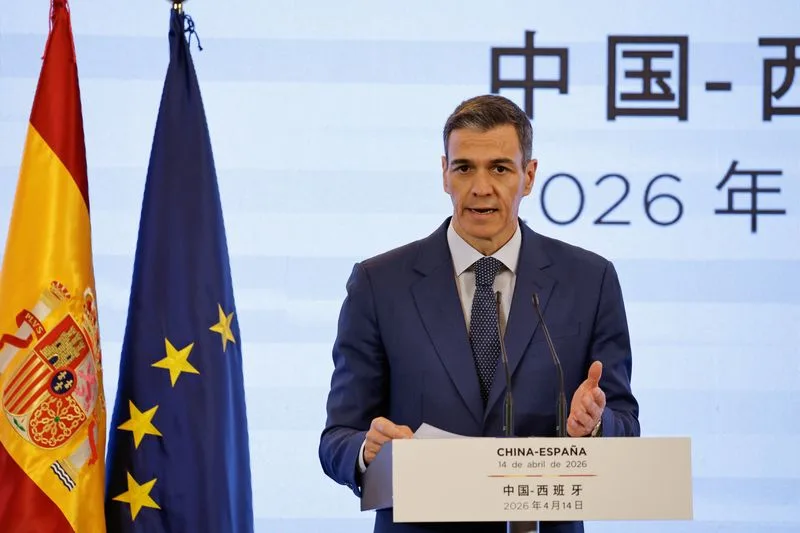
Some of the world's most prominents Global Left Leaders are converging on Barcelona this weekend for two days of meetings designed to build a coordinated progressive response to the global rise of far-right movements and the seismic shifts in international relations triggered by the Trump administration's aggressive reshaping of American foreign policy. Spain's Prime Minister Pedro Sanchez and Brazil's President Luiz Inacio Lula da Silva will spearhead the gatherings, which bring together current and former heads of state, mayors, trade unions, activists, and left-wing political parties from across the world under a shared agenda of defending democracy, protecting multilateral institutions, and demonstrating that a coherent alternative to nationalist and far-right politics remains both possible and viable. The scale and ambition of the meetings reflect a sense of urgency among progressive political leaders who believe the global balance of political power is shifting in ways that demand a coordinated international response rather than isolated national campaigns.
The gatherings are structured across two distinct but thematically connected events. The first, beginning on Friday and organized by Spain and left-wing political networks under the banner of Global Progressive Mobilisation, is designed to bring together advocates of left-wing ideas from across the world with the aim of building shared platforms and culminating in a declaration of common actions covering goals that range from defending democratic institutions to advancing the green transition. The second event on Saturday, entitled In Defence of Democracy and organized directly by the Spanish government, represents the fourth instalment of a summit that Lula and Sanchez jointly launched in 2024, establishing a pattern of regular high-level engagement between progressive leaders who share both a political worldview and a growing concern about the trajectory of global politics under the influence of nationalist and populist movements. Together the two events constitute what their organizers hope will be a significant and visible statement of progressive unity at a moment when that unity feels both more necessary and more difficult to sustain than at any point in recent political memory.
The backdrop against which Barcelona is hosting these gatherings could hardly be more consequential for the political questions both events are designed to address. U.S. President Donald Trump's swift and extensive cuts to humanitarian aid, his administration's military posture and interventions, and his repeated threats to abandon or fundamentally restructure NATO have collectively shaken the foundations of the international relations architecture that has governed global affairs since the end of the Second World War. For European leaders in particular, the realization that American commitment to the institutions and alliances that underpin European security and prosperity can no longer be taken for granted has prompted a fundamental rethink of global allegiances, strategic partnerships, and the degree to which progressive governments need to build new forms of international solidarity that do not depend on Washington's participation or approval. Barcelona this weekend is in part an attempt to give institutional form to that rethinking.
How the Rise of the Far Right and Trump's Foreign Policy Created the Conditions for Barcelona
The ideological origins of the Barcelona gatherings can be traced directly to the shock that European socialist and progressive parties experienced during the European Union parliamentary elections in 2024, when far-right parties recorded significant gains across multiple member states and demonstrated that nationalist and populist movements were not a temporary aberration but a durable and growing force in European democratic politics. That electoral outcome functioned as what organizers of the Global Progressive Mobilisation explicitly describe as a wake-up call for European socialists, forcing a serious reassessment of whether existing progressive political strategies were adequate to the challenge posed by a far right that had learned to speak effectively to the economic anxieties, cultural concerns, and institutional frustrations of voters that left-wing parties had historically relied upon for support.
The 2024 EU election results were not the only catalyst for the political rethinking that Barcelona represents. The return of Donald Trump to the U.S. presidency and the speed and scope of the policy changes his administration has implemented since taking office have created a dramatically altered global political environment that progressive leaders across Europe, Latin America, and Africa are still working to fully understand and respond to strategically. Trump's cuts to humanitarian aid have disrupted development programs and international assistance frameworks that many governments depended upon. His administration's approach to the Iran war, which has included military escalation and a naval blockade that has driven global oil prices to levels not seen since the pandemic era, has created economic pressures that fall disproportionately on the most vulnerable populations in importing nations. His rhetoric about NATO has forced European governments to confront defense spending and strategic autonomy questions they had previously been able to defer.
Both Sanchez and Lula have been consistently and publicly critical of the Trump administration across this range of issues, and both face growing far-right challenges in their own domestic political contexts that give the Barcelona gatherings a personal as well as geopolitical urgency. Sanchez has been particularly outspoken on the Iran war, using Spain's position and his own international platform to criticize the military escalation and advocate for diplomatic solutions. Lula has positioned Brazil as a voice for the global south in multilateral forums, pushing back against what he characterizes as the unilateral instincts of major powers and advocating for a reformed and more equitable international order. Their joint leadership of the Barcelona events places two of the most prominent and vocal progressive leaders in the world at the center of what is intended to be a genuinely global conversation about the future of left-wing politics in an era of nationalist resurgence.
Who Is Attending Barcelona and What the Summit Aims to Achieve
The attendance list for the Barcelona gatherings reflects the genuinely international ambition of the organizers and the degree to which progressive leaders across multiple continents have concluded that coordinated action is more valuable than isolated national responses to the challenges they share. South African President Cyril Ramaphosa, who has himself navigated a deeply contentious and publicly visible clash with the Trump administration over issues ranging from trade policy to bilateral relations, will be present, lending the gatherings a significant African voice and reinforcing the cross-continental character of the progressive coalition being assembled in Barcelona. His attendance signals that the concerns driving the event are not limited to European and Latin American political contexts but extend across the developing world in ways that give the gathering genuine global scope.
Mexico's President Claudia Sheinbaum will also attend, a participation that carries particular diplomatic significance given that her presence marks the first visit to Spain by a Mexican president since 2018. The eight-year gap in presidential-level visits between the two countries followed years of tension rooted in disagreements over the legacy of Spanish colonial rule and the complicated historical relationship between Spain and its former colonies in Latin America. Sheinbaum's decision to attend the Barcelona summit and to make it the occasion for the first Mexican presidential visit to Spain in nearly a decade signals a willingness to prioritize the shared political agenda of the progressive gathering over the historical grievances that had cooled bilateral relations, a pragmatic decision that reflects the seriousness with which Mexico's government views the current global political moment.
The organizational scale of the events is considerable and reflects the depth of the networks that Spain's Socialist Party and its international partners have mobilized for the occasion. Approximately 3,000 participants are expected across the two days of events, including current and former heads of state, around 400 mayors from cities across the world, representatives of trade unions, civil society activists, and political parties spanning a wide range of progressive traditions and national contexts. Sanchez and Lula will jointly close the event, a symbolic positioning that underscores their role as the leading figures of the progressive international coalition that Barcelona is intended to crystallize. The Party of European Socialists, whose Secretary-General Giacomo Filibeck has been one of the most vocal advocates for the kind of coordinated progressive response that Barcelona represents, is a central organizing partner, bringing with it a membership spanning 33 parties across Europe.
What Barcelona Means for the Future of Global Progressive Politics
The declaration of common actions that is expected to emerge from the Global Progressive Mobilisation on Friday will be closely watched both by those who hope it signals a genuine new chapter in coordinated left-wing international politics and by skeptics who question whether declarations of solidarity can translate into the kind of concrete policy coordination and electoral cooperation that would be needed to actually reverse the far-right momentum visible across multiple democracies simultaneously. The history of progressive international gatherings is not without examples of ambitious declarations that generated significant media attention before fading into irrelevance as the participating governments returned home to face the specific constraints and pressures of their individual political contexts. Organizers of the Barcelona events are clearly aware of this risk and have structured the agenda with a focus on concrete common actions rather than purely rhetorical commitments.
The defeat of Hungary's nationalist Prime Minister Viktor Orban in Sunday's election has provided Barcelona's organizers with a timely and politically useful piece of evidence that the far-right wave can be resisted and reversed in favorable conditions. Sanchez was explicit and enthusiastic in his response to the Hungarian result, stating that the wave can be stopped and that Hungary proves it, a framing that transforms a single national electoral outcome into a proof of concept for the broader progressive strategy that Barcelona is designed to advance. The significance of Orban's defeat extends beyond Hungary's borders because Orban had been one of the most prominent and internationally visible champions of nationalist and illiberal politics within the European Union, and his electoral removal reduces the far right's most effective spokesperson within European institutional settings.
Looking ahead from Barcelona, the test of whether this weekend's gatherings achieve their stated ambitions will be measured not in the declarations produced but in the electoral and policy outcomes that flow from the networks, relationships, and common frameworks built over the two days of meetings. Progressive parties in multiple countries face elections in the coming months and years, and the degree to which the Barcelona gathering produces actionable intelligence sharing, campaign strategy coordination, and genuine solidarity support between parties facing similar far-right challenges will determine whether it is remembered as a turning point or as an impressive but ultimately symbolic gathering of like-minded leaders who were unable to translate shared values into shared victories. Sanchez, Lula, and their partners in Barcelona clearly believe the moment demands more than symbolism, and the ambition of the gathering reflects a genuine conviction that coordinated progressive action at the international level is both necessary and possible in the current political environment.