
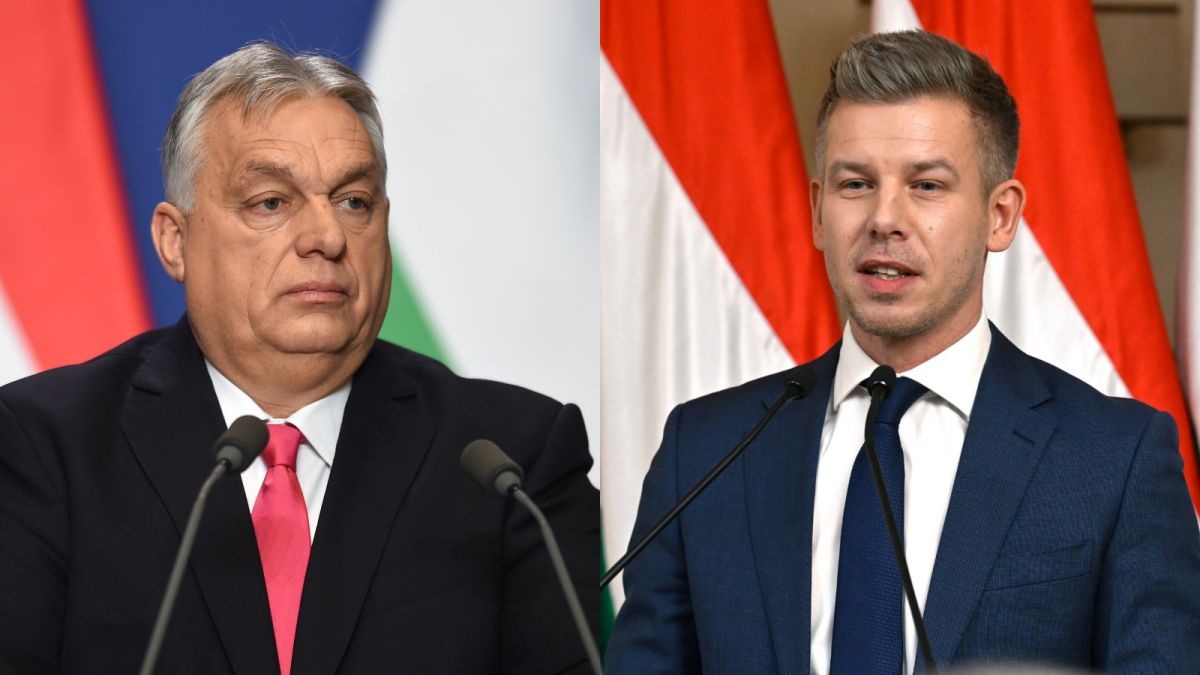
German investor morale Hungary Peter Magyar election 2026 survey results have delivered one of the most striking confidence reversals in recent European investment polling, with 42 percent of German investors now expecting an improved economic outlook in Hungary compared to just 7 percent in a survey conducted before the April 12 election that saw incoming prime minister Peter Magyar oust right-wing leader Viktor Orban after his 16 years in power. The survey by the German-Hungarian Chamber of Industry and Commerce, carried out specifically after the election to capture investor sentiment in the new political environment, shows the scale of optimism that Magyar's pro-European, market-friendly orientation has generated among Germany's business community, which has consistently been the largest foreign investor in Hungary and whose confidence in the Hungarian market directly affects the investment flows that the country's economic development depends on. Hungary's forint and government bonds have already rallied on the prospect of the policy shift that Magyar's Tisza Party will bring when he is sworn in on Saturday, with financial markets providing their own instantaneous verdict on the political change that the election delivered.
The transformation from 7 percent to 42 percent expecting improvement is not a marginal shift but a sixfold increase in investor optimism that captures the depth of the relief and opportunity that German business sees in the transition from Orban's frequently confrontational approach to foreign investors and Brussels to Magyar's explicitly cooperative orientation toward the European Union and market-friendly economic governance. Chamber chairman Robert Keszte said the entire country looks to the future with great optimism and positive enthusiasm and that this positive sentiment helps overcome the challenges ahead, reflecting both the genuine excitement in Hungarian civil society following the election outcome and the business community's assessment that the political change creates commercial opportunities that the previous environment had foreclosed. A quarter of the 260 companies polled said the election result directly increased their willingness to invest in Hungary, a major shift from results a year ago when investment plans had plunged amid the economic uncertainty that the final period of Orban's governance produced.
Germany's centrality to Hungary's investment landscape makes German investor sentiment one of the most important leading indicators of Hungarian economic performance, because German automotive, manufacturing, and industrial companies have been among the most significant contributors to Hungarian industrial development over the past three decades. The conditions in Germany's own economy, noted by Keszte as a potential headwind alongside Washington's tariffs on European car imports and the Middle East war, add complexity to what would otherwise be an unambiguously positive picture, reflecting the interconnectedness of Central European economies with their largest trading partner's fortunes. Hungary's emergence only last quarter from three years of economic stagnation provides the baseline from which Magyar's government must build, with the investment confidence the survey documents representing the supply of external capital that the government's ambitious spending plans will need to complement if the economic improvement is to be sustained.
Orban's Economic Legacy and Why German Investors Grew Frustrated
Viktor Orban's 16 years as Hungary's prime minister were characterised by a governing philosophy that placed national sovereignty, as he defined it, above the requirements of European Union membership and international investment norms in ways that created systematic friction with the foreign business community that Hungary needed to attract and retain for economic development. His government's use of special taxes targeting foreign-owned businesses, its redirection of EU funds toward politically connected domestic companies, and its resistance to the rule of law standards that European institutions required for funding disbursement created an environment in which foreign investors had to navigate political risk dimensions that comparable Central European markets including Poland and Czech Republic did not impose. German companies in particular, many of which had made substantial manufacturing investments in Hungary based on the country's EU membership and the associated legal certainties that EU frameworks provide, found their operating environment progressively complicated by the unpredictable regulatory changes and political pressures that the Orban government deployed.
The Hungary-EU funding dispute that saw billions of euros in cohesion funds withheld from Budapest over rule of law concerns had direct economic consequences that fell most heavily on the infrastructure, education, and business support investments that foreign companies most value in their assessment of operating environments. An EU member state that is unable to access its full allocation of European structural funds is simultaneously depriving itself of investment capital and signalling to international investors that its governance quality has deteriorated below the standards that EU institutions consider adequate. The cumulative effect of these signals on German investor confidence is visible in the survey's pre-election baseline of just 7 percent expecting improvement, a figure that reflects years of accumulated disappointment with the investment environment rather than a sudden loss of confidence triggered by any single policy decision.
The Hungarian economy's three years of stagnation before the first-quarter signs of recovery provide the economic backdrop against which Magyar's election victory must be understood, because the stagnation is partly attributable to the investment shortfall that Orban's governance created and partly to the broader European economic slowdown that affected all Central European economies through Germany's own difficulties. The distinction matters for Magyar's economic management because the share of the stagnation that reflects governance quality is potentially addressable through policy change, while the share that reflects Germany's own economic challenges requires navigating external conditions rather than domestic reform. Keszte's caution about Germany's growth outlook as a constraint on Budapest's room for manoeuvre reflects this honest assessment that some of Hungary's economic challenges are beyond any Hungarian government's capacity to resolve unilaterally.
What Magyar Represents for Europe's Political Landscape
Peter Magyar's electoral victory over Orban represents one of the most significant political reversals in Central European politics since the post-communist democratic consolidation of the 1990s, defeating an incumbent who had successfully marginalised opposition through media control, electoral system manipulation, and the distribution of economic benefits to loyal constituencies in ways that made his eventual removal seem implausible until it happened. Magyar built his political movement through mass grassroots mobilisation rather than through the conventional political party structures that Orban had systematically weakened, attracting support from voters across the political spectrum who shared the assessment that Orban's governance model had imposed too high a cost on Hungary's European future and economic development prospects.
His Tisza Party's platform, which emphasises EU cooperation, anti-corruption measures, education investment, small business support, and eventual euro adoption, aligns closely with the priorities that Keszte identified as most important to German investors, creating a specific policy convergence between the new government's agenda and the investment community's requirements. The euro adoption aspiration is particularly significant for German investors, because eliminating currency exchange risk between Hungary and Germany would reduce one of the major operational complexities of running Hungarian subsidiaries and would signal Hungary's full integration into the European economic mainstream that Orban had rhetorically challenged while remaining practically dependent on. Keszte's acknowledgment that Magyar's priorities overlap with those of German investors is the most commercially specific validation that the election result has received from the business community, connecting electoral politics directly to investment decision-making.
Investment Signals, Fiscal Challenges, and What Magyar Must Now Deliver
The survey's finding that a quarter of 260 German companies have increased their willingness to invest in Hungary as a direct result of the election outcome translates into a potentially significant increase in actual investment flows if that willingness is converted into committed projects during the window of optimism that political transitions typically create. Investment decisions that were deferred during the uncertainty of the Orban period's final years, or that were redirected to competing Central European locations perceived as more stable, may now be reconsidered with Hungary as a viable option, providing the new government with an early opportunity to demonstrate that its policy orientation is producing the tangible economic improvements that voters and investors are anticipating. The government's task is to rapidly provide the policy signals and early implementation evidence that converts expressed willingness to invest into actual capital commitments before the post-election euphoria fades and investors return to the harder-headed assessment of specific project economics.
Keszte's identification of Magyar's plans to curb non-EU workers and to favour small businesses over large companies as areas of concern for German investors flags the specific policy tensions that will require careful management in the early months of the new government. Large German manufacturing companies that rely on flexible access to labour from outside the EU for their Hungarian operations will be directly affected by immigration restrictions that complicate their workforce planning, and a policy framework that explicitly favours small businesses over large companies raises questions about whether the fiscal and regulatory environment for major foreign industrial investors will remain as favourable as the overall pro-European orientation suggests. These are not deal-breakers for the investment relationship but they are friction points that the new government's implementation of its platform will need to address through careful policy design that achieves its social objectives without creating the kind of operational complications that redirect investment decisions.
The fiscal challenge that Keszte explicitly identified, noting that what the government has announced so far has mostly boosted spending and that it will need to be mindful of the costs, is the most important single constraint on Magyar's ability to deliver his ambitious platform in full. A government inheriting three years of economic stagnation, an investment shortfall from the Orban period, and ambitious spending commitments on education, small business support, and anti-corruption infrastructure faces the classic challenge of governing a country that needs more public investment precisely at the moment when its fiscal capacity has been constrained by the economic performance of its predecessor. The combination of German investment confidence, forint and bond market support, and potential restoration of EU funding flows that Magyar's election has unlocked creates a more favourable financing environment than Orban's final years provided, but converting those favourable conditions into the fiscal space for the promised investments requires the kind of disciplined economic management that governing parties' electoral promises rarely fully anticipate.