
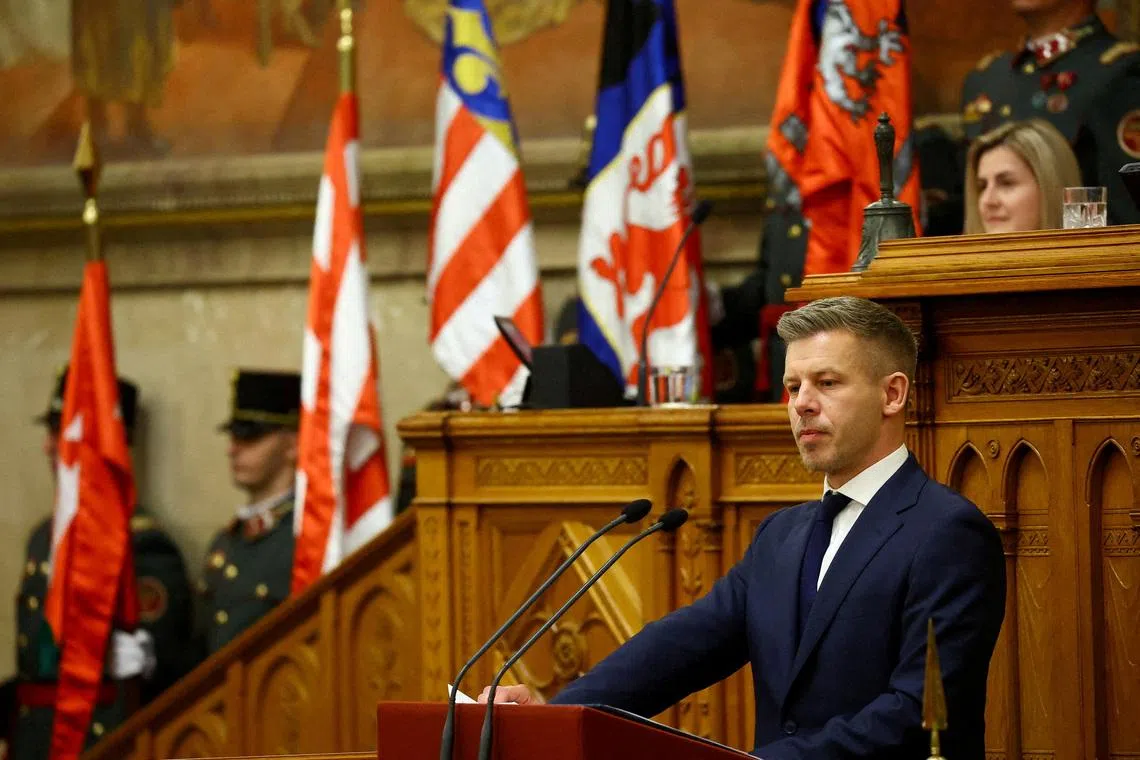
Hungary worker visa ban Philippines Georgia Armenia 2026 has taken effect from Friday as the new government of Prime Minister Peter Magyar's Tisza party, which ended Viktor Orban's 16-year rule in an April 12 election landslide, implemented its first concrete step toward the complete restructuring of Hungary's guest worker policy that the party had promised during its campaign, with a government spokeswoman confirming the immediate suspension of worker visa issuance for employees from the three countries and framing the move as the opening phase of a planned long-term solution to what the new government characterises as the wage suppression consequences of the simplified guest worker importation regime its predecessor established. The policy change targets a specific mechanism in Hungarian labour law, the decree that allowed manpower companies to bring workers from the Philippines, Georgia, and Armenia through a simplified procedure, and eliminates that procedural channel while protecting workers already present in Hungary by allowing them to apply for extensions and ensuring that applications already submitted before Friday's implementation date will still be assessed. The Tisza party's broader policy commitment, to stop issuing visas to workers from outside the European Union entirely by June, establishes the full scope of the transformation that Friday's targeted suspension is beginning, with the three-country focus representing a manageable first step toward the complete non-EU worker visa cessation that the new government has signalled as its ultimate direction.
Government spokeswoman Vanda Szondi told a media briefing that the policy aims to tighten employment opportunities for guest workers over concerns they are pushing down local salaries, providing the economic justification that frames the visa restrictions as a wage protection measure rather than an immigration restriction for its own sake. The wage suppression argument connects the guest worker policy to the economic concerns that were central to the Magyar-led opposition's successful campaign against Orban's government, whose economic management record became increasingly vulnerable as Hungary's economic performance deteriorated in the final years of Fidesz rule. By framing the visa restrictions as a response to labour market distortions that harm Hungarian workers' wages, the new government is positioning the policy within a progressive labour protection narrative that distinguishes its motivations from the immigration restriction politics more commonly associated with the right-wing governments that have historically been the strongest advocates for limiting non-EU worker entry in Hungary and across Central Europe.
The economic stakes of the policy are made visible by two competing data points that the government and its business community critics are deploying in their respective arguments about the wisdom of the guest worker restrictions. The official statistics showing that foreign workers account for just 2 percent of Hungary's workforce support the government's framing that the restrictions address a manageable and targeted labour market intervention rather than a wholesale policy reversal, while the acknowledgment that some sectors including services and manufacturing are heavily reliant on foreign workers provides the context for some of Hungary's largest foreign investors having warned that a complete halt to guest worker inflows would hit companies and the wider economy. The gap between the aggregate 2 percent workforce share and the sector-specific concentration that creates genuine dependencies in manufacturing and services is precisely the policy challenge that the new government must navigate as it moves from the initial Philippines, Georgia, and Armenia suspension toward the broader June non-EU cessation.
How Hungary Built Its Guest Worker System and Why Magyar Won on Changing It
Viktor Orban's Fidesz government built the simplified guest worker importation procedure that Friday's policy change targets as part of a broader response to Hungary's labour market tightening that accompanied the country's economic growth period in the late 2010s and early 2020s, when unemployment fell to historically low levels and Hungarian employers, particularly in manufacturing and services, found themselves unable to fill positions from the domestic labour supply at the wage levels they considered commercially sustainable. The simplified procedure for importing workers from the Philippines, Georgia, and Armenia, along with other non-EU countries whose nationals are not covered by the EU's freedom of movement framework, gave Hungarian manpower companies a streamlined administrative pathway to recruit, contract, and deploy foreign workers in a way that reduced the time and cost of filling labour shortages while simultaneously creating the wage pressure dynamics that the Magyar government is now citing as justification for ending the arrangement. The policy served Hungarian employers' immediate operational needs but at the cost of the wage improvement dynamic that Hungarian workers had been experiencing in the tighter pre-foreign worker labour market.
The April 12 election that ended Orban's 16-year rule represented one of the most dramatic democratic transitions in Central European politics since the post-communist era, with Magyar's Tisza party achieving the landslide victory through a campaign that combined accountability demands on the Fidesz government's economic management with specific policy commitments on labour market reform that resonated with Hungarian workers experiencing wage stagnation in sectors where guest worker deployment had been most concentrated. The guest worker policy was not the only issue that drove the election result, but it was a specific and concrete policy commitment that the Tisza campaign made whose implementation now becomes the first test of whether the new government's economic promises to Hungarian workers will be delivered with the speed and comprehensiveness that the campaign suggested. Friday's immediate implementation of the Philippines, Georgia, and Armenia suspension, rather than a staged consultation process, reflects the new government's calculation that demonstrating decisive early action on campaign commitments is politically important regardless of the economic adjustment costs it creates.
Hungary's position as a major Central European manufacturing hub, with significant investments from German, Japanese, South Korean, and other international automotive and industrial companies whose operations depend on stable and adequate labour supply, creates the specific investor relations dimension that the guest worker policy change must manage alongside its domestic labour market objectives. The foreign investor community's warning that a complete halt to guest worker inflows would hit companies and the wider economy is not a marginal concern for a government whose economic development strategy has been built around attracting and retaining exactly these kinds of high-value manufacturing investments, and the tension between the wage protection rationale for the guest worker restrictions and the investment retention rationale for maintaining adequate labour supply flexibility is the central economic policy challenge that the Tisza government must resolve as it moves from the first step to the full implementation of its June non-EU visa cessation commitment.
The Wage Suppression Argument and Its Evidence Base
The government's characterisation of guest workers as pushing down local salaries reflects a labour economics argument whose validity in the specific Hungarian context depends on the degree to which guest workers are genuinely substituting for domestic workers in ways that reduce wage growth, rather than filling genuine shortages that domestic workers cannot or will not fill at any wage level the relevant industries can sustain. In sectors where Hungarian workers are available and willing to work at competitive wages but are being undercut by guest workers employed at lower rates through manpower company arrangements, the wage suppression argument has direct empirical support and the policy response of restricting guest worker entry is the straightforward market correction that labour protection policy calls for. In sectors where genuine labour shortages exist because the available Hungarian workforce cannot fill all positions even at market wages, restricting guest workers creates the production constraints and potential investment deterrence that the foreign investor community is warning about, without producing the wage growth benefit that justifies the restriction.
The official 2 percent workforce share of foreign workers creates the impression of a manageable labour market intervention, but the sector-specific concentration in services and manufacturing means that the relevant question for policy assessment is not the aggregate workforce percentage but the specific percentage in the affected sectors and the specific wage dynamics in those sectors that would result from guest worker removal. A 2 percent aggregate share concentrated in specific manufacturing facilities and service sector operations could represent 20 or 30 percent of the workforce in those specific environments, making the practical disruption of a sudden restriction substantially more severe than the aggregate statistics suggest. The policy's first step targeting only three countries rather than all non-EU source countries reflects an implicit acknowledgment that a complete simultaneous restriction would be operationally disruptive in ways that a phased approach can manage more carefully, even if the political commitment to full non-EU cessation by June has been clearly stated.
The June Timeline, Investor Concerns, and the Transitional Arrangements
The Tisza party's commitment to stop issuing visas to all workers from outside the European Union by June establishes a compressed timeline for the full implementation of the guest worker policy reversal that Friday's three-country suspension has begun, and the gap between the immediate Philippines, Georgia, and Armenia restriction and the broader June cessation represents the transition period within which affected businesses must assess their labour supply strategies, Hungarian workforce recruitment efforts, and potential operational adjustments. Businesses that have been relying on non-EU guest workers from countries beyond the three targeted Friday will be watching the June implementation timeline and its specific scope to understand how comprehensively and how quickly their labour supply arrangements will be affected, and the investor community's warning about economic impacts reflects the uncertainty that the June commitment creates even before its specific implementation details have been fully announced. The June timeline is aggressive relative to the operational adjustment period that major manufacturing operations typically require to restructure their workforce supply chains, and the new government's willingness to impose that timeline reflects either confidence that the adjustment is manageable or a political calculation that demonstrating policy commitment to Hungarian workers outweighs the economic adjustment costs.
The transitional arrangements that Friday's implementation includes, allowing workers already present to apply for extensions and processing applications already submitted, represent the practical protection that distinguishes a policy change from a sudden enforcement action and that reduces the most immediate humanitarian and legal complications for foreign workers whose existing employment arrangements were made under the previous policy regime. These transitional protections are both legally appropriate given the workers' reasonable reliance on the existing policy framework and politically important for a government that is framing its guest worker restrictions as a labour market regulation rather than an anti-immigration measure, because forcing immediate departure of workers in the middle of employment arrangements would create the kind of humanitarian concern that undermines the wage protection narrative the government is advancing. The question of how generous these transitional arrangements will be in practice, and how the extension assessment process will be administered, will determine whether the policy is experienced by existing guest workers as a fair transition or as a retroactive enforcement that leaves them in legal uncertainty.
The foreign investor community's response to the guest worker policy change will be the most consequential external feedback that the new government receives on its labour market direction, because Hungary's economic development model under Orban was built substantially on attracting large-scale manufacturing investments whose operational continuity depends on labour supply stability. A new government that demonstrates willingness to prioritise domestic worker wage protection over foreign investor operational convenience is making a fundamental choice about economic development strategy that distinguishes its approach from its predecessor's, but the risk is that investors who cannot maintain adequate labour supply in Hungary redirect future investments to countries with more flexible guest worker policies, reducing the foreign investment inflows that have been a major source of Hungarian economic growth and employment. The Tisza government's long-term challenge is to build the domestic labour supply and wage structure that makes Hungarian workers genuinely competitive with guest workers in the affected sectors, so that the guest worker restrictions produce the intended wage improvements rather than simply creating labour shortages that reduce economic output and investment attractiveness simultaneously.