
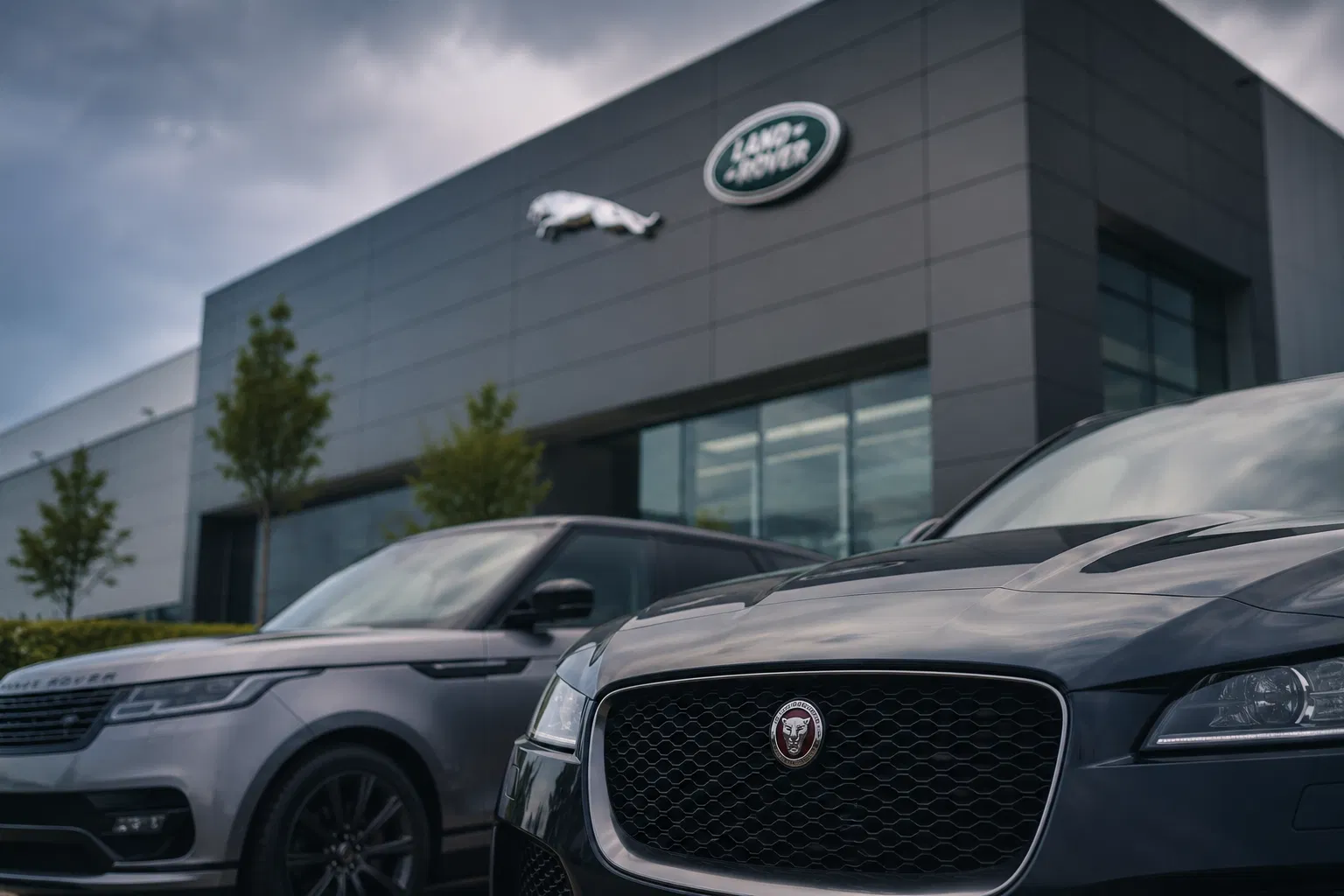
The announcement of jaguar land rover job cuts in 2026 did not arrive like a thunderbolt from a clear sky. It arrived the way most corporate disasters do at the end of a long, grinding sequence of smaller catastrophes that each seemed manageable in isolation but together formed a pattern that was impossible to ignore. A cyberattack that exposed the vulnerability of a manufacturer operating a global supply chain on digital infrastructure it had allowed to age. A tariff war that turned one of its most important export markets hostile overnight. Sales figures that began telling a story the executive team did not want to hear. And a brand that had spent years in the middle of an identity transformation that was proving considerably more expensive and considerably more publicly divisive than its architects had anticipated. What Jaguar Land Rover endured between 2025 and 2026 was not a crisis. It was a cascade. And understanding how a company survives a cascade rather than being consumed by it requires examining every stage of how it fell and every decision it made about how to rise.
The Brand Controversy: Jaguar's Reinvention That Divided Everyone
Long before the financial headlines and the redundancy notices, Jaguar Land Rover had created its own turbulence through a brand transformation that managed to antagonise precisely the audience it needed most. Jaguar, the performance saloon and sports car brand with decades of heritage racing and grand tourer identity, announced a radical repositioning toward an all-electric future in 2024. The rebrand campaign that accompanied it bold, geometric, and deliberately stripped of the heritage visual language that had defined the brand produced one of the most debated advertising moments in recent automotive history.
The backlash was immediate and cross-cultural. Jaguar loyalists, automotive journalists, and social media commentators across the ideological spectrum converged in rare agreement that the campaign had jettisoned something irreplaceable without adequately communicating what would replace it. The jaguar e-pace and other existing model lines were suddenly operating under a brand umbrella that felt disconnected from their character. Existing customers felt addressed by a campaign that seemed designed for someone else entirely. New customers, the electric vehicle adopters the rebrand was designed to attract, had not yet validated the approach with purchase decisions.
This was not merely a creative disagreement. A brand crisis in the automotive sector has direct financial consequences, because vehicles are considered purchases where brand trust functions as a purchasing precondition in ways it does not in lower-consideration product categories. Weakening brand trust at the exact moment you are asking customers to make a £70,000 commitment to an unfamiliar electric product is a compounding problem, not an isolated one.
The 2025 Cyberattack: When the Vulnerability Became Visible
In 2025, Jaguar Land Rover became one of the highest-profile victims of a cyberattack targeting the automotive manufacturing sector. The attack, which disrupted production systems across multiple facilities and temporarily paralysed elements of the company's supply chain management infrastructure, brought into sharp relief a vulnerability that the industry had been warned about for years: modern automotive manufacturing runs on integrated digital systems whose cybersecurity had not kept pace with their operational importance.
The human cost of the attack was immediate and specific. Production line workers arrived for shifts only to find systems unavailable. Logistics co-ordinators could not access scheduling software. Supplier communications were disrupted at a moment when the company was already managing supply chain pressures related to semiconductor availability and the logistical consequences of trade disruption. The attack did not destroy the company. But it cost money the company could not comfortably spare, it consumed management attention at a moment when management attention was already stretched, and it demonstrated to every competitor, supplier, partner, and investor that Jaguar Land Rover's digital infrastructure had not been treated as a strategic asset.
The damage to the supply chain and worker impact was real. Temporary layoffs were issued at affected facilities. Workers who had been managing the anxiety of industry-wide transition uncertainty found themselves facing the additional uncertainty of not knowing when their production lines would resume. The human experience behind the production disruption reports was one of working people managing economic insecurity in real time, trying to understand whether the disruption they were experiencing was temporary or the leading edge of something more permanent.
US Tariffs and Falling Sales: The Market That Turned Against Them
The external economic environment that Jaguar Land Rover was attempting to navigate in 2025 added a layer of commercial difficulty that no internal management decision could fully address. US tariff increases on British automotive imports, implemented as part of a broader trade restructuring under the Trump administration's manufacturing protection agenda, hit Jaguar Land Rover with particular severity.
The United States has historically been one of the most important export markets for Land Rover's premium SUV lineup. The Range Rover, the Defender, and related models had built genuine cultural cachet in the American market aspirational products with strong brand recognition among the affluent buyers who represent Land Rover's primary commercial base. Tariff increases that added thousands of dollars to the effective price of imported British vehicles at the point of retail did not make those vehicles impossible to sell, but they made them considerably harder to sell against American-made and Mexican-assembled alternatives that were not subject to the same additional cost burden.
Sales figures for Jaguar Land Rover's US operations showed declines that, in the context of already compressed margins from the brand's electric transition investment programme, moved from concerning to alarming within two quarterly reporting periods. The company was spending heavily on the development and tooling for electric vehicles whose first production versions were still reaching market, while simultaneously watching revenue from its existing product lines compressed by tariff-driven pricing pressure.
The jaguar e-pace specifically, as a more accessible entry point to the Jaguar brand and a model whose customer base is more price-sensitive than the Range Rover's, felt the commercial squeeze disproportionately. Customers who might have stretched their budget to reach the jaguar e-pace found the tariff-adjusted pricing pushing the model beyond their comfortable reach.
Job Cuts: The Decision That Could Not Be Avoided
Against the accumulation of brand controversy, cyberattack disruption, sales decline, and margin compression, the announcement of jaguar land rover job cuts in 2026 was, by the time it arrived, neither surprising nor avoidable. The specific numbers thousands of positions across UK manufacturing and support functions represented the arithmetic consequence of a company whose cost base had been built for a volume of production and revenue that the current commercial environment was not delivering.
The supply chain and worker impact extended beyond Jaguar Land Rover's direct workforce. The company's manufacturing operations in Solihull, Castle Bromwich, and Halewood support an ecosystem of supplier relationships, logistics companies, catering and service contractors, and local retail and hospitality businesses whose commercial health tracks the fortunes of the main employer. When jaguar land rover job cuts reduce direct headcount, the downstream effect on the communities surrounding those facilities is measured in additional redundancies and reduced local spending that the headline numbers never capture.
Workers who had given decades to the company, who had managed the transition from internal combustion to hybrid and were beginning to manage the next transition to full electric, found themselves caught in a restructuring whose logic was clear from a corporate finance perspective and devastating from a human one. These were not abstract headcount units in a spreadsheet. They were people with mortgages, with families, with commitments built on the reasonable expectation that the work they had done for years would continue to be available.
The Turning Point: What Jaguar Land Rover Did That Changed the Story
What makes the Jaguar Land Rover story something other than a straightforward industrial decline narrative is the set of decisions the company made when the cascade had run its course and the full scale of the challenge was visible.
The land rover military vehicle contract, which had been quietly under development through the period of civilian market difficulty, provided both a revenue anchor and a public signal of institutional purpose. Military procurement contracts for Defender-derived platforms for NATO member armed forces and for specialist vehicle configurations for allied defence programmes brought a category of revenue that is recession-resistant, tariff-immune, and strategically significant in an era of European defence spending expansion. The Land Rover military vehicle contract work was not new, but its strategic importance to the company's revenue diversification was elevated by the civilian market pressures that had become so acute.
The cyberattack, devastating in the immediate term, produced a security infrastructure investment that should have been made years earlier. The post-attack rebuilding of Jaguar Land Rover's digital architecture was conducted with an urgency and a budget that peacetime complacency had never generated. The rebuilt systems were faster, better integrated, more resilient, and better monitored. The attack that cost the company millions in immediate damage produced a digital infrastructure that is now materially more secure than the one it replaced.
On the brand controversy, the feedback from the market brutal, specific, and impossible to ignore produced a recalibration of the Jaguar repositioning that restored more heritage visual language while maintaining the electric ambition. The jaguar e-pace and its successors began to be communicated in ways that acknowledged the brand's past while pointing toward its electric future, rather than treating that past as an embarrassment to be discarded.
And the job cuts, as painful as they were, produced a cost structure that was sustainable rather than aspirational. A company that had been spending at the rate of its peak commercial performance while living through its commercial trough was brought into alignment between its ambitions and its resources. The restructuring was not comfortable. It was necessary.
Conclusion: The Brand That Survived Its Own Worst Year
Jaguar Land Rover did not emerge from 2025 and 2026 unchanged. No institution does when it experiences a cyberattack, a tariff shock, a brand identity crisis, and significant jaguar land rover job cuts within the same compressed period. The people who lost their jobs did not get them back because the company subsequently found its footing. The communities that absorbed the downstream impact of the restructuring did not receive compensation adequate to the disruption they experienced. The damage was real and human and lasting in ways that corporate recovery narratives do not adequately honour.
What can be said is that the company that emerged from that period was more honest about its costs, more secure in its digital infrastructure, more diversified in its revenue base through the land rover military vehicle contract and other institutional programmes, and more grounded in a brand identity that respected its heritage while genuinely pursuing its electric future.
The jaguar e-pace, the Defender, the Range Rover these are not just vehicles. They are the product of decades of engineering culture, manufacturing craft, and design ambition that survived a crisis precisely because the people who made them and the people who led them refused to accept that the crisis was the final chapter.
Britain has built very few automotive brands with genuine global recognition. Jaguar Land Rover is one of them. What 2025 and 2026 demonstrated is that genuine recognition, earned over decades, is harder to destroy than a bad year, even a very bad one might suggest.
Relevant content for More Read...