
US manufacturing production April 2026 Iran war supply disruption data presents a split picture of American industrial resilience and emerging vulnerability, with the Federal Reserve reporting that factory output posted its largest increase in 14 months in April, rising 0.6 percent after an upwardly revised 0.1 percent gain in March, while simultaneously the New York Federal Reserve's Empire State Manufacturing Survey flagged supplier delivery performance deteriorating to four-year highs and supply availability remaining negative as the Iran war's disruption of Strait of Hormuz shipping sends supply chain stress signals through the manufacturing economy. The April production gain significantly exceeded the 0.2 percent rebound that Reuters-polled economists had forecast, with motor vehicle and parts output jumping 3.7 percent and high-technology industries increasing 1.0 percent in a performance driven by the AI spending boom that has made semiconductor and computer equipment production one of the most dynamic parts of the American manufacturing sector. Factory production advanced 1.3 percent on a year-over-year basis, and overall industrial production climbed 0.7 percent, with capacity utilization for the industrial sector rising to 76.1 percent from 75.7 percent in March, though remaining 3.3 percentage points below the long-run average that suggests the sector is not yet operating near its productive limits.
Morgan Stanley chief economist Michael Gapen acknowledged the positive elements of the April production data while flagging the downside risks that supply chain stress and Iran war uncertainty create: firmer demand and continued expansion in output point to some resilience in the manufacturing sector, but uncertainty around supply and prices leaves risks to the near-term outlook tilted to the downside. The New York Fed's Empire State Manufacturing Survey delivered the sharpest near-term warning, with general business conditions rising nine points to 19.6 in May, the highest in more than four years, and new orders and shipments rising considerably for the second straight month, yet simultaneously showing delivery times hitting a four-year high and supply availability remaining in negative territory, indicating that the strong demand reflected in the business conditions index is being met by increasingly strained supply chains whose performance is deteriorating as the Iran war's effects on global shipping accumulate.
Producer prices increased at their fastest pace in four years in April, adding the inflationary dimension to the supply chain stress that the delivery time and availability data document, with oil prices jumping further on Friday after comments from Trump and Iran's foreign minister dented hopes of a deal to end ship attacks and seizures around the Hormuz strait. The combination of positive manufacturing output data and deteriorating supply conditions reflects the specific moment in which the American manufacturing sector finds itself, benefiting from the AI investment cycle and motor vehicle production rebound while facing the approaching headwinds of supply shortages in fertilizers, aluminium, and consumer products that the Middle East conflict is creating through its disruption of the global shipping routes that these supply chains depend on.
What Drove April's Manufacturing Strength and Its AI Component
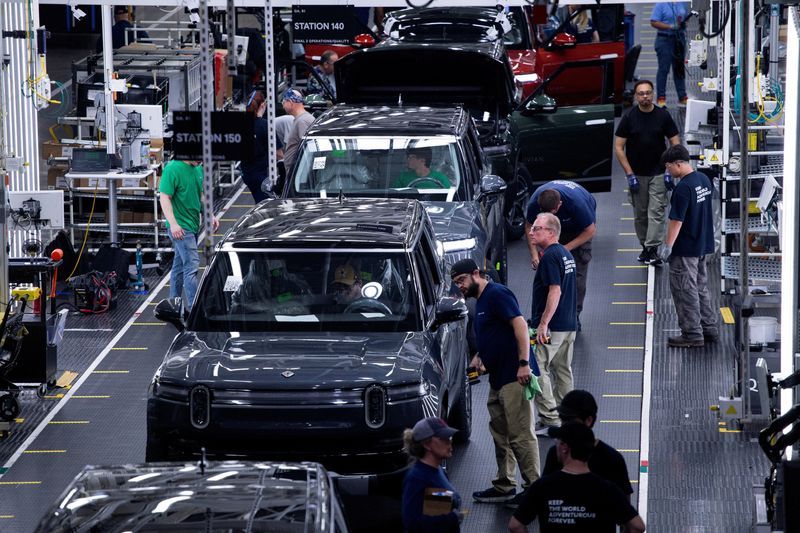
The 3.7 percent jump in motor vehicle and parts output that drove a significant portion of April's manufacturing gain reflects both the underlying demand for new vehicles in the American consumer market and the possibility that some of the production increase represented businesses and consumers front-loading orders to avoid potential shortages and higher prices from the Middle East conflict, a pattern that temporarily inflates production statistics while shifting future demand forward in ways that create corresponding weakness in subsequent periods. Motor vehicle production has been one of the more volatile components of American manufacturing output across recent years, subject to the semiconductor supply chain constraints that plagued the sector in 2021 and 2022, the recovery as those constraints eased, and now the new supply chain risks that the Iran war has introduced through its disruption of specialty chemicals, aluminium, and other materials that vehicle manufacturing depends on. A sector that is currently running at elevated production rates because customers are front-loading orders faces the specific risk that those customers have reduced future orders that will show up as production weakness when the front-loading effect dissipates.
The 1.0 percent increase in high-technology industry production, following the 0.5 percent gain in March, reflects the sustained investment demand from AI infrastructure buildout that has made semiconductor and computer equipment production one of the strongest segments of American manufacturing across the current cycle. Computers and peripheral equipment increased 1.5 percent for a second consecutive month, semiconductor and related electronic components rose 1.0 percent, and communications equipment increased 0.6 percent, collectively documenting a technology manufacturing sector operating with strong underlying demand from the AI data centre construction cycle that continues to absorb computing hardware at unprecedented rates. The AI spending boom, which Morgan Stanley and other institutions have identified as contributing significantly to the economy's 2.0 percent annualised growth pace in the first quarter, provides a manufacturing demand anchor that is partially independent of the consumer and business confidence cycles that typically govern factory output, because the hyperscaler capital expenditure plans driving data centre construction are committed over multi-year horizons that do not respond as quickly to quarterly economic uncertainty as more cyclical demand categories.
The exclusion of high-technology and motor vehicle sectors from the manufacturing production figure reveals a more modest but still positive underlying picture, with the remaining manufacturing categories rising 0.3 percent in April after a similar gain in March, suggesting broad-based if unspectacular manufacturing performance across the sectors that are less directly benefiting from the AI demand cycle. Durable goods production shot up 1.2 percent, while nondurable goods output eased 0.1 percent, with chemicals falling 0.9 percent and plastics and rubber products dropping 0.9 percent, the nondurable declines reflecting the supply chain pressures and chemical feedstock disruptions that are more directly linked to the Iran war's disruption of petrochemical supply routes. Petroleum and coal products output increased 1.0 percent for a second consecutive month, benefiting from elevated energy prices that incentivise domestic refining activity even as the underlying crude supply constraints from the Hormuz closure create the price pressure driving that incentive.
The Supply Chain Stress Signals and Their Implications for Future Production
The New York Fed's delivery time measure hitting a four-year high and supply availability remaining negative in May are the leading indicators that most directly connect the Iran war's supply chain disruption to measurable economic impact in American manufacturing, because delivery time deterioration and supply unavailability are the mechanisms through which external supply constraints translate into domestic production constraints with a lag that depends on inventory levels and the degree of supply chain redundancy that manufacturers have built. Companies with strong supplier relationships and established alternative sourcing can manage supply disruptions for extended periods by drawing down inventories and activating backup suppliers, but these buffers are finite, and the May Empire State survey's signal that supply conditions are worsening rather than stabilising suggests that the initial inventory buffers are being consumed rather than replenished.
The specific supply shortages that the Iran war has created, affecting fertilizers, aluminium, and consumer products among others, reflect the specific geography of the disruption in Hormuz-transiting supply chains. Fertilizer production depends on natural gas feedstocks whose supply chains the Hormuz closure has disrupted, creating both cost increases and availability concerns for the agricultural sector whose planting season timing makes fertilizer unavailability acutely damaging in ways that cannot be compensated by later delivery. Aluminium, whose production and trade routes include significant volumes transiting through Gulf shipping lanes, faces both higher energy costs that increase smelting expenses and logistics disruptions that affect delivery timelines for industrial users across the automotive, aerospace, and consumer products sectors. The breadth of the supply disruptions, spanning petrochemicals, metals, and agricultural inputs, means that the manufacturing sectors most exposed to supply chain stress extend well beyond the energy industry directly.
The Fed's Rate Hold, Capacity Utilization, and What the Outlook Requires
Higher oil prices and the accompanying inflation have led financial markets to expect the Federal Reserve to keep its benchmark overnight interest rate in the 3.50 to 3.75 percent range into next year, a monetary policy trajectory that creates its own headwind for manufacturing by maintaining the elevated borrowing costs that dampen business investment in new capacity and equipment. The Federal Reserve's Beige Book last month noted that many producers remained cautious about increasing drilling due to uncertainty about the persistence of higher prices, a caution that Capital Economics chief North America economist Stephen Brown described as a reality check to those hoping that a surge in U.S. production would offset supply losses from the Middle East. The second consecutive monthly decline in oil and gas well drilling, despite higher oil prices, is the most specific evidence that domestic energy producers are not responding to the price signal with the production increase that classical supply economics would predict, because the uncertainty about how long elevated prices will persist makes the multi-year capital commitments that new drilling requires commercially difficult to justify.
Capacity utilization for the industrial sector at 76.1 percent, while improved from March's 75.7 percent, remaining 3.3 percentage points below the long-run average is the systemic indicator that the manufacturing sector has significant spare capacity that is not being utilised, suggesting that the April production gains do not represent an economy operating near its productive limits but rather one that is recovering toward more normal utilisation rates from below-average starting points. The manufacturing sector's operating rate of 75.8 percent, 2.4 percentage points below the long-run average, reinforces this picture of an industrial economy with room to grow production without hitting capacity constraints, provided that supply chain disruptions from the Iran war do not prevent the inputs required for that production from reaching factories on the timelines that production schedules assume.
The elevated interest rates that inflation expectations from the Iran war are sustaining could offset some of the boost to manufacturing from the tax cuts that the Trump administration has implemented, creating a fiscal-monetary policy tension in which the stimulative effect of tax reductions is partially countered by the restrictive effect of higher borrowing costs on the capital investment decisions that manufacturing sector expansion requires. Manufacturing was already impaired last year by Trump's sweeping import tariffs, whose effect was partially cushioned by the AI spending boom that generated equipment demand, and the sector now faces the additional headwinds of supply chain disruption and persistent inflation that the Iran war has added to the already-complex policy environment in which American manufacturers are making their investment and production decisions. The April production data's positive headline performance exists within this challenging context, providing evidence of resilience but not reassurance about the near-term trajectory that supply chain deterioration and geopolitical uncertainty are shaping.