
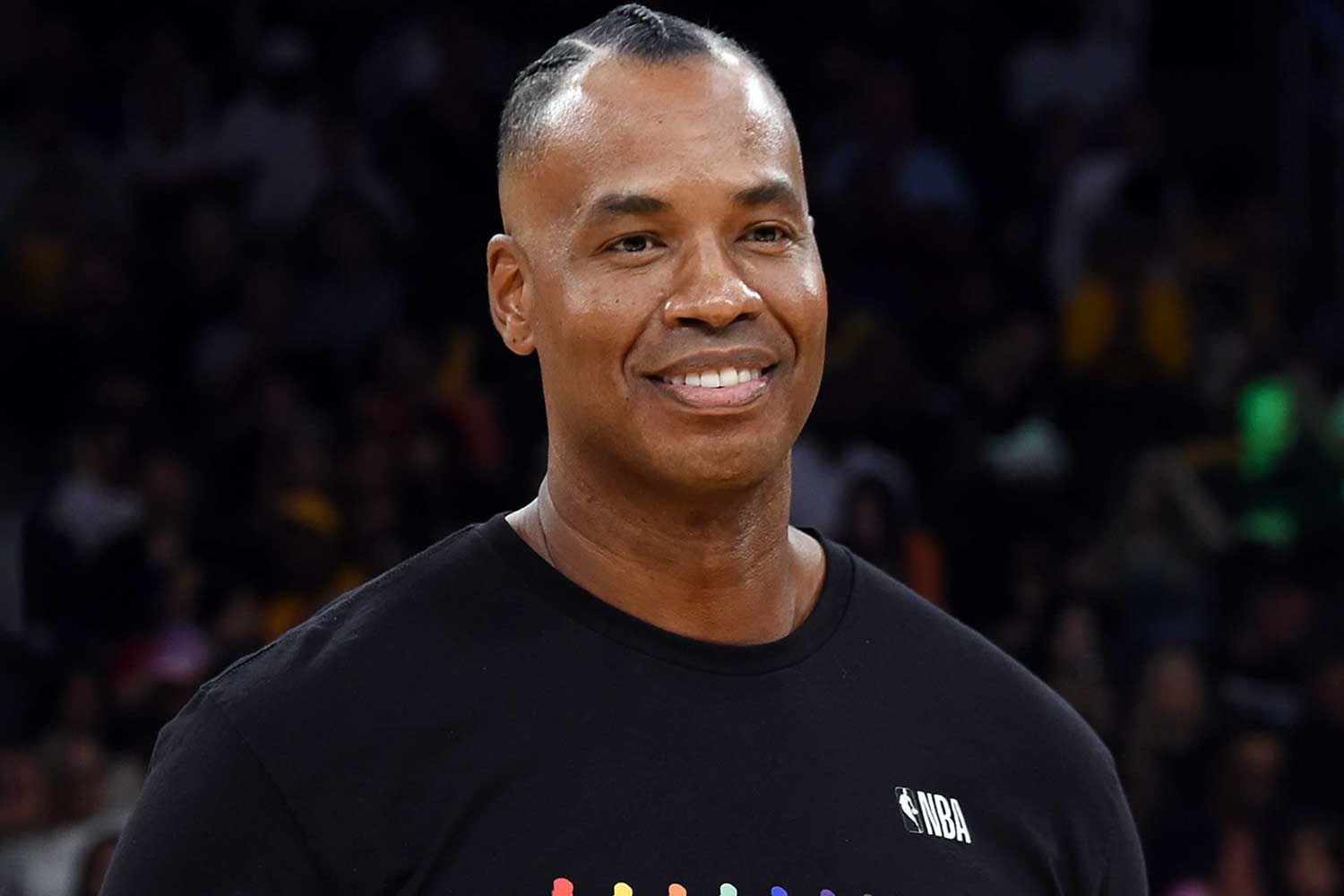
Jason Collins NBA first openly gay player dies glioblastoma 2026 after a valiant fight with the aggressive brain cancer that he had publicly disclosed in December 2025, with the former professional basketball player passing away at the age of 47, his family announced in a statement shared by the National Basketball Association on Tuesday. Collins made history in 2013 when he became the first active male athlete on a major American professional team sport to come out as gay through a front-page cover story in Sports Illustrated, a moment that changed professional sports and helped open the door for the more inclusive and welcoming environment that athletes across multiple sports and identities have benefited from in the years since. NBA Commissioner Adam Silver said Jason Collins' impact and influence extended far beyond basketball as he helped make the NBA, WNBA, and the larger sports community more inclusive and welcoming for future generations, adding that Collins would be remembered not only for breaking barriers but for the kindness and humanity that defined his life and touched so many others.
Collins revealed his glioblastoma diagnosis to the world in December 2025, describing the brain tumour with devastating vividness as a monster with tentacles spreading across the underside of his brain the width of a baseball. Doctors had told him that without treatment he would be dead within three months, and he had been receiving treatment with a drug called Avastin to slow the tumour's growth while also travelling to Singapore for a targeted form of chemotherapy in a comprehensive medical effort against a disease that he and his medical team understood was inoperable. When announcing his diagnosis publicly, Collins drew a parallel to his 2013 decision to come out as gay, describing the years since that historic moment as the best of my life and offering the message that would define his legacy beyond basketball: your life is so much better when you just show up as your true self, unafraid to be your true self, in public or private.
Collins was a California native who began his basketball career at Stanford University under coach Mike Montgomery before entering the NBA, where he played for six teams across 13 professional seasons beginning with the New Jersey Nets. He had been named to Time Magazine's 100 most influential people list, retired in 2014, and remains the only openly gay athlete to have ever played in any of the four major U.S. professional sports leagues during his time on the court. The Brooklyn Nets, where Collins concluded his career after the original New Jersey franchise relocated, said they were heartbroken by his death and noted that he had spent eight seasons in a Nets uniform, helped define an era of the franchise, and played a vital role on the back-to-back Eastern Conference championship teams in 2002 and 2003.
How Jason Collins Made History and What His Coming Out Meant
Jason Collins' decision to come out as gay through a first-person essay in Sports Illustrated in 2013 was a moment of genuine personal courage in a professional sports environment where no active male athlete in any of the four major American leagues had previously taken that step in public. Collins opened his essay with the direct and unforgettable line: I'm a 34-year-old NBA center. I'm Black and I'm gay, establishing immediately both the specificity of his identity and the deliberate simplicity with which he chose to present it to the world. The essay was comprehensive, thoughtful, and deeply personal, addressing his faith, his relationships, his experience of carrying the knowledge of his sexuality through 13 professional seasons, and his decision that the time had come to live publicly as himself rather than continue the separation between his private truth and his public identity.
At the time of publication, Collins was a free agent, meaning his professional fate after the announcement was genuinely uncertain in a way that would not have applied to a player under contract whose team would have been obligated to honour that agreement regardless of any public statements. The question of whether coming out would end his NBA career or whether any team would be willing to sign him created a real-world test of the professional sports world's actual, as opposed to stated, tolerance for openly gay athletes, a test whose outcome was not foreordained at the time despite the significant advances in gay rights that had occurred by 2013. The Washington Post later reported that President Barack Obama called Collins to offer his personal congratulations and support following the essay's publication, a presidential engagement that reflected the cultural significance of the moment beyond the sports world.
The Brooklyn Nets' decision to sign Collins in February 2014 provided the definitive answer to the question his free agent status had posed, with the team offering him a contract that allowed him to become the first openly gay athlete to play in any of the four major U.S. professional sports leagues. His debut with the Nets on February 23, 2014, was covered as a landmark cultural moment as much as a basketball game, with Collins receiving a standing ovation from the Madison Square Garden crowd during the Nets' road game against the New York Knicks that marked his return to NBA courts. The reception he received from fans, teammates, and opponents across his games with the Nets that season demonstrated that the feared negative consequences of coming out in professional sports were substantially less severe than many had feared, providing a lived example for younger athletes across sports who were watching how Collins was treated.
The Barriers He Broke and the Path He Created for Others
Collins' significance as a barrier-breaker extended beyond his personal courage to the practical example he provided for athletes across professional sports who were navigating similar questions about public identity in an environment whose tolerance for openly gay athletes was genuinely unknown before 2013. His experience demonstrated that an openly gay athlete could not only survive in a major professional league but could be supported by teammates, coaches, management, and fans in ways that made the professional environment, while imperfect, navigable for someone committed to living authentically. The cultural change that followed Collins' coming out, including increased visibility of LGBTQ athletes across multiple sports, stronger institutional support from leagues and teams for LGBTQ players, and a broader normalisation of LGBTQ presence in professional sports culture, was not caused by Collins alone but was accelerated by the credibility his example provided.
His inclusion on Time Magazine's 100 most influential people list captured the recognition that his cultural impact extended well beyond basketball, placing him alongside political leaders, scientists, artists, and activists whose work had shaped the world in significant ways. The honour reflected a mainstream cultural assessment that Collins' decision to come out and his subsequent advocacy for LGBTQ inclusion in sports had produced measurable change in how professional sports institutions and cultures approached questions of identity and inclusion that they had previously avoided or actively suppressed. The recognition that Silver's NBA statement provided on Tuesday, characterising Collins' impact as extending far beyond basketball, is consistent with this broader assessment of a career whose significance was always about more than professional basketball performance.
His Legacy, His Final Message, and What He Left Behind
Collins' public disclosure of his glioblastoma diagnosis in December 2025, made with the same directness and authenticity that had characterised his 2013 coming out, reflected a man who had learned that living publicly and honestly, even about the most difficult realities, was the approach that served both himself and those who were watching. Glioblastoma, the most common malignant brain tumour in adults, is an aggressive cancer that starts in astrocyte cells that support nerve cells in the brain, and its inoperable nature in Collins' case meant that treatment was aimed at slowing progression rather than achieving cure. Collins discovered the cancer was developing after noticing difficulty focusing, a symptom whose initial subtlety belied the severity of the diagnosis that subsequent imaging revealed.
His description of the tumour as a monster with tentacles spreading across the underside of his brain gave his public disclosure a visceral, humanising quality that made the abstract diagnosis concrete for the millions of fans and supporters who received the news through social media and sports media. Collins' characterisation of the diagnosis as a reminder of his 2013 coming out, framing both as moments requiring him to show up as his true self before the world regardless of consequences, revealed the philosophical consistency that had defined his public life since the Sports Illustrated essay. He was receiving Avastin, an anti-angiogenic drug that works by cutting off the blood supply to tumours, alongside specialised chemotherapy in Singapore, demonstrating the comprehensive and international character of the treatment programme his medical team had assembled.
His family's statement that Collins had changed lives in unexpected ways and was an inspiration to all who knew him and to those who admired him from afar captures the dual nature of his legacy as someone whose significance was felt both by those who knew him personally and by the much larger community of people who experienced his example from a distance. Stanford coach Mike Montgomery's characterisation of Collins' death as a sad day and his description of Collins as one of the school's greats acknowledges both the basketball achievement and the human character that made Collins significant to the people who encountered him in the specific contexts of his life rather than only through the historical narrative of his barrier-breaking. The NBA, the Nets, Stanford, and the millions who followed his career across its athletic and historic dimensions are all mourning not only a trailblazer but, as those who knew him most consistently emphasised, a genuinely kind and thoughtful person who brought people together.