
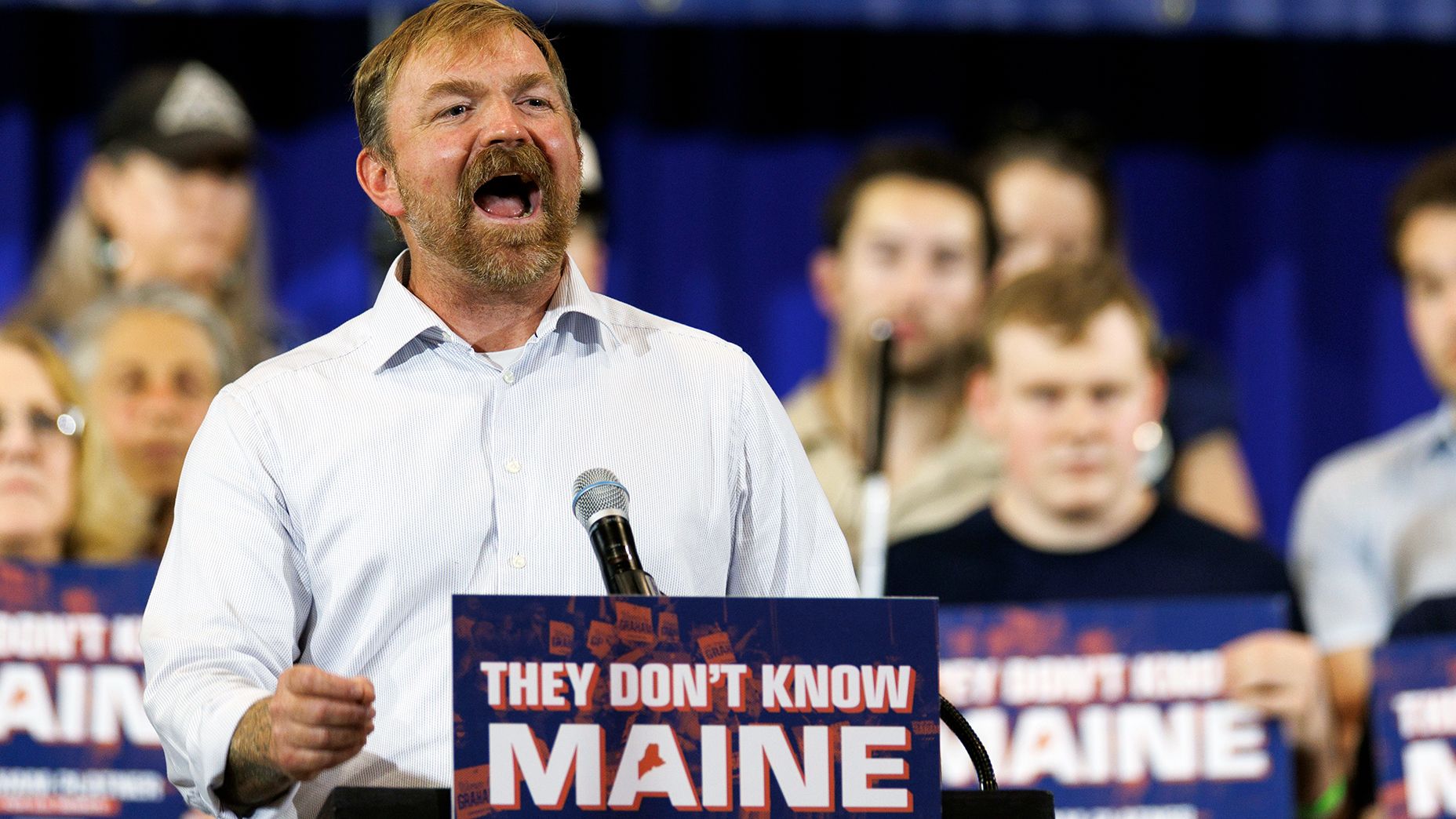
Graham Platner Maine meteoric rise from oysterman and former Marine to Democratic Senate nominee in one of the year's most closely watched races has ended in catastrophic collapse, with the candidate announcing he was suspending his campaign on Wednesday night via recorded video posted to social media, just over 48 hours after Politico published an allegation from an ex-girlfriend that an intoxicated Platner had entered her home uninvited in 2021 and sexually assaulted her. He has denied the allegation. The departure of a candidate who had beaten popular Maine Governor Janet Mills in the primary, built a grassroots network of more than 15,000 supporters, and earned endorsements from Vermont Senator Bernie Sanders and Massachusetts Senator Elizabeth Warren leaves Democrats scrambling to find a replacement before a state-mandated deadline of July 27, while exposing the party rifts between its progressive base and establishment moderates that threaten not just this November's Senate midterms but the party's positioning heading into the 2028 presidential race.
"We went toe to toe with one of the most entrenched political systems in the history of the world, and we won," Platner said in his 11-minute farewell video. "And now they are not going to let us have it, not if it's me."
For Democrats, the stakes in Maine are severe. To take control of the Senate in November's midterm elections, the party needs to flip four Republican-held seats while defending all of their own. Maine is widely considered a must-win target, and Platner had been polling with a narrow lead over five-term Republican Senator Susan Collins, who has represented Maine since 1997. That advantage now rests with whoever emerges from a replacement selection process whose management could either unite Platner's passionate progressive base behind a new candidate or leave thousands of activated voters feeling their choice was overruled by the establishment he repeatedly warned them against.
"So much of Platner's base, whose passion Democrats are going to want to have, will sit on their hands and be very angry if it looks like this is another case of the establishment triumphing over what the people want," said James Melcher, professor of politics at the University of Maine at Farmington.
How Platner Rose, Survived Scandal, and Then Fell in Rapid Succession
Platner's entry into Maine's Senate race last August positioned him immediately as a different kind of candidate: a working-class candidate with a gravelly voice, scruffy appearance, and a passionate pitch for universal healthcare, wealth taxes, and low-cost housing pitched specifically at the rural voters who have drifted from the Democratic Party in recent election cycles. His primary victory over Mills, the governor who had been handpicked by Democratic leaders as the party's safest bet to unseat Collins, was one of the year's most striking upsets, demonstrating the breadth of appetite among Democratic voters for outsider candidates offering a vivid vision over establishment-certified experience. Recent polling had shown Platner in a narrow lead over Collins, a figure who has survived every Democratic challenge thrown at her since 1997 and who beat a better-funded opponent in 2020 despite trailing in polls through to election day.
That the allegation was what finally ended his candidacy, rather than the series of controversies that preceded it, speaks to both the depth of his supporters' loyalty and the political tolerance that a hungry progressive electorate extended to their unconventional champion. Reports of offensive social media posts, a chest tattoo with Nazi connotations, sexually explicit text messages sent to women after his 2023 marriage, and allegations from former girlfriends of threatening and toxic behaviour failed to move 72 percent of Maine's Democratic primary voters from casting their ballots for him in June. The sexual assault allegation proved to be the breaking point, however, stripping away his closest allies within hours.
Within hours of Politico's publication, his political support evaporated. Warren and Sanders withdrew their endorsements. The national party announced it would no longer help finance his campaign.
"The thing I'm the most worried about is we run somebody and he or she loses, and then we spend the next four years pointing fingers at whose fault that was," said former state Senator Lynn Bromley, who had backed Mills in the primary.
The Progressive Blueprint That Platner Embodied and Why His Collapse Matters Beyond Maine
Platner's campaign represented something larger than a single Senate race. His ability to combine left-wing policy commitments with a working-class aesthetic and a cross-demographic appeal in a battleground state was being watched by national Democrats as a potential model for the 2028 presidential contest, with his success against Collins potentially becoming the most compelling argument available for nominating a left-wing candidate at the national level. That argument has now been foreclosed, at least in its Platner form, and the implications extend into the intra-party debate about whether Democrats should continue running progressive outsiders or return to the credentialed, vetted, establishment-aligned candidates whose scrutiny-tested records come with less explosive downside risk. Primary contests across the country this year have seen Democrats opting for outsider candidates with vivid visions over safer conventional choices, and Platner's collapse will inform how both wings of the party assess that strategy going forward.
His rise also underlined the risks of charismatic political neophytes who have not received close scrutiny before running for higher office. Platner's controversies were available for discovery before the primary, but the hunger for a different kind of candidate proved stronger than caution in the primary electorate, a dynamic that produced the enthusiastic grassroots network Democrats now desperately need to transfer to a replacement candidate rather than lose to frustration and disillusionment.
The July 27 Deadline, the Replacement Battle, and Susan Collins Waiting
The Maine Democratic Party has announced it will select a new nominee at a convGraham Platnerention held within the next two weeks, where reportedly hundreds of delegates will choose Platner's replacement, abandoning an earlier commitment to seek broader public input. That process change is itself a source of conflict, with state party chair Devon Murphy-Anderson accusing the Platner campaign of trying to manipulate the nomination process, an accusation Platner's side denied, insisting they want an open process rather than what they called the coronation of an establishment-backed candidate.
The accusation and counter-accusation in the days between the allegation's publication and Platner's withdrawal announcement document a party whose left-establishment tensions were already inflamed before the candidate's exit, and whose management of the replacement process could either heal or deepen those wounds depending on how transparently and inclusively the convention is run. Murphy-Anderson herself acknowledged that Platner's supporters are a vital part of the party who deserve to participate in an open process, suggesting awareness at the leadership level that the replacement selection's legitimacy in progressive eyes is as important as the replacement's political viability.
Among the names emerging as potential replacements are Troy Jackson, a former Maine Senate leader who campaigned alongside Platner during the gubernatorial primary and finished third; Nirav Shah, the state epidemiologist who became a familiar public face during the Covid pandemic and finished a close second in the gubernatorial race; and Shenna Bellows, the Maine secretary of state known for her lawsuit to block Trump administration access to state voter data, who ran against Collins in 2014 but was soundly beaten.
Each brings recent campaign experience and some name recognition, but none carries the grassroots energy that Platner generated, and all three face the challenge of consolidating his base in a compressed three-month window before November.
"If they play their cards right, I think that they will be fine and, with some voters, even better than they would have been before," Melcher said, "as long as the party doesn't handle this in a way they see as disrespectful or a cabal taking things over."
Collins, meanwhile, has had 30 years to build her Maine brand. She has survived every Democratic challenge mounted against her, consistently outperforming polls and overcoming funding disadvantages through the sheer institutional weight of her incumbency and constituent relationships. She will watch the Democratic replacement process closely, knowing that a divided or demoralised opposition is the specific electoral environment in which her incumbency advantage is most difficult to overcome.
"It's not as though it was going to be easy before, and now it's hard," Melcher said. "Beating Collins was always going to be hard."