
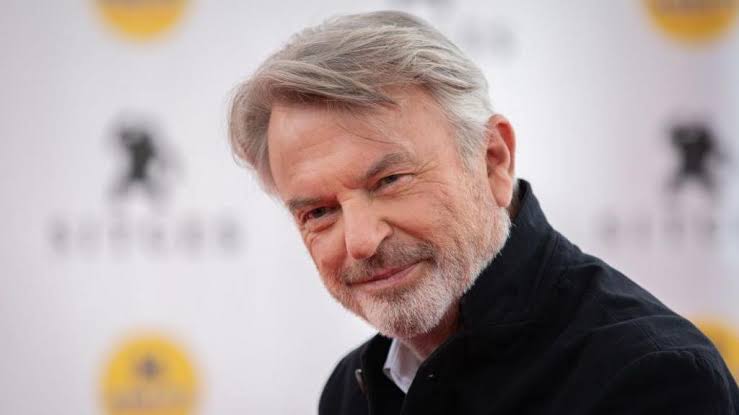
Sam Neill dead age 78 Jurassic Park actor dies 2026 has been confirmed by the actor's family in a statement released on Monday, with his whānau announcing that the celebrated New Zealand actor passed away in Sydney, Australia, surrounded by family, with the loss described as sudden and unexpected and with the family expressly confirming that Neill remained cancer free at the time of his death, having announced in April of this year that he was clear of the non-Hodgkin lymphoma he had disclosed in 2023. Neill is survived by a body of work that spans five decades and encompasses one of cinema's most recognisable roles as Dr Alan Grant in the original Jurassic Park in 1993 alongside some of the most demanding dramatic performances of his generation in films including Jane Campion's The Piano, John McTiernan's The Hunt for Red October, and Paul W.S. Anderson's Event Horizon, a range that speaks to a versatility that allowed him to anchor a blockbuster franchise and inhabit a Palme d'Or-winning art film in the same calendar year without seeming to strain at either.
"It is with immense sadness that the whānau of Sam Neill share the news of his passing on Monday 13th July, in Sydney, Australia," the family statement read.
"Sam was surrounded by family and passed with the dignity that has characterised his whole life. The loss was sudden and unexpected but blessed by the fact that Sam remained cancer free. They would like to express their deepest gratitude to the staff at St Vincent's Private Hospital for their incredible care. More details will be shared later, but for now, on behalf of the family, we ask that you respect their privacy as they navigate this immeasurable loss."
Australian Prime Minister Anthony Albanese mourned Neill on X, writing that he "starred in so many beloved Australian stories and he earned a special place in Australian hearts."
"Wry and dry, thoughtful and laconic, Sam fought illness with the same dignity, humour and conviction that gave strength to his every performance," Albanese wrote. "He will be much mourned and long remembered. May he rest in peace."
From Omagh to Jurassic Park, the Career of a Man Who Could Play Everything
Sam Neill was born in Omagh in County Tyrone, Northern Ireland in 1947, his New Zealander father having been stationed there as an officer with the Irish Guards. The family moved to New Zealand when Neill was seven, transplanting the child who would become one of the southern hemisphere's most celebrated actors from the hills of Ulster to the landscapes of a country that would shape both his identity and much of the career he eventually built. In a 2012 BBC interview, Neill reflected on those early years with the wry specificity that characterised him throughout his life.
"I was born in Omagh, we lived in Armagh and my favourite place here was Tyrella beach, I sort of think that's where I grew up," he said.
His Northern Ireland accent had been, in his own words, "well beaten out" of him by classmates in New Zealand, a detail he recalled when he returned to his roots for his role as a Belfast police chief in the BBC's Peaky Blinders in 2013, a performance for which he sought guidance from fellow actors James Nesbitt and Liam Neeson to reclaim the cadences of a childhood accent that decades of antipodean life had erased.
One of his earliest significant film roles came in Britain at the start of the 1980s when he played Damien in the third Omen film, a performance that now functions as the early evidence of a range that the subsequent decades would only confirm and deepen. The ability to project menace, charm, authority, and vulnerability within single performances, often within single scenes, was present from those early roles and never left him regardless of the scale or genre of the project he was working on.
1993: One Year That Defined the Full Scope of a Career
The year 1993 is, by any assessment, the single most revealing year of Sam Neill's career, a twelve-month period in which he appeared in two films that were about as different from each other as cinema allows while succeeding entirely in both.
In Jurassic Park, directed by Steven Spielberg, Neill played Dr Alan Grant, the palaeontologist whose scepticism about cloning technology is vindicated catastrophically by the events of the film. It became one of the highest-grossing films in cinema history at the time of its release, introduced Neill to a global audience whose size dwarfed anything he had previously reached, and created the franchise association that attached his face and presence to one of popular culture's most enduring properties. The film's continued vitality was noted this week by observers who pointed out that it still genuinely frightens children encountering it for the first time.
The same year, he appeared in Jane Campion's The Piano, a film that could not have been more different in ambition, scale, or register. The New Zealand-set drama won the Palme d'Or at Cannes, with Holly Hunter playing a mute woman and Neill as her husband whose character undergoes a genuinely disturbing transformation in the film's final act, moving from devoted partner to a figure of threat and violence in a performance that required the kind of psychological complexity that blockbuster cinema rarely demands from its actors. That Neill could carry both films in the same year without either performance seeming like a compromise of the other is the specific evidence of his range that those who worked with him and those who studied his career most consistently cite.
He returned to the Jurassic Park franchise in subsequent films, reprising the role of Dr Alan Grant with a reliability and affection for the character that suggested genuine fondness for the series rather than purely contractual obligation.
The Cancer Battle, the Clear Scan, and a Death That Came Without Warning
In March 2023, Neill made the disclosure that he had been diagnosed with cancer, describing it specifically as a ferocious type of aggressive non-Hodgkin lymphoma in terms whose directness reflected the public transparency about his own life that had characterised his social media presence and public persona throughout his later years. The diagnosis was received with an outpouring of affection from the global audience whose connection to his work across five decades made the news feel personal in the specific way that beloved public figures' health disclosures always do when the attachment runs deep enough.
The treatment Neill underwent was CAR-T cell therapy, formally known as Chimeric Antigen Receptor T-cell therapy, a form of immunotherapy in which a patient's own T-cells are extracted, modified to recognise and attack cancer cells, and reinfused into the patient's bloodstream, representing one of the most significant recent advances in haematological cancer treatment and one whose results in non-Hodgkin lymphoma cases have been among the most promising in the emerging immunotherapy field.
In April of this year, Neill announced the outcome that the treatment had produced.
"We've just had a scan just now and there is no cancer in my body, that's an extraordinary thing," he told Australian outlet 7 News.
The simplicity of the statement, and the evident wonder in its framing, reflected a man who understood the significance of what he had been through and the fortune of the outcome he had achieved. His family's confirmation that he remained cancer free at the time of his passing establishes that the illness he had confronted and beaten was not the cause of a death whose suddenness and unexpectedness the family statement describes with a grief whose rawness the language makes visible.
The statement's closing request, for privacy as the family navigates this immeasurable loss, uses a phrase whose weight is appropriate to the specific situation of a family that has lost a presence whose warmth, wit, and humanity extended beyond the professional achievement to the person who created it. More details, the statement confirms, will be shared later.