
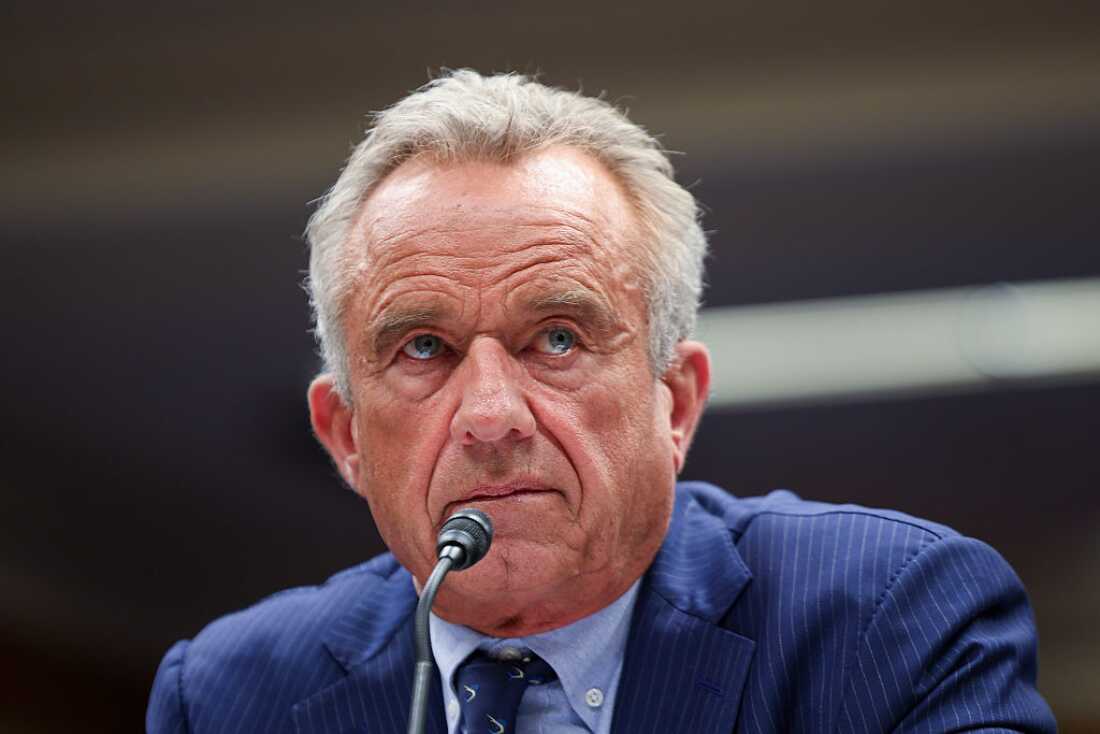
Kennedy ACIP vaccine advisory panel rules 2026 have been rewritten by the Department of Health and Human Services after U.S. Health Secretary Robert F. Kennedy Jr. published a revised charter for the Advisory Committee on Immunization Practices on Monday, broadening the list of expertise required for panel membership in what appears to be a direct response to a federal court ruling last month that found most of Kennedy's original appointees unqualified for the positions they held. The move follows a March 16 decision by Boston-based U.S. District Judge Brian Murphy, who concluded that Kennedy had unlawfully reconstituted ACIP after removing and replacing all 17 independent vaccine experts who had previously served on the panel, substituting members who shared Kennedy's controversial vaccine views but lacked the immunization expertise that the panel's own charter required. Murphy's ruling put the decisions of the reconstituted ACIP on hold and described Kennedy's appointees as distinctly unqualified, noting that only six of the 15 members had any meaningful experience in vaccines.
The revised charter published on Monday by the HHS broadens the expertise categories for ACIP membership beyond the previous requirements focused on immunization practices, public health, clinical vaccine use, preventive medicine, and vaccine research to include specialists in biostatistics and toxicology, among other categories. Two former ACIP members appointed by previous administrations reviewed the new charter and confirmed that it appears to broaden the membership requirements in ways that would potentially qualify the kinds of experts Kennedy has been appointing, including those whose backgrounds are in fields adjacent to immunization rather than in vaccine science itself. HHS spokesman Andrew Nixon attempted to minimise the significance of the changes, describing the charter renewal as routine statutory requirements that do not signal any broader policy shift, a characterisation that the timing and specific content of the revisions makes difficult to accept at face value given its direct connection to the court ruling it appears designed to address.
ACIP is not a peripheral institution in American public health. It is the committee whose recommendations directly shape the U.S. childhood immunization schedule, which determines which vaccines are recommended for American children at which ages, and whose guidance the CDC uses to inform vaccination policy across the country. The composition of ACIP therefore has direct and immediate consequences for American children's health, for the structure of U.S. vaccination programmes, and for the public health outcomes that immunization policy is designed to achieve. Kennedy's original removal of all 17 sitting members and replacement with individuals sharing his anti-vaccine views was the most direct intervention in the committee's composition in its history, and the judicial rebuke it received reflects how significantly that intervention departed from the legal and scientific standards the committee is required to uphold.
ACIP's Role, Kennedy's Reconstitution, and How the Court Confrontation Developed
The Advisory Committee on Immunization Practices was established in 1964 as the federal government's primary expert advisory body on vaccine recommendations, providing the scientific and clinical expertise that the CDC requires to make evidence-based decisions about the use of vaccines in the American population. The committee's composition has historically reflected the expertise requirements of its mandate: members are typically physicians with specialisations in infectious disease, paediatrics, public health, epidemiology, and vaccine science, along with researchers who have directly contributed to the evidence base on which vaccination recommendations are made. The committee's recommendations on the childhood immunization schedule carry particular weight because they determine the vaccination requirements that schools, childcare facilities, and public health authorities across the country apply, and because they directly influence which vaccines private and public health insurance plans cover.
The institutional design of ACIP reflects the principle that vaccination policy decisions should be insulated from political influence and grounded in scientific expertise, with the committee's independence from the political appointees who lead HHS providing the credibility that makes its recommendations authoritative with the medical and public health community. Independent expert advisory committees of this type are a recurring feature of American regulatory and public health governance, providing the technical legitimacy that politically appointed officials cannot themselves provide for highly specialised decisions where scientific expertise rather than policy preference should determine the outcome. The Federal Advisory Committee Act, the legal framework under which ACIP operates, establishes the statutory requirements for these committees including the requirements for member qualifications, conflict of interest management, and public accountability that Judge Murphy found Kennedy's reconstituted ACIP had violated.
ACIP's specific recommendations affect not just the clinical practice of individual physicians and paediatricians but the entire ecosystem of vaccination programme financing, school attendance requirements, liability protections, and public health outbreak response that depends on a stable and credible immunization schedule. When the National Vaccine Injury Compensation Programme determines liability protections for vaccine manufacturers, it uses the recommended vaccination schedule as its baseline. When state health departments set school vaccination requirements, they typically follow ACIP recommendations. When insurance plans determine vaccine coverage obligations, they reference ACIP guidance. The committee's recommendations therefore have cascading effects through the entire American health system that make the question of who sits on ACIP and whether they are genuinely qualified a public health matter of the first order.
Kennedy's Removal of All 17 Members and the Legal Challenge It Generated
Robert F. Kennedy Jr.'s removal of all 17 sitting ACIP members shortly after taking office as Health Secretary was an unprecedented action in the committee's history, breaking with the norm of maintaining continuity of expertise through staggered member terms while implementing any changes in committee direction that a new administration wanted to pursue. The simultaneous removal of the entire expert membership and its replacement with individuals reflecting Kennedy's vaccine-sceptical worldview was not a subtle shift in committee direction but a complete institutional replacement whose purpose was transparent: to use the committee that shapes American vaccination policy as a vehicle for Kennedy's longstanding campaign to question and restrict vaccine use, particularly the childhood immunization schedule that he has criticised for decades.
Kennedy's vaccine views are not new or incidentally controversial. He has been one of the most prominent anti-vaccine activists in the United States for over two decades, repeatedly and incorrectly linking childhood vaccines to autism despite overwhelming scientific evidence against that connection, and advocating for radical reductions in the recommended childhood vaccination schedule that the American Academy of Pediatrics, the World Health Organization, and the scientific consensus strongly oppose. His appointment as Health Secretary gave him the institutional authority to act on those views through the regulatory and advisory bodies that he oversees, and the ACIP reconstitution was the most direct exercise of that authority. The removal of credentialed vaccine experts and their replacement with individuals who shared his views but lacked comparable credentials was the predictable structural result of placing an anti-vaccine activist in charge of the government institution responsible for vaccine policy.
Judge Murphy's March 16 ruling that Kennedy's ACIP panel violated the Federal Advisory Committee Act and that its members were distinctly unqualified focused specifically on the charter requirements that the committee's own governing document established. The FACA requires that federal advisory committees have balanced membership with appropriate expertise for the committee's mandate, and ACIP's charter specifically required that members have expertise in the use and research of vaccines and immunization practices. Murphy's finding that only six of the 15 Kennedy-appointed members had any meaningful experience in vaccines was a factual determination based on the members' professional backgrounds and credentials, not a political judgment, and it established the legal basis for putting the committee's decisions on hold pending either the appointment of qualified members or a restructuring of the membership requirements that would qualify Kennedy's existing appointees under a revised standard.
The ICAN Letter and the Role of Anti-Vaccine Advocacy in the Charter Revision
The letter sent to Kennedy on March 25 by attorney Aaron Siri representing the Informed Consent Action Network, a group critical of vaccine safety and mandates, recommending changes to the ACIP charter provides a revealing window into the relationship between Kennedy's policy agenda and the anti-vaccine advocacy community that has supported and shaped that agenda. ICAN's public promotion of its charter revision letter, arguing that Kennedy should clarify committee member criteria and that the 13 ACIP members whose qualifications Murphy challenged do have the requisite experience, is a direct lobbying effort to use the charter revision mechanism to retrospectively qualify the members whose qualifications the court found wanting. The fact that the revised charter published on Monday expanded the membership criteria in ways that appear consistent with ICAN's recommendations raises obvious questions about the influence of anti-vaccine advocacy groups on HHS policy development under Kennedy's leadership.
The specific expertise categories added to the revised charter, including biostatistics and toxicology, are the kinds of specialisations that members of the Kennedy-appointed ACIP might plausibly claim without having direct vaccine research or clinical immunization experience. A biostatistician could analyse vaccine safety data without having conducted vaccine research, and a toxicologist could evaluate vaccine ingredients without having expertise in vaccination practices or immunology. The addition of these categories appears designed to provide a path to qualification for members whose professional backgrounds are in fields adjacent to vaccine science rather than in vaccine science itself, potentially achieving through charter revision what the original appointments could not achieve through straightforward application of the existing charter requirements.
HHS's characterisation of the charter changes as routine statutory requirements is difficult to reconcile with the specific timing and content of the revision. Charter renewals that are genuinely routine do not typically come within weeks of a federal court ruling that found the charter requirements were being violated, and do not typically expand the membership criteria in ways that appear tailored to address the specific credentialing deficiencies that the court identified. The spokesman's denial of any broader policy significance may reflect an institutional preference for minimising the court confrontation's visibility, but it does not change the functional reality that the revised charter is the Kennedy administration's response to the legal obstacle that Judge Murphy's ruling placed in front of its vaccine policy agenda.
The Revised Charter, Its Implications, and the Administration's Legal Position
The specific expansion of ACIP membership criteria from the previous focus on immunization practices, vaccine research, and clinical vaccine use to include specialists in biostatistics and toxicology represents a meaningful but targeted broadening of the expertise categories that potential members can use to establish their qualifications. Biostatistics and toxicology are legitimate scientific disciplines whose practitioners bring valuable skills to vaccine policy deliberations, and including them in the charter's expertise list is not inherently problematic from a scientific standpoint. The concern that former ACIP members and public health experts have raised about the expansion is not that these disciplines are irrelevant to vaccine policy but that broadening the criteria in these specific directions appears designed to qualify Kennedy's existing appointees rather than to genuinely improve the committee's scientific composition.
The distinction between expanding ACIP's expertise to include complementary scientific disciplines that strengthen the committee's overall analytical capacity and expanding it to retrospectively justify appointments that the court found unqualified is the critical question that the revised charter raises but does not answer on its face. A biostatistician who is also deeply knowledgeable about vaccine efficacy studies and has participated in vaccine safety research represents genuine expertise expansion that strengthens the committee. A biostatistician whose professional background is entirely in other fields and who was appointed to ACIP specifically because of vaccine-sceptical views shared with Kennedy represents the kind of appointment that Murphy's ruling was addressing, and whose qualification under the new charter criteria would represent a circumvention of the court's ruling rather than a genuine response to its substance.
The two former ACIP members who reviewed the new charter and confirmed that it appears to broaden the membership requirements provide independent expert validation of the functional change that the revised charter represents, even as HHS downplays its significance. Their assessment carries weight because they have the professional familiarity with ACIP's composition and mission to evaluate what the expertise changes actually mean for the committee's scientific capacity, and their confirmation that the criteria have been genuinely broadened suggests that the charter revision will indeed affect who qualifies for ACIP membership going forward. Whether the broadened criteria satisfy Judge Murphy's legal concerns about the FACA compliance of Kennedy's appointments is a separate question that the courts may need to address if the administration reappoints its existing members under the new criteria and those appointments are challenged.
The Administration's Legal Strategy and the Appeal Decision
The Trump administration's decision not to appeal Judge Murphy's March 16 ruling within the 60-day window that remains available reflects either a calculated legal strategy or an acknowledgment that the charter revision approach offers a more effective path forward than a direct appeal would. An appeal of Murphy's ruling would require the administration to argue that its original ACIP appointments were lawfully qualified under the existing charter requirements, a position that would be difficult to sustain given Murphy's detailed factual findings about the members' credentials. The charter revision approach sidesteps that argument by changing the qualification requirements, potentially making the question of whether the original appointments were qualified under the old charter moot if the administration proceeds with reappointments under the new charter.
The legal sustainability of the charter revision approach depends on whether Judge Murphy, or another court evaluating a challenge to the new charter, finds that the broadened criteria are a legitimate exercise of HHS's authority to update the committee's membership requirements or a legally impermissible attempt to circumvent the court's ruling by changing the rules after the court found them violated. Courts examining federal agency actions look at both the facial legitimacy of the action and its evident purpose, and an action that has the appearance of legitimate regulatory housekeeping but the evident purpose of circumventing a specific court ruling may receive more searching judicial examination than a genuinely routine charter update would face. The connection between the ICAN letter recommending specific charter changes and the charter revisions that appeared three weeks later adds a documented relationship between the anti-vaccine advocacy community's specific recommendations and the administration's regulatory response that courts examining the charter's purpose would be expected to consider.
The broader public health stakes of the ACIP reconstitution dispute extend beyond the immediate legal questions to the functioning of American vaccine policy during the period of uncertainty created by Murphy's ruling. With ACIP's decisions put on hold and the committee's composition contested, the CDC is operating without the full advisory committee guidance that normally informs its vaccination recommendations, a situation that affects the timely updating of the childhood immunization schedule and the institutional credibility of vaccination guidance at a moment when vaccine confidence in the United States is already under stress from the years of anti-vaccine messaging that Kennedy himself has helped propagate. Resolving the legal question of who can legitimately serve on ACIP is therefore not just an administrative law dispute but a public health infrastructure matter whose resolution directly affects the quality and credibility of the vaccination guidance that American families, physicians, and public health authorities depend on.