
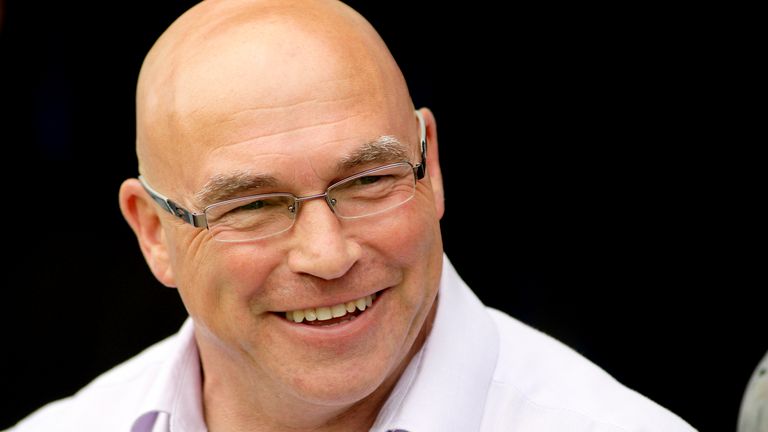
John Kear, the coach, broadcaster, and lifelong servant of rugby league whose warmth and passion made him one of the most recognisable and genuinely beloved public figures the sport has ever produced, has died at the age of 71. He passed away on Sunday while travelling home from the Challenge Cup final at Wembley Stadium, where just hours earlier he had been sitting at the commentary desk covering the match between Wigan and Hull KR. The Rugby Football League confirmed his death in a statement that described him as someone who "was loved and admired throughout the sport and well beyond," words that will resonate with everyone who encountered him across more than five decades of public service to a game he treated not as a profession but as a calling.
What made Kear a genuine public figure rather than simply a successful professional was the consistency of the human being behind every role he occupied. As a player at Castleford, as a coach at Sheffield Eagles, Hull FC, Bradford Bulls, Wakefield Trinity, and the England and Wales national teams, and as a broadcaster for the BBC, the same qualities showed up in every environment: humility, warmth, total commitment to the people around him, and an evangelical belief in rugby league's power to move and inspire. That combination of professional excellence and personal character is rare in any field, and in sport it is rarer still. The scale of the tributes that poured in within hours of his death, from clubs, governing bodies, fellow broadcasters, and supporters across the country, reflected not just professional respect but something considerably deeper and harder to manufacture.
The timing of his passing carries a particular poignancy that those who loved the sport will feel acutely. He died doing what he had done for decades: showing up for the game's biggest occasions, contributing his knowledge and enthusiasm to help audiences understand and enjoy what they were watching, and heading home afterwards as he had done hundreds of times before. That the journey home from Wembley on a Sunday evening in June was his last is the kind of detail that captures something true about the man. John Kear did not retire from rugby league. He simply stopped on his way back from one more final.
A Playing and Coaching Career Built on Loyalty, Belief, and Historic Underdog Victories
Kear's relationship with rugby league began in the most rooted possible way, as a boy from Wheldon Road in Castleford who went on to represent his hometown club for an entire decade. He made his debut for Castleford against St Helens at Knowsley Road on October 1, 1978, and went on to make 133 first-team appearances in the black and amber, turning down repeated approaches from other clubs to remain loyal to the town that shaped him. Castleford's tribute after his death called him "a true one-club man," and the phrase carries real weight in a sport where loyalty to place and community has always been one of its defining values. He was part of the 1986 Challenge Cup winning squad under Mal Reilly, an experience that planted the seed of his understanding of what elite preparation and team culture could produce on a major occasion.
When Kear moved into coaching, he channelled everything that playing career had taught him into building environments where players could exceed expectations, and the results were historic. In 1998, he guided Sheffield Eagles, a club operating far outside rugby league's traditional power structure, to a Challenge Cup final victory over Wigan that remains one of the greatest upsets the sport has ever seen. Sheffield Eagles, now in the Championship, described it on Monday as "our finest hour" and credited Kear as the architect of a moment their supporters will carry with them for the rest of their lives. Seven years later, in 2005, he produced a near-identical result with Hull FC, steering them to a Challenge Cup triumph over Leeds Rhinos in Cardiff that the club's chief operating officer Tony Sutton remembered as "that wonderful day at the Challenge Cup final." Two clubs, two Cups, two moments of sporting joy created by the same coach's ability to make teams believe in what was possible.
His public role extended beyond club football to the international stage in a way that marked him as someone who saw rugby league's potential in its broadest terms. He coached England at the 2000 Rugby League World Cup, reaching the semi-finals, and subsequently committed eleven years of his life to leading Wales, a nation that sits at the margins of the sport's traditional geography but which Kear served with the same intensity he brought to every other role. Wales Rugby League chairman James Davies said Kear "was instrumental in the development of many of Wales' players over the past decade" and spoke of the genuine pride Kear took in their progress. That pride was not performative. It was the natural expression of a man who believed every corner of the rugby league world deserved his full attention and best efforts.
How a Sport United in Grief Is Remembering the Man Who Gave It His Entire Life
The outpouring of tributes that followed the announcement of Kear's death illustrated the breadth of the footprint he had left across rugby league's landscape. Sheffield Eagles, Hull FC, Castleford, the Rugby Football League, Wales Rugby League, and the BBC all issued formal statements within hours, a roll call of institutions that spans the full geographic and competitive range of the sport. That breadth is unusual. Most figures in sport are remembered most intensely by the communities most directly connected to their work. Kear was mourned simultaneously by a club in the Championship, a Super League powerhouse, a national governing body, an international rugby league nation, and a public broadcaster. Each had a different reason to grieve, and each articulated it with the same sense of personal loss rather than institutional obligation.
Dave Woods, who worked alongside Kear in the BBC commentary box and counted him among his closest friends, offered the tribute that will stay longest in the memory of those who knew Kear well. "He was a great rugby league man, the most passionate and eloquent of evangelists for the sport, who relished the opportunity to do that on radio and television for the BBC," Woods said. "But I'll remember him as simply the best of blokes, humble, friendly, cheerful, always smiling, always happy to talk to anyone, especially about rugby league." The word evangelist is precisely right. Kear did not merely cover rugby league for the BBC; he advocated for it in every broadcast, treating every viewer or listener as someone worth converting to the game's cause. In a sport that has always had to fight for mainstream attention, that quality of committed, joyful advocacy was a public service that extended far beyond the commentary box.
RFL chair Nigel Wood extended the governing body's condolences to Kear's wife Dawn, his family, and "those who played or worked alongside him over the last 50 years," a timeline that places Kear's public contribution in proper perspective. Fifty years of showing up, coaching, playing, broadcasting, mentoring, and representing. The Challenge Cup final he attended on Sunday was not supposed to be a farewell. It was simply the next occasion on a calendar that had been full of such occasions for half a century. That it turned out to be his last does not diminish what came before it. If anything, it confirms that John Kear lived exactly the life he chose, in exactly the places that mattered most to him, until the very end.