
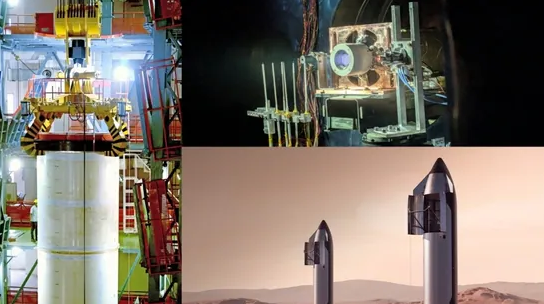
Key Global Spaceflight Developments in 2026 are positioning this year as a turning point in human and robotic exploration beyond Earth. From crewed lunar flybys and emerging commercial space stations to ambitious Asian space programs, 2026 reflects rapid technological progress and intensifying global competition.
“This is a year where long-term ambitions finally translate into real missions,” space analysts note, as governments and private companies alike push the boundaries of exploration.
NASA’s Artemis II: Humanity Returns Beyond Earth Orbit
One of the most anticipated missions among the key global spaceflight developments in 2026 is NASA’s Artemis II, scheduled for early 2026. The mission will mark the first crewed flight beyond low Earth orbit since Apollo 17 in 1972.
The Space Launch System rocket and Orion spacecraft are being prepared at Launch Pad 39B at Kennedy Space Center, with a launch window opening as early as February 6, 2026. Artemis II will carry four astronauts on a 10-day free-return flyby around the Moon.
The crew includes NASA astronauts Reid Wiseman, Victor Glover, and Christina Koch, along with Canadian Space Agency astronaut Jeremy Hansen. They will test life-support systems, navigation, and deep-space operations critical for future lunar landings.
“This mission is not about landing, but about proving we can safely send humans deep into space again,” a NASA official said.
Why It Matters: Artemis II closes a 50-year gap in human lunar exploration and lays the groundwork for Artemis III and future missions to Mars.
Commercial Space Stations: A New Orbital Era
Another major highlight in the key global spaceflight developments in 2026 is the rise of commercial orbital infrastructure. The American company Vast is preparing to launch Haven-1, expected to become the first privately built space station.
Haven-1 represents a shift away from exclusively government-owned platforms toward commercially operated low Earth orbit facilities.
“Private space stations will redefine how research, industry, and even tourism operate in orbit,” industry experts say.
Why It Matters: Commercial stations expand access to space, support microgravity research, and signal a new era of space commercialization.
Expanding Asia’s Space Ambitions
China’s Lunar Strategy
China’s space agency CNSA continues to advance its lunar roadmap with the Chang’e-7 mission, planned for 2026. The mission will target the Moon’s south pole, searching for water ice using an orbiter, lander, rover, and mini-hopper.
The mission is designed to test technologies crucial for in-situ resource utilization and future crewed lunar exploration.
“This mission strengthens China’s long-term vision for a sustained lunar presence,” observers note.
ISRO’s Active Launch Cadence
India’s space agency ISRO is maintaining an ambitious launch schedule in 2026. The PSLV-C62 mission launched in January deployed an advanced Earth-observation satellite and multiple commercial payloads.
ISRO has nine additional missions planned through March 2026 across PSLV, GSLV, LVM3, and SSLV launch vehicles. The uncrewed Gaganyaan-1 mission, part of India’s human spaceflight program, is targeted for late March 2026.
“India is steadily moving toward independent human spaceflight capability,” space policy experts say.
Why It Matters: These missions reinforce India’s growing role in space science, defense, and the global commercial launch market.
Other Noteworthy Missions and Trends
Beyond headline missions, NASA’s cargo services and next-generation spacecraft, including Sierra Space’s Dream Chaser Demo-1, are scheduled for uncrewed orbital demonstration flights. China will continue operations aboard its Tiangong space station, supported by new cargo launches.
NASA also plans to involve multiple companies in lunar lander development for Artemis III and later missions, increasing competition and reducing long-term risk.
Geopolitical and Economic Context
The key global spaceflight developments in 2026 highlight shifting geopolitical dynamics. NASA is adjusting Artemis timelines amid budget pressures and evolving international partnerships. China’s independent lunar and space station programs signal a strategic push for leadership in deep-space infrastructure.
Meanwhile, commercial players are reshaping the economics of space access, lowering barriers and accelerating innovation.
Looking Ahead
2026 stands out as a pivotal year where decades of planning materialize into real missions. Human spaceflight beyond Earth orbit, private space stations, and ambitious robotic explorers are redefining what is possible.
“This is not just another launch year,” analysts conclude. “It is a year that reshapes humanity’s future in space.”