
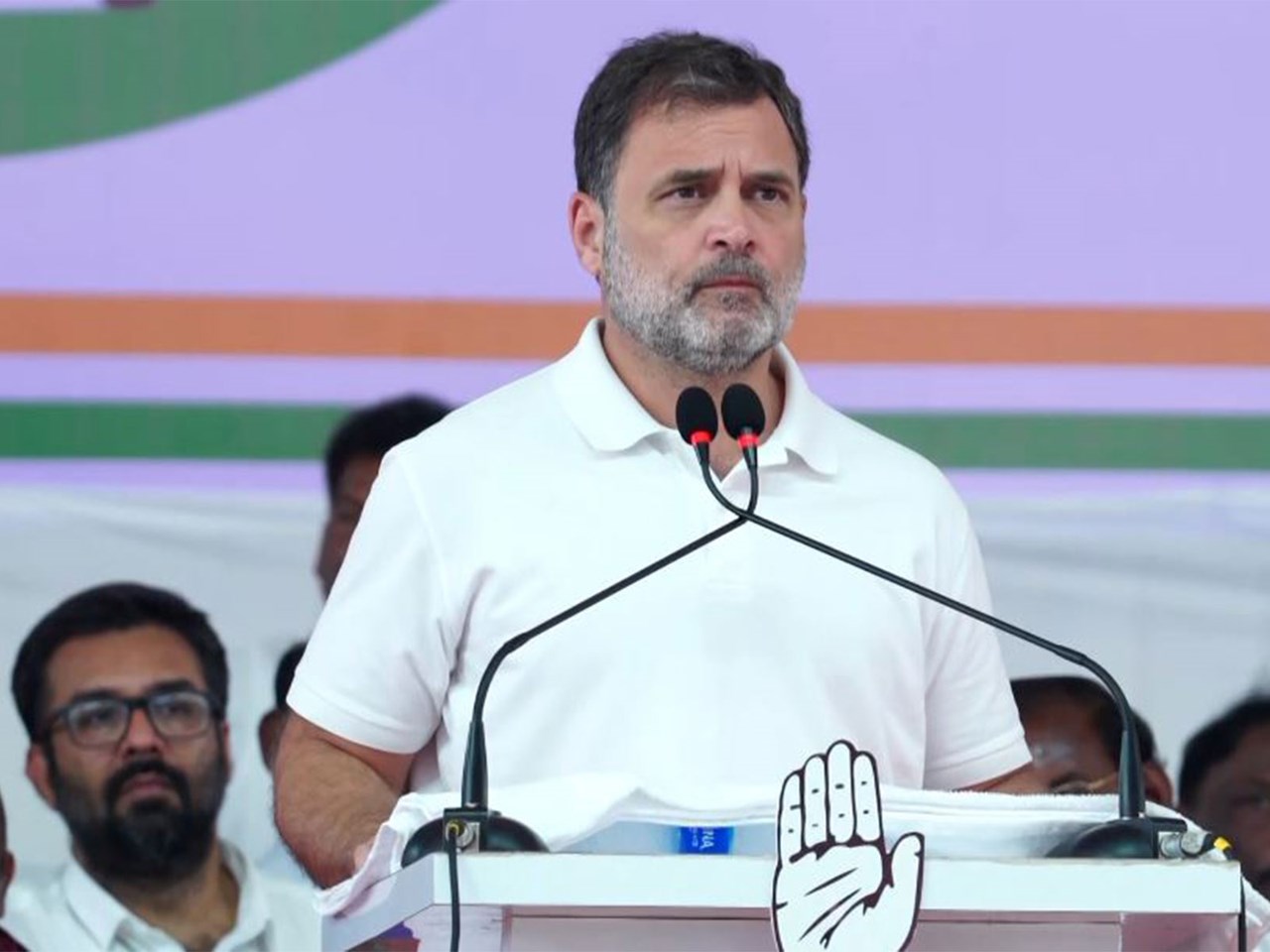
Rahul Gandhi LPG crisis Modi government 2026 accusation was launched by the Leader of the Opposition in the Lok Sabha on Monday, with the Congress leader drawing a direct and pointed comparison between how the Modi government is handling India's current LPG gas crisis, triggered by the West Asia conflict and its disruption to global energy supplies, and how it managed the COVID-19 pandemic, characterising both responses as devoid of policy, full of grand announcements, and placing the entire burden upon the poor. Gandhi posted his critique in Hindi on X, quoting Prime Minister Narendra Modi's own parliamentary statement that the LPG gas crisis would be handled just like COVID, and turning that formulation into an indictment by arguing that the COVID comparison is accurate precisely because it captured the government's failure mode: the pattern of high-profile communication without substantive policy protection for the most economically vulnerable citizens. The allegation comes as India faces what official sources confirm as an LPG availability crisis connected to the disruption of energy supply chains through the Strait of Hormuz.
The human specificity of Gandhi's critique distinguished it from standard opposition rhetoric, grounding the political argument in the material reality of working-class households. For migrant labourers earning daily wages of Rs 500 to Rs 800, Gandhi said, cooking gas has become completely unaffordable, and a labourer returning home at night does not even have the money to light the stove. The consequence he described is the economic reverse migration already observable in India's industrial cities, with labourers abandoning urban employment and returning to villages as the cost of maintaining a city-based household without cooking fuel access renders urban migration economically unviable. The textile sector is already in the ICU, the manufacturing sector is gasping for breath, and Gandhi directly attributed the origin of the crisis to what he called a diplomatic blunder committed at the negotiating table that the government refuses to acknowledge.
Modi's March 23 parliamentary statement, in which he called upon the nation to remain prepared and united just as it had stood together during COVID-19 and characterised the difficult global conditions from the West Asia conflict as likely to persist for a long time, provided Gandhi the political opening he used in Monday's X post. By taking Modi's own pandemic comparison and inverting it from a call to collective resilience into an admission of governing failure, Gandhi attempted to use the Prime Minister's own framing against him. The government has simultaneously been taking administrative action to address the LPG crisis, with Cabinet Secretary T.V. Somanathan briefing the Cabinet Committee on Security on petroleum product availability and with sources being diversified for LPG procurement from multiple countries, but Gandhi's critique is that these administrative responses, while occurring, represent exactly the kind of reactive announcement culture that characterises the government's crisis management approach rather than the proactive policy framework that would have prevented the crisis's worst impacts on the poor.
India's LPG Dependence, the West Asia Crisis, and the COVID Governance Pattern
India's dependence on energy imports from the Middle East is one of the most significant structural vulnerabilities in its economic architecture, with the country importing approximately 85 percent of its crude oil requirements and a substantial share of its LPG supplies from Gulf producers whose export routes transit the Strait of Hormuz. The concentration of that dependence on a single geographic corridor, now effectively closed by Iran's response to the U.S.-Israeli military campaign, creates exactly the supply chain vulnerability that energy security planning is designed to prevent or mitigate. India has oil reserves for approximately 60 days and LPG supplies for approximately one month according to official government disclosures, a buffer that is meaningful but finite and that creates urgency for supply diversification that the government is now pursuing under emergency conditions rather than as a planned strategic programme.
The LPG market in India carries specific political and social dimensions that make supply disruptions more immediately and visibly damaging than equivalent disruptions in other energy categories. LPG cooking gas is the primary cooking fuel for hundreds of millions of Indian households, particularly in urban and peri-urban areas where the government's Pradhan Mantri Ujjwala Yojana scheme dramatically expanded LPG access among lower-income families over the past decade. The political success of the Ujjwala scheme, which provided LPG connections to millions of households that had previously cooked on wood, dung, or kerosene, created both a genuine public health and quality of life improvement for those households and a political dependency that made LPG availability and affordability a first-order political concern for any government managing a supply crisis. When LPG becomes unaffordable for daily wage earners, it represents not just an energy crisis but a reversal of one of the flagship welfare achievements that the Modi government has used to build its development narrative.
The COVID-19 comparison that Gandhi deployed in his critique has specific resonance because the pandemic response generated extensive documentation of the gap between the government's communication effectiveness and its policy adequacy in protecting vulnerable populations. The images of migrant labourers walking hundreds of kilometres home after the sudden lockdown announcement, the failures of vaccine distribution in the initial phases, and the devastating second wave of 2021 are embedded in the public memory as evidence of a governing approach that prioritised the appearance of decisive action over the protection of the people most exposed to the crisis's worst consequences. Gandhi's invocation of that comparison is not merely a rhetorical device but an attempt to activate that specific public memory around a current crisis whose human consequences, he argues, follow the same pattern of the poor bearing costs that better governance would have distributed more equitably.
The West Asia Conflict's Impact on India's Industrial and Labour Economy
The transmission channel from the West Asia conflict to India's manufacturing and industrial labour market runs through energy costs in ways that become visible most acutely in the textile sector and other energy-intensive manufacturing industries that employ the largest concentrations of migrant workers. Higher energy costs increase production costs for factories and mills that cannot easily pass those increases to export customers in a globally competitive market, squeezing margins in ways that lead first to overtime reductions, then to reduced hiring, and in severe cases to production shutdowns that release workers into the urban labour market without the income that justified their urban residence in the first place. Gandhi's specific identification of the textile sector as already in the ICU reflects the sector's particular vulnerability to the combination of high energy costs, the Iran war's disruption of cotton and synthetic fibre supply chains, and the export market weakness created by the global economic disruption the war has produced.
The reverse migration of urban workers that Gandhi described, the abandonment of city residence and flight back to villages as urban household economics become unmanageable, is one of the most humanly damaging consequences of economic crises in India's development context because it reverses the human capital investment that migration represents and forces families back into rural livelihood strategies that may themselves be under stress from agricultural disruption. A migrant labourer who has spent years building skills and economic networks in an urban textile or manufacturing context loses that accumulated human capital when economic crisis forces a return to the village, and the village economy to which they return may not have the capacity to absorb the returning population at income levels sufficient to maintain the family's welfare. The economic damage of forced reverse migration therefore extends well beyond the immediate income loss to the longer-term developmental trajectory of affected families and communities.
Gandhi's attribution of the crisis's origin to what he called a diplomatic blunder committed at the negotiating table is the most politically charged element of his critique, as it implies that India's current energy crisis was not an unavoidable consequence of external events but a preventable outcome of specific foreign policy failures that the government refuses to acknowledge. This claim requires more specificity than Gandhi provided in his X post to be evaluated on its merits, but it points to the broader question of India's diplomatic positioning during the period before the U.S.-Israeli strikes on Iran, including whether India could have used its influence with the United States, Iran, and other regional parties to prevent or moderate the conflict's disruption of the energy supply chains on which the Indian economy depends. The government's consistent framing of the crisis as an external shock to which India is responding, rather than as an outcome influenced by India's own diplomatic choices, is exactly what Gandhi is contesting.
The Government's Administrative Response and Its Limitations
The Modi government's administrative response to the LPG crisis has involved a series of CCS meetings, official statements, and procurement diversification efforts that represent genuine institutional engagement with the supply challenge. Cabinet Secretary Somanathan's briefing of the CCS on petroleum product availability and the government's disclosure that it has India's oil reserves for 60 days and LPG for approximately a month reflect official transparency about the supply situation that allows public planning even if it also publicises the vulnerability. The direction to diversify LPG procurement sources and pursue alternative LNG supplies from countries outside the disrupted Gulf supply chain represents the substantive policy response to the immediate supply challenge, even if Gandhi argues that this diversification effort should have been undertaken proactively rather than being forced by crisis conditions.
Modi's CCS meeting, which assessed the availability of critical needs for common people and directed all departments to take measures to ameliorate problems of citizens and affected sectors, produced the PMO statement that communicated the government's engagement with the crisis across the executive machinery. Modi's call for an all-out effort to safeguard Indian citizens from the war's impact, and his emphasis on a timely and authentic public information system to ward off misinformation, are the communication elements of a crisis response that Gandhi characterises as substituting announcement for policy. The distinction Gandhi is drawing is between the government's effective use of communication infrastructure to project engagement and the adequacy of the substantive policy measures to actually protect the people most exposed to the crisis's economic consequences.
The Ujjwala scheme's legacy creates a specific political irony in the LPG crisis context. The government spent years and significant political capital promoting the expansion of LPG access among lower-income households as a development achievement, and the current crisis in which LPG becomes unaffordable for daily wage earners represents a reversal of that access gain that hits the exact population the scheme was designed to benefit. If the government's crisis response does not include specific measures to protect LPG affordability for Ujjwala-scheme beneficiaries and other low-income users, the scheme's political legacy becomes a measure of the crisis's regressive impact rather than of the government's development achievement.
Gandhi's Political Attack, Modi's Parliamentary Stance, and the Policy Gap
Gandhi's use of Modi's own COVID comparison as the vehicle for his critique reflects a sophisticated political communication choice that goes beyond simple opposition rhetoric to deploy the government's own framing against itself. By accepting the COVID comparison and then arguing that it is accurate precisely because COVID revealed the government's governing failures, Gandhi avoids the position of simply denying the government's claim and instead agrees with it in the most damaging possible way. The COVID pandemic generated extensive documented evidence of specific policy failures affecting vulnerable populations, and by connecting the LPG crisis response to that documented record, Gandhi is asking his audience to evaluate the current crisis through the lens of that established failure narrative rather than through the government's preferred frame of national resilience and collective response.
The specific human examples Gandhi used, the Rs 500 to Rs 800 daily wage labourer who cannot afford to light the stove, the urban worker abandoning the city for the village, the textile factory at crisis point, are not random illustrations but carefully chosen examples that connect the abstract energy crisis to the lived experience of the working-class voters whose economic welfare is the central contested political terrain of Indian electoral politics. Gandhi's question, why is it always the poor who perish first in every crisis, is designed to resonate across this specific constituency in a way that no macroeconomic argument about supply chain disruption or diplomatic positioning could, because it translates the political contest into a moral framing about whose welfare the government prioritises when crisis forces choices.
Gandhi's call to people not to remain silent, closing his X post with the observation that the question is not merely one for the poor but for all of us, is an attempt to mobilise the political conscience of middle-class voters who are not themselves living on daily wages but who may respond to the moral argument that a government's quality is measured by how it protects its most vulnerable citizens during crises rather than by how effectively it communicates about the crisis to the broader public. This universalising move, from the specific suffering of daily wage labourers to a question for all of us, is the rhetorical mechanism that transforms a welfare argument into a political mobilisation argument whose target audience extends well beyond those directly experiencing LPG unaffordability.
The Government's Position and the Policy Measures Being Implemented
The government's position, articulated through Modi's parliamentary speech, his CCS meetings, and the PMO statements that followed, frames the LPG crisis as an external shock of unprecedented severity that India is managing with the same national unity and resilience that it demonstrated during COVID, while simultaneously taking concrete administrative steps to diversify supply sources and protect citizen welfare. The comparison to COVID, which Gandhi has turned into an indictment, was intended in its original context as an inspiration, reminding the country of its demonstrated capacity to endure and overcome a global crisis through collective discipline and government-led response. That the same comparison is now being used as evidence of governing failure is itself a measure of how politically contested the crisis response has become.
The concrete supply measures being implemented, diversifying LPG procurement from multiple alternative countries and sourcing LNG from new suppliers, represent the substantive policy response to the immediate supply constraint that the Hormuz closure has created. Whether these measures are sufficient and timely enough to prevent the kind of household-level impact that Gandhi described depends on the pace of procurement diversification, the volumes available from alternative sources relative to India's requirements, and the price at which alternative supplies can be secured relative to the subsidised domestic LPG price that Indian households are accustomed to paying. Each of these variables creates policy choices with distributive consequences, and the choices made about who absorbs the cost difference between alternative-source LPG prices and domestic subsidy levels will determine whether Gandhi's critique about the poor bearing the entire burden proves accurate.
Modi's directive to all departments to take all possible measures to ameliorate the problems of citizens and sectors affected by the global situation, as conveyed in the PMO statement, is the administrative instruction whose implementation Gandhi is judging. The gap between an instruction to ameliorate problems and the actual amelioration of the specific problems Gandhi identified, migrant worker LPG unaffordability, textile sector distress, and urban-to-rural reverse migration, is the gap between governing announcement and governing outcome that has historically been the most contested dimension of the Modi government's performance narrative. Tuesday's parliamentary session and the weeks ahead will provide further opportunities for Gandhi and the Congress to continue pressing this critique as the LPG crisis evolves and its human consequences become more fully visible in the data and in constituency reports.