
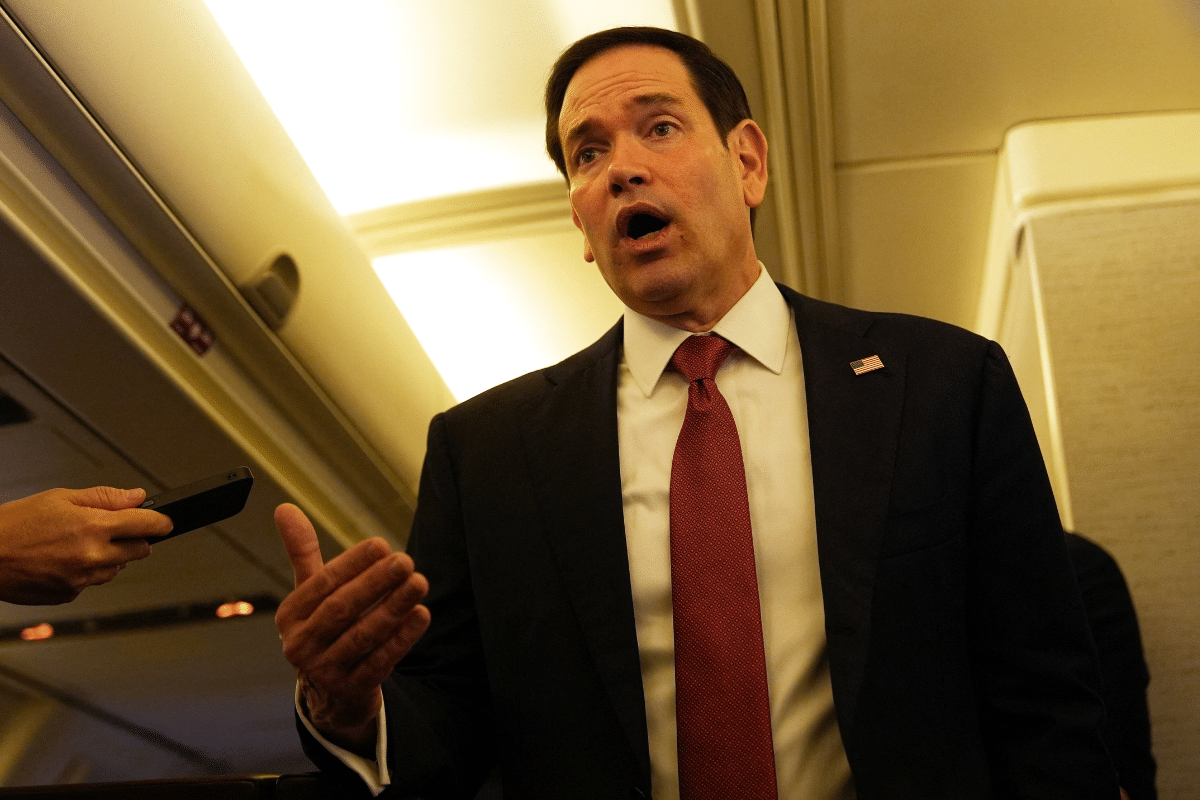
US Secretary of State Marco Rubio Iran has told reporters that reaching a deal with Iran could take "a few days," cooling expectations of any swift resolution to the conflict just one day after US forces carried out fresh military strikes inside Iranian territory. Speaking from Jaipur, India, where he was travelling as part of a diplomatic tour, Rubio made clear that the Strait of Hormuz must remain open to global shipping regardless of how negotiations proceed. "The straits have to be open, they're going to be open one way or the other, so they need to be open," he said, framing the waterway's status as a non-negotiable baseline for any deal.
The strikes carried out on Monday by US Central Command targeted boats that Washington said were attempting to lay mines in the strait, along with missile launch sites in southern Iran. The Pentagon described the action as defensive, aimed at protecting US troops from threats posed by Iranian forces. Iran, for its part, announced on Monday that it had downed a stealth drone using a newly deployed air defence system, without identifying where the drone had originated. The simultaneous exchange of military action and diplomatic activity underscored how volatile the situation remains even as both sides continue talking.
President Donald Trump weighed in from Washington via a lengthy post on his Truth Social platform, saying negotiations with Iran were going "nicely" while issuing a direct warning that fresh attacks would follow if talks collapsed. "It will only be a Great Deal for all, or no Deal at all," Trump wrote, capturing in blunt terms the administration's dual-track approach of keeping military pressure active while pursuing a diplomatic resolution through back-channel and direct negotiations. The statement added urgency to already high-stakes discussions that have been running for weeks across multiple diplomatic venues.
How the US-Iran War and Strait of Hormuz Crisis Reached This Point
The current conflict traces back to February 28, when the United States and Israel launched coordinated strikes against Iran, triggering a three-month war that has fundamentally reshaped the security landscape of the Middle East. A ceasefire was established in early April, but the truce has been fragile from the start, with US Central Command conducting what it describes as defensive operations even while formal negotiations continue. The February strikes were followed almost immediately by a dramatic reduction in commercial shipping through the Strait of Hormuz, a waterway through which roughly one fifth of the world's oil and liquefied natural gas normally flows on any given day.
Before the conflict, between 125 and 140 vessels passed through the strait daily. Since the strikes began, that number has fallen to only a few dozen, a reduction that has sent ripple effects through global energy markets and supply chains. Oil prices have spiked, and the costs of fuel, fertiliser, and food have risen in countries dependent on commodities that move through the Persian Gulf. The economic consequences of a prolonged standoff over the strait extend far beyond the immediate conflict zone and have added international urgency to the push for a negotiated settlement before the disruption becomes structural.
Iran's nuclear programme has been at the centre of Trump's stated objectives throughout the conflict. The president has been explicit that his primary aim is to prevent Iran from developing a nuclear weapon using its stockpile of highly enriched uranium. Tehran has consistently denied any intention to weaponise its nuclear capabilities, but the enrichment levels Iran has reached have alarmed Western governments and Israeli officials alike. That disagreement over Iran's nuclear intentions sits at the core of every negotiation and complicates the path to any agreement that both sides could credibly claim to accept.
What the Doha Talks, Nuclear Discussions and Hormuz Plan Mean Right Now
At the moment Rubio was speaking to reporters from Jaipur, Iran's top nuclear negotiator and its foreign minister were in Doha for talks with Qatar's prime minister, an official briefed on the visit confirmed to Reuters. The discussions covered two primary tracks: the status and management of the Strait of Hormuz, and Iran's stockpile of highly enriched uranium. Iran's central bank governor was also present in Doha to discuss the potential release of frozen Iranian funds as part of a broader final settlement, signalling that financial relief for Tehran is a significant element of the deal being assembled.
Iran's foreign ministry spokesperson Esmaeil Baghaei said that nuclear issues would only be formally negotiated after a framework accord on the broader conflict was first agreed, setting a sequencing preference that may slow progress. On the strait specifically, Baghaei said any protocol would involve Iran and Oman, which sits on the opposite shore of the waterway, and that while Iran would not impose tolls on passing ships, fees would apply for navigation services and environmental protection measures. Japan's Nikkei newspaper, citing a Middle East diplomatic source, reported that the United States and Iran are discussing a plan to reopen the strait approximately 30 days after a deal to end hostilities is reached.
Regional tensions were further complicated on Monday when Israeli Prime Minister Benjamin Netanyahu announced that Israel would intensify its strikes against Iran-backed Hezbollah in Lebanon. Israel's military confirmed it was attacking Hezbollah infrastructure in the eastern Bekaa Valley and other areas of Lebanon, despite a ceasefire agreement between Israel and Lebanon reached in mid-April. Israel has continued its air campaign, framing the strikes as acts of self-defence against Hezbollah, which was not a party to the truce. The combination of active US-Iran negotiations, continued US military strikes, Israeli operations in Lebanon, and a partially blockaded global energy corridor makes the current moment one of the most complex diplomatic episodes the region has seen in years.