
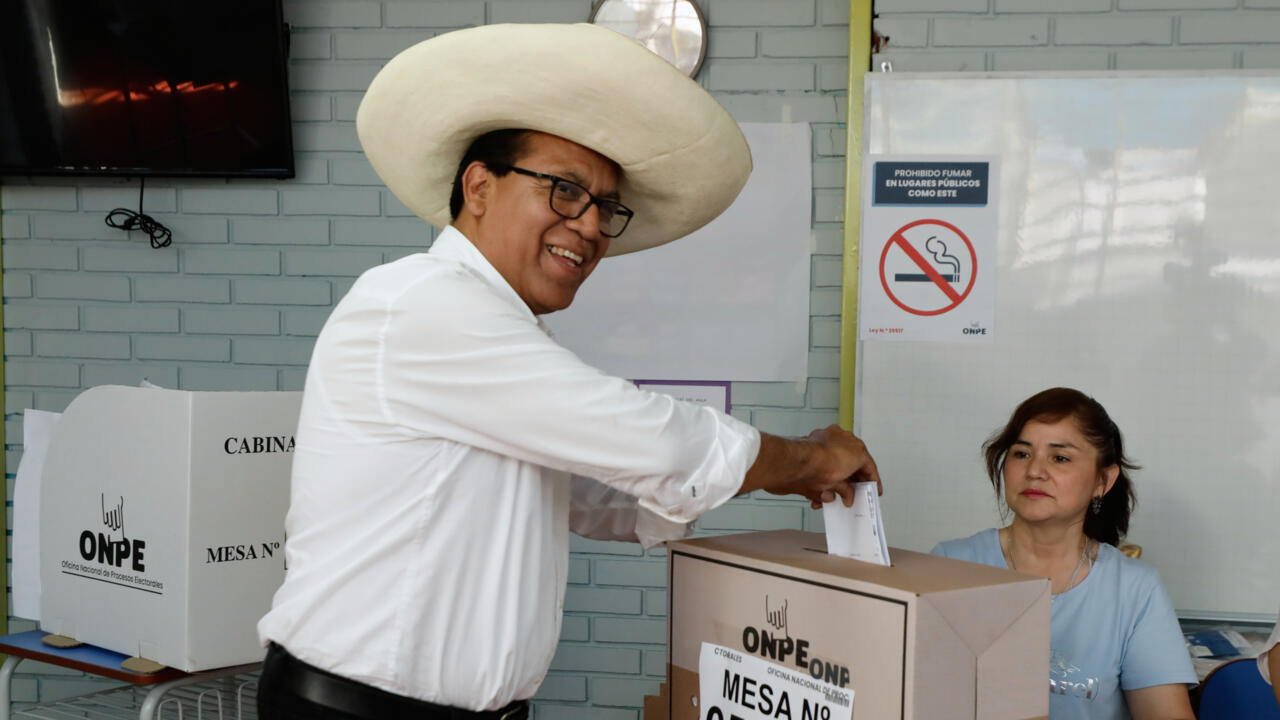
Roberto Sanchez Peru presidential candidate financial crimes 2026 accusation has been filed by a Peruvian prosecutor against the leftist presidential candidate, local media outlet RPP reported on Tuesday, hours after electoral authorities confirmed that Sanchez was on track to advance to the country's presidential runoff vote against conservative rival Keiko Fujimori. The prosecutor called for Sanchez to be imprisoned for five years and four months if convicted and requested that he be disqualified as a candidate, a dual demand that would simultaneously remove him from the race and place him in detention in the event of a conviction on the charges. The timing of the accusation, coming hours after the runoff confirmation with 99.76 percent of first-round ballots tallied, immediately generated political controversy about whether the legal action is motivated by legitimate prosecution of financial crimes or by political calculation designed to disrupt the candidacy of a candidate who appears to have won the first round of a major presidential election.
The specific charges against Sanchez, as reported by RPP, relate to making false statements in administrative proceedings and falsifying information regarding campaign contributions based on financial reports submitted by his party in 2020 and 2021. These are financial records from campaign periods that predate the current election cycle, meaning the accusations concern historical conduct rather than active wrongdoing in the current campaign, and their emergence at this specific moment in the electoral calendar has led Sanchez's supporters to question the prosecutorial timing even if the underlying legal questions are legitimate. Sanchez's lawyer rejected the accusation in comments quoted by RPP and argued that the party's treasurer rather than Sanchez himself was responsible for the financial reports in question, laying the groundwork for a personal responsibility defence that distinguishes between the candidate's legal culpability and the administrative conduct of his party's financial management structure.
The final result of the first-round vote count is expected to be announced by May 15, providing the formal confirmation of Sanchez's runoff qualification that will establish the legal baseline for any subsequent candidacy disqualification proceedings. The collision of the electoral timeline with the prosecutorial action creates a compressed legal and political situation in which decisions about candidacy eligibility, legal process, and electoral administration must be made or at least indicated on a timeline determined by the election calendar rather than by the pace of normal judicial proceedings. Peru's electoral authorities and judicial institutions will be required to navigate the intersection of criminal prosecution and electoral administration in ways that both uphold legal accountability and protect the integrity of a democratic process whose first round has already been conducted.
Peru's Electoral Landscape and the Sanchez-Fujimori Runoff Setup
Roberto Sanchez's advancement to the presidential runoff represents a significant performance in Peru's competitive multi-candidate first-round electoral system, which typically produces a field of a dozen or more candidates whose vote shares are distributed across the ideological spectrum in ways that make any candidate's first-round showing a relatively modest percentage of the total vote. Advancing to a runoff requires finishing in the top two, a result that in Peruvian presidential elections has historically been achieved with first-round vote shares in the teens to low twenties, and the closeness of the count at 99.76 percent of ballots tallied suggests a result whose final confirmation on May 15 will formalise what the count already shows with overwhelming clarity. Sanchez's positioning as a leftist candidate in a race against Keiko Fujimori continues Peru's pattern of runoffs that pitch candidates from the political left against the Fujimorista right, a binary that reflects deep and persistent structural divisions in Peruvian society that previous elections have not resolved.
Keiko Fujimori, the daughter of imprisoned former president Alberto Fujimori, has been one of the most persistent figures in Peruvian presidential politics, having contested and lost previous runoffs in 2011 and 2016 before her 2021 loss to Pedro Castillo in a bitterly contested election that produced months of legal challenges and political crisis. Her return to the runoff in 2026 confirms both her sustained electoral coalition's loyalty and the continued polarisation of Peruvian politics around the Fujimorista political tradition and its opponents. A Sanchez-Fujimori runoff would pit a leftist candidate whose campaign promises and political orientation likely draw on the tradition of Peruvian social democratic and progressive politics against a candidate whose family name and political programme represent the conservative-nationalist strand that has competed for power across multiple election cycles.
Peru's recent political history provides important context for understanding why the accusation against Sanchez is being received with such political sensitivity. The country has experienced extraordinary political instability over the past decade, with multiple presidents having faced corruption accusations, impeachment proceedings, and criminal investigations in ways that have deeply eroded public trust in political institutions and created a widely shared concern that legal and prosecutorial processes are routinely weaponised for political purposes rather than applied impartially. In this environment, the timing of any legal action against a candidate at a pivotal moment in the electoral calendar inevitably raises suspicion about prosecutorial motivation regardless of the underlying merits of the case.
The Financial Crimes Allegations and Their Basis
The allegations that Sanchez made false statements in administrative proceedings and falsified information about campaign contributions in financial reports from 2020 and 2021 relate to a category of electoral finance violation that Peruvian electoral law takes seriously as a form of corruption that undermines campaign finance transparency and democratic accountability. Electoral campaign finance regulations require parties to accurately report the sources and amounts of contributions received, expenditures made, and the financial status of their campaign operations, providing the transparency that allows voters, regulators, and civil society to assess whether campaigns are being funded by legitimate sources within legal limits. Violations of these requirements through false statements or falsified records are treated as serious offences because they corrupt the information foundation on which campaign finance oversight depends.
The defence argument that the party's treasurer rather than Sanchez bore personal responsibility for the financial reports raises a genuine legal question about the degree of personal culpability that party leaders bear for administrative filings made by designated financial officers, a question whose resolution in Peruvian law may depend on whether there is evidence that Sanchez had knowledge of and directed the falsifications or whether the conduct was genuinely confined to the treasurer's actions without his knowledge or instruction. The legal defence of attributing financial reporting errors to designated officials rather than to party leaders is a standard approach in campaign finance cases globally, and its merits depend entirely on the specific evidence about who knew what and who directed which actions, evidence that the prosecutorial process will need to establish before a conviction is possible.
Disqualification Risk, Electoral Timeline, and Peru's Democratic Moment
The prosecutor's request that Sanchez be disqualified as a candidate, if granted by the relevant judicial or electoral authority, would create a constitutional and procedural crisis in Peru's electoral process at a moment when the first round has already been completed and millions of Peruvians have cast ballots in anticipation of a Sanchez-Fujimori runoff. Disqualifying a candidate who has already advanced through the first round raises fundamental questions about the integrity of the first round itself, about the rights of the voters who supported the disqualified candidate, and about what procedural alternatives exist if the runoff cannot proceed as originally structured. Peru's electoral law and constitutional framework would need to be applied to a genuinely unusual situation, and the judicial and electoral authorities responsible for those decisions will face intense pressure from all political directions as they work through the legal analysis.
The May 15 announcement date for the final first-round results creates a specific timeline pressure within which the candidacy disqualification question must be at least initially addressed, because the formal confirmation of the runoff participants is a prerequisite for the organisational preparation of the runoff election itself. Electoral commissions need to print ballots, prepare voter materials, brief poll workers, and make the administrative arrangements that running a national election requires, and all of those preparations depend on knowing who the candidates are. If the disqualification request is still pending judicial resolution when the May 15 announcement is due, the electoral authorities will need to make decisions about how to proceed with administrative preparation under conditions of legal uncertainty, a challenge whose resolution will test Peru's institutional capacity and the independence of its electoral and judicial systems simultaneously.
Sanchez's political response to the accusation, operating through his lawyer's rejection and the attribution of financial responsibility to the party treasurer, sets the parameters for the legal contest that will proceed in parallel with the electoral campaign. Whether he can successfully separate his personal legal culpability from the party's financial reporting conduct, and whether the prosecutorial case has sufficient specific evidence of his personal direction or knowledge of the alleged falsifications, will determine both the legal outcome and the political narrative that surrounds his candidacy through the runoff period. In Peruvian political conditions where legal accusations against candidates are viewed through a heavily politicised lens, the strength and independence of the prosecutorial case will itself be scrutinised as evidence about whether the accusation represents genuine accountability or electoral interference.