
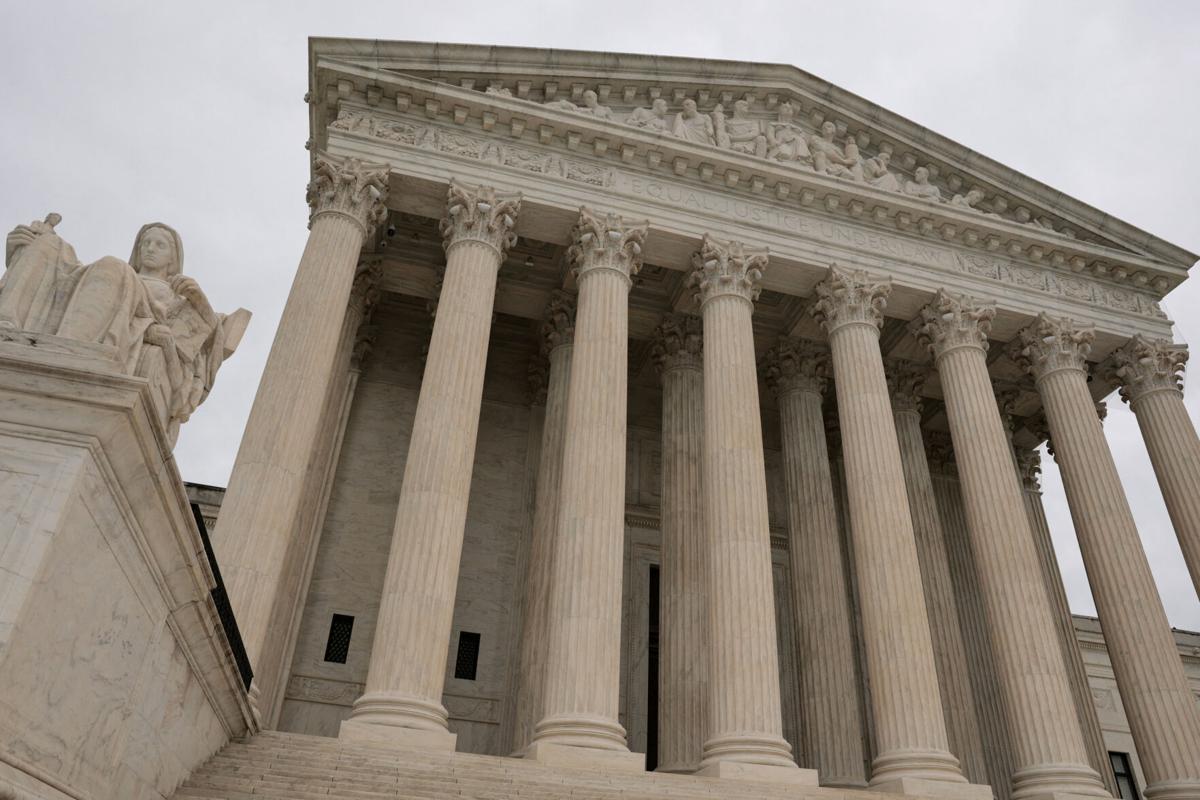
The United States Supreme Court has cleared the way for Alabama Republicans to pursue a congressional voting map that civil rights advocates say intentionally discriminates against Black voters, delivering a significant ruling with immediate implications for the upcoming midterm elections. The court's conservative majority lifted a lower court decision that had blocked Alabama's preferred electoral map on grounds that it was racially discriminatory and unlawfully diluted the voting power of Black Alabamians. The order allows state Republicans to revert to an older map that reduces the number of congressional districts where Black voters comprise a majority or near-majority from two to one out of Alabama's seven US House districts, a change that analysts say would benefit Republican candidates and reduce the electoral influence of a community that makes up approximately a quarter of Alabama's electorate.
The Supreme Court's decision represents the latest and most direct consequence of the court's landmark April 29 ruling in Louisiana v. Callais, in which the six-member conservative majority struck down an electoral map that had given Louisiana a second Black-majority congressional district. In that 6-3 decision, the conservative justices ruled that the redrawn Louisiana map had relied too heavily on race in violation of the constitutional equal protection principle, a finding that Republican-led states including Alabama immediately sought to use as a basis for reverting to older maps with fewer majority-Black districts. Alabama filed emergency motions with the Supreme Court almost immediately after the Louisiana ruling, arguing that its court-ordered map shared the same constitutional defects that the majority had identified in Louisiana's case. Monday's order granting that emergency request confirms that the court's conservative majority accepts that argument at least as a sufficient basis for interim relief.
The political stakes of the ruling extend well beyond Alabama's borders. Republicans are fighting to maintain their control of both the House of Representatives and the Senate in the midterm elections, and the congressional district boundaries drawn in Republican-led states have a direct bearing on how many seats each party can realistically expect to win. Alabama is among a group of states that has sought to eliminate majority-Black congressional districts following the Supreme Court's voting rights ruling, a coordinated strategy that reflects the partisan arithmetic of redistricting in a competitive national political environment. Black voters in the United States tend to support Democratic candidates at high rates, meaning that the concentration or dispersal of Black voters across congressional districts has direct consequences for the partisan composition of the House.
What the Alabama Voting Map Dispute Is About and How It Reached the Supreme Court
The origins of Alabama's congressional map dispute trace back to the redistricting process that followed the 2020 census, when Alabama's Republican-controlled state legislature drew congressional district boundaries that a federal lower court subsequently found to be intentionally discriminatory against Black voters. The lower court ruled that the Republican-drawn map unlawfully diluted the voting power of Black Alabamians by concentrating them into a single majority-Black district while dispersing remaining Black voters across multiple other districts in ways that prevented them from electing representatives of their choice. That finding led the lower court to order Alabama to use a remedial map that included two districts where Black voters comprised a majority or near-majority, directly increasing the likelihood of Black political representation in the state's congressional delegation.
In previous rounds of litigation, the Supreme Court itself had weighed in on Alabama's electoral map in a manner that might have been expected to resolve the dispute. In 2023, the court upheld the lower court's finding that Alabama's Republican-drawn map diluted Black voters' power in violation of the Voting Rights Act, a 5-4 ruling authored by Chief Justice John Roberts who was joined by fellow conservative Justice Brett Kavanaugh and the court's three liberal justices. That ruling appeared to settle the question in favor of requiring Alabama to draw a map with greater Black voter representation, and the state eventually implemented the court-ordered remedial map under judicial supervision. The subsequent Louisiana ruling, however, gave Alabama Republicans a new legal theory with which to challenge the remedial map's constitutionality, reigniting a dispute that many observers had considered resolved.
The procedural complexity of the current situation reflects how quickly the legal landscape shifted following the Louisiana v. Callais decision. Alabama officials argued in their emergency Supreme Court filings that the constitutional equal protection analysis the court applied in striking down Louisiana's map applied with equal force to Alabama's court-ordered remedial map, which they characterized as having been drawn with an excessive focus on race. The lower court that had ordered the remedial map disagreed with that characterization and declined to suspend its own order, prompting Alabama to seek emergency relief directly from the Supreme Court. Monday's order granting that relief, powered by the court's conservative majority over the dissent of its three liberal members, represents a significant procedural victory for Alabama Republicans even before the underlying legal question is fully adjudicated.
Liberal Justices Dissent and Signal That the Lower Court Can Still Act
The three liberal justices of the Supreme Court dissented from Monday's order in terms that were pointed and substantive, signaling both their disagreement with the majority's decision and the potential for further legal proceedings that could alter the situation before the elections conclude. Justice Sonia Sotomayor, writing a dissent joined by her two liberal colleagues, emphasized that the lower court's ruling on Alabama's map was more expansive than the Louisiana decision and included a specific finding of unconstitutional discrimination based on intentional dilution of Black voters' voting power. That intentional discrimination finding, Sotomayor argued, goes beyond the equal protection analysis in the Louisiana case and provides an independent legal basis for the lower court's order that the Supreme Court majority's intervention does not adequately address.
Sotomayor characterized the majority's decision to set aside the lower court's ruling as inappropriate and predicted that it would cause confusion as Alabamians begin voting in elections scheduled for the following week. The justice noted that early voting had already begun in some areas, raising the question of what the status of votes cast under the court-ordered map would be if that map is ultimately set aside in favor of the older Republican-preferred version. Deuel Ross, a lawyer at the NAACP Legal Defense and Educational Fund representing plaintiffs in the case, echoed this concern, saying the decision puts the validity of votes cast by thousands of early voters into doubt and represents an interference with an ongoing election that creates serious practical harms beyond its legal and constitutional dimensions.
The most significant practical signal in Sotomayor's dissent is her observation that the lower court remains free on remand to decide for itself whether the Louisiana ruling has any bearing on its Fourteenth Amendment analysis or whether its prior reasoning is unaffected by that decision. This statement, which the other two liberal justices joined, is essentially an invitation to the lower court to reconsider whether it can reimpose its judicial block on the Alabama Republican map on the basis of its intentional discrimination findings, even in light of the Supreme Court majority's intervention. That pathway, if the lower court chooses to pursue it, could reignite the legal dispute in ways that create further uncertainty about which map Alabama will ultimately use for the full election cycle, leaving the situation considerably less resolved than Monday's order might initially suggest.