
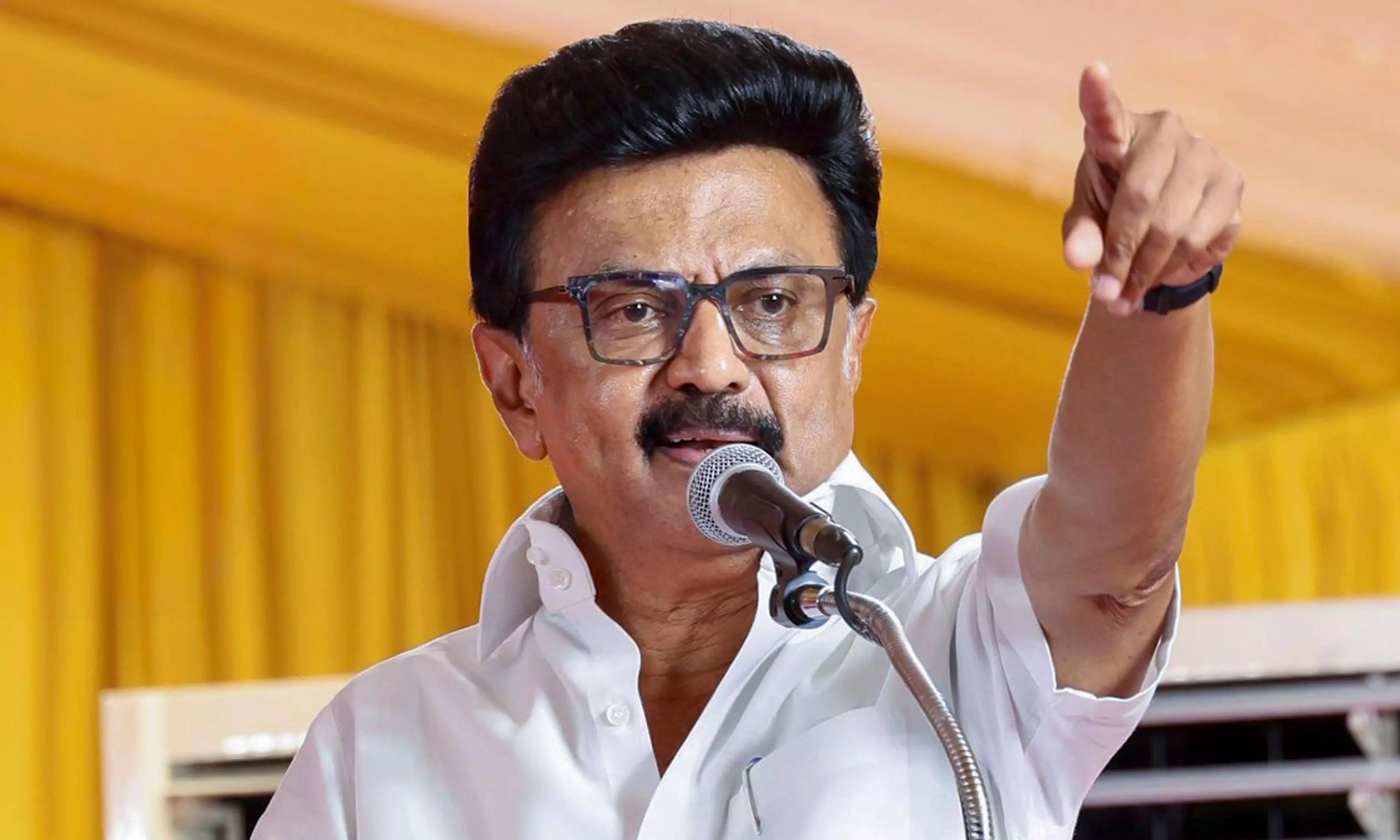
Tamil Nadu Governance has long been regarded as one of India's more politically sophisticated states, with a democratic culture shaped by decades of Dravidian movement ideology, social reform, and competitive electoral politics. Yet in recent months, a growing chorus of voices from civil society, opposition parties, and independent observers has begun raising pointed questions about the quality of governance under Chief Minister M.K. Stalin's Dravida Munnetra Kazhagam administration. The concerns range from law and order management to the perceived narrowing of space for legitimate political criticism, and they are gaining traction in public discourse across the state. For a democracy built on the promise of accountability, these questions deserve serious and dispassionate examination.
The DMK returned to power in 2021 with a decisive mandate and genuine public goodwill, riding on promises of welfare delivery, social justice, and competent administration. Stalin assumed office carrying both the weight of his father M. Karunanidhi's towering legacy and the expectations of a Tamil electorate hungry for change after a decade of AIADMK rule. In its early years, the government registered visible achievements in welfare schemes, education investment, and industrial outreach. Supporters of the party argue that these gains reflect a governing philosophy grounded in inclusive development and Dravidian progressivism, and that criticism of the administration often fails to account for the structural challenges any state government faces within India's federal framework.
However, political analysts and opposition voices contend that a more troubling pattern has emerged alongside those achievements. Concerns about law and order have grown steadily, with critics pointing to incidents of communal tension, organized crime, and sand mining related violence in parts of the state as evidence that ground-level governance has not kept pace with the administration's policy ambitions. These are not fringe complaints. They have been raised by civil society organizations, legal professionals, and journalists who cover the state with regularity, lending them a degree of credibility that demands a substantive official response rather than dismissal.
Media Freedom, Political Intolerance, and the Shrinking Space for Dissent in Tamil Nadu
The relationship between political power and media scrutiny has always been a sensitive one in Indian state politics, and Tamil Nadu is no exception. In recent months, however, concerns about the DMK government's tolerance for criticism have moved from the margins of political conversation to its center. Several journalists, social media commentators, and political critics have reported facing legal pressure, online harassment, and coordinated campaigns of intimidation following coverage or commentary that was perceived as unfavorable to the ruling party. These accounts, while not uniformly verified, have been consistent enough in their pattern to raise legitimate questions about the culture surrounding political discourse in the state.
In earlier years of Tamil Nadu's democratic history, robust criticism of sitting governments was understood as a foundational feature of the state's political culture rather than a threat to it. The Dravidian movement itself was built on the tradition of using public speech, literature, and popular media as tools of political mobilization and accountability. Critics of the current administration argue that this tradition is being selectively honored, with the ruling party comfortable receiving criticism in the abstract while responding poorly to specific, targeted scrutiny of its governance record. DMK representatives have consistently denied any systematic suppression of dissent, attributing individual cases of legal action to violations of specific laws rather than political motivation.
The rise of social media as a primary arena for political discourse has added significant complexity to this dynamic. Tamil Nadu's online political ecosystem is among the most active in India, with millions of users participating in debates across platforms including YouTube, X, and Instagram. Within that space, a pattern of organized pile-ons targeting critical voices has been widely documented, with accounts aligned to various political camps deploying coordinated pressure against individuals who speak inconveniently about powerful parties. The DMK is not unique in having supporters who engage in such behavior, but as the party in power, the scrutiny it faces for tolerating or tacitly encouraging such culture is inevitably greater than that faced by parties in opposition.
The Rise of Tamilaga Vettri Kazhagam and What It Signals About Voter Sentiment
Perhaps the most significant political development reshaping Tamil Nadu's democratic landscape is the emergence of Tamilaga Vettri Kazhagam, the party founded by actor turned political leader Vijay. TVK entered the formal political arena with considerable public curiosity and significant media attention, drawing large crowds at its early organizational events and generating intense discussion about its ideological positioning and electoral ambitions. For a state where new political entrants have historically struggled to break through the established DMK and AIADMK duopoly, TVK's early momentum has been notable enough to be taken seriously by analysts and established parties alike.
The significance of TVK lies not just in its organizational progress but in what its appeal reveals about the current political mood in Tamil Nadu. A substantial segment of the electorate, particularly younger voters, appears to be searching for a political alternative that sits outside the familiar structures of Dravidian party politics. Whether TVK can translate that sentiment into durable electoral support remains an open question, and political observers caution that the journey from public excitement to ballot box performance is rarely straightforward for new political formations in India. The organizational depth, ideological clarity, and candidate quality that sustained electoral success requires take years to build.
DMK strategists are watching TVK's trajectory carefully, though party spokespersons have been publicly dismissive of the new formation's electoral prospects. The more substantive concern for the ruling party is whether TVK's emergence will accelerate the crystallization of anti-incumbency sentiment that might otherwise remain diffuse and unorganized. In Tamil Nadu's competitive electoral geography, even a modest consolidation of disaffected voters around a credible new option could have significant consequences for seat distributions in future assembly and parliamentary contests. That electoral arithmetic is not lost on seasoned political operators within the DMK, regardless of what they say publicly about TVK's relevance.
Governance Under Scrutiny: Law and Order Concerns and the Accountability Gap
Law and order management is one of the most fundamental tests of any state government's administrative competence, and it is on this dimension that the DMK administration has faced some of its most persistent criticism during the current term. Opposition parties and civil society groups have pointed to incidents in multiple districts as evidence of a governance deficit at the ground level, arguing that the state police machinery has been slow, selective, or ineffective in its response to organized criminal activity and communal flashpoints. These allegations are contested by the government, which points to crime statistics and law enforcement initiatives as evidence of effective management.
What is harder to contest is the perception gap that has developed between the administration's official narrative and the lived experience reported by residents in affected areas. Perception gaps of this kind are politically damaging precisely because they tend to compound over time, particularly when the government's response to criticism is seen as defensive rather than genuinely investigative. Tamil Nadu's opposition parties, fragmented as they currently are, have seized on these concerns as a platform for organizational rebuilding ahead of the next electoral cycle. The effectiveness of that strategy will depend heavily on whether governance concerns translate into consolidated voter discontent or remain scattered across individual incidents and localities.
The DMK's defenders make a legitimate point that governing a large, complex, and economically dynamic state like Tamil Nadu involves navigating genuine structural constraints that purely political critics tend to underweight. Revenue limitations, bureaucratic capacity, the center-state relationship, and the inherited administrative legacies of previous governments all shape what any administration can realistically deliver within a single term. The question that voters will ultimately answer is not whether the DMK has governed perfectly but whether it has governed honestly, transparently, and with genuine accountability to the public that elected it. That question is the essence of what democratic politics is meant to resolve.
Democratic Accountability and Why Tamil Nadu's Political Debate Matters Beyond Its Borders
Tamil Nadu's current political moment carries significance that extends well beyond the state's own electoral calendar. As one of India's largest, most urbanized, and most economically consequential states, the quality of its democratic culture sends signals about the health of Indian federalism and the vitality of subnational democracy more broadly. When a state with Tamil Nadu's institutional depth and civic tradition faces questions about media freedom, tolerance for dissent, and the integrity of law enforcement, those questions resonate with democratic observers across the country and internationally.
The theme that has emerged from the current political discourse, that democracy is not a joke, is not a partisan slogan but a genuine statement of democratic principle. It is a reminder that electoral victory does not confer immunity from accountability, that a governing mandate must be continuously renewed through transparent and responsive governance, and that the institutions designed to hold power accountable, including the press, civil society, and the judiciary, must be allowed to function without political interference or social intimidation. These are not uniquely Tamil concerns. They are universal democratic requirements that every government in every democracy must be held to, regardless of ideological affiliation or electoral popularity.
The most constructive response to Tamil Nadu's current political tensions would be for all stakeholders to take these concerns seriously rather than treating them as weapons to be deployed for partisan advantage. The DMK has both the opportunity and the democratic obligation to demonstrate that it welcomes scrutiny as a sign of institutional health rather than resisting it as a political threat. Opposition parties, including TVK, have an equivalent obligation to ground their criticism in verifiable facts and constructive alternatives rather than opportunistic amplification of unverified claims. Tamil Nadu's voters, who have demonstrated sophisticated political judgment repeatedly across many decades, will ultimately render the judgment that matters most in a democracy. That judgment, delivered at the ballot box with full information and genuine freedom of choice, is the mechanism through which democratic accountability is most powerfully expressed.