
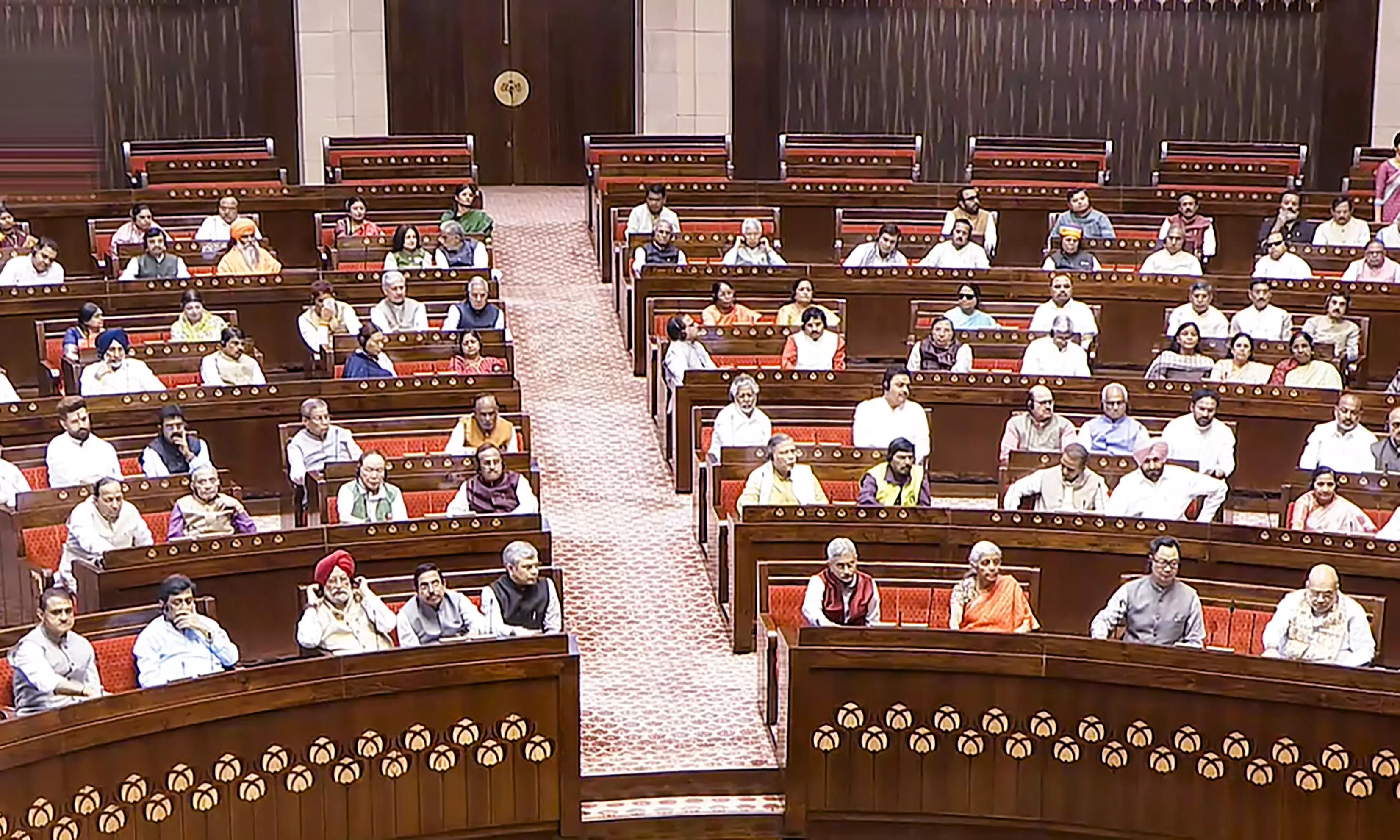
CAPF Bill Rajya Sabha passed 2026 with the Central Armed Police Forces General Administration Bill cleared in the upper house on Wednesday, April 1, 2026, as the Opposition walked out in protest after Minister of State for Home Affairs Nityanand Rai concluded his reply to the debate without addressing what opposition members described as the core concerns their MPs and senior Central Armed Police Forces officers had raised about the legislation. Rai maintained that the Bill represented an important step toward resolving longstanding inconsistencies in CAPF service rules, cadre management, and appointment-related matters, and would create an umbrella structure that strengthens coordination between the CAPFs and state police forces and administration. Opposition Leader Mallikarjun Kharge rejected that characterisation, reiterating his demand that the Bill be referred to a select committee of Parliament before passage, and announcing the walkout as a formal protest against what he characterised as the government's deliberate neglect of legitimate legislative concerns.
The Bill's passage in the Rajya Sabha comes during the Budget Session of Parliament and marks a significant legislative development in the governance framework of India's Central Armed Police Forces, which include organisations such as the Central Reserve Police Force, the Border Security Force, the Central Industrial Security Force, the Indo-Tibetan Border Police, and the Sashastra Seema Bal. These forces collectively employ hundreds of thousands of personnel deployed across a wide range of security functions from internal insurgency management to border guarding, industrial facility protection, and election security, and the administrative framework that governs their service conditions, promotion pathways, and coordination mechanisms directly affects the working lives and career trajectories of those hundreds of thousands of officers and personnel. The legislative stakes of the CAPF Bill are therefore not abstract governance questions but practical matters of individual career, morale, and institutional effectiveness that opposition members articulated with specific human detail.
The walkout that accompanied the Bill's passage, while procedurally familiar from the pattern of legislative confrontation in the current parliamentary session, carried substantive weight through the specific nature of the concerns the Opposition had raised. Fauzia Khan of the Nationalist Congress Party, led by Sharad Pawar, used her floor time to describe the human reality of the promotion delays that CAPF personnel experience, imagining an officer who joined as an Assistant Commandant, served for sixteen years, fought insurgents, earned promotion through service, and still has not received it. Priyanka Chaturvedi of Shiv Sena UBT demanded fair promotions, equitable leadership opportunities, fully filled posts, and recognition for those who have served decades in the forces. The walkout was not merely a tactical parliamentary manoeuvre but a statement that these human concerns had not received the substantive governmental response they deserved.
The CAPF Framework, Its Historical Development, and Why Reform Is Needed
The Central Armed Police Forces as an institutional category represents the product of decades of incremental expansion in India's internal security architecture, with each constituent force having been established at different points in the country's post-independence history to meet specific security challenges as they emerged. The CRPF, established in 1939 and significantly expanded after independence, became the primary internal security force for counter-insurgency operations and law enforcement support across multiple states. The BSF, established in 1965 following the India-Pakistan war, took on border guarding responsibilities along the Pakistan and Bangladesh frontiers. Each force developed its own administrative culture, service rules, and promotional structures adapted to its specific operational mandate, creating over time a patchwork of regulatory frameworks that the CAPF Bill now seeks to rationalise under a unified administrative architecture.
The domain expansion that Rai referred to in his parliamentary reply is the specific administrative consequence of the CAPFs' evolving operational responsibilities, which have grown substantially from their original mandates to encompass a wider range of security functions in response to changing threat environments and government security priorities. As forces took on new responsibilities, they adopted specific rules and guidelines tailored to those responsibilities, creating a cumulative regulatory complexity that has generated inconsistencies in how similar administrative situations are handled across different forces and in some cases within the same force across different time periods. An administrative framework built through successive ad hoc adaptations inevitably produces the kind of lack of clarity and inconvenience that Rai described, and the argument for consolidation and rationalisation under a unified structure has been recognised in policy discussions for years before the current Bill's introduction.
The career progression and promotion issues that opposition members raised in the parliamentary debate are directly connected to this administrative complexity, because promotion rules and cadre management practices that differ across forces and that have accumulated inconsistencies over decades create situations where similarly qualified and experienced officers receive materially different career outcomes depending on which force they serve in and which specific rules happen to apply to their circumstances. The systemic nature of these inconsistencies, affecting hundreds of thousands of personnel across multiple forces, makes it impossible to resolve them through individual administrative decisions and requires the kind of legislative intervention that the CAPF Bill represents. The question is not whether reform is needed but whether the specific reform embodied in this Bill adequately addresses the concerns of the personnel it will govern.
The Deputation Issue and Its Career Implications for CAPF Officers
The institutionalisation of deputation, which the Opposition identified as one of the core unaddressed concerns in the CAPF Bill, refers to the practice of posting Indian Police Service officers to senior command positions within the CAPFs rather than filling those positions through the internal promotion pathways of the forces themselves. This practice has been a source of significant professional frustration among career CAPF officers who see the most senior leadership positions in their forces filled by officers from a different cadre, limiting the career ceiling available to officers who have built their entire professional lives within the CAPF structure. Khan's parliamentary description of an officer who has served sixteen years, fought insurgents, and earned promotion through operational service but has still not received it captures the human cost of a career progression system that has been perceived as systematically disadvantaging long-serving CAPF officers relative to IPS deputation officers.
The judicial direction dimension of the Opposition's concerns refers to court rulings that have addressed aspects of CAPF service conditions and promotion practices, creating a legal framework that the Opposition alleged the Bill fails to adequately reflect or implement. When legislation affecting service conditions is passed without incorporating the guidance of relevant judicial decisions, it creates the risk of further legal challenges and continued uncertainty for the personnel whose conditions it governs, defeating part of the purpose of a consolidating Bill that is meant to reduce ambiguity and resolve inconsistencies. Kharge's specific identification of the lack of concern for judicial direction as one of the core unaddressed issues points to a substantive legislative quality concern rather than a purely political objection.
The lack of consultation and representation that the Opposition identified as another core concern reflects a complaint about the legislative process itself, specifically the allegation that the government did not adequately consult CAPF senior officers and their representative bodies before finalising the Bill's provisions. For legislation that directly governs the service conditions and career management of hundreds of thousands of personnel, consultation with those who will be governed by the law has both a practical value, in terms of the operational knowledge that experienced officers bring to the design of workable administrative structures, and a legitimacy value, in terms of the workforce's acceptance of changes that have been developed with genuine input from affected communities. A Bill passed without such consultation may be legally valid but administratively less effective than one that has incorporated the practical experience of the forces it governs.
The Select Committee Demand and Its Parliamentary Logic
The Opposition's repeated demand that the CAPF Bill be referred to a select committee of Parliament rather than passed in its current form reflects a well-established parliamentary mechanism for ensuring that complex legislation receives detailed scrutiny beyond what the floor debate format allows. Select committees can examine witnesses including expert officials, affected personnel representatives, and legal experts, can request detailed documentation from the government about the Bill's provisions and their anticipated effects, and can propose specific amendments that address identified concerns before the legislation returns to the house for final passage. The select committee process is particularly appropriate for legislation affecting the service conditions of large workforces, where the operational and administrative details matter enormously to the people affected but may not be fully apparent from the Bill's text alone.
The government's decision to proceed with the Bill's passage without referring it to a select committee reflects a political calculation that the Bill's core objectives are sound and that the select committee process would introduce delay without producing substantive improvements. Rai's defence of the Bill as an important step in resolving inconsistencies and creating an umbrella structure was the government's substantive response to the Opposition's concerns, framing the legislative initiative as a positive reform rather than an administrative imposition. The gap between those two characterisations, the government's positive reform framing and the Opposition's unaddressed concerns framing, defines the political contest over the Bill's significance that the walkout made public rather than resolved.
The walkout itself, as a parliamentary tactic, communicates the Opposition's assessment that its participation in the formal voting process would implicitly legitimise a legislative process it considers inadequate, and that visible protest through absence communicates that assessment to the public and to the CAPF personnel whose concerns were the subject of the debate. Parliamentary walkouts do not change legislative outcomes when the ruling coalition commands the votes for passage, but they do create a public record of dissent and a political cost for the government in the account that future evaluations of the Bill's effects will draw on.
What the CAPF Bill Contains, Its Implications, and What the Debate Revealed
The umbrella structure that the CAPF Bill creates is designed to provide a unified administrative framework that addresses the regulatory fragmentation that has accumulated across the different constituent forces over decades of independent administrative development. Rai's description of the Bill as aimed at resolving anomalies and streamlining structure for better coordination and implementation reflects the administrative logic of consolidation, in which a single coherent framework replaces multiple inconsistent ones to produce more predictable and equitable outcomes for the personnel it governs. The efficiency and morale boosting claimed for the Bill flow from the argument that personnel who operate under clear, consistent, and fairly applied rules are better positioned to focus on their operational roles than those who must navigate ambiguous and inconsistently applied administrative frameworks.
The federal structure dimension of the Bill, which Rai specifically addressed to rebut Opposition concerns that the legislation encroaches on state authority over police functions, reflects the constitutional sensitivity of any legislation touching on internal security and policing in India's federal system. The Central Armed Police Forces operate within a constitutional framework that distinguishes central and state police functions, and legislation affecting the CAPFs' administrative structure must be designed to strengthen rather than undermine the coordination between central and state security mechanisms. Rai's assurance that the Bill would strengthen the federal structure and help maintain proper coordination between the CAPFs and state police forces and administration was the government's answer to this constitutional concern, though the Opposition's walkout suggests that assurance was not found sufficient without detailed select committee examination of its constitutional implications.
The government's claim that the CAPF Bill will boost efficiency and morale of the forces depends ultimately on whether its specific provisions produce the administrative clarity and career progression improvements it promises. Legislative intent and operational implementation are not the same thing, and a Bill designed to resolve inconsistencies can create new ones if its provisions are not carefully drafted and if the administrative infrastructure for implementing the unified framework is not built alongside the legislative change. The Opposition's demand for select committee examination was at least partly an argument that the Bill's specific provisions deserve the detailed scrutiny that could identify implementation risks before they become operational problems affecting hundreds of thousands of personnel.
Opposition Concerns in Detail and the Human Face of the Debate
Fauzia Khan's parliamentary statement, describing a hypothetical CAPF officer who joined as an Assistant Commandant, served for sixteen years fighting insurgents, earned promotion through operational service, and still has not received it, was the most humanly immediate articulation of the career progression concerns that the Opposition raised throughout the debate. The hypothetical was not a hypothetical in any meaningful sense, because Khan's description matches the actual career experience of significant numbers of CAPF officers who have experienced promotion delays that the current administrative framework has been unable to resolve. Legislation that fails to address this reality, or that institutionalises the deputation practices that limit career ceilings for career CAPF officers, would represent a significant missed opportunity regardless of its other administrative merits.
Chaturvedi's demands for fair promotions, equitable leadership opportunities, fully filled posts, and recognition for those who have served decades in the forces together constitute an agenda for the kind of CAPF Bill that the Opposition wanted the government to bring rather than the one it passed. Fair promotions implies a promotion system that advances officers based on merit and service rather than being distorted by deputation practices or administrative inconsistencies. Equitable leadership opportunities implies opening the most senior positions to career CAPF officers rather than reserving them for IPS deputation. Fully filled posts implies addressing the vacancies across CAPF ranks that impose additional operational burdens on serving personnel. Recognition for decades of service implies a career framework that values and honours long CAPF careers rather than treating them as background to deputation leadership. These are substantive demands whose connection to personnel morale and operational effectiveness is direct.
Khan's characterisation of the Bill as judicial invasion wearing the clothes of the law is a sharp formulation that deserves unpacking. If the Opposition's concern about lack of judicial direction refers to the Bill failing to implement court rulings that would benefit CAPF personnel, then the judicial invasion framing suggests the Bill may be using legislative authority to circumvent those rulings rather than to implement them, using the law's form to undermine protections that the judiciary has established. This is a serious allegation about the Bill's relationship to the rule of law that the select committee process, with its ability to examine legal experts and request documentation about the Bill's relationship to existing judicial decisions, would have been well-placed to investigate. That investigation did not happen before passage, and its absence is part of what the walkout was communicating.
The Passage and Its Implications for CAPF Personnel Going Forward
The CAPF Bill's passage in the Rajya Sabha marks the completion of the parliamentary process required to bring the legislation into effect, subject to any implementation timeline specified in the Bill's provisions. For the hundreds of thousands of CAPF personnel whose service conditions, career progression, and administrative framework will be governed by the new law, the Bill's passage is the beginning of a period of implementation that will test whether the umbrella structure delivers the efficiency, consistency, and fairness improvements that the government claimed for it. The Opposition's concerns, now part of the parliamentary record of the debate, provide a set of specific benchmarks against which the Bill's implementation can be evaluated in the years ahead.
The deputation institutionalisation concern will be tested by whether the Bill's provisions in practice produce different senior command appointment outcomes for career CAPF officers, or whether the IPS deputation pathway continues to dominate CAPF leadership positions in ways that limit career ceilings for long-serving personnel. The career progression concern will be tested by whether promotion timelines improve across the CAPFs under the unified administrative framework, or whether the inconsistencies that have produced sixteen-year waits for deserved promotions persist under the new structure. These are empirical questions whose answers will emerge from the operational experience of the forces in the years following implementation, and the Opposition's walkout has ensured that there is a clear public record of the concerns against which those answers will be measured.