
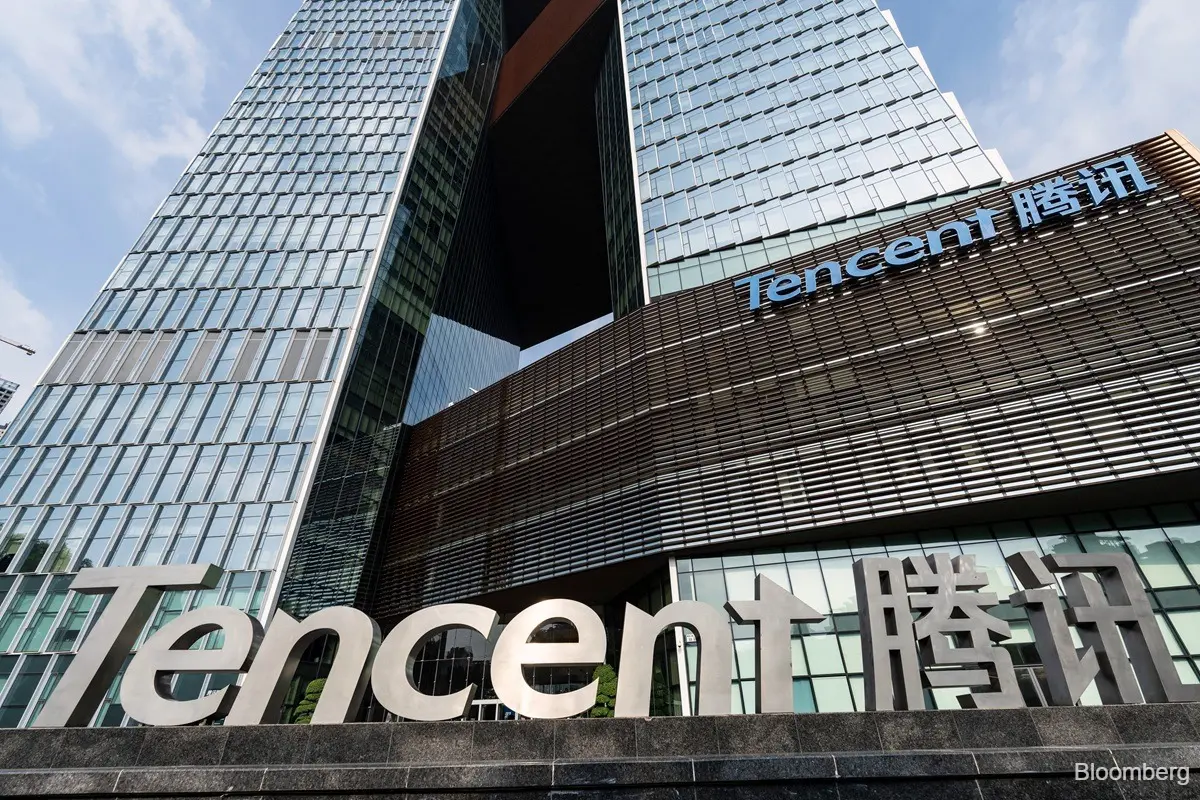
Tencent Manus AI startup shareholder Meta China Beijing 2026 deal has emerged as the most significant single episode in the ongoing US-China technology decoupling story this week, with Chinese gaming and internet giant Tencent in talks to become the largest shareholder of AI startup Manus after Beijing ordered Meta to unwind its $2 billion acquisition of the Chinese artificial intelligence company, according to two people with knowledge of the matter who spoke to Reuters on Friday. The Financial Times had first reported Tencent's talks earlier in the day, with Reuters sources adding the specific detail that Tencent together with Manus' original investors including ZhenFund and HSG are planning to buy the company back from Meta for no less than $2 billion, the same price at which Meta originally acquired the startup in a deal that Chinese regulatory authorities have now determined must be reversed. Tencent, Manus, Meta, ZhenFund, and HSG all declined to immediately respond to Reuters requests for comment, leaving the transaction's specific terms, timeline, and regulatory approval pathway unconfirmed at time of publication, though the involvement of multiple named institutional investors and the Financial Times' independent reporting give the deal framework a credibility that anonymous source reporting alone would not establish.
The technology and geopolitical significance of this transaction extends well beyond its $2 billion price tag to what it represents about the state of cross-border AI investment between China and the United States in the current regulatory environment. Beijing's order for Meta to unwind the Manus acquisition is the specific Chinese regulatory intervention in a foreign technology company's acquisition of a Chinese AI startup that documents the People's Republic's assessment that AI startups whose capabilities fall within the strategic technology categories that Chinese industrial policy prioritises cannot be held by foreign entities whose data access, intellectual property ownership, and strategic direction would be determined outside Chinese jurisdiction. The forced divestiture, combined with Tencent's emergence as the likely largest shareholder of the returned asset, creates the specific technology sovereignty outcome that Chinese AI policy has been building toward: keeping frontier AI capability development within the Chinese ecosystem of state-aligned and domestically controlled companies whose strategic direction Beijing can influence rather than in the hands of American technology platforms whose investment calculus is determined by Menlo Park and whose ultimate loyalties in any US-China technology conflict are not to Chinese national interests.
The Manus case is significant not only for what it reveals about Chinese AI governance but for what it signals to Western technology companies still considering Chinese AI acquisitions or partnerships. Meta's experience, having committed $2 billion to a deal that Chinese regulators subsequently forced it to unwind at the same price, creates the specific investment risk disclosure that any foreign company's board must now incorporate into its China AI investment due diligence, because the combination of Chinese regulatory unpredictability on strategic technology deals and the potential for forced divestiture at acquisition price rather than appreciated market value represents a risk-return profile that fundamentally differs from acquisitions in jurisdictions where regulatory stability and property rights protections are more reliably enforced.
Why Manus Attracted Meta's $2 Billion and How Beijing Responded
Manus emerged in the Chinese AI startup ecosystem as one of the more technically sophisticated agentic AI systems developed outside the major technology platform environment, building the specific capability that differentiates agentic AI from conversational large language models by enabling autonomous task completion across complex multi-step processes rather than simply responding to human queries in conversational form. The agentic AI category has been identified by AI researchers and technology investors as one of the most commercially significant frontiers in artificial intelligence development, because systems that can autonomously plan, execute, and iterate on complex tasks without human intervention at each step represent a qualitative capability leap from the conversational AI systems that have dominated the public AI discussion since ChatGPT's 2022 launch. Meta's interest in Manus at a $2 billion price point reflected the specific assessment that the startup's agentic AI capabilities were either technically differentiated enough to justify the premium, strategically important enough to the Meta AI development roadmap to warrant acquisition rather than internal development, or sufficiently valuable as a talent and intellectual property acquisition to make the price commercially rational even against the regulatory uncertainty that any Chinese AI startup acquisition carried in the current bilateral technology environment.
Beijing's intervention to force the divestiture reflects the specific Chinese regulatory assessment that Manus's AI capabilities fall within the category of strategic technology that Chinese policy frameworks designate as requiring domestic control, consistent with the broader pattern of Chinese regulatory intervention in technology deals that give foreign entities access to Chinese AI talent, data assets, or intellectual property in categories where China's technology sovereignty agenda prioritises domestic champions over foreign ownership. The data dimension of agentic AI systems is particularly sensitive from a Chinese regulatory perspective, because systems capable of autonomously executing complex tasks generate, access, and process the kind of rich behavioural and commercial data whose transfer to foreign-controlled entities creates the specific national security concern that Chinese technology regulations have been tightening around since the 2021 data security law and cybersecurity law revisions that subjected cross-border data flows in sensitive categories to heightened scrutiny and approval requirements.
ZhenFund and HSG's participation in the buyback consortium alongside Tencent documents the involvement of Manus's original pre-Meta investors who presumably know the company's technology and business trajectory most intimately and whose willingness to commit additional capital to a buyback at the $2 billion acquisition price reflects either their assessment that the company's value has appreciated above that level or their strategic interest in maintaining their positions in a company whose Tencent partnership will provide the distribution, computing infrastructure, and strategic alignment within the Chinese AI ecosystem that Meta's ownership would not have enabled in the same way. Original venture investors participating in buybacks from strategic acquirers whose acquisition regulatory authorities are forcing to be reversed create the specific transaction structure that preserves the investors' economic stake in an asset they know well while introducing the new strategic partner whose corporate resources can accelerate the company's development in ways that venture capital funding alone cannot.
The US-China AI Investment Landscape After the Manus Divestiture Order
The Manus divestiture order arrives in the specific context of a US-China technology investment environment that has been progressively constrained on both sides through the combination of American outbound investment restrictions on Chinese AI and semiconductor companies, Chinese restrictions on foreign acquisition of Chinese technology startups in strategic categories, and the bilateral technology export controls whose cumulative effect has been to create the investment decoupling that the Manus case illustrates at the deal execution level. American technology companies including Meta, Google, and Microsoft have been navigating the increasingly constrained landscape of permissible Chinese AI investment, with legal teams and government affairs functions spending significant resources on the regulatory risk assessment that the Manus deal's forced reversal will now make even more conservative across all future Chinese AI investment proposals. The specific lesson that the Manus divestiture teaches is that even a completed acquisition at a substantial price cannot be considered secure against Chinese regulatory reversal if the acquired company falls within the strategic technology categories that Beijing's increasingly assertive technology sovereignty agenda covers.
Tencent's emergence as the likely largest shareholder creates the specific market structure outcome that Chinese AI policy has been constructing across multiple investment decisions and regulatory interventions: a domestic AI ecosystem in which the largest and most strategically significant AI startups are owned and controlled by Chinese technology giants including Tencent, Alibaba, Baidu, ByteDance, and their affiliated investment vehicles, rather than by foreign platforms whose ownership would create the technology transfer, data access, and strategic direction concerns that Chinese regulatory policy has been acting to prevent. The WeChat ecosystem's distribution scale, Tencent Cloud's computing infrastructure, and Tencent's gaming and consumer technology user base collectively represent the specific corporate resources that Manus's agentic AI capabilities can be most effectively deployed against within the Chinese technology market, creating the commercial logic for Tencent's interest that exists independently of the regulatory pressure that created the buyback opportunity.
The $2 Billion Buyback Price, What It Means for Meta, and the Broader Investment Signal
Meta's forced divestiture at the original $2 billion acquisition price rather than at an appreciated value that the company's development during the ownership period might have generated creates the specific financial outcome for a deal that even a smooth acquisition at a fair price would not have guaranteed a return on, given that agentic AI startup development timelines and commercial scaling trajectories carry the inherent uncertainty that makes any pre-revenue or early revenue acquisition a financial risk regardless of the regulatory environment. The no less than $2 billion floor price that Reuters sources described for the buyback consortium's offer at minimum preserves Meta's invested capital without the appreciation that a successful held investment would have generated, creating an outcome that is financially neutral in the narrow sense of capital return but operationally costly when the management time, legal expense, regulatory engagement, and opportunity cost of the acquisition, ownership, and forced divestiture process are incorporated into the full investment cost assessment.
For Meta's board and its Chinese investment strategy more broadly, the Manus experience creates the specific precedent that will inform every future Chinese AI investment proposal's risk assessment, because a regulatory environment that can force the divestiture of a completed acquisition in a strategic technology category whose boundaries Chinese authorities define and can expand creates the acquisition uncertainty that rational capital allocation must discount against whatever commercial opportunity the target company represents. The combination of upfront regulatory approval uncertainty and post-closing reversal risk in Chinese strategic technology acquisitions creates the specific double-layer regulatory risk that boards with fiduciary obligations to shareholders must now explicitly address in their Chinese technology investment deliberations rather than treating Chinese regulatory risk as a standard deal closing condition whose satisfaction at closing ends the regulatory uncertainty.
The broader signal to global technology investors considering Chinese AI acquisitions or partnerships is the specific due diligence imperative that the Manus divestiture creates around the strategic technology category question: does this target fall within the Chinese regulatory framework's strategic technology designations that create forced divestiture risk, and if the answer is uncertain, does the commercial opportunity justify the capital commitment against the potential that a completed deal may be reversed at acquisition price rather than market value after the investment has been made and the business has been integrated into the acquirer's operations? The difficulty of answering the strategic technology category question with certainty before investing creates the specific investment risk premium that Chinese AI startups in sensitive capability categories will carry in foreign investor assessments for the foreseeable future after the Manus precedent.