
The United States government has announced a fresh wave of sanctions targeting three individuals and nine companies across Hong Kong, the United Arab Emirates, and Oman for allegedly facilitating Iran's shipment of oil to China in violation of existing American sanctions. The Treasury Department's Office of Foreign Assets Control made the designations public on Monday, identifying a network of shell companies and front entities that Washington says have been helping Iran's Islamic Revolutionary Guard Corps sell and transport its Iran oil shipments allotment to Chinese buyers while evading the financial restrictions the United States has maintained on Iranian energy exports. The action represents the latest escalation in the Trump administration's maximum pressure campaign against Tehran and arrives at a particularly sensitive diplomatic moment just days before President Donald Trump is scheduled to meet with Chinese President Xi Jinping.
The timing of the sanctions announcement is unlikely to be coincidental. Trump's planned meeting with Xi is expected to include direct pressure on the Chinese leader to assist in resolving the standoff with Iran and to help reopen the Strait of Hormuz, the critical waterway through which a significant share of global oil supplies pass and whose status has become a central point of geopolitical tension. By sanctioning companies based in Hong Kong and the UAE that are alleged to have facilitated Iranian oil sales to China just days before that meeting, the Trump administration is sending a clear signal that it views Chinese consumption of sanctioned Iranian oil as a problem that must be addressed as part of any broader diplomatic resolution. The message to Beijing is that the financial networks enabling Iranian oil revenues are under active scrutiny and will face consequences regardless of where in the world they are domiciled.
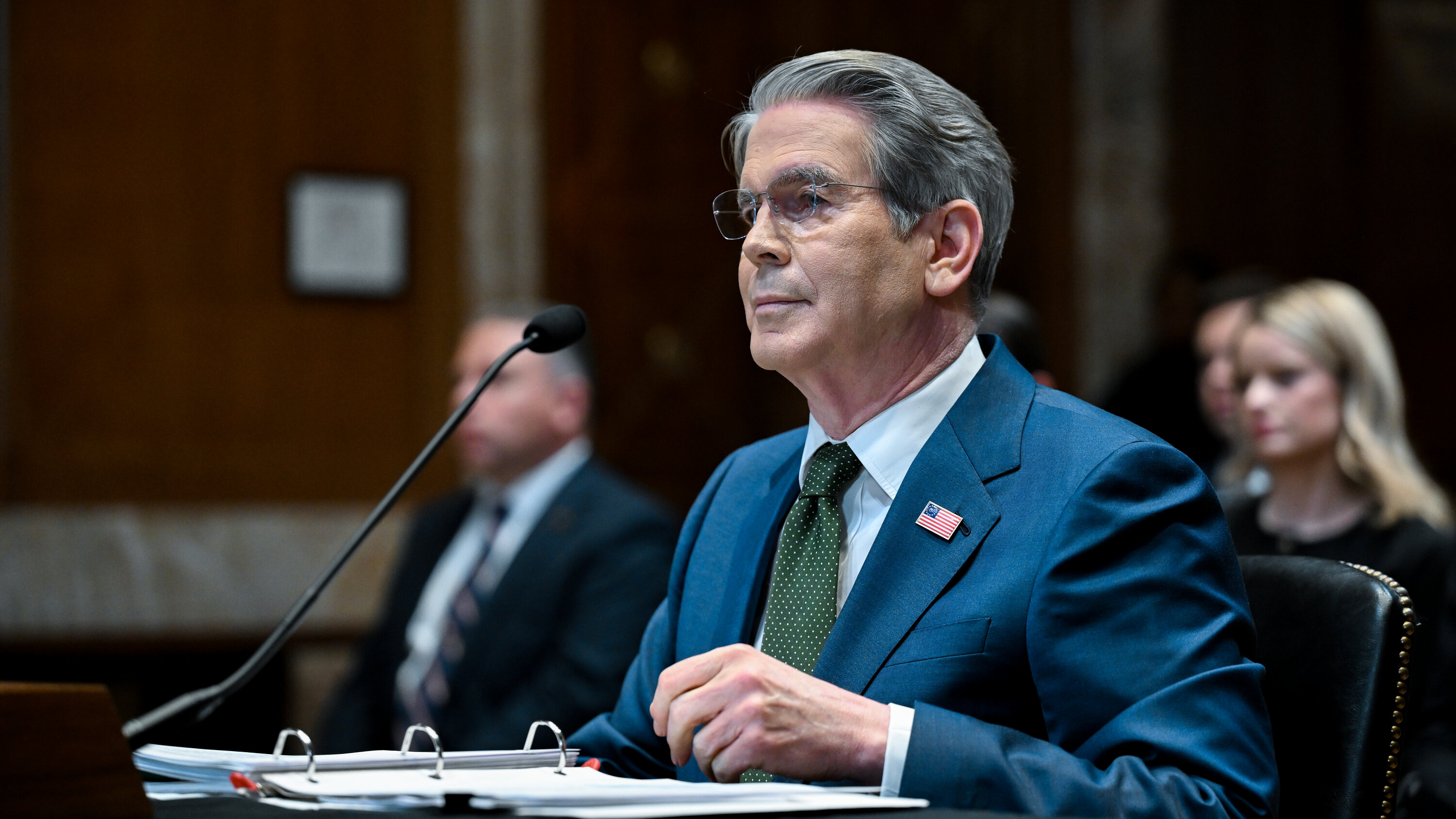
Treasury Secretary Scott Bessent articulated the strategic logic behind the sanctions in direct terms, stating that the Trump administration would continue using sanctions to deprive the Iranian government and military of funding for weapons, nuclear program development, and support for regional proxy forces. Bessent's statement framed the action not as an isolated financial enforcement measure but as part of a systematic campaign to cut the Iranian regime off from the financial networks it uses to fund terrorist activities and destabilize the global economy. The State Department complemented the Treasury action by announcing a reward of up to 15 million dollars for information leading to the disruption of the IRGC's financial mechanisms, a step that reflects the administration's interest in generating intelligence from within the networks being targeted rather than simply imposing penalties from the outside.
How the IRGC Oil Network Operated and Which Companies Were Targeted
The Treasury Department's designations reveal a detailed picture of how the IRGC has structured its oil sales operation to evade existing sanctions through a layered network of front companies and shell entities spread across multiple jurisdictions. According to Treasury, the IRGC relies on these intermediary companies to arrange and receive payment for its oil allotment, creating distance between the sanctioned Iranian entity and the financial transactions that generate its revenue. Monday's action builds directly on sanctions imposed in July 2025 against Golden Globe, a Turkey-based company that Treasury described as handling hundreds of millions of dollars in IRGC oil sales annually. The three individuals sanctioned on Monday work for the IRGC's Shahid Purja'fari oil headquarters and are alleged to have coordinated payments through Golden Globe as part of this broader evasion architecture.
The nine companies targeted span several jurisdictions and play different roles in the oil shipment network. In Hong Kong, four companies were designated. Hong Kong Blue Ocean Ltd and Hong Kong Sanmu Ltd were described as cover companies arranging the sale and shipment of Iranian oil. Jiandi HK Ltd allegedly signed a deal with the IRGC to purchase tens of millions of dollars worth of Iranian oil, while Max Honor International Trade Co Ltd purchased millions of barrels of Iranian oil from the IRGC during 2025. In the UAE, four companies were also targeted. Dubai-based Ocean Allianz Shipping LLC and Sharjah-based Atic Energy FZE were said to have facilitated Iranian oil shipments on five sanctioned shadow fleet tankers in 2025. Dubai-based Blanca Goods Wholesaler LLC and Dubai-based Universal Fortune Trading LLC were also designated, with the latter described as having been used as a front company by the National Iranian Oil Company in addition to its IRGC connections.
The ninth company, Zeus Logistics Group, is based in Oman and was designated for arranging vessels to carry Iranian oil cargoes. The geographic spread of the targeted entities, spanning Hong Kong, Dubai, Sharjah, and Oman, illustrates the deliberate diversification that sanctions evasion networks employ to reduce their vulnerability to enforcement actions targeting any single jurisdiction. By spreading operations across multiple financial and commercial centers, the network created redundancy and complexity that made it harder for any single regulatory authority to see the full picture of how Iranian oil was moving from producer to buyer. The Treasury action attempts to disrupt that architecture by simultaneously targeting multiple nodes across different countries rather than pursuing companies sequentially.
The Broader Strategic Context and What the Sanctions Mean for US-China-Iran Relations
The announcement of Monday's sanctions sits within a broader strategic context that connects Iranian oil revenues, Chinese energy purchasing decisions, and the diplomatic landscape surrounding the Strait of Hormuz into a single interconnected set of American policy concerns. Iran has been able to sustain significant oil export revenues despite extensive American sanctions in large part because China has continued purchasing Iranian crude at discounted prices, providing Tehran with both income and a major buyer willing to absorb volumes that sanctioned producers cannot sell on open markets. Washington views this arrangement as a direct subsidy to a government it considers a state sponsor of terrorism and a threat to regional stability, and the Trump administration has made disrupting that financial lifeline a central element of its Iran policy.
In previous rounds of Iran sanctions, the practical challenge for American enforcement authorities has been that Chinese state-owned and private entities purchasing Iranian oil have generally operated outside the reach of direct American legal jurisdiction, limiting the tools available to impose costs on the demand side of the sanctioned trade relationship. The strategy reflected in Monday's designations focuses instead on the intermediary layer, the shipping companies, trading firms, and financial facilitators that connect Iranian sellers to Chinese buyers through jurisdictions like Hong Kong and the UAE where American legal and regulatory influence is more readily exercisable. By sanctioning the pipes rather than the tap or the destination, Treasury aims to make the logistics of Iranian oil shipments more costly, complex, and risky for the commercial operators who have been profiting from facilitating them.
The Friday sanctions that preceded Monday's action, which targeted individuals and companies aiding Iranian purchases of weapons components used in drones and ballistic missiles, indicate that the Trump administration is pursuing Iran on multiple financial fronts simultaneously rather than focusing narrowly on oil revenues alone. The combination of oil sanctions and weapons-related sanctions creates a broader pressure environment that is designed to make international financial engagement with Iran's government and military entities increasingly costly across a wide range of commercial activities. Whether this intensified pressure campaign produces the diplomatic outcomes the administration is seeking, including Iranian cooperation on nuclear negotiations and Strait of Hormuz access, will depend on factors that sanctions alone cannot determine, including Tehran's political calculations and Beijing's willingness to use its leverage with Iran in response to American pressure.