
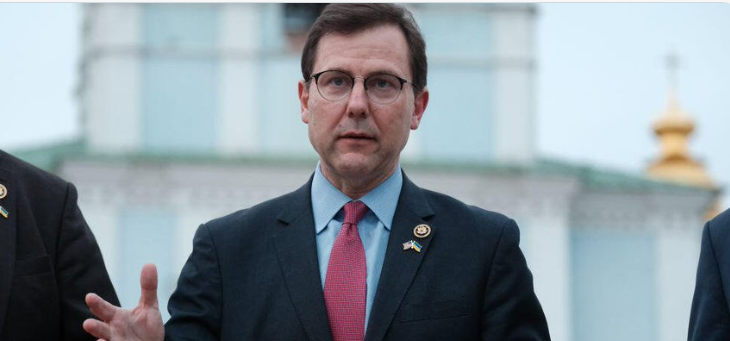
Republican Missing Congressman Tom Kean Jr of New Jersey has secured his party's nomination for re-election in Tuesday's primary, winning the Republican ticket for November's midterm elections despite having not been publicly seen since March 5 and having missed more than 100 votes in Congress during his unexplained absence. The nomination came after President Donald Trump issued a full endorsement on Truth Social on Monday, writing that Kean "has my Complete and Total Endorsement for Re-Election" and was "working tirelessly" for the America First agenda. Kean ran unopposed in the Republican primary, meaning no votes were required to secure the nomination, and as ballots were cast on Tuesday there had been no confirmed public sightings of the congressman, no media appearances, and no in-person contact with constituents or colleagues.
From an election-watch perspective, the primary result is only the opening act of what is shaping up to be one of the most unusual congressional races of the 2025 midterm cycle. Kean's district in New Jersey is classified as a swing district, carrying a high historical propensity to flip between parties in each election cycle, which makes it a priority target for both parties in November. Democrats have already fielded a strong challenger in Rebecca Bennett, a former US Navy helicopter pilot who won her party's primary on Tuesday and enters the general election with a compelling biographical narrative and a clear contrast to offer voters on questions of accountability and public service. The combination of a genuinely competitive district, an absent incumbent, and a challenger with a military background makes this race one of the clearest electoral bellwethers for November's battle over the balance of power in Congress.
Trump's endorsement of Kean despite the controversy and mystery surrounding his absence is politically revealing in ways that extend beyond this single race. The president has consistently backed incumbents who support his agenda regardless of the circumstances surrounding them, and his characterisation of Kean as someone who "will never let you down" sits in pointed contrast to the months of unanswered texts, declined interviews, and constituent concerns that have defined Kean's public profile since March. Whether that endorsement is enough to carry a swing-district candidate through a general election against a motivated Democratic opponent, in a midterm environment where the party in power historically faces headwinds, is the central question that election analysts will be watching closely as November approaches.
How Three Months of Absence Became a National Political Story
Kean's last recorded vote in Congress was cast on March 5, a date that has since become a marker of one of the more unusual disappearances in recent congressional history. In the days and weeks that followed, colleagues, Republican officials, and multiple news organisations began reporting concerns about his whereabouts. Text messages sent to Kean went unanswered. Interview requests were declined or ignored. One aide's response to media inquiries captured the situation with a phrase that has since become widely quoted: "There's no cameras where Tom is." That line, reported by the New York Times, did nothing to reduce public curiosity and considerably amplified it, raising questions about what kind of situation required a sitting congressman to be entirely unreachable by press, colleagues, and constituents simultaneously.
The first official explanation came in April, when Kean's staff confirmed he was dealing with a medical issue without providing any further detail about its nature, severity, or expected duration. A formal statement released by his office on April 27 included Kean's own words, in which he said his doctors were assuring him his "recovery will be complete" and that he expected to "return to a full schedule and be at 100 percent." The statement was posted to X but came with no video, no photograph, and no in-person verification of any kind, which did little to satisfy those asking whether the congressman was genuinely recovering or whether something more serious was being managed away from public view. In an era of constant digital documentation, a congressman who has been photographically invisible for months generates speculation precisely because the absence of evidence is itself unusual.
The electoral significance of that absence became concrete when the vote count began accumulating. Missing more than 100 congressional votes is not a minor attendance gap; it is a sustained failure to perform the core constitutional function of a sitting member of Congress. In a swing district where every vote in November will be hard fought, that record gives Democrats a ready-made accountability argument that requires no interpretation or spin. Rebecca Bennett's campaign does not need to characterise Kean's absence as anything other than what it objectively is: over 100 uncast votes on legislation affecting New Jersey's seventh district, during a period when constituents had no way to speak to, see, or verify the condition of their elected representative.
What Trump's Endorsement, Bennett's Military Record, and a Swing District Mean for November
The general election contest between Kean and Bennett is now set, and the electoral dynamics favour a genuinely competitive race that neither party can take for granted. New Jersey's seventh district has the kind of demographic and political profile that makes it a reliable barometer of broader national electoral trends: educated suburban voters, a mix of homeowners and commuters, constituents who split tickets with some regularity and who respond to candidate quality as much as party affiliation. In a midterm environment where the party holding the White House typically loses ground in Congress, the district's swing character becomes even more pronounced, and the specific circumstances of Kean's absence give Democrats an unusually concrete accountability argument to make to voters who might otherwise be inclined to support an incumbent.
Bennett's profile as a former US Navy helicopter pilot is precisely the kind of candidate biography that plays well in swing-district general elections. Military service communicates a set of values, including commitment, reliability, and willingness to show up under difficult circumstances, that land with particular force in a race against a candidate whose central vulnerability is that he has not shown up at all for months. Democratic strategists will not need to work hard to draw that contrast; it is embedded in the factual comparison between Bennett's public record and Kean's current situation. Whether voters ultimately prioritise that contrast over party affiliation, Trump's endorsement, and whatever recovery narrative Kean is able to construct before November will determine the outcome in a district that both parties genuinely believe they can win.
Trump's involvement in the race adds a national dimension that transforms it from a local congressional contest into a proxy test for presidential influence in competitive districts. His endorsement of Kean was unsurprising given the strategic importance of holding the seat, but the specific language he used, describing Kean as "working tirelessly" during a period of documented public absence, creates an accountability gap that opposition researchers and journalists will continue to probe. Every week that Kean remains out of public view is another week in which the gap between Trump's characterisation and observable reality widens. If Kean does return to active campaigning in the coming weeks as his telephone interview suggested, the question of how he explains the preceding months to voters who feel they deserved more transparency will define the early framing of a general election contest that neither party can afford to lose.