
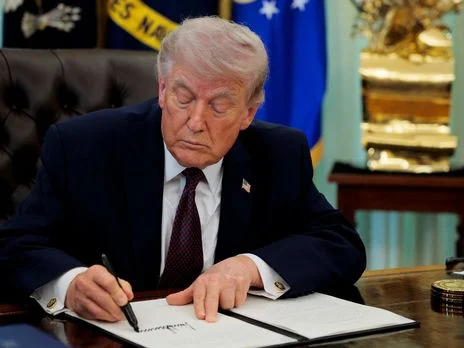
Trump Birthright Citizenship Supreme Court 2026 arguments revealed a judicial panel deeply skeptical of the administration's position, with most of the nine justices signalling during Wednesday's oral arguments that they are unwilling to let President Donald Trump proceed with what may be the most legally ambitious piece of his restrictive immigration agenda. Trump attended the proceedings in person from the public section of the courtroom, a historic first for a sitting president, and watched as the court's conservative majority, including three justices he personally appointed, appeared to find the administration's constitutional arguments legally invalid and operationally impractical. The case concerns Trump's executive order, issued on his first day back in office in January 2025, instructing U.S. agencies not to recognise the citizenship of children born in the United States if neither parent is an American citizen or legal permanent resident, a directive that a lower court found inconsistent with the Constitution's 14th Amendment.
The contrast between Wednesday's judicial reception and the Supreme Court's general posture toward the Trump administration's immigration agenda over the past year is striking and significant. The court has repeatedly intervened in the administration's favour, allowing Trump to end humanitarian protections for migrants, deport them to countries where they have no ties, and carry out aggressive immigration enforcement operations including raids that can target individuals based on race or language. Wednesday's birthright citizenship arguments potentially foreshadow a different outcome, one in which the court's justices are drawing a constitutional line that even a sympathetic bench is not willing to erase. Kevin Johnson, an immigration law expert at the University of California, Davis, stated directly that he does not think Chief Justice John Roberts wants to go down in history as presiding over a court that ended birthright citizenship, and the questions the justices posed to U.S. Solicitor General D. John Sauer defending Trump's order suggested broad judicial discomfort with the administration's constitutional theory.
The stakes of the case extend well beyond the specific executive order to the foundational question of what the 14th Amendment to the United States Constitution means and has meant for more than 150 years. Roberts's exchange with Sauer captured the essential constitutional tension in a single brief exchange: when Sauer argued that eight billion people are one plane ride away from having a child who is a U.S. citizen and that the world has changed, Roberts replied that it is indeed a new world, but that it is the same Constitution. That response crystallises the judicial philosophy that appears to command majority support on the court, that constitutional text and its long-established interpretation is not something that executive orders can rewrite to match contemporary immigration anxieties, and that the pathway for changing birthright citizenship runs through constitutional amendment rather than presidential instruction. A ruling is expected by the end of June.
The 14th Amendment, Birthright Citizenship History, and How the Executive Order Was Challenged
The 14th Amendment to the United States Constitution was ratified in 1868 in the aftermath of the Civil War, part of the Reconstruction Amendments that fundamentally altered the constitutional relationship between the federal government, the states, and individual Americans. The Amendment's Citizenship Clause states that all persons born or naturalized in the United States, and subject to the jurisdiction thereof, are citizens of the United States, language that was specifically drafted to reverse the Supreme Court's 1857 Dred Scott decision, which had held that Black Americans could not be citizens regardless of birth on American soil. The Clause's drafters chose broad and categorical language deliberately, intending to establish citizenship by birth as a constitutional right that could not be easily qualified or revoked by legislative or executive action.
The phrase subject to the jurisdiction thereof has been the specific textual hook on which the Trump administration's constitutional argument hangs, with the administration arguing that this phrase limits birthright citizenship to children whose parents have a lawful, permanent relationship with the United States rather than extending it to all persons born on American soil regardless of parental status. This reading would exclude the children of undocumented immigrants and temporary visa holders, the population primarily affected by Trump's executive order, on the theory that their parents are not fully subject to U.S. jurisdiction in the constitutionally relevant sense. The lower courts that have examined this argument have consistently rejected it, finding it inconsistent with the Clause's text and with more than a century of consistent interpretation that has extended citizenship to essentially all persons born on American soil with narrow exceptions for foreign diplomats' children and members of enemy occupying forces.
The long, unbroken history of birthright citizenship that Johnson cited as likely to sway the court is a specific form of constitutional evidence called historical practice, which courts treat as evidence of how constitutional text has been understood and applied over time. When a constitutional provision has been interpreted consistently in a particular way for more than 150 years, across multiple administrations of different political parties and across multiple Supreme Court compositions, that consistency itself carries significant weight as evidence of what the provision means. The administration's argument requires the court to overturn not just a legal precedent but a practice of citizenship recognition so deeply embedded in American law and administrative practice that reversing it would affect hundreds of thousands of people born on American soil annually and potentially call into question the citizenship of millions of Americans born under circumstances that the executive order would retroactively characterise as not establishing birthright citizenship.
Trump's Executive Order and the Legal Challenges It Generated
Trump's executive order on birthright citizenship, issued on January 20, 2025, the first day of his second term, was challenged in federal court almost immediately by multiple state attorneys general and immigrant rights organisations that argued it was facially unconstitutional on its face as a violation of the 14th Amendment's Citizenship Clause. The speed of the legal challenge reflected both the organised state of immigration rights legal infrastructure and the relative clarity of the constitutional issue, which did not require complex factual development to present a strong legal case. Lower federal courts consistently blocked the order from taking effect pending Supreme Court review, finding that the executive's assertion of authority to redefine birthright citizenship by executive order exceeded the constitutional authority that Article II of the Constitution grants to the president.
The government's appeal to the Supreme Court specifically asked the court to address not only the merits of the birthright citizenship question but also the scope of nationwide injunctions issued by individual district court judges that have been used repeatedly to block Trump administration policies across the country. The nationwide injunction question is a significant procedural issue in its own right, separate from the birthright citizenship constitutional question, and the Supreme Court's treatment of that issue could have implications across the entire landscape of challenges to Trump administration policies beyond this specific case. The court may choose to address both questions together or to separate them, depending on how the justices assess the relationship between the procedural and substantive issues in the case's posture before them.
The administration's political framing of birthright citizenship as a magnet for illegal immigration and birth tourism has been a consistent element of its public communications about the executive order, with Sauer raising the birth tourism concern before the Supreme Court on Wednesday as part of the policy justification for the order's constitutionality. Roberts's dismissal of that argument as insufficiently responding to the constitutional text reflected the court's orientation toward textual and historical analysis rather than contemporary policy arguments as the relevant framework for constitutional interpretation. The policy concerns that the administration identifies are not legally irrelevant, but they are the kind of concerns that the Constitution itself has addressed through the Citizenship Clause's categorical language, and changing that categorical language in response to contemporary policy concerns requires constitutional amendment rather than executive order.
The Supreme Court's Previous Stance on Trump Immigration Policies
The Supreme Court's general posture toward Trump's immigration agenda over the past year has been substantially favourable, providing the administration with judicial clearance to implement a range of aggressive enforcement measures while legal challenges proceeded in the lower courts. The court's willingness to allow enforcement of immigration policies while their constitutionality is litigated has given the administration the practical effect of many of its immigration priorities without requiring final constitutional adjudication in most cases. This pattern of stay litigation, in which the administration secures Supreme Court permission to implement challenged policies pending final judicial resolution, has been one of the most consequential features of the legal landscape surrounding Trump's immigration agenda.
The court allowed Trump to end Temporary Protected Status designations for migrants from multiple countries, removing the humanitarian protection that had allowed hundreds of thousands of people to remain in the United States lawfully for years or decades. It permitted deportations to third countries with which individuals have no ties, a practice that immigrant rights advocates challenged as violating due process protections. It allowed enforcement operations to proceed including immigration raids that critics say effectively permit targeting based on race or language, a practice that raises its own constitutional concerns under the Fourth Amendment's equal protection principles. In certain cases the court has drawn limits, ruling that the administration must provide migrants with minimum due process protections before deportation, but those limits have been narrower than immigrant rights advocates sought.
The 6-3 ruling in February that struck down Trump's sweeping global tariffs under the International Emergency Economic Powers Act is the most recent major example of the court ruling against a Trump signature priority, and its reception illustrates the political dynamics surrounding Supreme Court decisions that constrain the administration. Trump responded to that ruling by calling the justices who voted against him unpatriotic and disloyal, labelling his own appointees Neil Gorsuch and Amy Coney Barrett as an embarrassment to their families, and characterising the Supreme Court broadly as not acting very well. His Wednesday comment calling justices who seek to show their independence stupid people, made on the same day he attended oral arguments in his own case, illustrates the unprecedented nature of the current relationship between this president and the judiciary that is evaluating his policies.
Wednesday's Arguments, Justice Signals, and What a Ruling Would Mean
Chief Justice Roberts's conduct of the Wednesday arguments provided the clearest signal about the court's likely direction, with his questioning demonstrating sustained scepticism toward the administration's constitutional theory and his specific responses to Sauer's arguments suggesting he finds them textually and historically unpersuasive. Roberts's labelling of the administration's jurisdictional argument as quirky, his dismissal of the birth tourism policy concern with the it's the same Constitution response, and his general orientation toward the plain text and historical practice that Johnson cited as likely to be determinative all suggest a Chief Justice who is prepared to rule against the administration on the merits of the birthright citizenship question.
The picture was not uniformly adverse for the administration across the court's conservative members. Justice Samuel Alito appeared receptive to the administration's argument that birthright citizenship should be extended only to those with lawful domicile in the United States, which the administration defines as lawful, permanent residence with intent to remain. Alito's sympathetic questioning does not determine the outcome but does indicate that the court's conservative majority is not monolithic on the question, and that a ruling against the administration may not be unanimous across the court's six conservative justices. The three liberal justices can be expected to side with the constitutional challenge based on their general approach to the Citizenship Clause and their questions in the session, making Roberts's position as potential swing vote in a potentially close conservative majority the most consequential judicial positioning in the case.
George Mason University law professor Ilya Somin's assessment that the weight of argument and precedent is strongly on one side here, more so than in most other cases, contextualises the birthright citizenship question within the broader landscape of Trump administration legal challenges in a way that is significant. Constitutional challenges that involve clear textual provisions, long historical practice, and consistent prior interpretation present differently to the court than policy-driven challenges where the constitutional question is genuinely contested. Somin's observation that this case is unusually one-sided in terms of argument and precedent, and that the court has been overly deferential to Trump on many immigration issues, suggests that a ruling against the administration on birthright citizenship would represent the court correcting its general deference posture in a case where the constitutional case for correction is overwhelming.
The Columbia Law Expert's Analysis and Why Birthright Citizenship Is Different
Elora Mukherjee's analysis from Columbia University's immigrant rights clinic provides the conceptual framework for understanding why birthright citizenship may produce a different judicial outcome than the other immigration issues on which the court has sided with the administration. Her observation that birthright citizenship is core to our identity as a nation and unlike any of the other contexts in which the court has sided with Trump identifies the specific quality of the constitutional right at issue that may distinguish it from other immigration policy questions. The other enforcement measures the court has allowed, humanitarian protection revocations, aggressive deportation practices, enforcement raids, are policy choices about how the immigration system treats non-citizens. Birthright citizenship is a constitutional provision about who is an American, a question that touches the foundational self-conception of the country in a way that deportation policy does not.
The practical implications of a Supreme Court ruling sustaining Trump's executive order would extend far beyond the children born after the order's implementation to the question of how citizenship has been documented and recognised in the United States across the order's period of block-then-implementation. If the court ruled that the executive order is constitutional and that the 14th Amendment does not extend citizenship to children born to undocumented parents and temporary visa holders, the administrative consequences of determining how existing citizenship records are treated would be enormous, affecting potentially millions of people whose citizenship has been recognised under the existing interpretation. Johnson's reference to the long, unbroken history of birthright citizenship points to why reversing it is not simply a prospective policy change but a retroactive disruption of settled legal status for a large population.
The court's ruling in this case, expected by the end of June, will also address the nationwide injunction question that the administration raised as part of its appeal, and that question's resolution could have broader implications for how courts can respond to executive actions that are challenged as unconstitutional across multiple jurisdictions simultaneously. If the court limits the scope of nationwide injunctions, future challenges to Trump administration policies may be harder to implement as effective blocks while the underlying constitutional questions are litigated, giving the administration more time to implement challenged policies even when courts ultimately find them unconstitutional. That procedural question sits alongside the substantive birthright citizenship question as a potentially significant outcome of the June ruling regardless of which party the court's decision primarily favours.
Trump's Presence and His Comments About the Court
Trump's decision to attend the oral arguments in person, sitting in the courtroom's public gallery while the justices heard arguments in a case directly involving his executive order, was described as a historic first for a sitting president. The significance of the presence is both symbolic and practical: symbolically, it signals the personal importance that Trump attaches to this particular legal battle and his willingness to be physically present for proceedings that may result in a ruling against him; practically, it created a dynamic in which the justices were aware of the president's physical presence while they questioned his administration's lawyer, a circumstance with no precedent in the court's history. Johnson's assessment that the presence is unlikely to make a difference in the outcome reflects the institutional independence of the federal judiciary, but the gesture itself communicates something about how this administration relates to the institutions that constrain it.
Trump's Wednesday comments about the Supreme Court, calling justices who want to show their independence stupid people and asserting that the court has not been acting very well, represent an extraordinary public attack on the institution from whose decision he is simultaneously seeking relief. The comments about his own appointees Gorsuch and Barrett, made in the context of the February tariff ruling but reiterated in the same week as the birthright citizenship arguments, create a political context for the court's forthcoming decision that has no parallel in modern American constitutional history. A president who publicly labels sitting justices, including his own nominees, as stupid for exercising independent judicial judgment is simultaneously asking those same justices to rule in his favour on the most audacious piece of his immigration agenda.
The marble frieze above the Supreme Court bench that Trump may have observed during the proceedings, one of whose sculpted figures known as Majesty of the Law stands with a book at his side, provides a quiet symbolic counterpoint to the political dynamics surrounding the case. The institution Trump was watching, and whose composition he has significantly shaped through three appointments, is preparing to exercise the constitutional authority that the Majesty of the Law represents, and the June ruling will tell the country whether that authority will be deployed to uphold or to narrow the citizenship guarantee that the 14th Amendment has embodied for more than 150 years.