
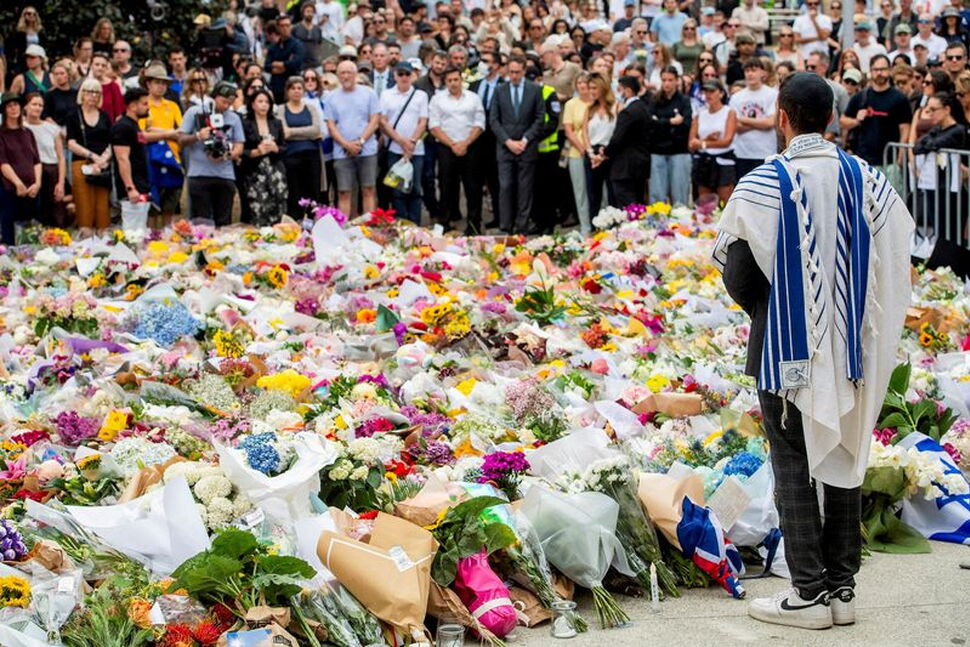
Australia antisemitism after top intelligence official has told a Royal Commission inquiry that antisemitism was left unchecked in the country following the outbreak of the Israel-Gaza war in October 2023, and that this failure to act allowed hatred to become normalised and ultimately fuelled violence against Jewish Australians. Mike Burgess, Director-General of Security at the Australian Security Intelligence Organisation, delivered the testimony during public hearings focused on the events leading up to last December's devastating Bondi Beach mass shooting, which killed 15 people attending a Jewish Hanukkah celebration.
Burgess did not mince words in his assessment of what went wrong. He said the war in the Middle East provoked a range of strong emotions across the Australian community, and that violent behaviours including antisemitism were not adequately confronted in the period that followed. "Those behaviours, including antisemitism that, in our view, were left unchecked, were therefore normalised and gave more permission for violence," Burgess told the inquiry. "And Jewish Australians were on the receiving end." His statement placed unchecked social hatred directly in the chain of events that led to real-world violence.
The Royal Commission, a wide-ranging formal inquiry with significant legal authority in the Australian system, is examining the full context surrounding the Bondi attack. The first block of public hearings this month has focused specifically on the nature and prevalence of antisemitism in Australia, drawing testimony from members of the Jewish community about what they experienced in the months before the attack. Burgess's appearance marked a significant moment in the proceedings, bringing the country's foremost security authority into the record on a question that has deep implications for how Australia responds to hate-fuelled extremism going forward.
How Antisemitism Escalated in Australia After the October 2023 Gaza War Outbreak
In the months following the October 2023 outbreak of conflict in Gaza, antisemitic incidents across Australia rose sharply in both frequency and severity. What began as threatening and intimidating behaviour gradually escalated into direct targeting of people, businesses, and places of worship. Burgess told the inquiry that by late 2024, the shift from verbal hostility to physical attacks had become impossible to ignore, with vandalism and arson attacks recorded against homes, schools, synagogues, and vehicles across the country in the period leading up to the Bondi attack.
The cumulative weight of this escalating threat environment was significant enough to trigger a formal change in Australia's national security posture. In August 2024, ASIO raised the national terrorism threat level to "probable," a decision Burgess said was directly influenced by the spike in antisemitic incidents that had been recorded in the preceding months. Raising the threat level is not a routine administrative act; it signals that intelligence agencies have assessed a genuine and elevated risk of a terrorist attack occurring. That decision now stands as a documented warning marker that preceded the Bondi tragedy.
Two specific incidents during this period were linked by ASIO to a foreign state actor. Burgess told the inquiry that the agency had concluded Iran's elite Islamic Revolutionary Guard Corps was responsible for antisemitic attacks on a kosher restaurant in Sydney and on Melbourne's Adass Israel Synagogue. That finding had serious diplomatic consequences: Iran's ambassador to Australia was expelled in August following the determination. The involvement of a foreign intelligence service in orchestrating attacks on Australian soil represents a qualitative escalation far beyond domestic extremism and places the antisemitism surge in a broader geopolitical context.
What ASIO Is Revealing About Iran, Proxies, and the Ongoing Threat to Jewish Australians
At the current Royal Commission hearings, Burgess provided additional detail about Iran's suspected role in the broader pattern of attacks beyond the two incidents formally attributed to the Revolutionary Guard. He acknowledged that ASIO believed Iran was probably involved in more attacks but that the agency could not yet reach the evidentiary threshold needed to make definitive public attributions. "They use their network of proxies and agents to do their bidding, and that is to bring harm to Jewish people wherever they are in the world," Burgess said, describing a deliberate and organised campaign rather than a series of isolated incidents.
The use of proxy networks is a well-documented feature of Iranian intelligence operations globally, and Burgess's testimony positions the threat to Australian Jews within that international framework. It also raises uncomfortable questions about the adequacy of Australia's counterintelligence capacity and its ability to detect and disrupt foreign-directed attacks before they occur. The inquiry is expected to examine not only what happened at Bondi but why the protective systems in place, both social and institutional, failed to prevent the escalation that preceded it.
For Jewish Australians, the testimony confirms what many community members have been saying publicly for over a year: that the hostility they experienced after October 2023 was real, sustained, and in some cases state-sponsored. The Royal Commission process provides an authoritative public forum for that testimony to be recorded and acted upon. With further hearings scheduled and more witnesses to be called, the inquiry is still building its full picture of the conditions that made the Bondi attack possible, and what structural changes Australia needs to make to ensure it cannot happen again.