
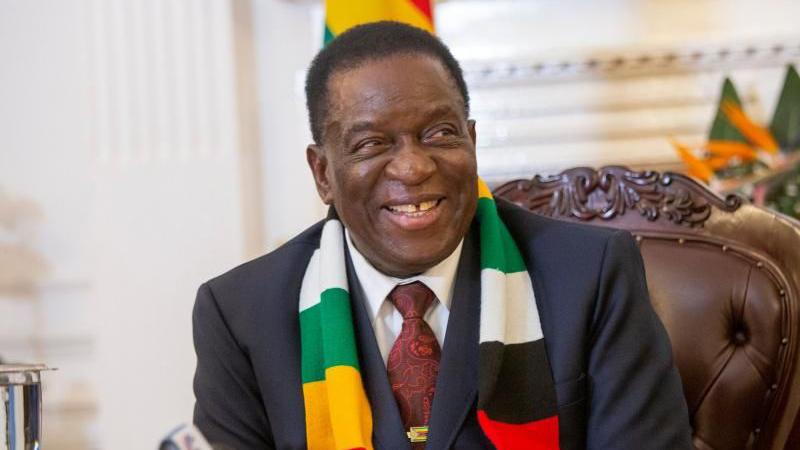
Zimbabwe's lower house of parliament voted by a decisive majority on Thursday to extend presidential terms from five to seven years and abolish direct presidential elections, in a constitutional amendment that will allow President Emmerson Mnangagwa to remain in office until 2030 and that has immediate implications for the country's economic governance credibility in the eyes of international investors, multilateral lenders, and development partners. More than 216 lawmakers backed the legislation, comfortably exceeding the 187-vote two-thirds majority threshold required to amend the constitution. The bill now heads to the senate, where approval is expected, before being enacted by the president whose own term in office it extends. For a country with a deeply troubled economic history and a governance record that international financial institutions monitor carefully, the concentration of political power enabled by these amendments sends a signal to global markets that the trajectory of Zimbabwe MP democratic accountability is moving in the wrong direction at a moment when it can least afford the reputational cost.
The economic stakes of Zimbabwe's political governance are not abstract. The country has spent decades managing the consequences of institutional degradation that began under Robert Mugabe's long rule and continued through the economic collapse of the late 2000s, when hyperinflation reached astronomical levels and wiped out savings, erased contracts, and destroyed the confidence of domestic and foreign investors alike. The recovery path has been slow, contested, and heavily dependent on the willingness of international creditors, the International Monetary Fund, the World Bank, and bilateral partners to re-engage with a government that has repeatedly promised reforms it has struggled to deliver consistently. Political stability has been offered as the justification for Mnangagwa's constitutional changes, a framing that Zanu-PF supporters have consistently deployed. But economic history teaches a different lesson: genuine investor confidence is built on institutional credibility, rule of law, and democratic accountability, not on the extension of one man's tenure by parliamentary decree.
The amendments contain several interconnected provisions that collectively reshape Zimbabwe's political economy in ways that extend well beyond the specific question of when Mnangagwa leaves office. Direct presidential elections, held since 1990, are abolished: future presidents will be chosen by parliament rather than voters. Parliamentary and presidential terms are both extended from five to seven years. Parliamentary elections scheduled for 2028 are delayed to 2030. Each of those changes reduces the frequency of competitive democratic pressure on the governing party and increases the concentration of institutional power in a parliament where Zanu-PF holds a commanding majority. For economic governance purposes, the removal of direct electoral accountability from the presidency is the most significant single change, because it eliminates the mechanism by which citizens could most directly express economic dissatisfaction through the ballot box.
How Mnangagwa Came to Power and Why Zimbabwe's Economic Reform Promises Have Remained Largely Unfulfilled
Emmerson Mnangagwa, now 83, came to power in November 2017 not through an election but through a military-assisted removal of Robert Mugabe, who had governed Zimbabwe since independence in 1980. The manner of the transition was presented internationally as a correction rather than a coup, and Mnangagwa positioned himself from the outset as a reformer who would restore economic growth, attract foreign investment, and return Zimbabwe to the international financial community after decades of isolation under Mugabe's erratic economic management. He described himself as a constitutionalist and pledged to respect term limits, statements that now sit in pointed contrast to the constitutional amendments his party has just passed through parliament with his cabinet's backing since February.
The elections that followed, in 2018 and 2023, were both disputed. International observers raised concerns about the conduct of both polls, citing irregularities, restrictions on opposition campaigning, and an uneven playing field that gave Zanu-PF structural advantages that independent candidates and opposition parties could not overcome. The disputed nature of the electoral mandate matters economically because it affects the credibility of economic policy commitments: a government whose democratic legitimacy is contested has less political capital to deploy in support of the painful structural reforms that Zimbabwe's debt situation and fiscal position require. International creditors considering debt restructuring or new lending to Zimbabwe factor governance risk into their assessments, and elections that international bodies decline to fully endorse increase that risk premium in ways that have direct consequences for the cost and availability of external finance.
The 2013 constitution that Mnangagwa's amendments now override was itself designed to prevent the kind of consolidation of executive power that characterised the Mugabe era. It restricted a president to two terms and specified that any move to extend term limits would require endorsement by voters in a referendum, with an additional provision that a sitting president cannot benefit from any extension without a separate referendum confirming voter approval. Those protections were not inserted arbitrarily: they were a direct response to the lessons of the Mugabe decades and an attempt to institutionalise constraints on power that would survive changes in individual leadership. The Constitutional Court's dismissal of the legal challenge seeking to block the bill on Wednesday, the day before the parliamentary vote, removed the final institutional obstacle to amendments that the constitution's own designers had explicitly attempted to prevent.
What Parliamentary Power Consolidation and Reduced Electoral Accountability Mean for Zimbabwe's Investment and Debt Outlook
The immediate economic risk created by Thursday's vote is reputational and institutional. Zimbabwe is currently engaged in various stages of dialogue with the IMF, the World Bank, and bilateral creditors about debt clearance and access to new concessional finance, processes that are explicitly conditioned on governance improvements including democratic accountability and rule of law. Constitutional amendments that extend the ruling party's institutional dominance, remove direct presidential elections, and extend parliamentary terms without voter approval through referendum are precisely the kind of governance developments that multilateral institutions cite when justifying delays, conditions, or reductions in financial engagement. The timing of the amendments, which comes at a moment when Zimbabwe needed to demonstrate governance progress to its creditors, makes the economic cost potentially more acute than the amendments themselves might otherwise produce.
The abolition of direct presidential elections is particularly significant for the investment climate assessment that international businesses and sovereign wealth funds apply when considering Zimbabwe market exposure. Direct presidential elections, even when imperfect, provide a periodic forcing mechanism through which governing parties must engage with popular economic concerns and potentially face replacement by competitors offering different policy directions. Parliament electing the president concentrates that accountability within an institution where Zanu-PF already holds majority control, effectively insulating the executive from the kind of competitive pressure that markets use as a proxy signal for policy responsiveness to economic conditions. Foreign direct investment decisions, long-term infrastructure contracts, and development finance commitments all incorporate governance assessment metrics in which this kind of structural change registers as a negative indicator.
Opposition parties, civil society organisations, and constitutional lawyers have consistently argued that changes of this magnitude require a national referendum rather than parliamentary approval, a position that reflects both the constitutional design intent and the democratic legitimacy principle that fundamental changes to how power is held and transferred should be endorsed by the population directly affected. Forty-two lawmakers voted against the bill, a minority but a visible one that documents the existence of institutional resistance within the political system even as it is being overridden. The international community's response to Thursday's vote will be watched carefully in Harare and in the financial centres that hold Zimbabwe's debt and consider its investment prospects, because the gap between what Zimbabwe's government says about reform and what its parliament has just done is now considerably wider than it was before Thursday's session concluded.