
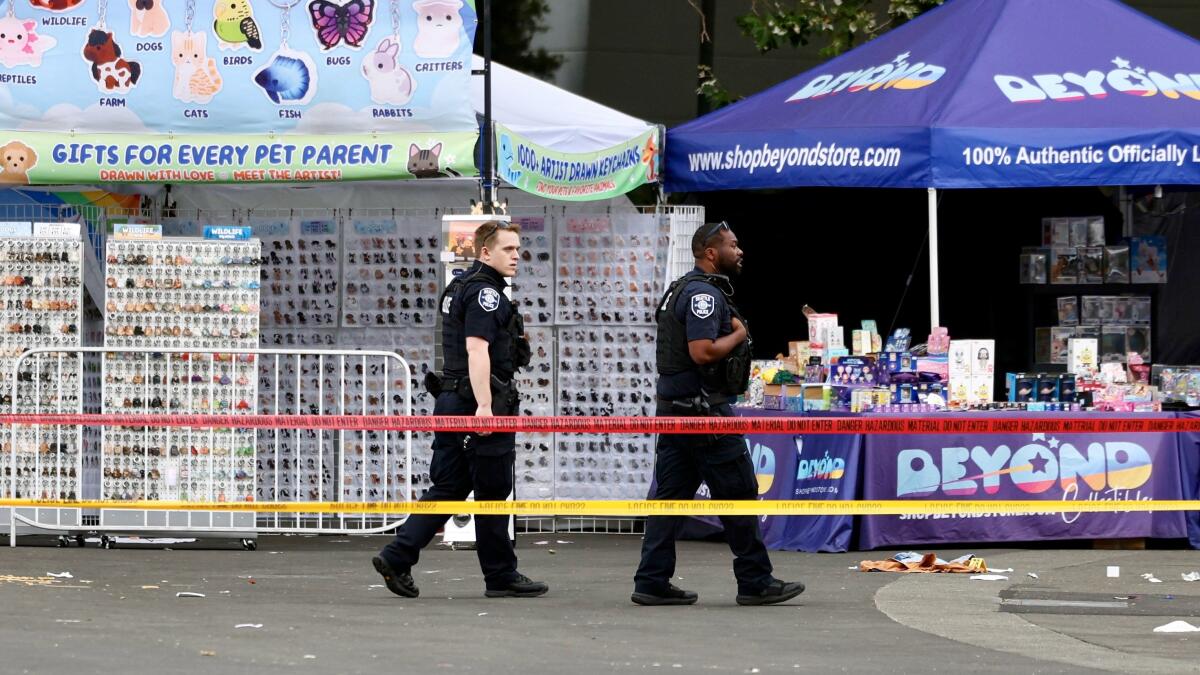
At approximately 18:00 local time on Friday July 25, gunshots were fired at the Seattle food festival shooting, the 74-acre public campus in central Seattle that is home to the Space Needle, the Museum of Pop Culture, and several performing arts venues. The shooting occurred during the Bite of Seattle, the city's annual food festival that draws tens of thousands of visitors each year and had been running through the weekend. Seattle Fire Department confirmed two people were killed at the scene and five others were injured, four of whom were transported to Harborview Medical Center.
Witnesses described the atmosphere shifting from festival celebration to panic within seconds. A reporter from the Seattle Times described hearing several loud pops followed by what sounded like rapid gunfire. A local vendor at the festival told the newspaper he heard multiple gunshots "all at once" and watched as panicked parents grabbed their children and ran toward exits. "Children were crying and the scene was mayhem," the vendor said. Video footage from the scene showed members of the public crouching on the ground and taking cover behind pillars and shelves of merchandise inside the Space Needle's lobby as the shooting unfolded outside.
Seattle Mayor Katie Wilson confirmed in an initial statement that two suspects had been taken into custody, then updated that statement to confirm one suspect was in custody. "I want to thank the Seattle police officers who responded to the scene and took a suspect into custody," she said. No further details about the suspect's identity, age, or any potential motive have been released. The Seattle Police Department confirmed the investigation is ongoing and asked the public to avoid the Seattle Center area. Harborview Medical Center, which is treating four of the injured, placed itself in partial lockdown as a precautionary measure based on communication with Seattle Police, to protect patients, families, and staff.
What witnesses reported and what video showed
The Bite of Seattle is one of the city's most widely attended annual events, typically drawing families, tourists, and food enthusiasts to the Seattle Center over a summer weekend. On Friday evening, with the festival in full swing, the Space Needle's surrounding grounds were crowded with people when the first shots were heard. The speed with which panic spread through the crowd, described by multiple witnesses as near-instantaneous, reflects both the sound of rapid gunfire in an enclosed public space and the experience that American festival and event crowds have increasingly developed for recognizing and responding to such situations.
The Space Needle, rising 605 feet above the city and one of the most recognizable structures in the world, served as an impromptu shelter for people in the immediate vicinity. Members of the public took cover inside its lobby, crouching behind pillars and merchandise displays as the shooting was ongoing nearby. The Space Needle's roof had recently been decorated as a giant football as part of Seattle's hosting of several 2026 FIFA World Cup matches, a detail that underlines how closely the shooting has landed in time and space to one of the city's highest-profile periods of international visibility.
Mayor Wilson, in a statement that went beyond the immediate operational details, placed the shooting in the context of communal grief. "Impacted families are living through the worst moment of their lives, and an entire community is trying to understand how a gathering built around culture, connection, and joy ended in gunfire," she said. "Tonight, our attention belongs to the people whose lives were taken, those fighting to recover, and the families beside them. Seattle grieves with you, and we will stand with you in the difficult days ahead." Washington Governor Bob Ferguson offered condolences and said he was receiving briefings on the ongoing police response.
From the first shots to the ongoing investigation
~18:00 local time
Gunshots heard at the Seattle Center during the Bite of Seattle food festival. Witnesses describe rapid gunfire and immediate panic. People flee or take cover inside the Space Needle lobby.
Shortly after
Seattle Fire Department responds. Two people are pronounced dead at the scene. Five others receive treatment. Four transported to Harborview Medical Center including a 2-year-old boy and a 56-year-old woman in serious condition.
Early statements
Mayor Katie Wilson issues initial statement saying two suspects are in custody. Seattle Police Department describes "multiple shooting victims."
Updated statement
Mayor Wilson updates to confirm one suspect is in custody. No further details on suspect released.
Hospital response
Harborview Medical Center holds press conference, confirms partial lockdown, four patients in treatment including the child in satisfactory condition and the 56-year-old woman in surgery.
Political response
Washington Governor Bob Ferguson offers condolences and urges public to avoid Seattle Center. Congresswoman Pramila Jayapal condemns "senseless violence" and coordinates with mayor and governor.
Ongoing
Seattle Police Department investigation continuing. Public urged to avoid the area. No motive, suspect identity, or further details released.
The shooting at a public festival and the gun violence debate it reignites
Shootings at public festivals, concerts, and outdoor events have become one of the most politically resonant categories of gun violence in the United States, precisely because they occur at gatherings specifically designed around community, celebration, and open access. The Las Vegas Route 91 Harvest festival shooting in 2017, which killed 60 people and injured more than 400, remains the most deadly mass shooting in modern US history and demonstrated with terrible clarity the vulnerability of large outdoor crowds to gun violence. The Gilroy Garlic Festival shooting in California in 2019 killed three people and injured 17. Each incident at a festival or public gathering setting reignites a specific subset of the broader gun violence debate about how to protect public spaces without converting them into fortress-like environments that destroy the community quality they are meant to celebrate.
Congresswoman Pramila Jayapal, who represents Seattle, condemned the shooting as "senseless violence" and confirmed she was coordinating across multiple levels of government with the mayor and governor. That three-level governmental response, city, state, and federal representation, reflects the political seriousness with which elected officials in Washington state are treating the incident, though the early hours after a shooting of this kind rarely produce policy commitments and more typically produce condolences and coordination statements. The political debate about what, if anything, should change in response to this shooting will develop over the coming days and weeks as more information about the circumstances becomes available.
Seattle hosting several 2026 FIFA World Cup matches is an unavoidable backdrop to the shooting in terms of international visibility. The Space Needle's football-themed roof decoration, installed for the World Cup, appears in footage and photographs from the immediate aftermath. The World Cup brought unprecedented global attention to Seattle as a host city, and a fatal shooting at a major public event during that period will amplify international coverage of the incident in ways that a similar event at a different time might not. How Seattle's civic leadership navigates the intersection of grief, investigation, and international host-city obligations over the coming days will be watched carefully.
Public event shootings in the United States and what the data shows
The Bite of Seattle shooting occurs within a broader pattern of gun violence at public gatherings in the United States that has been documented and tracked by organizations including the Gun Violence Archive, which defines a mass shooting as any incident in which four or more people are shot. By that definition, the United States has experienced hundreds of mass shootings each year for the past decade. Public festivals, concerts, and outdoor events are not the most common setting for such incidents, which more frequently occur in residential or commercial contexts, but they generate disproportionate public attention and political response because of the communal nature of the space they violate.
Washington state has its own documented history of public shootings, including the 2016 Cascade Mall shooting in Burlington, which killed five people, and a series of incidents at Seattle area locations over recent years that have contributed to ongoing political debate about public safety in the city. Seattle specifically has seen elevated concerns about public safety and gun violence in recent years, with the issue featuring prominently in city council and mayoral political debates. Mayor Wilson's election was partly contested on public safety grounds, making her response to Friday's shooting both a governance obligation and a political test of her administration's stated commitments.
The presence of a two-year-old among the injured at a food festival in one of America's most family-friendly civic spaces is the detail that most sharply illustrates the nature of the impact. Families attend the Bite of Seattle specifically because it is considered a safe, celebratory community environment. The discovery that a two-year-old was hit in such a setting will resonate deeply with the many parents who attended the same event on the same afternoon, and with parents across the country who have been weighing the risks of attending large public events with young children since mass shootings at such locations became a regular feature of American public life.
Impact on the Seattle Center, the Bite of Seattle, and the broader event economy
The Bite of Seattle is one of the city's signature annual events, drawing visitors from across the region who come specifically for the concentration of Seattle's restaurant and food culture in the Seattle Center grounds. Its economic footprint is significant: large food festivals of this kind generate revenue for local restaurants, food vendors, organising bodies, and the surrounding hospitality sector that services the influx of visitors. The shooting's impact on the remainder of the festival weekend, and on the organizer's and vendors' ability to continue, will depend on decisions made by city authorities and festival organizers about whether the event can safely continue or should be cancelled as a matter of public safety and community respect.
For the Seattle Center campus more broadly, which hosts the Space Needle, the Museum of Pop Culture, the Chihuly Garden and Glass, and several other major attractions, a shooting of this magnitude at a major event will prompt a review of security arrangements at future large gatherings. The balance between maintaining the open, accessible character of a public civic space and adding security measures significant enough to prevent or deter armed individuals is a challenge that event venues and public spaces across the United States have been grappling with for years without finding solutions that satisfy either the security imperative or the community access imperative fully.
The World Cup hosting dimension adds a commercial and reputational layer. Seattle has invested substantially in its World Cup hosting infrastructure and public profile, and international visitors and media are in the city for matches during this period. A fatal shooting at a major public event during the World Cup hosting window creates a public safety perception challenge for the city that its leadership will need to address directly and quickly, particularly given that future large-scale events and international visitors will be making safety assessments partly informed by what happened on Friday evening.
Investigation, political response, and community recovery
The immediate next steps are investigative. Seattle Police Department has a suspect in custody and will be working to establish the circumstances of the shooting, the suspect's identity and background, any potential motive, and whether there is any continuing threat. The initial confusion about whether one or two suspects were in custody, which Mayor Wilson corrected in an updated statement, will be clarified as the police process develops. The identities of the two people killed will be released once their families have been notified, which is standard protocol in fatal shooting investigations.
Harborview Medical Center's partial lockdown, which was put in place as a precautionary measure to protect victims' families, will be lifted as the security situation stabilizes and the immediate threat level is assessed as reduced. The 56-year-old woman in surgery represents the most critical remaining medical situation among the survivors, and her condition will determine the final casualty picture in the coming hours and days. The two-year-old boy's stable and satisfactory condition is the most relieving specific detail in an otherwise devastating set of facts.
The political response will move through its predictable phases: immediate condolences, coordination statements, vigils and community gatherings, and eventually policy debate. Whether the Bite of Seattle shooting produces any legislative or policy response at the city, state, or federal level depends on factors that cannot be assessed in the immediate hours after the incident, including the political will of elected officials, the specific circumstances the investigation reveals, and the sustained engagement of the community in demanding a response. Mayor Wilson's statement that "Seattle grieves with you, and we will stand with you in the difficult days ahead" establishes a personal commitment that her administration will be judged against in the weeks to come.