
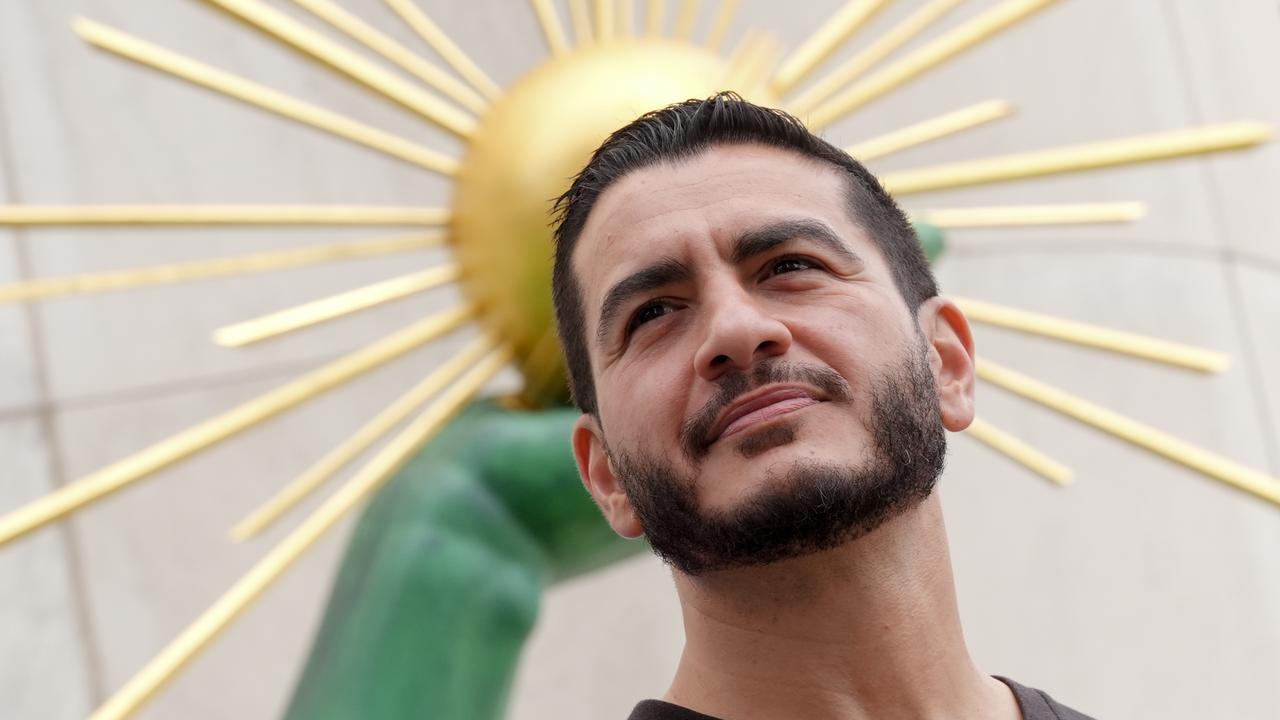
With 70 percent of the estimated vote counted, progressive candidate Abdul El-Sayed holds a narrow lead of 49.8 to 46.3 percent over establishment-backed moderate Haley Stevens in Michigan's Democratic Senate primary 2026, in a race whose outcome will define more than who faces Republican Mike Rogers in November. It will define the Democratic Party's institutional reputation, its ideological direction, its relationship with Arab American voters whose political loyalty it cannot take for granted, and the specific electoral message that potential 2028 presidential contenders will take into their campaigns as the party continues its post-2024 reckoning with why it lost and what winning requires. No primary on Tuesday's multi-state calendar carries the same weight of meaning as this one, and the margin by which either candidate wins or loses will be read as carefully as the result itself.
The race is being contested in the worst possible laboratory conditions for confident generalisation: a statewide swing-state race in a Midwestern battleground with one of the country's largest Arab American communities, contested between a physician-turned-progressive-politician whose campaign combines economic populism with a sharp critique of US support for Israel and an incumbent congresswoman whose establishment backing from Democratic leaders and pro-Israel groups represents the party's institutional establishment in its most direct form. Every element of this race is simultaneously about Michigan and about the national party, about November and about 2028, about Israel and about healthcare costs, about who Democrats are and who they need to become.
"This race is about how people are hurting," said Representative Debbie Dingell, the Michigan Democrat who stayed neutral in the primary. Grocery prices, gas, rent, healthcare. She is right about what matters in November. The question is which candidate, and which Democratic message, is most capable of making those concerns the race's defining frame rather than ceding them to the Republican party whose 2024 performance in Michigan documented that working-class voters across ethnic lines are persuadable by the right economic message even when the party delivering it does not share their values on social issues.
What Happened: The Race, the Candidates, and the Stakes
Michigan's Democratic Senate primary is being contested between two candidates whose profiles embody the two competing theories of what the Democratic Party needs to do to win the swing-state general elections that Senate control in November and presidential competition in 2028 both require.
Abdul El-Sayed, a physician who ran for Michigan governor in 2018 and built the progressive infrastructure whose mobilisation this Senate campaign is activating, has run on a platform of universal healthcare, lower costs, restricting big money in elections, and a substantially different US approach to Israel that has resonated with Michigan's large Arab American community in the specific way that no primary in a liberal coastal city quite captures, because this is a statewide constituency in which Arab American votes matter for the arithmetic of general elections as well as for the ideological statement of primary outcomes. His campaign's economic populism, which combines the structural critique of corporate power and healthcare system failures with the personal physician's credibility on why universal coverage matters, represents the specific combination of message and messenger that progressive strategists argue can win working-class voters who have been drifting toward Republicans.
Haley Stevens, the U.S. Representative whose establishment backing includes Democratic party leaders and pro-Israel groups, represents the coalition theory that winning swing states requires the moderate positioning that makes Democratic candidates acceptable to the suburban voters whose migration toward the party during the Trump years was the specific demographic shift that the 2024 results documented as more fragile than 2020 suggested. Her backing reflects the institutional assessment that a primary winner with clean establishment credentials and a record of working within the party system is more electable in November than a progressive whose positions on Israel and corporate power create the specific attack surface that Republican campaigns exploit most effectively in general election advertising.
The result whose final form remains unclear at 70 percent counted will be read differently depending on who wins, the margin, and where the remaining vote comes from in Michigan's diverse geographic and demographic landscape.
Why It Happened: Three Structural Forces That Made This Race Inevitable
Three structural forces in American Democratic politics have converged in Michigan's Senate primary in ways that make the race's outcomes readable as evidence about all three simultaneously.
Force One: The Democratic Party's Israel Problem.
Israel's favourability rating among Democrats has fallen from 59 percent in 2018 to 22 percent in May, according to Reuters/Ipsos polling, and only 16 percent of Democrats support continued military and economic aid to Israel while 57 percent oppose it. These are not fringe positions in the Democratic electorate: they are the modal Democratic voter's position on a question that the party's leadership and its institutional funders have been managing in tension with the membership's sentiment for two years since the Gaza conflict's outbreak in October 2023.
Michigan's Arab American community, one of the largest in the country concentrated in Dearborn and surrounding Wayne County communities, has been the most organised political expression of this Democratic electorate sentiment, having delivered the uncommitted protest primary vote in the 2024 presidential primary that generated national attention and whose management the Biden and subsequent Democratic leadership conducted with varying degrees of success. An El-Sayed victory in a statewide Democratic primary, if it holds, would represent the clearest electoral accountability statement yet from a Democratic electorate that has been telling its party's leadership through polling, protest votes, and candidate endorsements that the Israel policy disconnect has electoral consequences whose management through temporisation is no longer adequate.
Force Two: The Progressive-Moderate Civil War's Swing-State Test.
Previous progressive-moderate Democratic primary contests have mostly occurred in safely Democratic districts or coastal states where the winner faces limited general election competition. This is a statewide Senate race in a genuine swing state whose general election outcome matters for Senate control, making it the most direct test yet of whether the progressive economic and foreign policy platform can win a primary electorate that includes not just university-town liberals but the working-class and suburban voters whose preferences determine November outcomes in states like Michigan.
The specific significance of the swing-state setting is that an El-Sayed primary win cannot be dismissed as a coastal liberal bubble outcome. Michigan's Democratic primary electorate includes the Flint working-class voters who have experienced the specific healthcare and economic failures whose structural critique El-Sayed's platform addresses, the suburban Oakland County voters whose 2020 migration toward Biden was the demographic underpinning of his Michigan victory, and the Arab American Dearborn community whose mobilisation any Democratic candidate needs for the November general election regardless of their Israel position.
Force Three: The 2028 Presidential Message Laboratory.
Self-described liberals now make up 71 percent of Democrats, up from 55 percent in 2012, according to Reuters/Ipsos polling, and large majorities identify universal healthcare, expanded abortion access, and higher taxes on corporations and the wealthy as essential policy positions. A presidential candidate running in 2028 who dismisses progressive economic populism as a loser's platform needs to reckon with the specific demographic reality that the party whose nomination they are seeking is substantially more liberal than it was a decade ago, and that Michigan is the specific state whose swing-state competitive pressures most directly test whether the progressive-plus-swing-state combination is achievable or whether it requires the moderation trade-off that establishment Democrats consistently argue is necessary for November.
The 2028 contenders who are watching Michigan's results most carefully are not the announced candidates but the prospective ones, the party figures whose calculation about whether to run a progressive or moderate primary campaign depends on which theory of Democratic primary electability the Michigan result validates.
Reputation Analysis: What Each Outcome Does to Democratic Party Brand
The Michigan primary is fundamentally a reputation contest for the Democratic Party at a moment when its brand is under significant stress from the 2024 defeat, the ongoing ideological civil war, and the specific credibility gap on economic issues that working-class voter migration toward Republicans has created. Each possible outcome carries distinct reputation implications.
If El-Sayed wins narrowly: The Democratic Party's progressive wing gains the specific statewide swing-state validation that a narrow primary win in a safe district cannot provide. The party's reputation for being receptive to Arab American political concerns and to the Israel policy critique that 57 percent of Democratic voters share is reinforced, potentially making the party more cohesive on an issue that has been an internal reputation liability. But a narrow win also signals that the progressive coalition requires the maximum mobilisation of the Arab American community and the university-town liberal base to overcome the establishment's organisational and financial advantages, raising questions about whether a general election against Rogers, who starts with a substantial Republican base in a swing state, would reverse the primary coalition's advantage in a more broadly competitive electorate.
If Stevens wins narrowly: The establishment's organisational advantages in candidate recruitment, financial backing, and institutional endorsements have overcome a significant grassroots challenge in a state where the progressive candidate had genuine policy resonance. The Democratic Party's reputation for rewarding loyalty to the party system and its funders is reinforced, which carries the specific cost of deepening the Arab American and progressive activist disillusionment that the party has been managing since 2023. A narrow Stevens win would be read by some party analysts as a validation of establishment electability theory and by others as a warning that the progressive energy whose mobilisation El-Sayed activated will be significantly diminished in November without the candidate who generated it.
If either candidate wins decisively: A decisive result in either direction reduces the credibility of the losing side's theory in the specific moment, making it harder to maintain the argument that the race was effectively tied and the outcome determined by factors unrelated to the ideological question at its centre.
Timeline: How the Race Got Here and Why Michigan Matters Most
October 2023: Hamas attacks Israel, killing 1,200 people. Israel launches Gaza military campaign. Michigan's Arab American community begins organising politically around US policy response.
March 2024: Michigan Democratic presidential primary produces the uncommitted protest vote campaign that generates national attention, with approximately 100,000 Democrats voting uncommitted rather than for Biden specifically to protest his Gaza policy.
November 2024: Trump carries Michigan in the presidential election, defeating the Democratic nominee in a state Biden had won in 2020. The loss, combined with the Democratic party's broader 2024 defeat, triggers the party's post-election recalibration whose direction the Michigan Senate primary is partly testing.
2025 to early 2026: El-Sayed builds his primary campaign infrastructure through the progressive networks he developed during his 2018 gubernatorial campaign and through new organising energy from the Arab American and Muslim communities whose political mobilisation the Gaza crisis accelerated. Stevens secures establishment backing from Democratic leadership and pro-Israel organisations whose financial resources provide the institutional infrastructure that counters progressive grassroots mobilisation.
July 2026: Primary election day produces the narrow El-Sayed lead at 70 percent reporting, with the remaining votes from Michigan's diverse geographic districts determining whether the progressive advantage holds through the full count.
Political Impact: Senate Control, November, and the Rogers Race
The November general election against Republican Mike Rogers is the immediate political consequence whose stakes extend beyond Michigan to the question of Democratic Senate control that this cycle's competitive map makes dependent on winning seats in states like Michigan whose Senate contests were competitive in recent cycles.
Rogers, a former Republican congressman whose profile in a swing state Senate race represents the specific challenge that the Democratic nominee will face in a general electorate substantially different from the primary's Democratic-only composition, benefits specifically from whichever Democratic primary outcome most diminishes the coalition energy of the losing side. An El-Sayed win that demoralises moderate suburban Democrats is a different Rogers opportunity than a Stevens win that demoralises progressive and Arab American Democrats, but both involve the specific coalition management challenge that swing-state Senate races always create for Democratic nominees who win through internal party contests whose terms are set by the most engaged partisan voters rather than the broader November electorate.
Representative Dingell's neutrality in the primary and her emphasis on the economic concerns that will matter in November, groceries, gas, rent, healthcare, reflects the specific framing that any Democratic nominee will need to prioritise in the general election campaign whose argument to swing voters in the remainder of Michigan will be primarily economic rather than primarily ideological.
Global Impact: What American Jewish and Arab Community Politics Signals to the World
The Michigan Senate primary's Israel dimension carries international reputational significance that extends beyond American domestic politics to how US foreign policy is understood to be accountable to its domestic democratic constituency. A Democratic primary result that validates the Arab American and progressive critique of US Israel policy documents for international observers that American democratic accountability mechanisms are capable of producing electoral consequences for foreign policy positions even in a political system whose structural features often insulate foreign policy from domestic electoral pressure.
The specific data points from the Reuters/Ipsos polling, 57 percent of Democrats opposing continued military and economic aid to Israel and 16 percent supporting it, represent the most direct public opinion accountability data for US Israel policy whose electoral expression the Michigan primary is providing. Whether this data translates into actual primary voting behaviour in the way the polling suggests it should will be documented by the Michigan result.
What Happens Next: The Count, the November Campaign, and the 2028 Implications
The remaining 30 percent of Michigan's estimated vote will determine the final result whose specific margin and geographic distribution will be parsed by political analysts, campaign strategists, and prospective 2028 candidates with the same intensity that early presidential primary results typically generate, because this race has been nominated as the most direct test of the Democratic Party's ideological direction that any 2026 primary can provide.
The November general election against Rogers will begin immediately for whichever candidate wins, with the progressive-moderate division's management the first and most urgent political task whose success or failure will determine whether the Democratic coalition in Michigan is unified enough for the general election competition that Senate control requires.
The 2028 presidential race's Michigan-shaped lessons will be absorbed into the campaign calculations of every Democratic figure who is considering a presidential run, with the specific evidence about which Democratic message can win primary voters in a swing state informing the candidate positioning and donor coalition decisions that 2028 campaigns will be making in the months following the primary result.
What to Watch Next
Watch for the final vote count's completion and whether the geographic distribution of remaining votes from Michigan's diverse districts maintains or reverses El-Sayed's narrow lead, with Wayne County's Arab American heavy precincts and Oakland County's suburban areas both potentially decisive in determining which way the final margin breaks.
Watch for the November general election's opening messaging from whichever Democrat wins, specifically whether the nominee leads with the economic populism framing that Dingell identified as November's decisive issue or whether the Israel and establishment critique that defined the primary dominates the general election campaign's early weeks in ways that may or may not serve the November coalition.
Watch for 2028 presidential candidate declarations and positioning in the months following the Michigan result, whose specific lessons about progressive versus moderate electability in swing-state primaries will be directly referenced in the rationale of candidates who announce and in the strategic calculations of those who choose not to.
Watch for the specific Arab American community's engagement level in the November general election against Rogers, whose participation rate relative to 2024 and 2020 will be one of the clearest indicators of whether the primary's outcome generated the community mobilisation or the disillusionment that each possible result's reputation analysis projects.